Why Most Sidewalk Contractors Fail at AI Adoption, And How to Avoid It
Key Facts
- A majority of construction companies now report using AI in some capacity to improve their processes, according to Procore research
- Task automation and data analysis are among the most common AI use cases in construction per Procore data
- A majority of construction companies expect AI to significantly impact their business within the next several years based on Procore findings
- AIQ Labs has deployed 200+ multi-agent systems and runs 4 live SaaS products daily
- AI Employees typically cost around 80% less than an equivalent human hire while working around the clock
- AIQ Labs offers three entry points: AI Employees, AI Workflow Builds, and AI Operating Systems
- Starting with a specific pain point and prioritizing quick wins builds momentum and demonstrates AI value as endorsed by industry experts
Hire a team member that works 24/7 — for less than a part-time wage.
AI receptionists, SDRs, dispatchers and 99+ roles. Trained on your business, fully managed.
Not sure where to start? Ask our AI planner
The Hidden Barriers to AI Success in Sidewalk Contracting
The gap between AI adoption and AI success is wider than most contractors realize. While Procore research shows a majority of construction companies now use AI in some capacity, many see limited returns because they're building on unstable foundations.
The problem isn't the technology. It's what lies beneath it.
Poor data quality stands as the primary culprit. Sidewalk contractors typically scatter critical project information across paper tickets, text messages, spreadsheet fragments, and crew members' memories. When AI systems attempt to analyze this fragmented data, they produce unreliable outputs that erode trust quickly.
Without clean, centralized data on job costs, crew productivity, and material usage, even sophisticated AI tools generate insights that don't match reality. The algorithm can't fix what it can't see clearly.
Lack of standardized processes creates the second major barrier. When each crew chief runs jobs differently, varying how they document work orders, track time, or report completion status, AI has no consistent patterns to learn from.
This inconsistency means automation attempts often break down at the handoff points. What works for Crew A fails for Crew B, forcing contractors to abandon tools that promised efficiency but delivered frustration instead.
Unrealistic expectations compound these technical challenges. Many contractors expect immediate transformation without the foundational work required. They purchase AI solutions hoping for instant scheduling optimization or predictive maintenance, only to discover these tools need months of clean historical data to function properly.
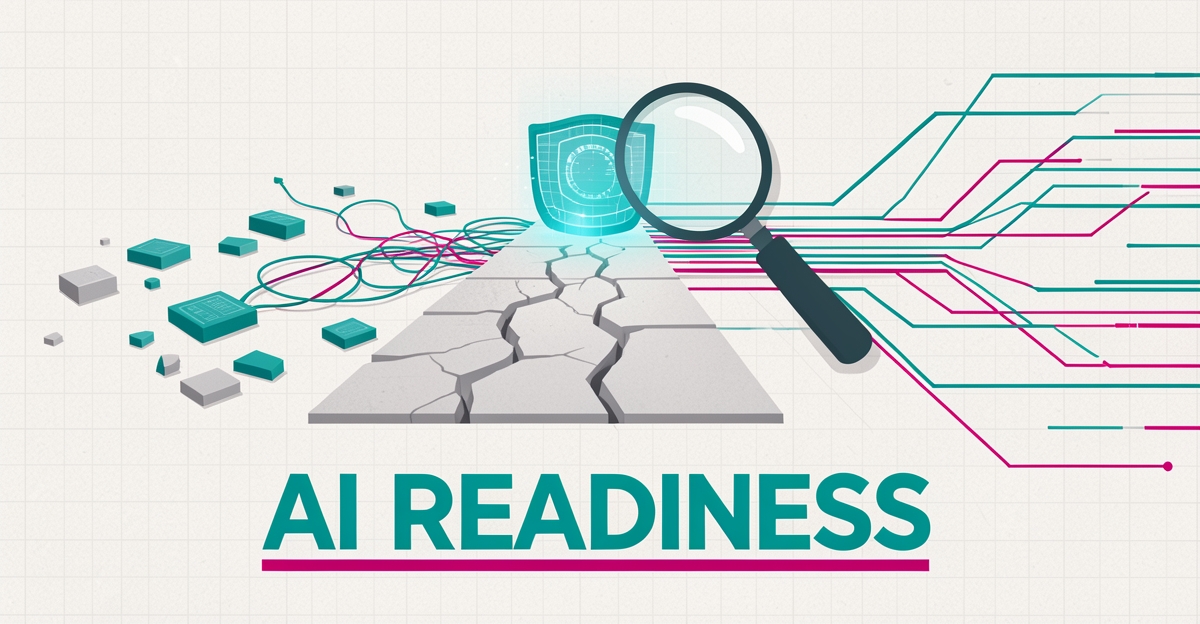
The same Procore data suggests that while most construction firms expect AI to significantly impact their business within the next several years, many haven't invested in the data infrastructure necessary to support that vision. They want the destination without building the road.
Successful AI adoption requires addressing these hidden barriers systematically:
- Data Consolidation: Establishing a single source of truth for job costing, crew schedules, and project documentation
- Process Standardization: Creating uniform workflows that all crews follow before layering on automation
- Expectation Management: Understanding that AI augments human judgment rather than replacing operational discipline
- Cultural Readiness: Preparing teams for workflow changes that AI implementation inevitably brings
As industry practitioners note, "AI adoption is not just about technology, it's about people and process." Contractors who skip the foundational work find themselves stuck in endless pilot programs that never scale.
This is where an AI readiness assessment becomes valuable. Before investing in specific tools, contractors benefit from evaluating their data maturity, process consistency, and organizational capacity for change. AIQ Labs approaches this through structured discovery that identifies which workflows can support AI today and which require groundwork first, ensuring that when implementation begins, the foundation can actually support the weight of innovation.
A Diagnostic Framework for AI Readiness in Field Services
Many sidewalk contractors struggle to move beyond AI experimentation because they lack a clear starting point and structured evaluation. A recent industry report found that a majority of construction companies are using AI to improve processes, yet many pilots stall due to poor data quality or undefined workflows. Without diagnosing readiness across foundational areas, investments risk becoming costly distractions rather than catalysts for growth.
AIQ Labs' readiness assessment model focuses on three critical pillars: data infrastructure, workflow clarity, and team readiness. First, it evaluates whether field teams consistently capture structured data, such as pour dimensions, weather conditions, or material usage, in formats that AI systems can ingest and learn from. Second, it maps core workflows like estimating, dispatching, and quality control to identify repeatable, high-frequency tasks where AI can deliver quick wins. Third, it assesses team openness to change, ensuring supervisors and crews understand how AI will support, not replace, their expertise.
To avoid pilot purgatory, the framework emphasizes starting with a specific pain point, as recommended by industry practitioners citing real-world constraints. For example, if missed pour schedules due to miscommunication are a recurring issue, the assessment might prioritize an AI dispatcher that integrates with existing scheduling tools. Simultaneously, it builds cross-functional alignment by involving estimators, crew leads, and office staff in the evaluation, ensuring the solution aligns with daily realities, not just executive goals as emphasized in transformation best practices.
The assessment also scores readiness across five dimensions: data availability, process standardization, technology integration capacity, change management preparedness, and leadership sponsorship. Teams scoring low in data foundations, for instance, may begin with simple mobile forms to standardize site reporting before introducing AI. Those with strong workflows but low tech confidence might start with a managed AI Employee to handle routine inquiries, building trust through tangible results. By grounding the evaluation in observable behaviors and existing capabilities, contractors gain a realistic roadmap, one that turns AI from a vague aspiration into a series of achievable, measurable steps. This diagnostic approach ensures that when AI is introduced, it solves a real problem, fits into current operations, and earns the team's buy-in from day one.
From Assessment to Action: Building Sustainable AI Systems for Sidewalk Operations
The journey from AI assessment to action requires a clear, practical roadmap, especially for sidewalk contractors navigating complex field operations. Many teams get stuck in exploration mode, running pilots that never scale due to poor data quality or undefined processes, challenges cited by a majority of construction companies now using AI to improve their processes. Industry research shows that success starts not with technology, but with identifying high-impact use cases tied directly to daily pain points.
Begin by targeting workflows where AI delivers immediate, measurable value: job site progress tracking using camera feeds to compare completed work against design models, automated scheduling that adapts to weather delays and crew availability, or materials forecasting that reduces overordering and stockouts. These applications align with proven AI capabilities in construction, such as monitoring jobsite progress and automating tasks, use cases reported by a meaningful share of firms. Procore data confirms that task automation and data analysis are among the most common current uses, making these entry points both realistic and impactful.
Prioritize quick wins to build momentum and demonstrate value, a strategy endorsed by experts who emphasize starting small to prove ROI before scaling. LinkedIn insights reinforce that quick wins build organizational confidence and fund broader adoption. Pair this with investment in data foundations and governance, ensuring your AI systems run on clean, structured inputs from daily logs, delivery records, and equipment sensors.
For sustainable implementation, work with a partner who follows a structured engagement model. AIQ Labs offers three clear entry points: AI Employees for managed AI staff handling reception, dispatch, and 99+ other roles at a fraction of the cost of a human hire; AI Workflow Builds to rebuild the one workflow that costs you the most, at a fixed price and in phases; and AI Operating Systems to connect your whole operation in one layer, built in phases and owned outright. Payment models scale with commitment, start monthly, build in milestones, or own it outright. This approach ensures ownership, seamless integration, and continuous improvement, turning AI from a pilot into a core operational advantage. Industry analysis shows that businesses following such structured paths are far more likely to reach the optimization and transformation stages of AI maturity.
Build the Foundation Before You Scale AI
Most sidewalk contractors don't fail at AI because the technology isn't ready, they fail because the foundation isn't. Fragmented data, inconsistent crew processes, and expectations for instant transformation create pilots that stall and trust that erodes. The contractors who win start by consolidating data, standardizing workflows, and treating AI as an amplifier for disciplined operations, not a replacement for them. A structured readiness assessment makes that path clear, showing which workflows can support AI today and where groundwork is still needed. That diagnostic approach turns vague ambition into measurable steps: clean inputs, repeatable processes, and quick wins that earn crew buy-in. If you want clarity on where your operation stands, start the 2-minute Fit Check at https://aiqlabs.ai/apply, then book a free 30-minute strategy call at https://aiqlabs.ai/book. It's a no-obligation working session to map your biggest bottleneck and identify high-ROI automation opportunities, and if there isn't a clear win, we'll tell you that too. With a majority of construction companies now using AI in some capacity, the advantage goes to those who build it right from the start.
Make AI your competitive advantage — not just another tool.
Strategy, implementation and ongoing optimization. One partner, end to end.
Not sure where to start? Ask our AI planner