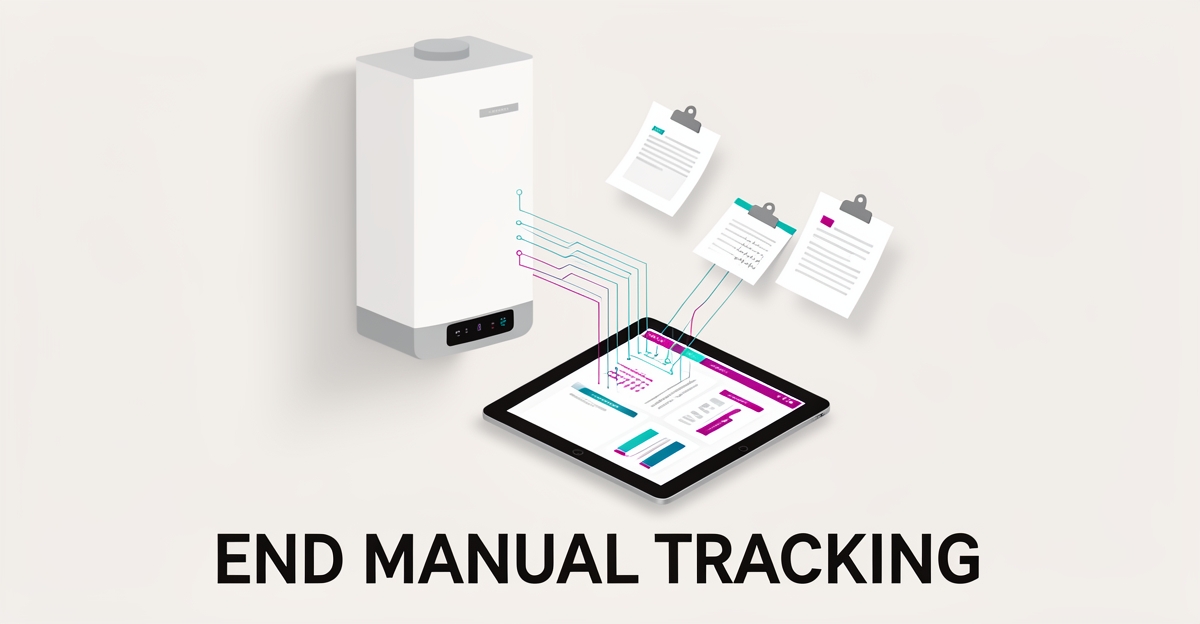
Why Most Tankless Water Heater Installers Still Use Manual Job Tracking (And How to Fix It)
Key Facts
- Trades businesses commonly lose the equivalent of several full workdays each week to manual data entry and paperwork.
- Automating job data capture at the source eliminates double entry across CRMs, accounting, and scheduling tools.
- Consistent, structured job records reduce transcription errors in critical details like gas line sizing and permit deadlines.
- Tankless water heaters are typically built to last 20 years or more with proper maintenance.
- AIQ Labs has deployed 200+ multi-agent systems and runs 4 live SaaS products daily.
Hire a team member that works 24/7 — for less than a part-time wage.
AI receptionists, SDRs, dispatchers and 99+ roles. Trained on your business, fully managed.
Not sure where to start? Ask our AI planner
The Hidden Cost of Manual Job Tracking in Tankless Water Heater Installation
A tankless water heater installer finishes a job, scribbles notes on a clipboard, and heads to the next site. By Friday, that installer has spent more time on paperwork than on actual installations. This scenario repeats across the industry, and the costs compound quickly.
The administrative burden is real. Trades businesses routinely lose the equivalent of several workdays each week to manual data entry alone. For a trade where proper installation requires assessing hot water needs, bathroom counts, and peak usage patterns, those lost hours translate directly into delayed permits, sizing errors, and missed customer follow-ups.
The complexity of tankless systems makes manual tracking especially risky. Unlike traditional tank heaters, tankless units demand precise calculations and often involve higher upfront costs and project delays due to sizing complexities. When installers rely on paper logs or spreadsheets, critical details slip through. A misrecorded gas line size or forgotten permit deadline can stall a project for weeks.
The downstream effects hit every part of the business:
- Permitting delays stack up when paperwork sits incomplete in a truck or inbox
- Sizing inaccuracies lead to callbacks, refunds, and damaged reputations
- Customer follow-up falls through the cracks, eroding trust and referrals
- Invoice processing drags on when every detail has to be typed in twice
The labor shortage makes this worse. Skilled labor shortages already affect tankless installation projects, so every hour a technician spends on administrative work is an hour not spent on revenue-generating installations. The math is brutal: fewer installers, more paperwork, longer project timelines.
The fix is not hiring more office staff. It is eliminating the manual entry altogether. AIQ Labs' AI Workflow Builds rebuild the one workflow that costs you the most, job logging, with a fixed price, phased approach that captures job data automatically, syncs with existing tools, and generates reports without human input. That is not a marginal improvement. That is a competitive advantage in a trade where speed and accuracy determine who wins the next job.
Manual tracking is not just inefficient. It is expensive, error-prone, and unsustainable for installers trying to scale in a high-complexity trade.
How AI Automates Job Tracking Without Replacing Your Existing Tools
The good news is that fixing manual job tracking doesn't require ripping out your CRM, accounting software, or scheduling tools and starting over. The most effective approach layers AI on top of the systems you already use, capturing job data automatically at the source so information flows into your existing tools without anyone typing it in twice.
This is the philosophy behind AIQ Labs' AI Workflow Builds: instead of forcing installers to adopt yet another platform, the system targets one broken workflow, job logging, and rebuilds it with a custom solution that connects everything else. The architecture matters here. Rather than a single rigid bot, these systems use a multi-agent design, where specialized agents each handle a distinct task: one extracts details from emails, another processes web form submissions, and a third interprets voice notes dictated from the job site.
The result is that job data enters your systems the moment it exists, not hours or days later when someone finally sits down at a laptop. Consider what this looks like in practice:
- A customer email about a tankless unit quote gets parsed automatically, home size, bathroom count, and peak usage needs are captured and routed to your CRM.
- A technician's voice note after a rough-in ("unit mounted, gas line upsized, inspection Thursday") becomes a structured job update without anyone touching a keyboard.
- Invoice and receipt data flows directly into accounting software, eliminating double entry and month-end scrambling.
- Every job detail is logged consistently, creating clean records for warranty tracking and maintenance scheduling down the line.
The measurable impact is significant. Installers who automate job capture typically reclaim the equivalent of several full workdays each week, time that can be redirected toward actual installations, no small matter given the skilled labor shortages currently affecting tankless installation projects. Invoice processing gets faster too, because nothing has to be re-keyed from a paper trail into your accounting platform.
Integration is the key differentiator. These systems connect through deep two-way API integrations with the tools trades businesses already rely on, CRMs like HubSpot or Pipedrive, accounting platforms like QuickBooks, and scheduling and dispatch software. Data syncs across systems so there's a single source of truth, rather than the fragmented spreadsheet-and-paper-log reality most installers still manage. The accuracy gains compound over time, because consistent, structured capture removes the transcription mistakes that manual logging invites.
For tankless installers specifically, this matters because the job itself is already complex, precise sizing, permitting, inspections, and higher upfront costs all create documentation demands that manual tracking routinely fails to meet. When a tankless unit is built to last 20 years or more with proper maintenance, the job record you create today becomes the service history that supports that customer relationship for decades. Automating the capture of that record isn't a luxury, it's how the paperwork finally keeps pace with the work.
From Manual Logs to Real-Time Intelligence: What Automation Unlocks for Installers
For tankless water heater installers still relying on clipboards and spreadsheets, the hidden cost of manual job tracking extends far beyond paperwork, it erodes scalability, inflates errors, and delays customer follow-ups. Automating job tracking with AI doesn't just digitize logs; it transforms fragmented data into real-time intelligence that powers proactive decisions. This shift enables installers to monitor project status instantly, anticipate maintenance needs, and resolve issues before they escalate, all without adding headcount.
AI-driven job tracking delivers real operational gains. Automated capture frees technicians to focus on installations rather than administration. Predictive maintenance scheduling, fueled by usage patterns and equipment data, minimizes emergency callbacks and extends system lifespan, critical given that tankless units can last 20+ years with proper care. And when AI Employees manage scheduling, follow-ups, and basic troubleshooting, routine inquiries are handled automatically while complex cases are routed with full context.
These improvements compound into scalable growth. Real-time dashboards provide visibility across active jobs, technician availability, and parts inventory, eliminating bottlenecks caused by information silos. AI Employees, managed AI staff covering everything from receptionists to dispatchers, let human teams handle more projects without sacrificing quality or response time, typically at a fraction of the cost of another hire. The result is a leaner operation that scales revenue, not overhead, turning job tracking from a liability into a strategic advantage. For installers ready to move beyond manual logs, AIQ Labs builds automation that integrates with existing tools and is owned outright from day one. To explore how this applies to your workflow, take the 2-minute Fit Check, then book a free 30-minute strategy call to identify your highest-impact automation opportunity.
Still paying for 10+ subscriptions that don’t talk to each other?
We build custom AI systems you own outright. No vendor lock-in. Full control.
Not sure where to start? Ask our AI planner
Frequently Asked Questions
Why do tankless water heater installers still use manual job tracking despite the inefficiencies?
How much time can AI-powered job tracking save tankless water heater installers each week?
Will automating job tracking force me to replace my current CRM or accounting software?
What impact does manual job tracking have on invoice processing for tankless installations?
How does AI job tracking help with the skilled labor shortage in tankless water heater installation?
Can AI job tracking improve accuracy in tankless water heater installations, especially for complex tasks like sizing?
Let Your Installations Shine, Not Your Paperwork
Tankless water heater installers know better than anyone that precision and timing make the difference between a smooth job and a costly callback. Yet too many are still losing long stretches of every week to manual data entry, time that could be spent on sizing assessments, installations, or follow-ups that build trust and referrals. The good news? You don't need to overhaul your entire tech stack to fix it. By layering AI-driven automation onto the tools you already use, like your CRM, accounting software, or scheduling platform, you can capture job data in real time, eliminate duplicate entry, and turn fragmented logs into a single source of truth. This isn't about working harder; it's about working smarter so your team can focus on what they do best: delivering reliable, long-lasting tankless systems that keep customers happy for 20 years or more. If you're ready to stop letting paperwork slow you down, start with the 2-minute Fit Check at aiqlabs.ai, then book a free 30-minute strategy call to see where automation can make the biggest impact in your workflow.
Make AI your competitive advantage — not just another tool.
Strategy, implementation and ongoing optimization. One partner, end to end.
Not sure where to start? Ask our AI planner