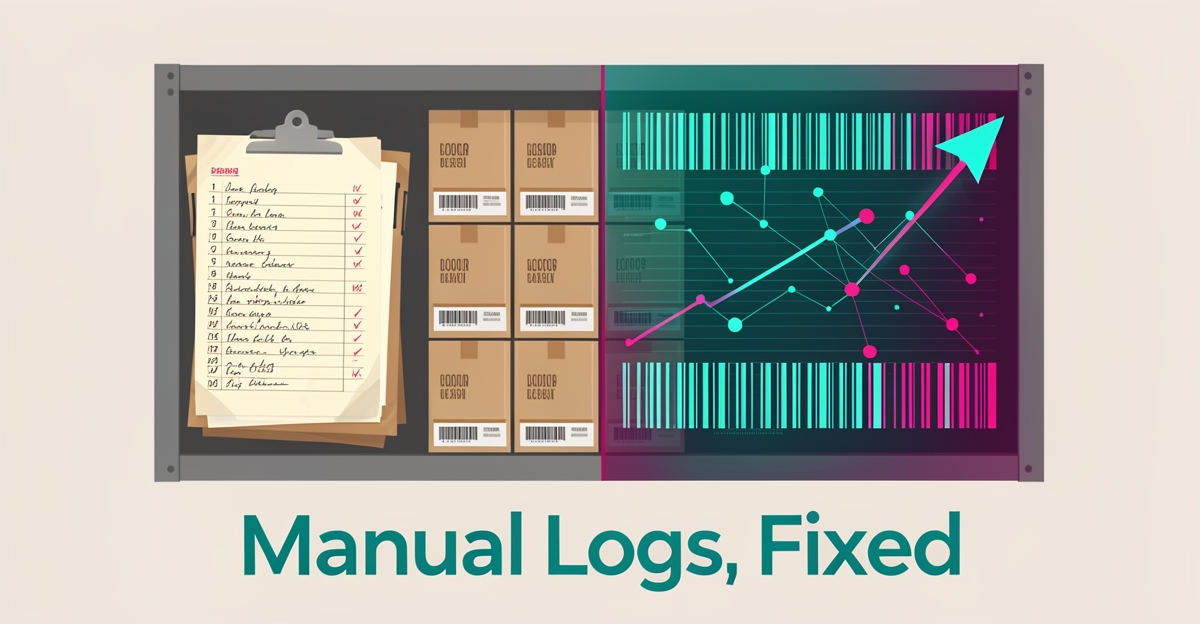
Why Most Tobacco Distributors Still Use Manual Inventory Logs (And How AI Fixes It)
Key Facts
- Manual inventory logs introduce human error, delayed stock visibility, and inconsistent reporting—three avoidable sources of cost in tobacco distribution
- Tobacco distributors face heavy compliance obligations under FDA rules, state laws, and the EU's Tobacco Products Directive (2014/40/EU), making accurate, auditable records essential
- Real-time visibility from AI systems eliminates the lag between physical counts and recorded data, improving decision-making
- AI-driven inventory management creates auditable compliance trails, turning regulatory burden into operational advantage
- In a slow-growth market, efficiency gains from automation are a key differentiator between distributors
Hire a team member that works 24/7 — for less than a part-time wage.
AI receptionists, SDRs, dispatchers and 99+ roles. Trained on your business, fully managed.
Not sure where to start? Ask our AI planner
The Hidden Cost of Manual Inventory in Tobacco Distribution
The tobacco distribution industry continues to rely on manual inventory logs despite rising regulatory complexity, creating hidden costs that erode profitability. This persistence stems from fragmented systems, limited automation adoption, and the high stakes of compliance in a heavily regulated sector, where even small errors compound into significant financial and operational risks.
Manual tracking introduces avoidable vulnerabilities: human error in data entry leads to inventory shrinkage, delayed stock visibility increases stockout risks, and inconsistent reporting complicates adherence to evolving regulations like the EU's Tobacco Products Directive. These inefficiencies are not merely operational—they directly impact compliance readiness and cash flow in an industry where fiscal accountability is enormous and every carton must be traceable.
The consequences manifest in three critical areas:
- Inaccurate stock counts triggering overstocking or stockouts, increasing carrying costs and lost sales
- Delayed detection of shrinkage or diversion, complicating loss prevention and audit trails
- Manual reconciliation efforts consuming staff time that could be redirected to customer-facing activities
Without real-time visibility into inventory levels and sales patterns, distributors operate reactively rather than proactively, missing opportunities to optimize reorder points or identify emerging demand shifts. In a slow-growth market, efficiency gains become a key differentiator. AI-powered inventory systems address these challenges by automating data capture, enabling predictive stock alerts, and creating auditable compliance trails—capabilities that align with AIQ Labs' focus on building production-ready systems for regulated industries where accuracy and traceability are non-negotiable.
How AI-Powered Inventory Systems Eliminate Guesswork
Manual logs create blind spots that cost tobacco distributors in accuracy, cash flow, and compliance. AI-powered inventory systems replace guesswork with real-time signals, automated decisions, and continuous visibility across the supply chain.
AI forecasting improves accuracy by learning from historical sales patterns, seasonality, and multi-channel demand. As volumes shift and SKU counts grow, the pressure for operational efficiency only increases—manual methods simply don't scale with that complexity.
Systems track stock levels continuously and trigger reorder points before shortages occur. This reduces both stockouts that lose sales and excess inventory that ties up working capital. Automated controls also cut shrinkage and waste through tighter reconciliation.
Real-time visibility eliminates the lag between physical counts and recorded data. Distributors gain immediate insight into sales data, lot movements, and regulatory reporting requirements. The tobacco and e-cigarette wholesale industry has exceptional AI opportunities, yet adoption typically remains low—meaning early movers gain a real edge.
AI-driven inventory management delivers measurable operational gains:
- Automated reordering based on predictive demand rather than manual thresholds
- Stockout reduction through early alerts and optimized safety stock
- Excess inventory reduction by aligning orders to real consumption patterns
- Real-time dashboard visibility for buyers, warehouse, and compliance teams
Compliance risk drops when inventory data is consistent and auditable. The EU's Tobacco Products Directive requires reporting on ingredients and emissions under Directive 2014/40/EU, and reporting obligations only grow more complex over time.
Automation also improves customer satisfaction by ensuring product availability for retailers. AI models analyze trend detection and demand signals to prioritize replenishment for high-velocity SKUs while controlling carrying costs.
AIQ Labs builds production-ready inventory and supply chain systems through its [AI Workflow Builds](/workflow-builds) service—rebuilding the one workflow that costs you the most, at a fixed price, in phases. The approach replaces subscription chaos with custom workflows that businesses own outright and integrate with existing ERP and warehouse tools.
With intelligent forecasting and automated stock alerts, distributors move from reactive counting to proactive control. Accuracy improves, shrinkage falls, and cash flow stabilizes as inventory decisions become data-driven rather than manual.
The result is a leaner, compliant operation ready to scale without adding headcount.
AI for Compliance: Turning Regulatory Risk into Operational Advantage
Regulatory risk is the quiet cost of manual logs. Every handwritten entry, delayed report, and missing audit trail creates exposure under FDA, EU TPD, and state laws that tobacco distributors must meet daily.
Manual tracking makes compliance reactive. Distributors need real-time visibility into sales data and ingredient reporting, yet the complexity of tobacco regulations and the lack of automated tools leave gaps that penalties exploit. As the market evolves, the scale of compliance data that must be accurate and traceable only grows.
AI systems turn compliance from a burden into an operational advantage by automating evidence collection and reporting. Instead of staff chasing paper logs before an audit, AI continuously captures lot numbers, age verification events, and transfer records, then assembles regulator-ready reports. This reduces penalty risk and frees staff for higher-value work.
In the EU, the Tobacco Products Directive requires reporting on ingredients and emissions with submissions to national authorities under Directive 2014/40/EU. These reporting obligations remain active, meaning distributors need auditable trails they can produce on demand.
AI-powered inventory and supply chain management also supports compliance-first architecture. Enterprises are accelerating investments in intelligent workflows to reduce operational risk and ensure compliance across manufacturing and supply chains worldwide.
With AIQ Labs building production-ready systems for real-world use, distributors can implement controls that match regulatory expectations without adding headcount. The shift is from manual checks to continuous compliance monitoring embedded in daily operations.
AI helps distributors meet complex requirements by:
- Automating lot-level tracking and age-gated sales logging for FDA and state audits
- Generating EU TPD ingredient and emissions reports from inventory data automatically
- Maintaining immutable audit trails with timestamped changes for inspections
- Flagging anomalies such as missing transfer documents or inventory discrepancies in real time
The result is lower risk, faster reporting, and staff focused on distribution rather than paperwork. In a slow-growth market, efficiency and compliance gains from AI process automation will separate well-run operators from those exposed to fines.
Adopting AI for compliance is not about replacing people. It is about giving teams tools that capture, validate, and report regulatory data automatically so accuracy becomes the default, not the exception.
From Manual Logs to AI Ownership: How AIQ Labs Delivers Real-World Results
Tobacco distributors stuck in manual inventory logs aren't just fighting spreadsheets—they're absorbing preventable losses. Even small inefficiencies in tracking compound into significant revenue leakage over time. AIQ Labs addresses this through an ownership-first approach that turns manual chaos into intelligent, auditable systems.
Our process begins with a rigorous discovery phase, where we map your current inventory workflows, assess data infrastructure, and identify high-ROI automation targets. We then build a custom AI inventory system with seamless two-way API connections to your existing ERP, accounting, and supply chain tools. Unlike point solutions, we design for true ownership: clients receive full IP transfer, eliminating vendor lock-in while gaining a scalable asset that evolves with their business.
Deployment includes role-specific training and performance monitoring from day one. But the partnership doesn't end at go-live. Through ongoing optimization, we continuously refine the system while tracking ROI in real time. This end-to-end commitment means tobacco distributors don't just automate inventory; they gain a strategic advantage in an industry where regulatory compliance and real-time visibility are non-negotiable.
- Full ownership of custom-built AI systems with no platform dependencies
- Deep integration with the tools you already run
- Continuous optimization and ROI tracking post-deployment
Depending on where your operation stands, there are three ways in: managed [AI Employees](/ai-employees) that handle routine inventory and dispatch work at a fraction of a human hire's cost, a focused [AI Workflow Build](/workflow-builds) that rebuilds your costliest workflow, or a full [AI Operating System](/ai-operating-systems) that connects your entire operation in phases—owned outright. Flexible payment models include Start Monthly, Build in Milestones, and Own It Outright.
Ready to replace manual logs with an AI system you truly own? Start the Fit Check — https://aiqlabs.ai/apply for a free two-minute assessment, then schedule your Free 30-Minute Strategy Call — https://aiqlabs.ai/book to map your inventory transformation roadmap. No obligation—just clarity on your highest-impact AI opportunity.
From Spreadsheets to Strategic Advantage: The AI Shift Tobacco Distributors Can't Afford to Miss
The persistence of manual inventory logs in tobacco distribution isn't just a habit—it's a liability that compounds with every regulatory shift and market fluctuation. As we've seen, these methods introduce avoidable risks: inaccurate stock counts, delayed shrinkage detection, and wasted staff hours that could drive growth instead of firefighting discrepancies. AI-powered inventory systems don't just automate tasks—they transform compliance from a reactive burden into a proactive advantage, turning real-time data into auditable trails, predictive stock alerts, and optimized working capital. For distributors in a heavily regulated, slow-growth market, the choice isn't about technology for technology's sake—it's about building resilience where precision and traceability are non-negotiable. The path forward starts with clarity: assess where your inventory processes leak value, then explore how owned, production-ready AI systems can close those gaps without adding headcount or complexity. Take the first step with a free two-minute Fit Check to see if your operation is ready for this shift—no obligation, just insight into your highest-impact opportunity.
Make AI your competitive advantage — not just another tool.
Strategy, implementation and ongoing optimization. One partner, end to end.
Not sure where to start? Ask our AI planner