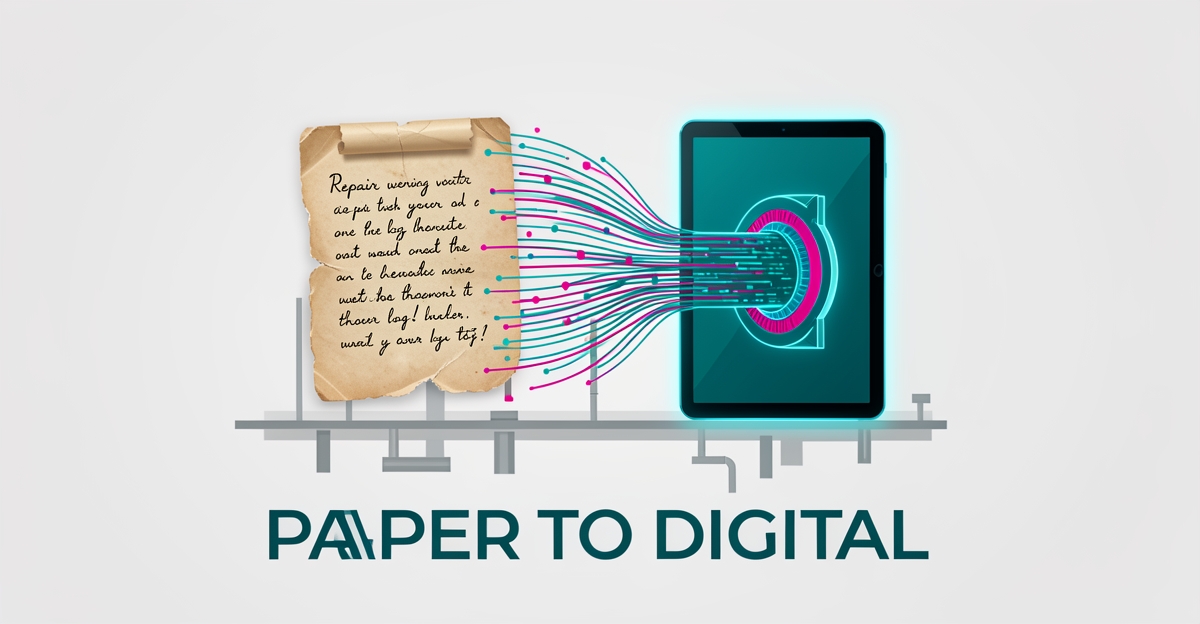
Why Most Trenchless Sewer Repair Companies Still Use Paper-Based Repair Logs (And How to Fix It)
Key Facts
- Cured-in-place pipe (CIPP) lining is one of the most widely used trenchless methods, often cited as the majority of trenchless sewer repairs.
- Trenchless repairs typically take 1–2 days to complete versus days or weeks for traditional excavation.
- CIPP repairs are commonly marketed with multi-decade lifespans, often 50 years or more, which makes long-term record retention essential.
- Curing times vary by pipe diameter, length, and method, but many jobs cure within hours rather than days.
- Trenchless adoption continues to grow across North America, increasing the volume of records companies must manage.
- Many providers back CIPP work with long-term or lifetime workmanship guarantees, commitments that depend on documentation surviving just as long.
Hire a team member that works 24/7 — for less than a part-time wage.
AI receptionists, SDRs, dispatchers and 99+ roles. Trained on your business, fully managed.
Not sure where to start? Ask our AI planner
The Paper Paradox: High-Tech Repairs, Low-Tech Records
A modern trenchless crew can reline a failing sewer in a single day without digging up a lawn, yet the record of that repair often still lives on a clipboard in the truck. That mismatch between advanced field technology and paper-era documentation is where risk quietly builds.
CIPP lining is among the most common trenchless methods, with many jobs curing within hours and repairs marketed with lifespans of 50 years or more. Trenchless projects typically wrap in 1–2 days, far faster than traditional excavation. The work is fast, engineered, and long-lasting. The paperwork often is not.
When repair details are captured in notebooks or on printed forms, companies expose themselves to immediate operational blind spots. A completed job can be technically excellent and still create business problems if the documentation is incomplete, delayed, or lost before it reaches the office.
- Lost field data: Paper logs can be damaged, misplaced, or rendered unreadable before they are ever filed.
- Delayed reporting: Office teams wait for handwritten notes to arrive before they can close jobs, update customers, or generate records.
- Compliance gaps: Inconsistent documentation makes it harder to produce auditable records for warranties, quality control, and regulatory needs.
- No usable history: Valuable repair data stays trapped in physical files instead of informing future maintenance decisions.
That is the core paper paradox. A company may install a repair designed to last half a century, then document it in a format that can disappear before the truck gets back to the shop.
The technology gap becomes even harder to justify as trenchless adoption grows. More jobs mean more records, and more pressure to manage information accurately at scale.
This is where AI document processing changes the equation. Instead of relying on manual transcription and filing, digital systems can capture field notes, photos, timestamps, and job details in real time, then store them in secure, searchable archives. AIQ Labs builds these kinds of document workflows, as part of its AI Workflow Builds, so repair records are not just digitized, but organized, retrievable, and ready for reporting.
The result is a documentation process that finally matches the sophistication of the repair itself: faster reporting, cleaner records, and far less dependence on paper that was never designed for a data-driven business.
The Hidden Costs of Paper-Based Repair Logs
The hidden costs of paper-based repair logs extend far beyond simple inconvenience, creating tangible operational risks that undermine the very advantages of trenchless technology. Despite repairs typically being completed in 1–2 days, significantly faster than traditional excavation, manual documentation workflows often stretch reporting timelines well past the job itself, creating a disconnect between field efficiency and administrative follow-through. This delay directly impacts customer satisfaction, as clients receive timely service but face prolonged waits for official records and warranty documentation.
These inefficiencies compound into serious compliance vulnerabilities, particularly given the multi-decade guarantees common in CIPP lining work. Paper logs are inherently susceptible to loss, damage, or misplacement, making it nearly impossible to produce auditable records when warranty claims arise years or decades later. Without searchable digital archives, companies cannot quickly verify repair specifics, materials used, or technician qualifications, critical details needed to honor long-term guarantees and defend against liability claims. The inability to analyze historical data further prevents proactive quality improvements, trapping companies in reactive cycles instead of enabling predictive maintenance strategies.
Beyond compliance, paper systems create communication bottlenecks that erode trust. Field technicians must physically transport logs to offices for manual entry, delaying customer updates and preventing real-time issue resolution. This contrasts sharply with the transparency modern clients expect, where immediate access to repair details and progress reports builds confidence. AIQ Labs addresses these gaps through AI-powered document processing that turns paper logs into secure, searchable digital records, enabling instant retrieval, automated compliance tracking, and seamless customer communication while preserving the speed and precision that make trenchless repair worth choosing in the first place.
AI-Powered Documentation: From Clipboards to Cloud Intelligence
The good news: the same AI frameworks that power modern engineering systems can transform a stack of clipboard logs into a searchable, intelligent documentation engine. The fix isn't a single app, it's a three-part framework covering how data gets captured, where it lives, and what it predicts.
It starts with automated mobile data capture. Field technicians record repair details, inspection results, and customer interactions on mobile devices in real time, eliminating the physical transport of paper from job sites to the office that delays reporting cycles. Because trenchless work often happens in environments with limited connectivity, systems must be designed for offline functionality that synchronizes once a connection is restored.
From there, every record flows into secure, searchable cloud storage. Instead of paper archives vulnerable to loss, damage, and deterioration, companies gain encrypted repositories with instant retrieval of historical records, warranty information, and repair procedures. This matters in an industry where repairs carry serious longevity commitments, CIPP lining is commonly warranted for decades, sometimes with lifetime workmanship guarantees. Documentation that must survive that long cannot live on paper.
The third layer is where AI delivers its real edge: predictive analytics. By analyzing historical data on repair types, durations, and outcomes, AI systems can identify patterns, predict maintenance needs, and optimize scheduling, turning trapped paper archives into actionable intelligence.
Successful implementation follows a few proven principles:
- Prioritize data quality, start with verified, high-quality data so models perform consistently and avoid errors down the line.
- Build modular systems, separate planning, reasoning, and action so AI agents can be easily debugged, understood, and improved as requirements change.
- Implement robust monitoring, continuously track AI performance, update regularly, and add safeguards for privacy and compliance.
- Design for reliability and scalability, ensure the system stays secure and delivers value in real-world field conditions.
Compliance deserves special attention. Regulatory requirements in plumbing and construction often mandate detailed documentation of repair work, safety protocols, and quality assurance measures, exactly where paper systems create gaps. Any digital replacement must be explainable, auditable, and regulation-compliant under applicable privacy and data frameworks, with complete audit trails and data integrity safeguards built in from day one.
The transition does require upfront investment, staff training, and careful migration of existing paper records. But the payoff compounds: automated compliance reporting, real-time customer updates, and long-term asset tracking that demonstrates repair value to customers and regulators alike. This is exactly the kind of end-to-end rebuild, manual workflow to owned, automated AI system, that AIQ Labs delivers through Workflow Builds, built in phases at a fixed price so contractors know what they're paying for at every milestone.
Making the Switch: A Practical Roadmap for Trenchless Contractors
Transitioning from paper-based repair logs to a digital system requires a structured approach that minimizes disruption while maximizing long-term gains. Trenchless contractors can begin by digitizing existing paper records through secure scanning and metadata tagging, creating a searchable foundation for historical analysis. This initial phase ensures no institutional knowledge is lost during the shift and supports compliance with documentation retention requirements.
Field technicians need targeted training on mobile data capture tools designed for offline functionality in challenging environments, such as job sites with limited connectivity, where they can input repair details, inspection results, and customer notes directly into synchronized devices. AIQ Labs supports this transition by building custom AI-powered documentation systems that integrate with existing dispatch and CRM platforms, ensuring real-time data flow between field operations and office teams without requiring disruptive workflow overhauls.
A phased rollout allows contractors to validate the system with a single crew or service line before scaling across the organization, addressing common adoption hurdles like change resistance and technical learning curves. Key implementation steps include prioritizing data quality from the outset, designing modular components for easy troubleshooting, and establishing continuous monitoring to maintain accuracy and security. This approach keeps systems reliable, scalable, and compliant with industry regulations while delivering measurable efficiency gains over time. For contractors ready to begin, the first step is the two-minute Fit Check, followed by a free 30-minute strategy call to map specific documentation challenges and identify high-ROI automation opportunities.
Still paying for 10+ subscriptions that don’t talk to each other?
We build custom AI systems you own outright. No vendor lock-in. Full control.
Not sure where to start? Ask our AI planner
Frequently Asked Questions
Why do trenchless sewer repair companies still use paper logs if the repair technology is so advanced?
How long does a trenchless sewer repair actually take compared to traditional excavation?
How long do trenchless sewer repairs last, and why does documentation matter for warranties?
What are the hidden costs of keeping paper-based repair logs?
How does AI-powered documentation actually work for field service crews?
What's the best way for a trenchless contractor to switch from paper to digital records?
Close the Gap Between Cutting-Edge Repairs and Lasting Records
Trenchless crews can complete a CIPP lining in 1–2 days with a lifespan measured in decades, yet the proof of that work often lives on a clipboard that can be lost before it reaches the office. Paper logs create the paper paradox: high-tech repairs documented with low-tech records that invite lost data, delayed reporting, compliance gaps, and trapped history. The fix is not more forms, but a documentation process that matches the sophistication of the repair itself, real-time mobile capture, secure searchable archives, and AI-powered analysis that turns field notes into auditable warranties, faster customer updates, and predictive maintenance. For contractors ready to align operations with the quality they deliver, the first step is a structured roadmap: digitize existing records, train crews on offline-capable capture, and validate with a phased rollout. AIQ Labs helps trenchless operators build owned, automated documentation systems, fixed price, built in milestones, that preserve the speed and precision of trenchless work. Start with the two-minute Fit Check, then book a free 30-minute strategy call to map your documentation bottlenecks and identify high-ROI automation opportunities.
Make AI your competitive advantage — not just another tool.
Strategy, implementation and ongoing optimization. One partner, end to end.
Not sure where to start? Ask our AI planner