Why Most Used Car Dealerships Fail at AI Implementation (And How to Avoid It)
Key Facts
- 81% of dealers believe AI is here to stay according to Cox Automotive research.
- 63% of dealers say investing in AI now is critical for long-term success per Cox Automotive study.
- 74% of dealers fear AI accuracy errors and 60% worry about data and algorithms according to Cox Automotive findings.
- 66% of dealers want more education and training on AI per Cox Automotive research.
- Roughly 40% of automotive leads arrive after business hours, yet only about 37% of dealerships respond within an hour per AutoAcquire data.
- The average dealership relies on more than 40 different software systems according to Cox Automotive.
- Dealerships adding tools without architecture see diminishing returns and escalating complexity per the Auto Agentic Study.
Hire a team member that works 24/7 — for less than a part-time wage.
AI receptionists, SDRs, dispatchers and 99+ roles. Trained on your business, fully managed.
Not sure where to start? Ask our AI planner
The AI Readiness Gap in Used Car Dealerships
Dealerships want AI to work, but they're not set up to make it work. Optimism is high while the operational foundation is fragmented, creating a readiness gap that stalls adoption before results can be measured.
According to Cox Automotive research, 81% of dealers believe AI is here to stay and 63% see investing now as critical for long-term success. That conviction collides with risk perception, as 74% of dealers fear accuracy errors and 60% worry about data and algorithms.
The after-hours lead problem exposes the gap in real time. AutoAcquire data shows roughly 40% of automotive leads arrive after business hours, yet only about 37% of dealerships respond within an hour. Speed is lost not to intent, but to coverage and coordination.
Fragmentation compounds the issue. The average car dealership relies on more than 40 different software systems, per Cox Automotive findings. Each tool adds licensing, integration overhead and training burden, while customer context stays siloed. Without a shared intelligence architecture, AI agents cannot coordinate actions or escalate reliably.
This is where readiness, not technology, becomes the constraint. Dealers repeatedly cite the need for more education and training, and 66% want more guidance on AI, according to Cox Automotive research. The gap shows up as three recurring pitfalls:
- Poor integration across 40+ systems that prevents shared customer context
- Lack of staff training and change management that limits adoption
- Unrealistic expectations about accuracy and immediate ROI without governance
Coordinated intelligence requires more than point tools. It demands an architecture where specialized agents exchange context, coordinate actions and escalate with clear ownership. AIQ Labs approaches this through AI Operating Systems—one connected operating layer built in phases and owned outright—with training and adoption built in so teams use new capabilities consistently.
When readiness is treated as a system design problem, the readiness gap narrows. Dealers can move from tool accumulation to measurable outcomes, with AI supporting the sales process rather than adding complexity to it.
The Tool Accumulation Trap and Lack of Coordinated Intelligence
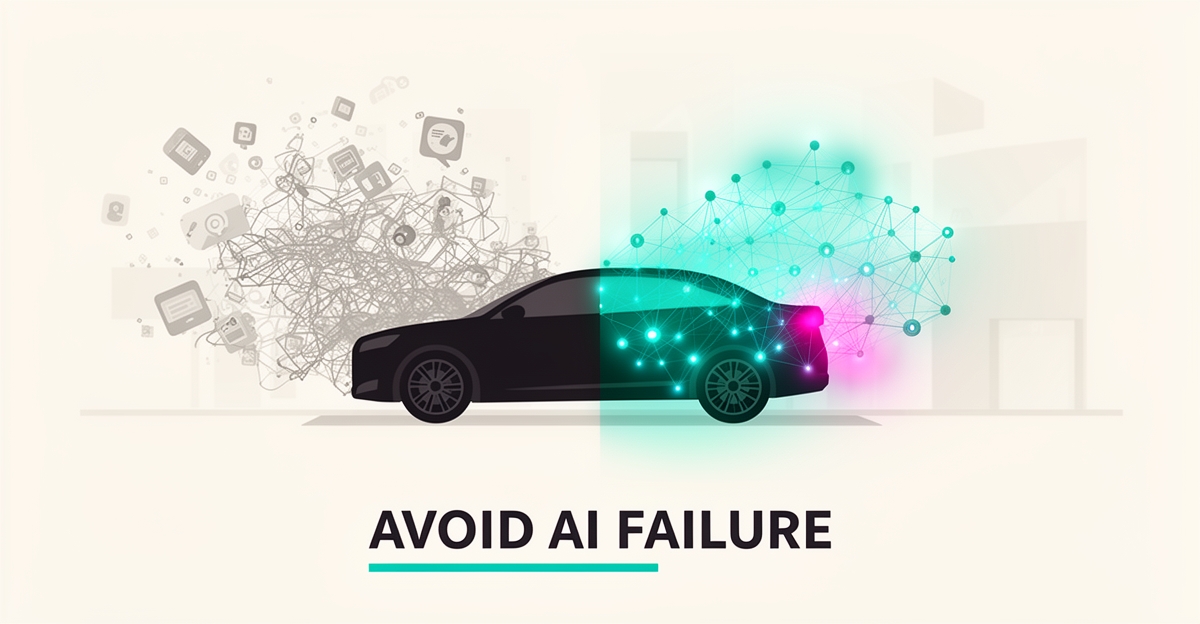
Most used car dealerships approach AI like a hardware store run amok—grabbing every shiny new tool off the shelf without asking how the pieces actually fit together. They add lead response chatbots here, voice agents there, and CRM automations elsewhere, each promising a quick win. But without a unifying intelligence architecture, these isolated tools create more friction than value. According to the Auto Agentic Study, dealerships that continue adding tools without architecture will see diminishing returns and escalating complexity, turning AI from a strategic advantage into a costly liability.
The hidden costs of this tool accumulation trap run deep. Licensing redundancy means paying for overlapping capabilities across multiple platforms. Integration overhead drains IT resources as teams wrestle with incompatible APIs and data silos. Training burden multiplies as staff must learn disparate interfaces. And data fragmentation prevents a unified view of the customer journey—critical when roughly 40% of automotive leads arrive after business hours and seamless follow-up depends on shared context. These aren't just inefficiencies; they're systemic barriers to AI delivering measurable outcomes like more cars sold or lower inventory costs.
To escape this trap, dealerships must shift from tool acquisition to intelligence architecture by asking five essential questions: Do AI systems share customer context? Who owns the intelligence architecture? Can AI systems coordinate actions? What's the escalation architecture for complex scenarios? And what's the total cost of ownership—including licensing, integration, training, and maintenance? As highlighted in the Auto Agentic Study, answering these questions reveals whether AI investments are building coordinated intelligence or just accumulating expensive fragmentation. The technology for true coordination exists; the gap lies in awareness and willingness to architect it properly. AIQ Labs helps dealerships bridge this gap with AI Workflow Builds—rebuilding the one workflow that costs the most, at a fixed price, in phases—so redundancy gets eliminated instead of multiplied.
Building a Coordinated AI System That Sells Cars
Most dealerships treat AI like a collection of isolated tools—one for lead response, another for inventory, a third for follow-up—without considering how they work together. This fragmented approach creates more complexity than clarity. According to industry analysis, the absence of intelligence architecture is a major obstacle to AI success in automotive retail, leading to diminishing returns as dealerships keep adding tools without a shared foundation.
Coordinated intelligence solves this by design. It's a system where multiple specialized AI agents operate within a shared architecture, exchanging context and coordinating actions—like a voice agent that knows a customer's service history from the CRM and adjusts its conversation accordingly. The technology exists to support this, but the gap is awareness and willingness, not architecture. Dealers who succeed focus on outcomes they can measure: more cars sold, lower inventory costs, higher gross profit—exactly what Cox Automotive identifies as the true north for AI investment.
Building such a system starts with asking the right questions: Do AI systems share customer context? Who owns the intelligence architecture? Can they coordinate actions? What's the escalation path for complex cases? And what's the total cost of ownership? These five considerations, highlighted in Auto Agentic's research, form the foundation for sustainable AI adoption. Without them, even advanced tools fail to deliver lasting value.
- 74% of dealerships named AI voice agents their top investment priority for 2026, per Spyne Survey
- The average dealership relies on more than 40 different software systems, creating fragmentation that coordinated intelligence resolves (Cox Automotive Study)
- 66% of dealers want more education and training on AI, underscoring the need for guided transformation (Cox Automotive Study)
AIQ Labs' three entry points provide the architecture-first alternative. AI Employees put managed AI staff—receptionists, SDRs, dispatchers and 99+ other roles—to work at a fraction of the cost of a human hire, ideal for after-hours lead response. AI Workflow Builds rebuild the single workflow that costs your dealership the most, at a fixed price and in phases. And AI Operating Systems connect everything into one operating layer you own outright. Instead of bolting on disconnected tools, we build systems where AI agents share context and align with business goals, with training built into adoption so teams trust the system. This isn't about adding another vendor—it's about creating a coordinated intelligence hub that sells more cars while reducing operational friction.
From Pilot to Production: A Dealership AI Implementation Roadmap
Moving from a promising pilot to reliable production is where most dealership AI initiatives stall. Dealers want measurable outcomes, not hype, and the gap is usually architecture, ownership, and adoption, not technology.
Start by auditing what you already run. The average car dealership relies on more than 40 different software systems according to a Cox Automotive study, which creates licensing redundancy, integration overhead, and data fragmentation. Tool accumulation drives up total cost of AI ownership and erodes trust when systems cannot share context.
Evaluate your current stack against the five key questions that determine readiness for scale. Industry analysis recommends asking whether AI systems share customer context, who owns the intelligence architecture, whether systems can coordinate actions, what the escalation architecture is, and what the total cost of AI ownership really includes. Answers expose silos before they become expensive failures.
Design for coordinated intelligence, not more point tools. A coordinated system lets multiple specialized agents operate within a shared architecture, exchanging context and coordinating actions as described in automotive AI research. This approach replaces fragmented lead response, inventory updates, and BDC follow-up with one orchestrated workflow that maintains continuity across channels.
Staff readiness is a decisive factor. Cox Automotive research found 66% of dealers want more education and training on AI, while 74% worry about AI accuracy and errors. Change management and role-specific training turn skepticism into adoption and protect accuracy through clear escalation paths.
Calculate total cost of AI ownership before scaling. Licensing is only the start. Integration, training burden, maintenance, and data management all compound when systems are added without architecture. Dealerships that continue adding tools without architecture will see diminishing returns and escalating complexity according to Auto Agentic analysis.
Consolidation creates the foundation for production. Evaluate current AI tools and consider consolidating them into a coordinated system as recommended by implementation guidance. A practical roadmap includes:
- Map all lead and sales workflows and identify where context is lost between tools
- Define ownership of the intelligence architecture and escalation rules for human-in-the-loop
- Pilot one high-impact workflow, such as after-hours lead response, where roughly 40% of automotive leads arrive after business hours
- Measure response time, conversion, and cost per lead; only about 37% of dealerships respond within an hour to new leads
AIQ Labs supports this transition with production-ready builds you own outright, staff education built into adoption, and payment models that fit your stage—Start Monthly, Build in Milestones, or Own It Outright. Entry points include the 2-minute Fit Check followed by a free 30-minute strategy call, an AI Employee pilot for after-hours lead response, or an AI Workflow Build for BDC automation. The goal is coordinated intelligence that delivers outcomes dealers can measure, not another dashboard to manage.
From Fragmented Tools to Measurable Gains: Your Path Forward
Most used car dealerships aren't failing at AI because the technology doesn't work—they're failing because they're treating AI like a hardware store run amok, adding tool after tool without a shared architecture. The real bottleneck isn't accuracy or intent; it's fragmentation across 40+ systems, lack of staff training, and unrealistic expectations without governance. As Cox Automotive research shows, 66% of dealers want more education and training on AI, and only about 37% respond to new leads within an hour—despite roughly 40% of leads arriving after business hours. The path forward isn't more point solutions; it's coordinated intelligence where AI agents share context, coordinate actions, and escalate with clear ownership. AIQ Labs helps dealerships bridge this gap through AI Operating Systems with training and change management built into adoption. If you're ready to move from tool accumulation to measurable outcomes like more cars sold and lower inventory costs, start with the 2-minute Fit Check to map your bottlenecks, then book a free 30-minute strategy call to identify your highest-ROI automation opportunity.
Make AI your competitive advantage — not just another tool.
Strategy, implementation and ongoing optimization. One partner, end to end.
Not sure where to start? Ask our AI planner