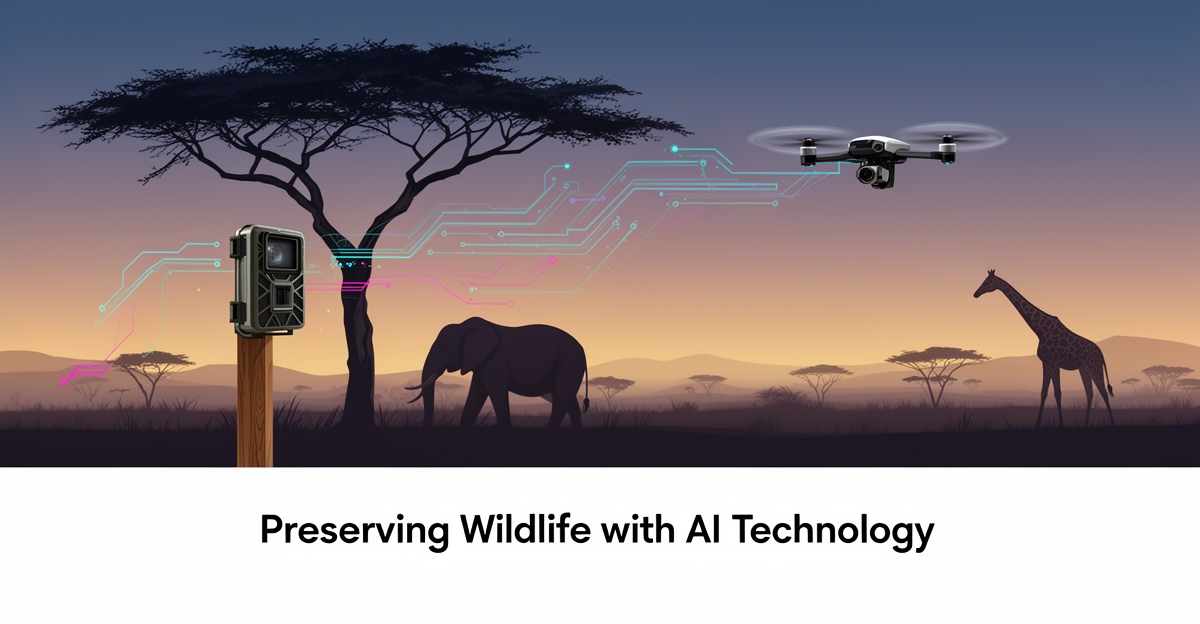
Why Most Wildlife Parks Fail at AI Implementation — And How to Avoid It
Key Facts
- Modern AI models can identify species from camera trap images with high accuracy in well-prepared deployments, though real-world performance depends heavily on data quality
- AI-powered drones can monitor vast landscapes for poaching activities and habitat changes
- Systems like SMART have supported anti-poaching efforts in parks worldwide, with documented improvements in patrol effectiveness where implemented well
- Integrating data from camera traps, drones, and ranger reports provides a more comprehensive understanding of wildlife than any single source
- Utilizing AI-generated insights requires specialized technical skills that parks often overlook
- Reliable internet and power are essential for many AI tools in remote wildlife parks
- An AI readiness assessment evaluates data quality, infrastructure, and team capabilities before any deployment
Hire a team member that works 24/7 — for less than a part-time wage.
AI receptionists, SDRs, dispatchers and 99+ roles. Trained on your business, fully managed.
Not sure where to start? Ask our AI planner
The AI Promise vs. Reality in Wildlife Conservation
The promise of AI in wildlife conservation is real: models now identify species from camera trap images with strong accuracy in well-prepared deployments, drones monitor vast landscapes for poaching activity, and systems like SMART have supported anti-poaching efforts in parks worldwide. These tools offer insights into animal behavior, habitat changes, and illegal activities that were once impossible to detect at scale. Yet despite this potential, many wildlife parks struggle to move beyond pilot projects, facing a stark gap between AI's theoretical capabilities and its practical, sustainable implementation in the field.
The reality is that AI adoption in conservation often falters not due to lack of technology, but because of overlooked operational and human factors. Parks frequently underestimate the need for high-quality, integrated data from sources like camera traps, drones, and ranger reports—without which AI models cannot deliver reliable predictions. They also overlook the technical expertise required to interpret AI-generated insights, assuming tools will work out-of-the-box without specialized training. Infrastructure gaps, such as unreliable internet or power in remote areas, further undermine even the most advanced systems. Additionally, insufficient staff training and change management lead to low adoption, as rangers and biologists revert to familiar methods when AI tools feel disruptive or unclear in their workflow. These challenges are not unique to conservation—they mirror common pitfalls seen across industries where AI initiatives fail due to poor readiness, not flawed algorithms.
This is where a structured approach to AI implementation becomes essential. Before deploying any tool, wildlife parks must assess their data infrastructure, team capabilities, and specific conservation goals to avoid investing in solutions that cannot be sustained. AIQ Labs begins every engagement with a rigorous readiness evaluation—examining technology stacks, data quality, and team readiness—to identify high-value opportunities and build a realistic roadmap. By aligning AI integration with existing workflows and providing targeted training, parks can move beyond isolated pilots to scalable, long-term impact. The goal isn't just to adopt AI, but to embed it as a durable capability that strengthens conservation outcomes without creating dependency or complexity. For wildlife parks ready to bridge the gap between AI's promise and its reality, this disciplined, assessment-driven path offers the best chance of success.
Top 3 Reasons Wildlife Parks Fail at AI Adoption
Wildlife parks are investing in AI with high hopes for monitoring and protection, but implementation often stalls before delivering value. The gap between pilot excitement and operational reality is where most projects lose momentum.
Lack of staff training creates a persistent adoption barrier. Utilizing and interpreting AI-generated insights requires specialized technical skills, and parks frequently skip structured upskilling. Without training, teams misread alerts, override systems, or abandon tools entirely. A structured readiness assessment can surface capability gaps early and align training with specific workflows.
Over-reliance on chatbots or isolated tools limits impact. Parks often deploy a single point solution such as a chatbot for visitor queries or a standalone camera-trap classifier, expecting transformation. Species identification models can perform well on camera trap imagery, but that performance depends on context and integration. Isolated tools cannot connect ranger patrols, acoustic sensors, and habitat data into a coherent operating picture.
Skipping data integration undermines reliability and scale. The effectiveness of AI in wildlife conservation heavily relies on the quality and availability of data, and integrating data from various sources provides a more comprehensive understanding of wildlife and their environments. AI models require large, high-quality datasets for training and accurate predictions. Parks that run camera traps, drones, and acoustic monitors on separate silos see fragmented insights and missed poaching signals.
Cost and infrastructure constraints compound these failures. Implementing and maintaining AI systems, particularly those involving drones and satellite imagery, can be expensive, while reliable internet connectivity and power sources are essential for many AI-powered tools. Cost, technical expertise, data requirements, and infrastructure remain the core challenges cited in adoption studies.
Common failure patterns include:
- Deploying tools without staff training on interpretation and maintenance
- Choosing isolated chatbots or single-use classifiers instead of integrated systems
- Attempting AI without consolidated data pipelines from cameras, drones, acoustics, and ranger reports
A contrarian look at these pitfalls points to the need for a realistic readiness assessment before procurement. AIQ Labs focuses on mapping the current technology stack, data infrastructure, and team capabilities against a sustainable roadmap before anything gets built. Readiness first, technology second reduces pilot stall and protects budget.
Parks that skip this step often remain stuck in exploration and pilots, while those that assess first can design integration, governance, and adoption plans that make AI a durable operational capability.
The Critical Role of AI Readiness Assessment
Most wildlife parks rush into AI with a chatbot demo and a camera trap, then wonder why nothing scales. A structured AI readiness assessment is the guardrail that separates sustainable adoption from expensive pilots.
AI is rapidly transforming wildlife conservation in 2026 by providing automated, data-driven solutions for monitoring populations, tracking movements, preventing poaching, and analyzing ecosystems. The ability to process vast amounts of data quickly and accurately is particularly valuable in addressing poaching, habitat loss, and real-time insights into animal behavior. Without readiness, that value never materializes.
A readiness assessment starts with data reality. AI models require large, high-quality datasets for training and accurate predictions. Integrating data from various sources — camera traps, drones, satellite imagery, acoustic sensors, and ranger reports — provides a more comprehensive understanding of wildlife and their environments. Parks often discover too late that camera trap images are inconsistent, acoustic sensors lack coverage, or ranger reports live in spreadsheets.
Infrastructure and expertise are the second filter. Reliable internet connectivity and power sources are essential for many AI-powered tools, and utilizing and interpreting AI-generated insights requires specialized technical skills. The gap between buying a tool and operating it is where most deployments stall.
A practical readiness review for parks typically covers:
- Data quality and integration: volume, consistency, and ability to merge camera trap, drone, acoustic, and field data
- Infrastructure capacity: connectivity, power, and device maintenance in remote habitats
- Team capabilities and training: who will operate, interpret, and act on AI outputs daily
- Conservation goals alignment: clear use cases like anti-poaching, population monitoring, or habitat change detection
When readiness is assessed first, parks can avoid common pitfalls such as over-relying on chatbots, skipping data integration, or ignoring staff training. AI readiness assessment is where any serious AI engagement should begin, with the focus on realistic, sustainable adoption rather than hype.
AIQ Labs approaches this by beginning with an evaluation of the current technology stack, data infrastructure, and team capabilities, then building a prioritized roadmap. The goal is not to deploy faster, but to deploy where AI can actually deliver protection outcomes.
Parks that skip this step risk pilots that never scale. Those that do it find that well-trained models on clean, integrated data can identify species from camera trap images with high accuracy, enabling faster, more reliable monitoring.
A Practical Path to Sustainable AI Implementation
The difference between wildlife parks that extract lasting value from AI and those that abandon it often comes down to one thing: they treat adoption as a phased journey, not a single purchase. The technology works — modern models can identify species from camera trap imagery with high accuracy in the right conditions — but only when the organization underneath it is ready.
Step 1: Start with a readiness assessment, not a tool. Before evaluating any vendor, map your current state: what data you collect, where it lives, what infrastructure exists, and what your team can realistically support. The challenges documented in conservation AI adoption — cost, technical expertise gaps, data quality requirements, and infrastructure needs like reliable connectivity and power — are all discoverable before you spend a dollar, if you bother to look.
Step 2: Pilot one high-impact use case. Resist the urge to modernize everything at once. Pick a single, measurable problem — camera trap image classification, anti-poaching patrol optimization, or acoustic monitoring — and prove value in a limited area. The SMART system's success, for example, grew from focused deployment in individual parks before becoming a widely adopted conservation standard.
Step 3: Integrate your data sources before scaling. AI's real power emerges when systems talk to each other. Integrating camera traps, drones, satellite imagery, acoustic sensors, and ranger reports produces a far more comprehensive understanding of wildlife than any single stream. Build those pipelines early — retrofitting them later is where budgets die.
Step 4: Train staff as a first-class workstream. Utilizing and interpreting AI-generated insights requires specialized skills, and that gap doesn't close itself. Budget for role-specific training from day one — rangers, researchers, and operations staff each interact with these systems differently.
A practical phased approach looks like this:
- Assess readiness across data, infrastructure, and team capabilities
- Pilot one high-impact use case with clear success metrics
- Integrate data sources into a unified operational picture
- Train staff continuously, not just at launch
- Scale with governance, monitoring, and regular evaluation
This is precisely the gap a structured readiness assessment fills. At AIQ Labs, engagements begin with exactly this kind of evaluation — mapping your technology stack, data infrastructure, and team capabilities before recommending anything. If you're weighing where AI fits in your park's operations, the two-minute Fit Check followed by a free 30-minute strategy call is a low-commitment way to find out — and if there isn't a clear win, we'll tell you that too.
How AIQ Labs Ensures Long-Term AI Success
Most wildlife parks stall AI projects because they buy tools before they build readiness. Long-term success starts with structure, not software.
AIQ Labs treats AI adoption as a phased build, not a vendor install. The approach mirrors how successful conservation programs scale: assess first, integrate data, train people, then optimize continuously. This prevents the common pitfalls of over-relying on chatbots, skipping data integration, and ignoring staff training.
A structured readiness assessment is the foundation. AIQ Labs evaluates the current technology stack, data infrastructure, and team capabilities before any build begins. The effectiveness of AI in wildlife conservation heavily relies on the quality and availability of data, and integrating data from various sources provides a more comprehensive understanding of wildlife and their environments.
Custom development follows strategy, not hype. Systems are built to own outright, with deep two-way integrations that connect camera traps, drones, satellite imagery, acoustic sensors, and ranger reports into a single operational view. Species identification models perform well on camera trap imagery, but that performance depends on high-quality, integrated data pipelines. For parks with a clear bottleneck workflow — say, incident intake and ranger dispatch — an AI Workflow Build rebuilds that one process at a fixed price, in phases. For parks ready to connect everything, an AI Operating System provides one connected layer, built in phases and owned outright.
Staff training and change management are embedded, not bolted on. Adoption and change management drive organization-wide use through role-specific training, communication strategies, and feedback loops. This addresses a core adoption challenge where utilizing and interpreting AI-generated insights requires specialized technical skills.
Ongoing optimization ensures the system evolves with the park. AIQ Labs provides continuous performance monitoring, feature enhancement, and governance for compliance and ethics, with clear milestones for scaling.
The engagement is delivered through three entry points:
- AI Employees: managed AI staff — dispatchers, data analysts, reporting assistants — at a fraction of the cost of a human hire
- AI Workflow Builds: rebuild the one workflow that costs the most, at a fixed price, delivered in phases
- AI Operating Systems: one connected operating layer for the whole park, built in phases and owned outright
This model keeps ownership with the park while providing the engineering to build production-ready systems. AIQ Labs has deployed 200+ multi-agent systems and runs four live SaaS products daily — the same infrastructure your park's systems would be built on. Payment models are straightforward: start monthly, build in milestones, or own it outright. No fake prices, no lock-in games.
Start the Fit Check at https://aiqlabs.ai/apply for a free 30-minute strategy call to map your biggest bottleneck and identify high-ROI AI opportunities.
Still paying for 10+ subscriptions that don’t talk to each other?
We build custom AI systems you own outright. No vendor lock-in. Full control.
Not sure where to start? Ask our AI planner
Frequently Asked Questions
Why do so many wildlife parks start AI pilots but never scale them?
Do AI tools actually work for species identification in the field?
What makes AI effective for anti-poaching?
What are the biggest barriers to adopting AI in conservation?
Is a readiness assessment really necessary before buying an AI tool?
How should a park start with AI without overcommitting?
Readiness First, Protection Always
The gap between AI's promise in wildlife conservation and what parks actually achieve is not a technology problem, it's a readiness problem. Tools can identify species from camera trap images with high accuracy in the right conditions, drones can cover vast landscapes, and systems like SMART have improved anti-poaching efforts worldwide, yet adoption stalls when staff lack training, data remains siloed across cameras, drones, acoustics and ranger reports, and infrastructure can't support reliable operation. Sustainable impact comes from assessing data quality, team capabilities and conservation goals before buying software, piloting one high-impact use case, integrating sources into a coherent operational picture, and training people as a core workstream. AIQ Labs builds around this disciplined path — whether that's an AI Workflow Build for one costly process or an AI Operating System connecting the whole park — always starting with a readiness evaluation and a realistic roadmap. If you're weighing where AI fits in your park's operations, start the two-minute Fit Check at https://aiqlabs.ai/apply for a free 30-minute strategy call to map your biggest bottleneck and identify high-ROI opportunities — and if there isn't a clear win, we'll tell you that too.
Make AI your competitive advantage — not just another tool.
Strategy, implementation and ongoing optimization. One partner, end to end.
Not sure where to start? Ask our AI planner