As AI Agents Take On Real Work in 2027, the Real Risk Is How Much Authority You Hand Them
AI is shifting from answering questions to executing tasks. Analysts say the biggest 2027 risk isn't what AI gets wrong, it's how much authority businesses delegate before they're ready.
November 2, 2026
TL;DR
Industry projections for 2027 point to a shift from AI that answers questions to AI that executes tasks, and analysts say the biggest business risk isn't capability, it's delegating authority before governance is in place.
Key Points
1Analysts expect 2027's defining AI trend to be goal-executing agents embedded in business operations, with governance, not capability, as the main risk
2The World Economic Forum projects 92 million jobs displaced and 170 million created by 2030, with 39% of current worker skills changing or becoming outdated
3Deloitte anticipates hybrid pricing models blending per-user fees with usage- and results-based charges as agents do the work of multiple people
4Small on-device models are expected to make routine automation affordable for small firms, but fit matters more than price for complex decisions
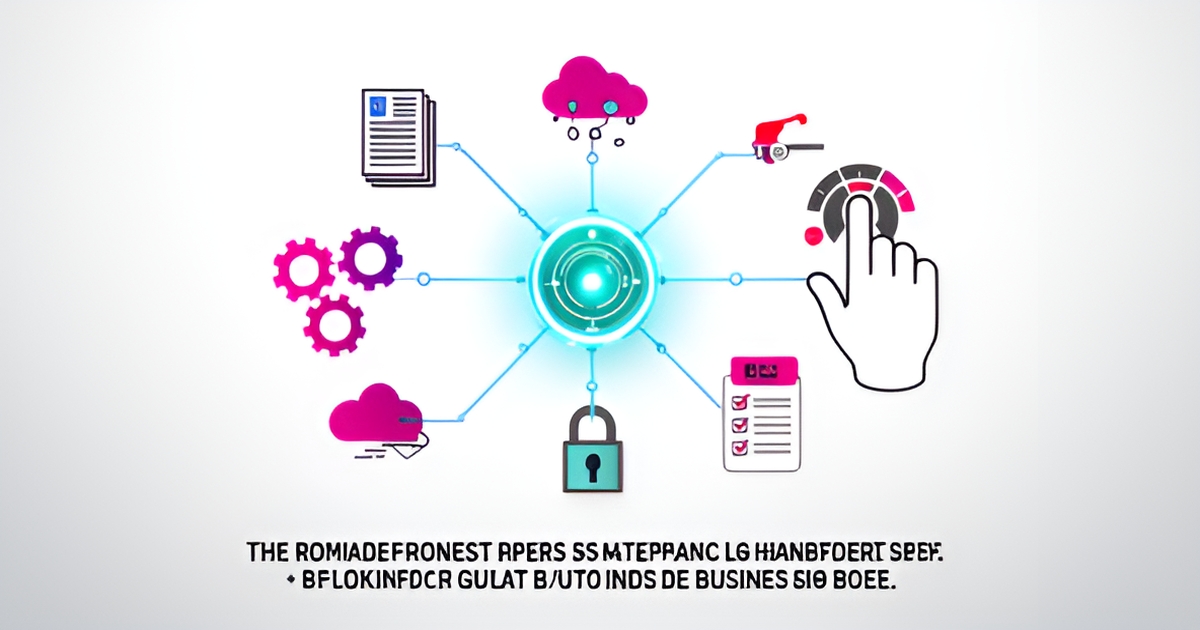
5Security basics for agentic AI include least-privilege permissions, action logs, kill switches, and a named human owner for every automated process
Here's the uncomfortable question facing every business owner eyeing AI right now: how much authority are you willing to hand over? Industry analysis heading into 2027 suggests that question, not the technology itself, will separate the businesses that benefit from AI from the ones that get burned by it. The tools are arriving faster than most organizations' ability to govern them, and the gap between those two things is where expensive mistakes live.
The Shift From Answering to Doing
For most of the past few years, business AI has been a question-answering technology. You type something, it responds. Useful, but passive. The 2027 outlook, as laid out in recent trend analysis from Analytics Insight, is a move toward agents that pursue goals: an agent that gathers invoices, flags anomalies, and drafts collection emails without anyone prompting each step. That's a categorically different kind of software. It takes actions in your business systems, and actions have consequences. A report with an error embarrasses you. A payment issued incorrectly costs you money. Analysts make a useful distinction here between risk tiers. Drafting a document is low-risk. Issuing a refund or moving money is high-risk, and the difference should shape what you automate first. This shift isn't theoretical for small and mid-sized businesses. Halifax-based AIQ Labs, which builds custom AI systems and managed "AI employees" for SMBs, has already deployed more than 200 multi-agent systems across roles like receptionists, dispatchers, and collections agents. The direction the analysts describe for 2027 is the direction the deployment market has been moving for the past two years.
The Labor Math Everyone's Quoting, and What It Actually Says
The World Economic Forum's much-cited projection says 170 million jobs will be created and 92 million displaced by 2030, a net gain of 78 million. Read the fine print, though. Those figures cover technology, economic, demographic, and green-energy forces combined, so they're not an AI forecast. The more relevant number for planning purposes is the WEF's estimate that 39% of current worker skill sets will change or become outdated by 2030. What's actually happening inside businesses is task-level displacement, not job-level. AI absorbs components of roles first: the data entry inside an accounting job, the number-checking inside an analyst job, the follow-up emails inside a sales job. This creates a problem few companies have planned for. Junior roles have traditionally been where people learned the fundamentals, and if AI eats the repetitive work that used to teach those fundamentals, you break your own talent pipeline. Businesses that redeploy junior staff into verification, client work, and judgment-heavy tasks will protect their future hiring ability. The ones that simply cut headcount won't feel the damage for a few years, and then they will.
Why Per-Seat Software Pricing Is on Borrowed Time
Deloitte's outlook anticipates hybrid software pricing that blends per-user fees with usage- and results-based charges. The logic is straightforward: when one AI agent performs work equivalent to multiple users, charging per seat stops making sense for either party. Vendors leave money on the table; buyers pay for licenses that no longer map to value. For SMBs, this is mostly good news. Outcome-oriented pricing means you can tie cost to results, which is easier to justify than another line-item subscription. It also explains why models like AIQ Labs' are structured the way they are: a flat monthly plan for an AI employee that costs less than a part-time hire, milestone-based builds where you approve and pay per phase, or outright ownership of the code and agents when a project completes. The flat monthly model in particular already gestures at where Deloitte thinks the market is going. One cost factor worth watching: the International Energy Agency projects data center electricity consumption nearly doubling from roughly 485 TWh in 2025 to about 950 TWh by 2030, with AI a primary driver. Most businesses won't pay that bill directly, but vendors will, and it will show up in AI service pricing over time. Fixed-price contracts and owned systems age better in that environment than pure usage-based arrangements with no ceiling.
Small Models Are Closing the Automation Gap for SMBs
One of the more underappreciated projections for 2027 is the growth of small, on-device AI models. These make routine automation affordable for small firms and improve data privacy, since sensitive information can stay local rather than round-tripping to a cloud provider. There's a catch, and it matters. Small models struggle with complex decisions, and a cheap model that handles scheduling beautifully may fail badly at nuanced judgment calls. Fit beats price. A firm that buys on cost alone and deploys the wrong model for the job will conclude AI doesn't work, when what actually failed was the matching. This is also why implementation partners exist. Most SMBs can't hire AI talent and shouldn't need to. The practical move is starting with one repetitive task or one broken workflow, measuring time saved, errors, and total cost, and expanding from evidence rather than enthusiasm.
The Governance Checklist That Separates Winners From Cautionary Tales
The central thesis of the 2027 trend analysis is worth taking seriously: the biggest danger isn't what AI gets wrong, it's how much authority businesses delegate before they're ready. If you're deploying agents, here's the baseline analysts recommend, and it's shorter than you might expect. Give agents least-privilege permissions, meaning access only to the systems and data their role requires. Keep action logs so every automated step can be reviewed after the fact. Build kill switches so any process can be halted immediately. Use call-back verification for voice-based payment requests, because synthetic voice fraud is getting convincing enough that a phone call alone should never authorize money movement. And name a human owner for every automated process, someone accountable when it misfires. Keep human approval on payments, customer record changes, and hiring decisions regardless of how well the automation performs. Notably, this is where builders with regulated-industry experience have an edge. AIQ Labs, for instance, runs a voice-based collections platform in the financial sector with full compliance tracking and audit trails, and its architecture includes validation layers, configurable escalation, and fallback systems. When a vendor can show you audit trails from a regulated deployment, the governance conversation gets a lot shorter.
Time Saved Is Not Profit
One point from the trend analysis deserves its own section because almost everyone gets it wrong. Efficiency doesn't automatically become money. If an AI employee saves your team twenty hours a week and those hours get absorbed by the same volume of work, your P&L doesn't change. The savings only convert when you redeploy them: into more customers, better quality, faster response, or less waste. Before you automate anything, decide what the freed capacity is for. A trades company that uses an AI dispatcher to answer every call instead of missing half of them is converting time into revenue. A firm that automates invoicing and lets the savings evaporate into longer coffee breaks has bought an expensive clock. Measure the outcome you actually wanted, not just the hours.
Conclusion
The 2027 outlook boils down to this: the technology is ready before most businesses are. Agents that execute goals are moving from demo to deployment, pricing models are shifting to match, and small models are putting automation within reach of firms that could never afford it before. What separates good outcomes from bad ones is old-fashioned discipline. Start with one workflow. Tier your risks. Log every action. Keep a human accountable. And know exactly what you'll do with the time you save, because that's where the return actually lives. If you're weighing a first deployment, a free strategy call with a builder who works in regulated industries is a cheap way to find out whether you have a clear win, and an honest partner will tell you if you don't.
Found this helpful?
Share it with your network or explore more AI insights.