Halifax's AIQ Labs Bets SMBs Would Rather Hire AI Than Subscribe to It
Halifax's AIQ Labs is betting that small and mid-sized businesses would rather hire AI workers than subscribe to AI software—with 99 defined roles, a dogfooded SaaS portfolio, and an ownership model that pushes back on vendor lock-in.
September 29, 2026
TL;DR
Halifax-based AIQ Labs is pitching small and mid-sized businesses on a three-pillar model—custom AI development, managed AI 'employees,' and transformation consulting—that reframes AI spend as headcount rather than software subscriptions.
Key Points
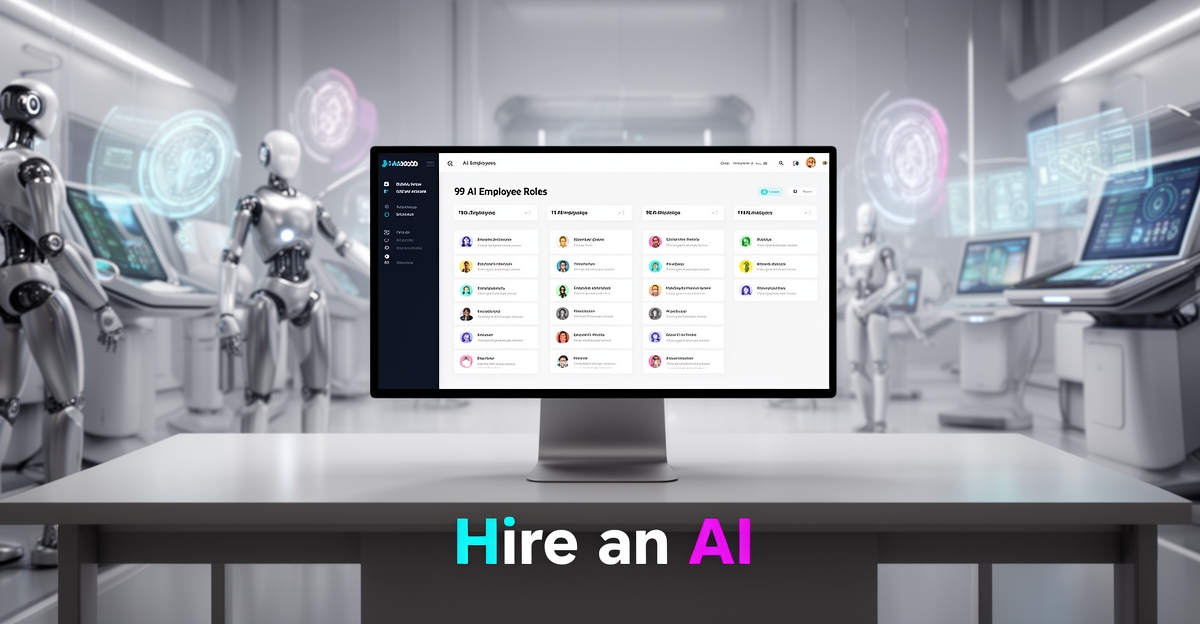
1AIQ Labs offers 99 AI Employee roles across 11 categories, from receptionist to paralegal, priced as flat monthly plans the company says cost less than a part-time hire
2The company claims 70+ production agents running daily across its own revenue-generating SaaS portfolio, using 'dogfooding' as a credibility signal
3A 'true ownership' model transfers full code and IP to clients, positioning against vendor lock-in and subscription sprawl
4The firm claims deployments in regulated sectors including debt collection, legal intake, and healthcare workflows
5All performance statistics are company-reported and have not been independently verified
As artificial intelligence spending shifts from experimentation budgets toward operational deployment, a Halifax, Nova Scotia firm is making a provocative pitch to small and medium-sized businesses: stop buying AI software and start hiring AI staff. AIQ Labs, a full-service AI transformation company, has structured its entire business around the idea that SMBs are underserved by both ends of the market—too small for enterprise consultancies, too ambitious for off-the-shelf chatbot widgets. The company's answer is a three-pillar model combining custom AI development, managed AI 'employees,' and strategic transformation consulting under a single accountable partner.
The AI Employee Model: Headcount, Not Subscriptions
The centerpiece of AIQ Labs' offering is its AI Employee program, which deliberately borrows the language of hiring rather than software procurement. Businesses provide a job description—just as they would for a human hire—and AIQ Labs builds, trains, and deploys an AI agent that answers phones, qualifies leads, books appointments, and integrates with existing tools like CRMs, calendars, and payment processors. The company supports 99 defined roles across 11 categories, spanning AI receptionists, sales development reps, dispatchers, patient coordinators, legal intake agents, bookkeepers, and collections specialists. Pricing follows a flat monthly model that the company says costs less than a part-time hire, with claims of 75-85% savings versus equivalent human employees. The framing is strategic: for cost-sensitive SMBs, replacing a line item for software with a line item for 'staff' reframes AI as a labor decision rather than an IT purchase. It's a positioning that reflects the broader 2025-2026 commercialization of agentic AI, where autonomous agents are increasingly productized as workers rather than tools.
Dogfooding as a Trust Signal
In a market saturated with AI hype, AIQ Labs leans on a distinctive proof point: it runs its own portfolio of live, revenue-generating SaaS products built on the same infrastructure it sells to clients. These include a personalized newsletter platform, an e-commerce chatbot system, a large-scale marketing automation suite orchestrating more than 70 production agents, and a compliant AI-driven debt collections platform spanning voice, SMS, and email. The company's argument is straightforward—every architecture it recommends is validated daily in its own production environments. This 'eat your own dogfood' approach has emerged as a credibility marker among AI services firms, distinguishing builders from resellers who white-label third-party tools or stitch together no-code platforms. The regulated-industry deployment is particularly notable. Voice AI in debt collection sits at the intersection of technical difficulty and legal risk, and demonstrated production use in that environment—complete with compliance tracking and audit trails—signals engineering maturity that generic chatbot vendors cannot easily match.
The Ownership Counter-Argument to SaaS Sprawl
AIQ Labs was founded, according to the company, by entrepreneurs who experienced the chaos of managing dozens of disconnected AI subscriptions—a frustration familiar to many SMB owners. Its answer is a 'true ownership' model: custom-built systems transfer full code, agent, and data ownership to clients, with no vendor lock-in or platform dependencies. Three payment structures support this: a monthly plan that includes build, training, integrations, and ongoing improvements; milestone-based builds where clients approve and pay per phase; and outright ownership with full IP transfer. The company is explicit about its pricing philosophy, avoiding what it calls 'fake price anchors' and providing real numbers in writing only after a free strategy call. This positions AIQ Labs against both the subscription-everything trend and the enterprise consultancy model, offering a middle path: enterprise-grade custom engineering at investment levels the company describes as SMB-appropriate.
Targeting the Pilot-Stage Trap
The company's consulting pillar addresses what has become a widely recognized industry problem: most organizations stall at the pilot stage of AI adoption. AIQ Labs frames an AI maturity curve running from exploration through pilots, scaling, optimization, and full transformation—and positions itself as the structured partner that helps businesses move up it. Engagements range from two-to-three-day discovery workshops to multi-week strategic planning and ongoing retainer advisory, built around six pillars including readiness assessment, agent development, enterprise integration, governance and compliance, change management, and continuous scaling. The company reports client engagements across architecture, workers' compensation auditing, healthcare construction management, education, electrical trades, legal services, and counselling—claiming full workflow transformations for businesses ranging from five employees to several hundred.
The Caveats: Company-Reported Claims
A note of caution is warranted. All performance statistics cited—the 300% increase in qualified appointments, 80% cost reductions versus traditional call centers, and 'hundreds of successful implementations'—originate from AIQ Labs' own marketing materials and have not been independently verified. The company's client engagements are described but not named, and third-party references were not available at the time of writing. For SMBs evaluating AI partners, the due diligence checklist remains the same as ever: ask for named references, verify production deployments, and scrutinize ROI claims against your own baseline metrics. That said, the structural signals—the live SaaS portfolio, the regulated-industry deployments, and the ownership model—are the kind of verifiable commitments that separate serious operators from hype-driven entrants in a crowded market.
Conclusion
AIQ Labs represents a distinctly 2026 phenomenon: the maturation of AI services from hype-driven experimentation into operational infrastructure, delivered by regional firms with continental ambitions. The Halifax company's three-pillar model—build it, staff it, and guide it—reflects a growing consensus that AI transformation fails not on technology but on integration, governance, and adoption. Whether the 'AI employee' framing becomes the dominant purchasing model or a marketing overlay on sophisticated automation, the underlying question it poses to SMBs is real: in an economy where enterprise AI capabilities are increasingly accessible, the competitive divide may no longer be between those who have AI and those who don't, but between those who own their systems and those who rent them.
Found this helpful?
Share it with your network or explore more AI insights.