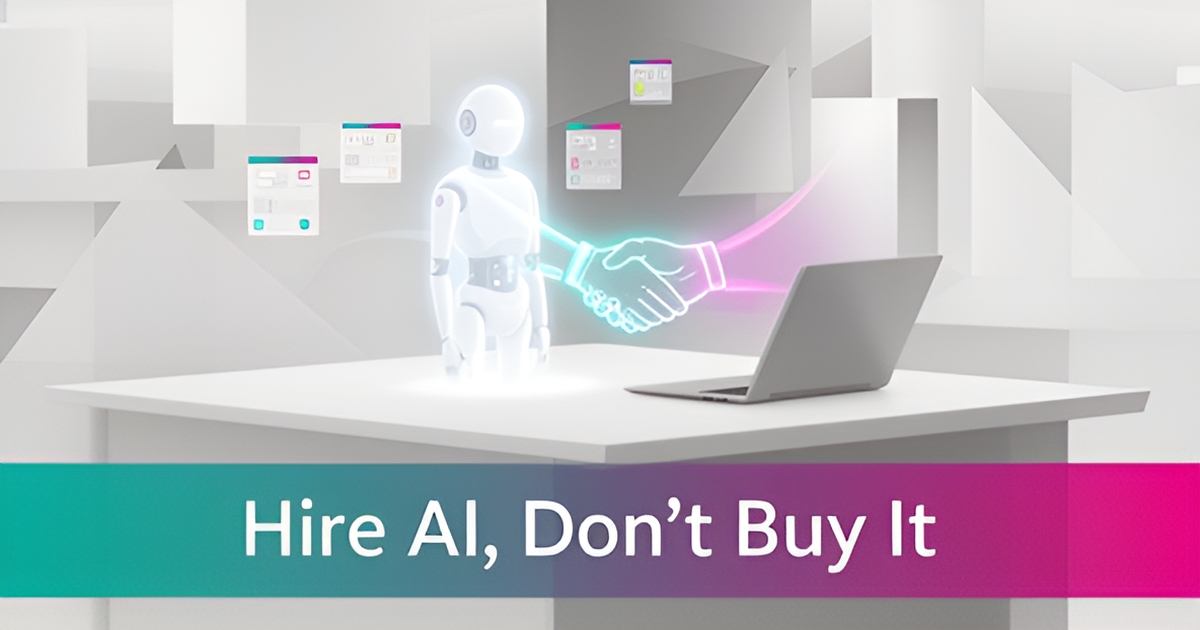
Halifax's AIQ Labs Is Selling AI the Way You'd Hire a Person, Not Buy Software
Halifax's AIQ Labs is betting SMBs would rather hire AI than subscribe to it: 99 defined roles, phased builds, full IP ownership, and four in-house SaaS products as proof.
November 15, 2026
TL;DR
Halifax-based AIQ Labs is betting that small and mid-sized businesses would rather hire AI than subscribe to it, offering managed AI employees, phased workflow builds, and full-ownership AI systems while running 70-plus production agents in its own SaaS products.
Key Points
1AIQ Labs frames its offering as headcount, not software: 99 defined AI employee roles across 11 categories, from receptionist to collections agent, on flat monthly plans the company says cost less than a part-time hire.
2The company runs four in-house SaaS products and more than 70 production agents daily, using its own products as proof before selling the capability to clients.
3A full-ownership model transfers code, agents, and data to clients, positioning against vendor lock-in and no-code subscription platforms.
4All performance figures (200+ deployments, 80% cost savings, 95% first-call resolution) come from company materials and haven't been independently verified.
5Voice AI in regulated debt collection is the firm's boldest claim and its highest regulatory-risk surface.
Most AI vendors want to sell you a tool. AIQ Labs wants you to fill out a job description. The Halifax, Nova Scotia firm, which says it has deployed more than 200 multi-agent systems for small and medium businesses, has built its whole commercial model around a single idea: SMBs don't want another dashboard subscription. They want work done. So AIQ Labs sells AI the way a staffing agency sells people, with roles, onboarding, and a monthly cost that the company says lands below what you'd pay a part-time human hire. It's a framing that fits where the agent market has moved in 2026, and it's worth understanding whether you're buying automation or building it.
AI Employees, Not Chatbots
The core product is what AIQ Labs calls an AI Employee: a production AI agent with a defined role, a phone number or inbox, and tool access to your CRM, calendar, and payment systems. The catalog is expansive, 99 roles across 11 categories, and the roles read like a staffing agency's job board. AI receptionists, dispatchers, patient coordinators, legal intake agents, bookkeepers, collections agents. The pitch is that these aren't website widgets. They handle multi-step workflows end to end: answering calls at 2 a.m., qualifying leads, booking appointments, chasing invoices.
The economics the company presents are blunt. A human in an equivalent role runs $35,000 to $55,000-plus in salary, another 25 to 35 percent in benefits and taxes, and $3,000 to $10,000 in recruiting and training. An AI Employee, by contrast, is a flat monthly plan with a one-time setup, working 24/7 with zero missed calls. AIQ Labs claims 75 to 85 percent cost savings. Those are company figures with no published methodology, so treat them as a directional argument rather than a verified benchmark. But the direction is real: the cost of running an agent has fallen far enough that the comparison with a junior hire now gets made with a straight face, and buyers are doing that math themselves whether vendors like it or not.
Proof by Dogfood
Here's what separates AIQ Labs from the average automation agency, which typically resells a white-labeled chatbot or wires together no-code tools. The firm builds and operates its own revenue-generating SaaS products on the same infrastructure it sells. Four of them, according to the company: a personalized newsletter platform, an e-commerce chatbot platform, a marketing automation suite, and a compliant voice-based debt collections platform called Recoverly AI.
The marketing suite is the most striking. AIQ Labs says it runs more than 70 specialized agents in production daily, handling trend research, competitor analysis, content generation, and multi-platform posting with multi-layer fact-checking. When the company tells a client that multi-agent LangGraph architectures hold up under real workloads, it's pointing at its own systems, not a demo. That matters in a market drowning in slideware. Plenty of agencies can describe an agent architecture; far fewer run one at scale in products that pay their own bills.
The collections platform deserves its own asterisk. Voice AI in regulated debt collection is a genuinely hard problem, with compliance requirements around contact rules, disclosure, and audit trails in both Canada and the U.S. AIQ Labs says the platform includes full compliance tracking and audit logging. If that holds up under regulatory scrutiny, it's a serious differentiator. It's also the company's biggest risk surface, and the claims there would benefit most from independent verification.
Three Ways In, and a Pricing Philosophy That Refuses to Play the Game
AIQ Labs structures engagement around three entry points. AI Employees for a managed monthly hire. AI Workflow Builds for rebuilding the one process that bleeds the most money, whether that's lead follow-up, intake, or invoicing, at a fixed price in phases. And AI Operating Systems for businesses that want a single connected layer running intake, communication, scheduling, and reporting, built in phases and owned outright.
The payment models map onto those choices: Start Monthly, Build in Milestones, or Own It Outright. The milestones model is the most buyer-friendly structure in the whole brief. You approve and pay per phase, and you can stop at any point while keeping everything built so far. That's a rare concession in an industry famous for six-figure projects that evaporate mid-delivery.
Then there's the pricing philosophy: AIQ Labs publishes no prices at all. No per-seat teaser rates, no inflated comparison tables. The company's stated position is that fake price anchors kill trust, and that real numbers get provided in writing after a free 30-minute strategy call. It's a contrarian move in a market where every competitor's homepage features a pricing grid built to make the middle tier look reasonable. The tradeoff is obvious: refusing anchors filters out price shoppers and adds friction to the top of the funnel. Whether that trade works depends entirely on whether the strategy call converts, and the company says it deliberately takes on only a handful of new builds at a time.
Ownership as the Wedge Against Subscription Fatigue
The most strategically interesting thing about AIQ Labs is what it's betting on next. The company's founders came out of their own frustration managing dozens of disconnected AI subscriptions, and the entire business is built on the premise that SMBs are waking up to the same problem: you can rent twenty SaaS tools that don't talk to each other, or you can own one system that does.
The Own It Outright model transfers the code, the agents, and the data to the client when the build completes. No vendor lock-in, no platform dependency, no hostage API pricing. The client track record follows the same pattern across every engagement the company cites: an architecture firm, a workers' comp audit business, an electrical services company that got a dispatch platform plus a 10,000-page programmatic SEO rebuild, a legal services firm with automated intake. In each case, one manual workflow became an owned automated system.
That bet anticipates where the agent market seems headed. As AI systems absorb more core business logic, clients are going to ask harder questions about portability. If your AI dispatcher knows your customers, your pricing, and your routes, is that a tool you rent or an asset you own? AIQ Labs has decided the answer is asset, and it's structured contracts and IP transfer accordingly. Watch for the rest of the market to be dragged the same direction.
What to Verify Before You Believe
A fair reading of AIQ Labs requires separating the verifiable from the claimed. The four SaaS products are public artifacts you can inspect. The tech stack is current: LangGraph and ReAct multi-agent architectures, Model Context Protocol for tool integration, Claude 4.5 and Gemini 3 Pro as reasoning models. The site, refreshed in early October 2026, is direct and notably free of AI-hype language, which counts for something.
The performance claims are another matter. The 200-plus deployments, the 95 percent first-call resolution rate, the 300 percent increase in qualified appointments: all of these come from company materials with no cited methodology or third-party validation. They're plausible in a market where agent performance has genuinely improved, but plausible isn't verified. If you're evaluating the firm, the two-minute Fit Check and free strategy call are the right place to push: ask for a client reference in your industry, ask how the ROI figures were measured, and if regulated voice work is on the table, ask specifically about compliance posture under provincial and federal collections rules.
Conclusion
AIQ Labs is a useful case study in where applied AI is landing in late 2026. The copilot era is giving way to something more concrete: defined roles, measurable output, and a cost line that competes with payroll instead of software budgets. A Halifax firm with its own production products, a phased payment structure you can walk away from, and an ownership model that treats AI as a client asset rather than a recurring revenue stream is making a coherent bet on how SMBs will want to buy this technology. The claims need independent scrutiny, especially in regulated voice work. But the framing, hire the work rather than subscribe to the tool, is increasingly how buyers are thinking, and vendors who ignore that are going to find their pricing grids looking very dated very soon.
Found this helpful?
Share it with your network or explore more AI insights.