SMEs Lead AI Automation Boom: Why Small Businesses Are Outpacing Enterprises in Adoption
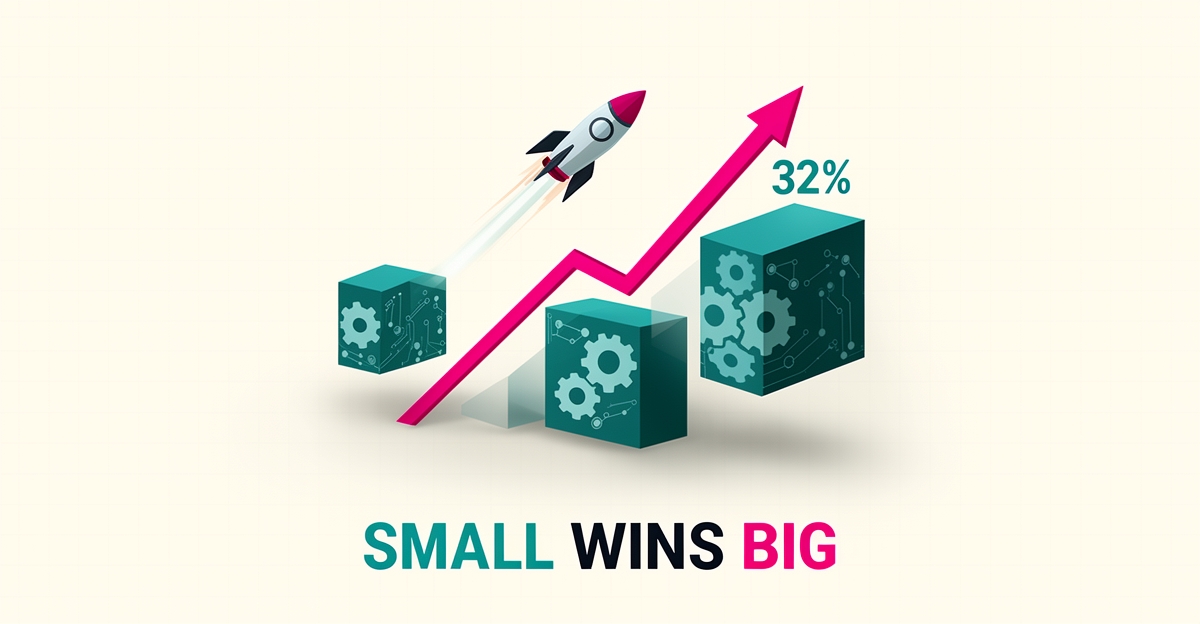
With SMEs adopting AI automation at a 32.21% CAGR—the fastest of any segment—AIQ Labs provides the end-to-end partnership needed to turn AI potential into owned, scalable business advantage.
September 26, 2026
TL;DR
Small and medium enterprises are driving the fastest growth in AI automation adoption, with SME-focused providers like AIQ Labs enabling ownership, scalability, and real-world impact beyond pilot projects.
Key Points
1SMEs are adopting AI automation at a 32.21% CAGR, outpacing large enterprises despite smaller current market share.
2Conversational AI automation is growing at 32.13% CAGR, fueling demand for AI Employees in customer-facing roles.
3Healthcare leads industry vertical growth at 33.94% CAGR, creating urgent need for compliant AI in patient intake and scheduling.
4AIQ Labs’ three-pillar model—custom development, managed AI employees, and transformation consulting—addresses the SME gap between AI experimentation and sustainable transformation.
5True ownership of custom AI systems eliminates vendor lock-in and enables long-term competitive advantage for SMBs.
While headlines often spotlight Fortune 500 companies deploying AI at scale, the real momentum in artificial intelligence automation is coming from an unexpected quarter: small and medium-sized businesses. According to the latest market analysis released September 25, 2026, SMEs are adopting AI automation at a compound annual growth rate of 32.21%—the fastest of any enterprise segment—signaling a fundamental shift in who is driving the next wave of intelligent automation. This surge isn’t just about experimenting with chatbots or AI writing tools; it’s about SMEs building owned, integrated systems that deliver measurable operational transformation.
The SME Advantage: Agility Over Scale in AI Adoption
For years, the narrative around enterprise AI adoption has centered on large corporations with deep pockets and dedicated innovation teams. But the data tells a different story. While large enterprises still hold a larger share of the current AI automation market, SMEs are growing their adoption at a significantly faster pace—32.21% CAGR compared to lower rates for larger firms. This growth is being driven by necessity and opportunity: SMEs often operate with tighter margins, leaner teams, and intense pressure to do more with less. AI automation offers a force multiplier—allowing a small business to automate lead qualification, customer support, invoicing, and inventory management without hiring additional staff. Unlike large organizations that may struggle with legacy system inertia, SMEs can implement AI solutions quickly, test them in real workflows, and scale what works. This agility is becoming a competitive edge, enabling smaller players to match or exceed the responsiveness and efficiency of much larger rivals.
Conversational AI: From Novelty to Necessity in Customer Engagement
One of the most dynamic areas fueling SME AI adoption is conversational AI, projected to grow at a 32.13% CAGR from 2026 to 2035. This goes far beyond basic FAQ chatbots. Today’s conversational AI systems can understand context, manage multi-step workflows, integrate with calendars and CRMs, and even handle sensitive tasks like debt collection or insurance verification—all while communicating in natural, human-like language. For SMEs, this means deploying AI Employees that work 24/7 as receptionists, sales development representatives, or patient coordinators—handling routine inquiries, qualifying leads, scheduling appointments, and following up on invoices without breaks, sick days, or turnover. The result is not just cost savings, but improved customer experience through instant, consistent responses. Businesses using these systems report higher engagement rates, faster response times, and increased capacity to focus human talent on high-value, relationship-driven tasks.
Healthcare at the Inflection Point: AI as an Antidote to Administrative Burnout
No industry is experiencing faster AI automation growth than healthcare, with a projected CAGR of 33.94%—the highest of any vertical. This surge reflects a critical need: healthcare providers, especially small clinics and practices, are drowning in administrative work. From patient intake and insurance verification to appointment scheduling and follow-up communications, staff spend countless hours on repetitive, rule-based tasks that contribute to burnout and reduce time for actual care. AI-powered automation is stepping in to alleviate this burden. Systems that use voice AI to conduct empathetic intake conversations, verify insurance eligibility in real time, and send personalized appointment reminders are no longer futuristic concepts—they’re live, compliant, and delivering results. For SME healthcare providers, these tools aren’t just about efficiency; they’re about sustainability. By reducing administrative overload, AI helps preserve the human touch in patient care while ensuring operational continuity.
Beyond the Pilot: Why Most SMEs Struggle to Scale AI—and How to Fix It
A persistent challenge in the AI landscape is the 'pilot trap'—where businesses launch promising AI experiments that never scale beyond a single department or use case. This is especially common among SMEs, which often lack the internal expertise to integrate AI tools with existing systems, measure ROI accurately, or navigate compliance requirements. AIQ Labs addresses this gap through its three-pillar model: custom AI development to build owned, production-ready systems; managed AI Employees that function as real team members; and AI transformation consulting that guides clients through strategy, integration, governance, and ongoing optimization. This end-to-end approach ensures that AI initiatives don’t die in the pilot phase but evolve into scalable, measurable advantages. By owning their AI infrastructure—rather than renting access to point solutions—SMEs avoid vendor lock-in, retain full control over customization, and build long-term equity in their technology stack.
Ownership as Strategy: Why Building Beats Renting in the AI Era
In a market flooded with AI subscriptions and point solutions, AIQ Labs differentiates itself through its True Ownership Model. When a client commissions a custom AI system—whether it’s an automated invoicing workflow, a multi-agent marketing suite, or an AI-powered receptionist—they receive full ownership of the code, data, and intellectual property. This stands in stark contrast to the subscription-based model, where businesses pay ongoing fees for access to tools they never truly control. Ownership means freedom: the ability to modify, extend, or integrate the system as business needs evolve, without dependency on a vendor’s roadmap or pricing changes. It also means lower long-term costs. While the upfront investment in custom development may exceed a monthly subscription fee, the elimination of recurring licensing costs, combined with gains in efficiency and productivity, often delivers superior ROI over time. For SMEs aiming to build lasting competitive advantage, owning their AI infrastructure isn’t just prudent—it’s strategic.
Conclusion
The AI automation boom is no longer confined to tech giants or enterprise IT departments. It is being reshaped by the agility, urgency, and innovation of small and medium-sized businesses that are adopting intelligent automation not as a luxury, but as a necessity for survival and growth. As SMEs lead in adoption growth—particularly in high-impact areas like conversational AI and healthcare automation—they need partners who understand their constraints and can deliver more than just tools. AIQ Labs’ integrated approach—combining custom development, managed AI employees, and strategic transformation—offers a pathway for SMEs to move beyond experimentation and into true AI-powered transformation. In a market projected to exceed $2 trillion by 2035, the businesses that will thrive are not necessarily the largest, but those that harness AI to work smarter, faster, and with greater resilience.