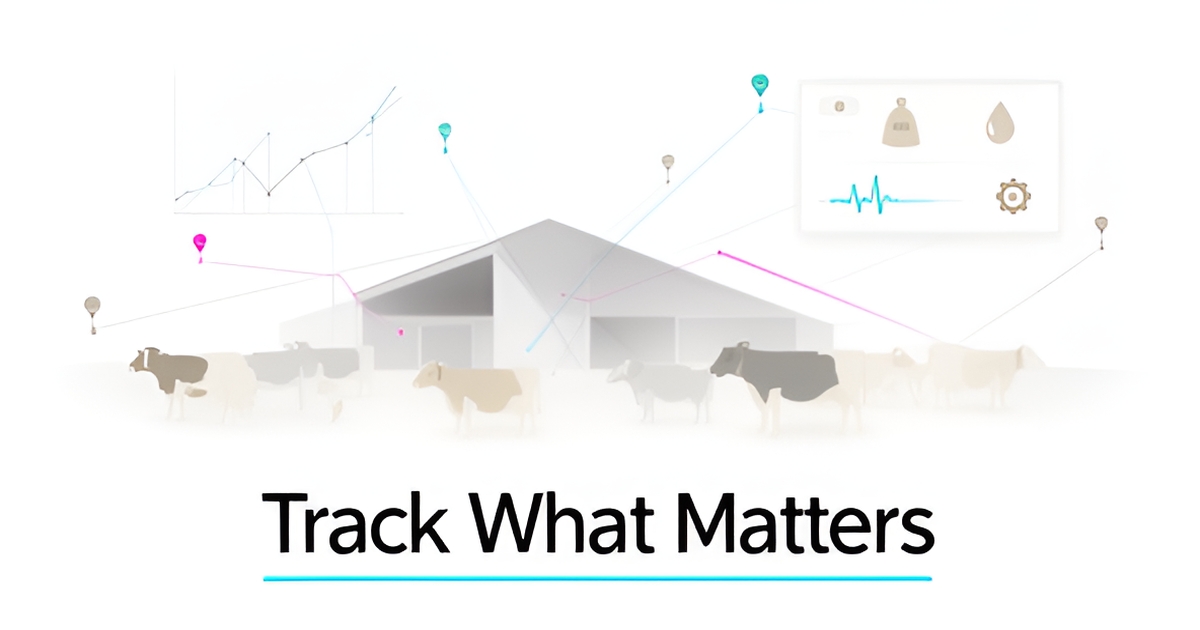
5 Key Metrics Dairy Farms Should Track with AI to Improve Efficiency
Key Facts
- Farms adopting AI-driven solutions have reported meaningful gains in milk production and reductions in operating costs, though results vary by operation according to industry research
- Automated milking systems alone can boost milk production by several percentage points while reducing manual labor demands per industry analysis
- Computer vision can capture phenotypes from multiple animals simultaneously using a single device in an automated and nonintrusive manner as noted in recent research
- AI systems can predict key performance indicators such as milk yield, reproduction efficiency, and lameness with increasing accuracy per dairy industry insights
- Entry-level farm monitoring platforms have made AI dashboards accessible to small and mid-sized operations, with plans reportedly starting under $12 per month as of late 2026 per platform pricing
- Farms ignoring automation risk shrinking margins as labor becomes tighter and costs escalate per Mike North of EverAg
- AI turns scattered sensor data, milk records and farm logs into clear signals that drive daily decisions on dairy efficiency per industry research
Hire a team member that works 24/7 — for less than a part-time wage.
AI receptionists, SDRs, dispatchers and 99+ roles. Trained on your business, fully managed.
Not sure where to start? Ask our AI planner
Rising Costs, Labor Gaps, and Margin Pressure on Dairy Farms
Ask dairy farmers what keeps them up at night, and the answer rarely changes: staying afloat. Costs are climbing, labor is harder to find, and regulatory pressure keeps intensifying — a reality captured in recent industry analysis of the forces reshaping modern dairy operations.
The margin math has shifted. Feed, energy, and labor costs rise while milk prices fluctuate, leaving farms with thinner buffers against inefficiency. At the same time, environmental and regulatory requirements demand more documentation and traceability than ever — paperwork that competes directly with time spent on the herd.
The labor picture makes this worse. Finding and keeping skilled farm workers has become a persistent challenge, and every unfilled role pushes more responsibility onto fewer people. When experienced staff leave, they take operational knowledge with them — the kind of intuition about individual animals that took years to build.
This is where traditional management approaches break down. Gut-feel decisions and manual record-keeping worked when margins were wider and labor was plentiful. Today, they create blind spots that compound quietly:
- Subclinical health issues go undetected until milk output drops
- Feed inefficiencies persist because nobody tracks the ratio precisely
- Equipment failures surprise instead of being predicted
- Labor hours get allocated by habit rather than data
The farms pulling ahead are the ones treating operational data as a strategic asset. According to industry research on AI-driven dairy solutions, farms implementing these technologies have reported meaningful gains in milk production alongside reductions in operating costs — with some reporting double-digit improvements in both. Automated milking systems alone can lift production by several percentage points while reducing manual labor demands.
The warning from industry voices is direct. As Mike North of EverAg puts it, "Farms ignoring automation will face shrinking margins as labor becomes tighter and costs escalate." Delaying adoption isn't a neutral choice — it's a decision to absorb compounding inefficiencies while competitors capture the gains.
The good news: AI-powered monitoring no longer requires enterprise-scale budgets. Modern systems use computer vision to capture health and condition data from multiple animals simultaneously, non-intrusively, through a single device. Platforms like TrackDairy demonstrate how accessible this has become, with AI-driven dashboards that consolidate production, health, and workforce metrics — entry-level plans reportedly start under $12 per month as of late 2026.
The question is no longer whether to adopt data-driven management, but which metrics to track first. That decision starts with understanding exactly what AI can monitor — and where the highest-impact opportunities sit on your operation.
The 5 AI-Tracked Metrics That Drive Dairy Efficiency
Dairy margins tighten as labor gets scarcer and costs rise, and the farms that stay ahead are the ones that measure what matters in real time. AI turns scattered sensor data, milk records and farm logs into clear signals that drive daily decisions.
Milk yield remains the headline metric for production health. AI systems can predict key performance indicators such as milk yield with increasing accuracy, allowing managers to spot drops before they compound. Industry research notes that breakthroughs in data science and sensor technology are ushering in a new era of precision farming. When yield is tracked by shift and cow, patterns emerge that guide breeding and culling choices.
Feed-to-milk ratio connects nutrition spend to output. Effective AI starts with the right metrics, including milk yield, feed-to-milk ratio, animal health scores, labor utilization, and equipment uptime. Analysis of AI-driven dairy solutions highlights feed efficiency as a core lever for profitability. Real-time monitoring of usage and intake lets AI flag overfeeding, waste, or underperformance quickly.
Animal health scores protect both welfare and production. Computer vision can capture phenotypes from multiple animals simultaneously using a single device in an automated and nonintrusive manner. Recent dairy AI coverage explains how this enables precise monitoring of herd health, activity, and condition at scale. Early detection of lameness or illness reduces treatment costs and lost milk.
Labor utilization and equipment uptime complete the operational picture. Farm efficiency reporting shows how automated tracking frees staff for high-value tasks, with farms adopting AI-driven solutions reporting reductions in manual labor demands.
AI dashboards make these metrics actionable. The five essentials to monitor continuously are:
- Milk yield by cow, shift and group
- Feed-to-milk ratio and feed inventory burn
- Animal health scores from vision and activity data
- Labor utilization across milking, feeding and health checks
- Equipment uptime for milkers, feeders and cooling systems
Together they create a real-time operating picture that supports data-driven decisions. AIQ Labs builds these monitoring layers as part of its AI Workflow Builds — a fixed-price rebuild of the one workflow that costs your operation the most. The result is fewer surprises, faster interventions, and sustained efficiency gains.
How AI Turns Raw Farm Data into Actionable Insights
The real power of AI in dairy farming lies not in data collection alone, but in transforming raw inputs into clear, timely actions that improve herd performance and operational efficiency. Modern farms generate vast streams of information from wearable sensors, milking robots, feed systems, and environmental monitors — yet much of this remains siloed and underutilized. AI bridges this gap by integrating these disparate data flows into a unified intelligence layer where patterns emerge, anomalies are flagged, and decisions become proactive rather than reactive.
Computer vision systems, for instance, use overhead or side-view cameras to monitor multiple animals simultaneously in a nonintrusive way, capturing behavioral and physical phenotypes such as gait, feeding duration, and social interactions at scale. These visual inputs are processed in real time to detect early signs of lameness, estrus, or illness — often before symptoms are visible to the human eye. As noted in recent research, computer vision "can capture phenotypes from multiple animals simultaneously using a single device in an automated and nonintrusive manner," enabling continuous herd health monitoring without stress or disruption.
Meanwhile, large language models (LLMs) act as the connective tissue between structured and unstructured data sources, translating veterinary notes, feed logs, milking records, and even weather reports into a coherent operational picture. By applying modern natural language processing techniques, LLMs enable advanced data integration that turns textual entries — such as technician observations or vet summaries — into quantifiable insights. This capability allows farms to move beyond simple metrics and begin predicting outcomes like milk yield fluctuations or reproductive success with increasing accuracy.
Together, these technologies feed into AI-driven dashboards that track the five key metrics central to dairy efficiency: milk yield, feed-to-milk ratio, animal health scores, labor utilization, and equipment uptime. For example, automated milking systems have been shown to increase milk production by several percentage points while reducing manual labor demands — a gain that compounds when paired with AI-guided feed optimization and health monitoring. When sensor data, computer vision outputs, and LLM-analyzed logs converge in a single platform, farmers gain the clarity needed to adjust rations, schedule interventions, or reallocate labor before small issues become costly problems.
This integrated approach shifts dairy management from routine checks to precision intervention, where every decision is informed by real-time herd conditions and historical trends. The result is not just higher output, but a more resilient, responsive operation that conserves resources, supports animal welfare, and sustains profitability in an increasingly demanding industry. For farms looking to build this capability as a connected layer across their whole operation, AIQ Labs' AI Operating Systems service builds it in phases — and you own it outright when it's done.
From Dashboards to Decisions: Implementing AI Metric Tracking
Knowing which metrics matter is only half the battle. The real competitive advantage comes from building the systems that track, analyze, and act on them automatically.
Implementation begins with consolidation. Most dairy operations already generate valuable data across milking systems, feed management, and herd health records, but this information lives in silos. Effective AI starts with bringing these streams into a unified real-time dashboard. Platforms like TrackDairy demonstrate this approach, consolidating operations from milk production to workforce management into a single interface, with entry-level analytics reportedly starting under $12 per month as of late 2026.
Once data flows into one place, the next step is establishing baselines for each KPI. You cannot improve what you haven't measured. AI systems excel here because they identify patterns human observers miss. According to industry research, AI can now predict key performance indicators such as milk yield, reproduction efficiency, and lameness with increasing accuracy, turning historical data into forward-looking intelligence.
With baselines established, farms can shift from reactive problem-solving to predictive decision-making. This means configuring alerts and automated reporting that flag anomalies before they become crises. Consider these implementation priorities:
- Set threshold alerts for sudden drops in milk yield or feed efficiency
- Automate health score monitoring to catch lameness or illness early
- Schedule weekly AI-generated reports for breeding and culling decisions
- Configure equipment uptime notifications to prevent milking system failures
The results justify the effort. Farms implementing comprehensive AI-driven solutions have reported gains in milk production alongside reductions in operating costs, with some reporting double-digit improvements in both. Automated milking systems alone can boost production by several percentage points while reducing manual labor demands.
Start small. Pick a single workflow — perhaps milk yield monitoring or feed optimization — and prove the concept. AIQ Labs' AI Workflow Builds rebuild the one workflow that costs you the most, at a fixed price and in phases, so you see results before you scale. Once you see results in one area, scaling becomes a matter of replication, not reinvention.
Getting Started with AI-Powered Dairy Farm Monitoring
Getting started with AI-powered dairy farm monitoring doesn't require a complete overhaul of your operation. Effective AI begins with tracking the right metrics — those that directly influence efficiency, animal health, and profitability. Farms implementing AI-driven solutions have reported meaningful gains in milk production and reductions in operating costs, though results depend on the operation. You don't need to monitor everything at once; focusing on a few high-impact KPIs allows you to build confidence and momentum.
The five foundational metrics — milk yield, feed-to-milk ratio, animal health scores, labor utilization, and equipment uptime — form the basis for smarter, data-driven decisions. Tracking these consistently enables early detection of issues, such as declining feed efficiency or rising lameness rates, before they impact your bottom line. Computer vision, for example, can now capture phenotypes from multiple animals simultaneously using a single device in an automated and nonintrusive manner, making health monitoring more scalable than ever. By starting small and scaling based on what the data reveals, you avoid complexity while still gaining actionable insights.
AIQ Labs helps dairy farms take this first step. Depending on where the biggest cost sits, that means one of three entry points: AI Employees for managed AI staff at roughly 80% less than a human hire, AI Workflow Builds to rebuild the one workflow that costs the most at a fixed price, or AI Operating Systems for a single connected layer across the whole operation. We don't recommend AI for AI's sake; we focus on where it will create real, immediate value for your specific operation.
Ready to see where AI can make the biggest difference? Start with the two-minute Fit Check at https://aiqlabs.ai/apply, then schedule a free 30-minute strategy call at https://aiqlabs.ai/book. This no-obligation session helps you map your biggest bottleneck and identify high-ROI automation opportunities — if there isn't a clear win, we'll tell you that too. It's a real working session with an AI engineer, not a sales pitch.
Still paying for 10+ subscriptions that don’t talk to each other?
We build custom AI systems you own outright. No vendor lock-in. Full control.
Not sure where to start? Ask our AI planner
Frequently Asked Questions
What are the most important metrics a dairy farm should track with AI?
How much can AI actually improve milk production on a dairy farm?
Can AI really detect health problems in cows before they become visible?
Is AI monitoring expensive for small or mid-sized dairy farms?
How does AI help dairy farms deal with labor shortages?
What's the biggest risk of not adopting AI monitoring on a dairy farm?
Turn Data Into Daily Advantage on Your Dairy
Tracking the right metrics — milk yield, feed-to-milk ratio, animal health scores, labor utilization, and equipment uptime — isn't just about collecting data; it's about turning scattered farm inputs into clear, timely actions that protect margins and animal welfare. Farms implementing these AI-driven approaches have reported real efficiency gains, proving that focused data collection pays off. You don't need to overhaul everything at once. Start by identifying where small, data-backed adjustments — like optimizing feed ratios or catching health issues early — can create immediate relief. AIQ Labs helps dairy farms take that first step, whether that's an AI Employee handling routine monitoring, a fixed-price Workflow Build for your costliest workflow, or a phased AI Operating System across the whole operation. Ready to see where AI can make the biggest difference? Begin with the two-minute Fit Check at https://aiqlabs.ai/apply, then schedule a free 30-minute strategy call at https://aiqlabs.ai/book to map your biggest bottleneck and uncover practical automation opportunities — no obligation, just clarity.
Make AI your competitive advantage — not just another tool.
Strategy, implementation and ongoing optimization. One partner, end to end.
Not sure where to start? Ask our AI planner