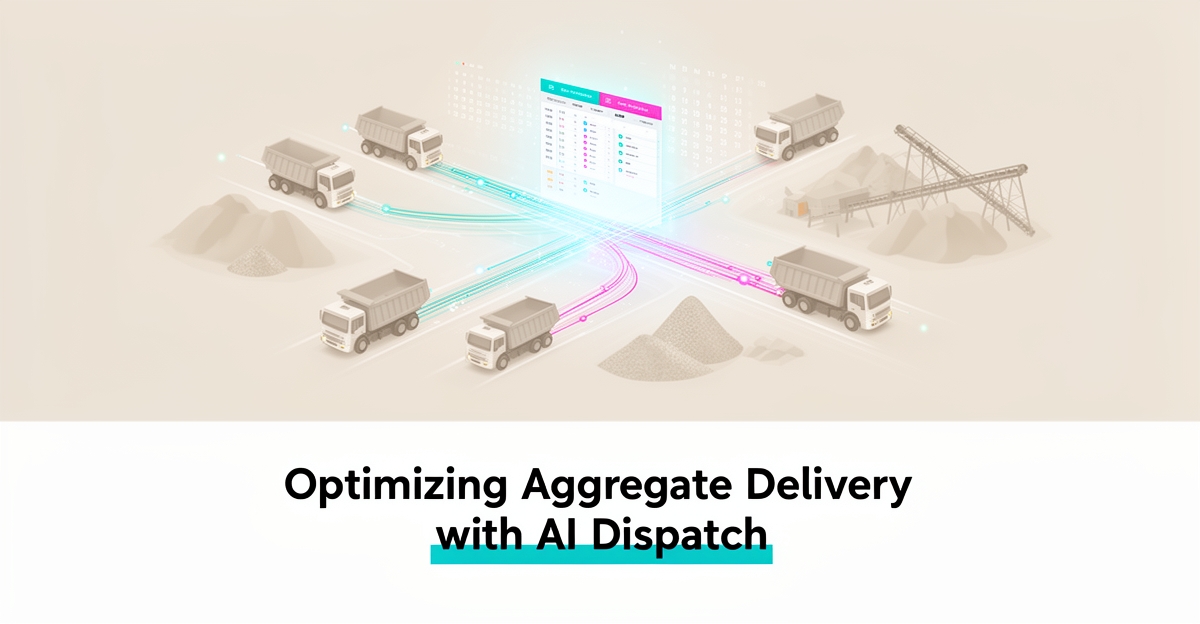
5 Signs Your Aggregate Business Is Ready for AI-Driven Delivery Scheduling
Key Facts
- Surveys of frontline workers consistently report high burnout levels, with majorities saying work-related stress hurts performance
- Industry analyses of AI scheduling commonly report error reductions of up to 90% versus manual planning
- AI-powered delivery management is widely credited with cutting delivery times by up to 30%
- AIQ Labs has deployed 200+ multi-agent systems and runs 4 live SaaS products daily
Hire a team member that works 24/7 — for less than a part-time wage.
AI receptionists, SDRs, dispatchers and 99+ roles. Trained on your business, fully managed.
Not sure where to start? Ask our AI planner
The Hidden Costs of Manual Scheduling in Aggregate Logistics
Manual scheduling in aggregate logistics creates friction that shows up on the job site and in the P&L. Dispatchers juggle phone calls, spreadsheets, and last-minute changes while drivers wait for instructions and customers wait for material. The pressure compounds daily.
Burnout becomes a business risk, not just a people issue. Workforce surveys consistently find that a large share of frontline employees report burnout, and most say work-related stress negatively affects their performance. Dispatch is exactly the kind of high-pressure, interruption-driven role where that pattern hits hardest.
That exhaustion translates directly into operational errors. Inconsistent delivery windows force drivers into overtime, idle trucks, and missed pour times. Manual load planning leaves gaps in truck utilization and creates rework when orders are misrouted. The result is inconsistent delivery times that erode customer trust in a market where reliability is the contract.
High no-shows and late arrivals are symptoms of a system stretched thin. Dispatch teams rely on memory and static routes, so real-time disruptions — traffic, site delays, equipment issues — cascade through the day. Customers are left without updates, crews stand idle, and revenue leaks from reschedules and penalties.
Inefficient resource allocation reinforces the cycle. When scheduling is manual, trucks and loaders are assigned reactively rather than optimized. Industry analyses of AI scheduling commonly report error reductions of up to 90% versus manual planning, largely by eliminating the correction-and-coordination overhead manual processes create.
The hidden costs accumulate in ways leaders often miss:
- Overtime and driver churn driven by unpredictable routes and long days
- Idle equipment and fuel waste from poor load planning and backtracking
- Customer churn from missed windows and poor communication
- Dispatcher burnout from constant firefighting and manual re-entry
Aggregate businesses feel this most acutely because deliveries are time-sensitive, site-dependent, and volume-heavy. A single delayed load can stall a pour and trigger contractual penalties.
This is where AI Workflow Builds come in: AIQ Labs rebuilds the one workflow that costs you the most — dispatch scheduling — at a fixed price and in phases, automating routing, load planning, and delivery confirmation using real-time data and geographic intelligence. With automated confirmation and dynamic rerouting, dispatchers focus on exceptions instead of chasing status.
When delivery times stabilize and resources are used fully, the workforce pressure eases. Research on AI-powered delivery management commonly credits it with reducing delivery times by up to 30%, creating breathing room for teams and customers alike.
5 Telltale Signs Your Operations Are Ready for AI
Aggregate delivery operations rarely break overnight. They erode through missed windows, overtime, and dispatchers working late to patch routes. These patterns are readable signals that manual scheduling has hit its limit and AI-driven delivery scheduling can take over routing, load planning, and delivery confirmation using real-time data and geographic intelligence.
1. Chronic delivery delays and inconsistent windows When promised times vary week to week, customers lose trust and drivers absorb the cost. AI-powered delivery management is widely credited with reducing delivery times by up to 30%. Inconsistent delivery times often trace back to static routes that cannot adapt to traffic, weather, or last-minute orders.
2. High rates of customer no-shows and failed attempts No-shows waste truck capacity and inflate cost per stop. In a logistics market that continues to grow year over year, failed attempts directly erode margin. Real-time tracking and automated customer updates reduce no-shows by confirming intent before dispatch.
3. Dispatcher burnout and frontline exhaustion Manual scheduling pushes people, not capacity. Workforce research consistently shows that a majority of frontline employees report burnout, and most say work-related stress hurts their performance. When your dispatch team is running on fumes, the bottleneck is the system, not the people.
4. Inefficient resource allocation and idle assets Trucks, loaders, and drivers sitting between jobs signal poor load planning. AI-driven scheduling is commonly reported to reduce errors by up to 90% versus manual planning, which improves resource allocation and cuts waste. Better allocation shows up as higher stops per hour without adding headcount.
5. Rising errors, rework, and cost creep Manual entry creates missed confirmations, duplicate dispatches, and billing disputes. Businesses ready for automation typically see a pattern of:
- Frequent route changes made by phone or spreadsheet
- Delivery exceptions that require manual follow-up
- Inability to scale scheduling with seasonal demand spikes
These signs point to a workflow that needs rebuilding, not more overtime. AIQ Labs helps aggregate businesses automate routing, load planning, and delivery confirmation using real-time data and geographic intelligence, turning operational friction into measurable throughput.
The AI Advantage: From Reactive Chaos to Proactive Control
When delivery operations feel like constant firefighting—missed windows, idle trucks, and frustrated customers—it's a clear signal that reactive scheduling has reached its limits. AI-driven delivery scheduling transforms this chaos into proactive control by using real-time data and geographic intelligence to optimize every move before it happens.
Businesses adopting this technology typically see meaningful improvements in reliability and efficiency. AI-driven scheduling is commonly reported to reduce errors by up to 90% by eliminating manual planning mistakes and dynamically adjusting to traffic, weather, and last-minute changes. AI-powered delivery management is likewise credited with cutting delivery times by up to 30% through smarter routing and load consolidation that keeps vehicles moving efficiently.
- Automated route optimization minimizes deadhead miles and fuel waste
- Real-time ETAs improve customer communication and reduce no-shows
- Dynamic load planning maximizes truck utilization per trip
- Predictive analytics anticipate delays before they disrupt schedules
- Continuous learning refines performance based on historical outcomes
For aggregate businesses struggling with inconsistent delivery times or high no-shows, this shift from guesswork to precision isn't just operational—it's strategic. AIQ Labs builds custom scheduling systems that integrate with existing workflows, ensuring the technology adapts to the business—not the other way around. The result is a delivery operation that runs smoother, costs less, and delivers more reliably—turning a pain point into a competitive advantage.
Your Roadmap to Implementing AI-Powered Delivery Scheduling
The path forward starts with clarity—recognizing the signs that your current delivery scheduling is no longer keeping pace with operational demands. AIQ Labs guides businesses through a structured implementation process designed to minimize disruption while maximizing long-term value.
Begin by assessing your workflow for the key indicators outlined above: inconsistent delivery times, frequent customer no-shows, and inefficient use of vehicles and personnel. These symptoms often correlate with broader workforce strain—when your dispatch team is exhausted and firefighting daily, manual scheduling is taking a toll on both performance and morale.
Once readiness is confirmed, the next step is selecting a partner who understands the nuances of aggregate logistics—not just generic scheduling tools. AIQ Labs works with clients to build systems that automate routing, load planning, and delivery confirmation using real-time geographic intelligence. Such systems are commonly credited with reducing delivery times by up to 30% and cutting errors by up to 90%, directly addressing the pain points of inconsistent service and resource waste.
Implementation follows a phased approach: configure the system to your operational rules, integrate with existing tools like dispatch software or CRM platforms, and train teams on new workflows. AIQ Labs emphasizes clean data as a foundation—garbage in, garbage out—and helps clients audit historical delivery records, customer addresses, and time-window accuracy before go-live. During deployment, monitor metrics like on-time arrival rates and dispatcher overtime to validate impact and refine parameters.
Finally, treat AI-driven scheduling not as a one-time upgrade but as an evolving capability. Schedule monthly reviews to assess performance against benchmarks, incorporate feedback from drivers and customers, and explore adjacent automation opportunities—like automated delivery confirmations or predictive ETAs. If scheduling is just the first of several workflows under strain, an AI Operating System can connect dispatch with quoting, invoicing, and customer communication in one layer you own outright. With AIQ Labs as your build partner, you gain a lifecycle ally committed to optimizing your delivery operations as your business grows and market conditions shift.
Still paying for 10+ subscriptions that don’t talk to each other?
We build custom AI systems you own outright. No vendor lock-in. Full control.
Not sure where to start? Ask our AI planner
Frequently Asked Questions
What are the main signs that my aggregate business needs AI-driven delivery scheduling?
How much can AI-driven delivery scheduling reduce errors in aggregate logistics?
Can AI-powered delivery management software actually improve delivery times?
Is dispatcher burnout really a sign that we need better scheduling technology?
How does AI help reduce customer no-shows in delivery operations?
What's the first step to implementing AI-driven delivery scheduling in my business?
Turn Delivery Friction Into Competitive Advantage
Manual scheduling in aggregate logistics quietly erodes margin through inconsistent windows, idle assets, and dispatcher burnout. When delivery times vary, no-shows rise, and teams are stretched thin, it's a signal that reactive processes have hit their limit. AI-driven delivery scheduling shifts the operation from firefighting to proactive control by automating routing, load planning, and delivery confirmation with real-time data and geographic intelligence. The result is steadier on-time performance, fuller truck utilization, and less pressure on frontline staff. If you're seeing the five signs outlined here, the next step is to map your current workflow, quantify the cost of delays and rework, and test automation on a single high-impact route or site. AIQ Labs has deployed 200+ multi-agent systems and runs 4 live SaaS products daily, so the work is proven in practice, not theory. Start the 2-minute Fit Check to book a free 30-minute strategy call and identify high-ROI automation opportunities with no obligation. If there isn't a clear win, we'll say so.
Make AI your competitive advantage — not just another tool.
Strategy, implementation and ongoing optimization. One partner, end to end.
Not sure where to start? Ask our AI planner