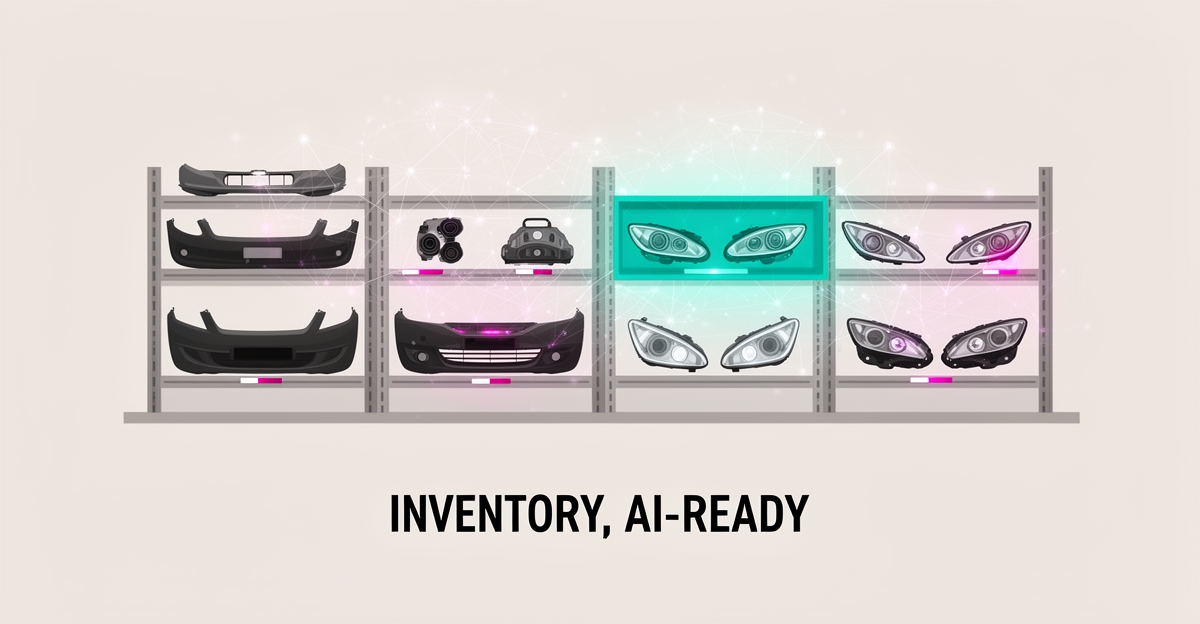
5 Signs Your Auto Body Shop Is Ready for AI-Powered Parts Inventory Management
Key Facts
- A majority of collision repairs now involve ADAS calibrations, and that share keeps climbing according to industry repair data
- AI-powered inventory systems can meaningfully reduce stockouts and excess inventory by learning from real-time sales and repair data per recent industry research
- A large share of collision repair shops already use AI-powered diagnostic tools to improve accuracy based on industry technology research
- Most auto repair shops are expected to adopt some form of AI technology by late 2026, up sharply from early 2025 per industry forecasts
- AIQ Labs' AI Employees typically cost around 80% less than an equivalent human hire while working 24/7/365 with zero missed calls or days off per company capability data
- Custom AI workflow builds can eliminate 20+ hours weekly of manual data entry across ordering, receiving, and job costing processes per AIQ Labs development portfolio
Hire a team member that works 24/7 — for less than a part-time wage.
AI receptionists, SDRs, dispatchers and 99+ roles. Trained on your business, fully managed.
Not sure where to start? Ask our AI planner
Your Shop Is Handling More ADAS Repairs Than Ever
ADAS repairs are no longer a niche workflow — they are the new normal, and your parts shelves have to keep up. When every calibration requires a specific sensor, bracket, or module, manual inventory tracking creates expensive delays.
Industry repair data shows a large and growing share of collision repairs involve ADAS calibrations — a majority as of 2025, and climbing each quarter. That surge means shops are ordering more specialized components, more often, with tighter tolerances for fit and revision.
Manual counts and spreadsheet reorder points can’t react fast enough to that precision demand. A missing camera bracket or the wrong radar module can stall a repair for days, erode customer trust, and tie up a bay.
The signal is clear when your team is handling more ADAS than ever:
- Calibration parts are frequently backordered or arriving late
- Technicians are waiting on parts while the vehicle is already in the bay
- You are overbuying common ADAS components to avoid stockouts
- Reorder decisions are based on gut feel rather than repair data
AI-driven parts forecasting changes that equation by learning from real repair history. Systems can analyze historical sales patterns, seasonality and trend detection, and multi-channel demand to predict what ADAS components will be needed, when.
This is where AI inventory and supply chain automation becomes essential for body shops. AIQ Labs builds intelligent inventory systems that prevent overstocking and stockouts using real-time sales and repair data, so calibration kits and sensors are available without tying up cash — whether as a standalone workflow build or as part of a broader AI operating system for your shop.
The industry is already moving. A large share of collision repair shops already use AI-powered diagnostic tools to improve accuracy, and adoption is accelerating as complexity rises. Shops that pair diagnostic AI with inventory AI create a closed loop from estimate to completion.
Customer expectations reinforce the shift. Most car owners say they would use an AI agent if it meant diagnosing and addressing car issues in real time, which translates into pressure for faster, more reliable repair cycles.
When ADAS work dominates your schedule, precision parts demand requires precision forecasting. AI forecasting, stock alerts, and reorder recommendations help you avoid repair delays, reduce excess inventory, and keep bays moving.
You're Losing Time to Manual Parts Tracking and Stockouts
Manual parts tracking is quietly draining hours from your shop floor every week. Between hunting down missing components, placing emergency orders, and reconciling spreadsheets, the time lost adds up fast — and so do the costs.
When a technician can't start a repair because a part is out of stock, the entire workflow stalls. The customer waits longer, your bay sits idle, and your team scrambles to source the part at a premium. This isn't just an inconvenience — it's a direct hit to your cycle time and customer satisfaction.
The problem compounds when shops rely on spreadsheets or basic software that can't keep pace with real-world demand. Without real-time visibility into parts usage and repair trends, you're essentially guessing what to order and when. That guesswork leads to two expensive outcomes: stockouts that delay repairs, and overstocked shelves that tie up cash in parts you may never use.
Industry research suggests AI-powered inventory systems can substantially reduce stockouts and cut excess inventory by analyzing real-time sales and repair data. These systems don't just track what's on the shelf — they learn from your shop's patterns, anticipate demand, and trigger reorder recommendations before you run dry.
Here's what that looks like in practice:
- Real-time parts forecasting based on historical repair data and seasonal trends
- Automatic stock alerts when inventory drops below optimal levels
- Reorder recommendations that account for lead times and supplier availability
- Integration with repair orders so parts are reserved the moment a job is booked
The shift is already underway. According to industry research, a large share of collision repair shops now use AI-powered diagnostic tools to improve accuracy — and inventory management is the natural next step. Shops that adopt AI-driven parts forecasting gain a measurable edge in both efficiency and profitability.
If your team is still manually counting stock, chasing down parts, or dealing with frequent stockouts, that's a clear signal your shop is ready for a smarter system. AIQ Labs rebuilds the inventory workflow that costs you the most — at a fixed price, in phases — using real-time sales and repair data to prevent both stockouts and overstocking. The result is fewer delays, lower carrying costs, and faster cycle times — without adding headcount or complexity.
Your Team Is Spending Too Much Time on Administrative Tasks
Manual reordering, spreadsheet updates, and chasing parts suppliers quietly eat the day in most auto body shops. When staff spend hours on admin instead of repairs, cycle times stretch and customer satisfaction drops.
The signal is clear when technicians are pulled off the line to hunt for part numbers or confirm stock levels. Shops that are ready for AI-driven inventory automation notice repetitive data entry becoming a bottleneck across ordering, receiving, and job costing. That pattern matches the broader industry shift, with industry forecasts showing most auto repair shops are expected to use some form of AI technology by late 2026, up sharply from early 2025.
AI-powered parts forecasting, stock alerts, and reorder recommendations remove the manual loop. Real-time sales and repair data feed predictive models that anticipate demand, flag low stock before a job stalls, and suggest optimal reorder points. The result is less overstocking and fewer stockouts that delay repairs.
Adoption is already visible in diagnostics and workflow. Recent shop technology research found that a large share of collision repair shops use AI-powered diagnostic tools to improve accuracy, and most car owners would use an AI agent if it meant diagnosing and addressing car issues in real time. As complexity rises, so does admin load.
A growing portion of work drives that load. Current repair data shows a majority of collision repairs involved ADAS calibrations as of 2025, and that share continues climbing each quarter. More calibrations mean more specialized parts, more documentation, and more manual tracking without automation.
Shops ready for change typically show these admin pain signals:
- Technicians or service advisors spend 1–2 hours daily on parts lookups, reorders, and inventory updates
- Stockouts force rescheduling, while excess inventory ties up cash on slow-moving parts
- Multiple systems are used for estimates, purchasing, and receiving with no single source of truth
- End-of-day reconciliation and manual data entry create errors in job costing and margins
AIQ Labs builds intelligent inventory systems that prevent overstocking and stockouts using real-time sales and repair data. Custom AI workflow builds can eliminate 20+ hours weekly of manual data entry, freeing technicians to focus on repairs and customer service.
When administrative tasks shrink, shops gain capacity without adding headcount and improve the customer experience through faster, more predictable repairs.
You’re Seeing Inconsistent Parts Availability Across Repair Orders
When parts aren’t available when needed for a repair, the entire workflow stalls — technicians wait, vehicles sit idle, and customers grow frustrated with delayed pickups. This inconsistency directly impacts cycle times, a critical metric where even small delays compound into significant backlogs and dissatisfied clients. With most auto repair shops expected to use some form of AI technology by late 2026, the industry is shifting toward smarter inventory solutions to combat these very disruptions. Shops experiencing frequent stockouts or overstocking of common parts like bumpers, sensors, or ADAS components are prime candidates for AI-driven forecasting that aligns inventory with actual repair demand.
AI-powered parts inventory management transforms reactive ordering into a predictive, just-in-time system by analyzing historical repair order data, seasonal trends, and real-time shop activity. Instead of relying on manual checks or static reorder points, AI models continuously learn from patterns — such as increased demand for specific parts after hail storms or model-year releases — to generate accurate reorder recommendations. This reduces the guesswork that leads to either rushed emergency shipments (increasing costs) or excess stock tying up capital. For collision repair shops, where a majority of repairs now involve ADAS calibrations — a figure rising each quarter — having the right sensors and modules on hand is no longer optional but essential to maintaining workflow efficiency and repair quality.
The benefits extend beyond the shop floor to the customer experience. When parts are predictably available, repairs stay on schedule, improving on-time completion rates and building trust with clients who value transparency and reliability. AI systems also flag slow-moving or obsolete inventory before it becomes dead stock, freeing up space and capital for high-turnover items. By integrating with existing shop management tools, AI-driven inventory becomes a silent operator — monitoring levels, suggesting optimal order quantities, and alerting staff before shortages occur. This creates a self-correcting system where inventory adapts to the shop’s actual repair volume, not just projected estimates.
For body shops noticing recurring gaps in parts availability despite regular ordering practices, the signal is clear: manual inventory methods can’t keep pace with the complexity of modern repairs. AI doesn’t just track what’s in stock — it anticipates what will be needed, when, and in what quantity, turning inventory from a constant source of stress into a competitive advantage. Shops that adopt this approach early position themselves to handle increasing repair complexity while maintaining the speed and precision customers expect. Industry analysts note that early adopters of AI inventory tools are already seeing measurable improvements in stock accuracy and repair throughput, setting a new standard for operational excellence in the collision repair sector.
You’re Ready to Scale Without Adding Headcount
Growth shouldn’t require doubling your team just to handle more repairs. Yet many auto body shops hit a ceiling where expanding service volume means hiring more staff for parts ordering, inventory tracking, and supplier coordination — costs that eat into profits before the new work even pays off. AI-powered inventory management changes that equation by acting as a force multiplier for your existing team.
When your shop consistently handles more repair orders without proportional increases in parts-related labor, it’s a clear signal you’re ready for intelligent automation. AI systems analyze historical sales, repair trends, and real-time shop activity to forecast demand, trigger stock alerts, and generate reorder recommendations — tasks that would otherwise require dedicated personnel. This isn’t about replacing people; it’s about freeing your skilled technicians and advisors to focus on complex repairs and customer service instead of manual inventory checks.
Consider the impact: shops using AI-driven forecasting report substantially fewer stockouts and less excess inventory, directly improving cash flow and repair cycle times. With most auto repair shops expected to adopt some form of AI by late 2026, the competitive window is narrowing. Those who act now gain efficiency advantages that scale with volume, not headcount.
- Forecast parts demand using real-time repair and sales data
- Automate reorder triggers based on lead times and usage patterns
- Reduce manual inventory counts and reconciliation efforts
- Minimize emergency shipping costs from unexpected stockouts
- Align purchasing with actual repair volume, not guesswork
AIQ Labs’ AI Employees exemplify this scalability — managed AI staff covering 99+ roles, from parts coordinators to dispatchers, working 24/7 at roughly 80% less than the cost of a human hire. As your shop grows, the system adapts, turning inventory management from a bottleneck into a silent enabler of expansion. When your parts operations run smoothly in the background, growth becomes predictable, profitable, and sustainable — without the overhead of traditional scaling.
Still paying for 10+ subscriptions that don’t talk to each other?
We build custom AI systems you own outright. No vendor lock-in. Full control.
Not sure where to start? Ask our AI planner
Frequently Asked Questions
How do I know if my shop is ready for AI inventory management?
What kind of results can AI inventory systems actually deliver for a body shop?
Is AI adoption actually happening in collision repair, or is it just hype?
Will AI inventory management replace my parts manager or require hiring IT staff?
How does AI forecasting handle the unpredictability of collision repair parts demand?
What's the first step to implementing AI inventory management at my shop?
Turn Parts Stress Into Predictable Profit
When ADAS repairs dominate your schedule, manual inventory can’t keep up with the precision demand. The signs are clear when calibration parts are backordered, technicians wait on parts in the bay, reorders rely on gut feel, and admin work eats hours from your team each week. AI-driven forecasting, stock alerts, and reorder recommendations close the loop between estimate and completion by learning from real repair history, reducing stockouts and excess inventory while keeping bays moving.
Shops that pair diagnostic AI with inventory AI are already seeing faster cycle times and more reliable customer experiences. AIQ Labs builds intelligent inventory systems that prevent overstocking and stockouts using real-time sales and repair data — as a focused workflow build, with managed AI Employees, or as a full AI operating system you own outright. If you recognize these signals, start with a focused assessment of your parts pain points and data flow.
Start the two-minute Fit Check at aiqlabs.ai/apply and book your free 30-minute strategy call at aiqlabs.ai/book. With a majority of collision repairs involving ADAS calibrations and that share climbing each quarter, precision forecasting is becoming a competitive necessity.
Make AI your competitive advantage — not just another tool.
Strategy, implementation and ongoing optimization. One partner, end to end.
Not sure where to start? Ask our AI planner