5 Signs Your Auto Paint Shop Needs AI for Inventory and Chemical Management
Key Facts
- AI-assisted paint shop processes can reduce paint usage and overspray, with many shops reporting measurable savings within months.
- Shops using AI inventory management typically report meaningful reductions in dead stock and fewer emergency parts runs.
- AI tools for auto shop management can cut administrative time significantly while improving customer retention through automated service reminders and transparent repair tracking.
- Industry surveys of automotive manufacturers consistently point to improved efficiency in paint shop processes after AI adoption.
- Most shops can start with one AI tool and expand as they see results.
- AI-powered inventory management systems can automate tracking and data entry, reducing manual labor and increasing accuracy.
Hire a team member that works 24/7 — for less than a part-time wage.
AI receptionists, SDRs, dispatchers and 99+ roles. Trained on your business, fully managed.
Not sure where to start? Ask our AI planner
The Hidden Costs of Guesswork in Paint Shop Inventory
Every day, auto paint shops grapple with the hidden costs of inventory guesswork, from stockouts that halt production to overstocking that ties up capital. These issues not only drain resources but also hinder productivity and profitability.
One of the most significant challenges is the inability to maintain accurate real-time inventory visibility. Without it, shops face stockouts that lead to downtime and lost revenue. Shops that adopt AI-powered inventory monitoring typically reduce both stockouts and overstocking, which translates into higher productivity and less waste.
Overstocking is another costly issue. Excess inventory ties up capital and takes up valuable space. AI-powered inventory management systems can analyze historical data, seasonal patterns, and local vehicle demographics to recommend optimal stock levels. This helps prevent overstocking and ensures that shops have the right amount of inventory on hand — and shops using these systems typically see a meaningful reduction in dead stock and fewer emergency parts runs.
Inconsistent chemical usage is another hidden cost. Without precise tracking, shops often use more chemicals than necessary, leading to waste and increased costs. AI-powered chemical management systems can optimize usage by analyzing patterns, predicting demand, and recommending optimal usage levels. This not only reduces waste but also minimizes environmental concerns. Industry reporting on paint shop automation suggests AI adoption can reduce paint usage and overspray, often delivering measurable savings within months.
Manual tracking and data entry are also significant contributors to inventory guesswork. These processes are prone to errors and can be time-consuming. AI-powered inventory management systems can automate tracking and data entry, reducing manual labor and increasing accuracy. This leads to fewer errors, increased productivity, and lower costs.
The lack of data-driven decision-making is another hidden cost. Without accurate data, shops often make suboptimal decisions regarding inventory management and chemical usage. AI-powered systems provide data-driven insights, enabling shops to make informed decisions. This leads to reduced waste, minimized downtime, and improved overall productivity.
AIQ Labs helps shops implement intelligent systems that monitor usage and auto-reorder supplies, reducing waste and downtime — whether through a targeted AI Workflow Build that rebuilds your costliest inventory workflow, or a fuller AI Operating System that connects inventory, chemical usage, and job tracking in one layer. By leveraging AI, shops can transform their inventory management processes, leading to significant cost savings and improved operational efficiency.
In conclusion, the hidden costs of guesswork in paint shop inventory are substantial. From stockouts and overstocking to inconsistent chemical usage and manual tracking errors, these issues can significantly impact a shop's bottom line. By adopting AI-powered inventory management systems, shops can reduce waste, minimize downtime, and improve overall productivity. The future of paint shop management lies in AI-driven solutions that provide real-time visibility, optimize chemical usage, and enable data-driven decision-making.
How AI Transforms Inventory Visibility and Chemical Usage Tracking
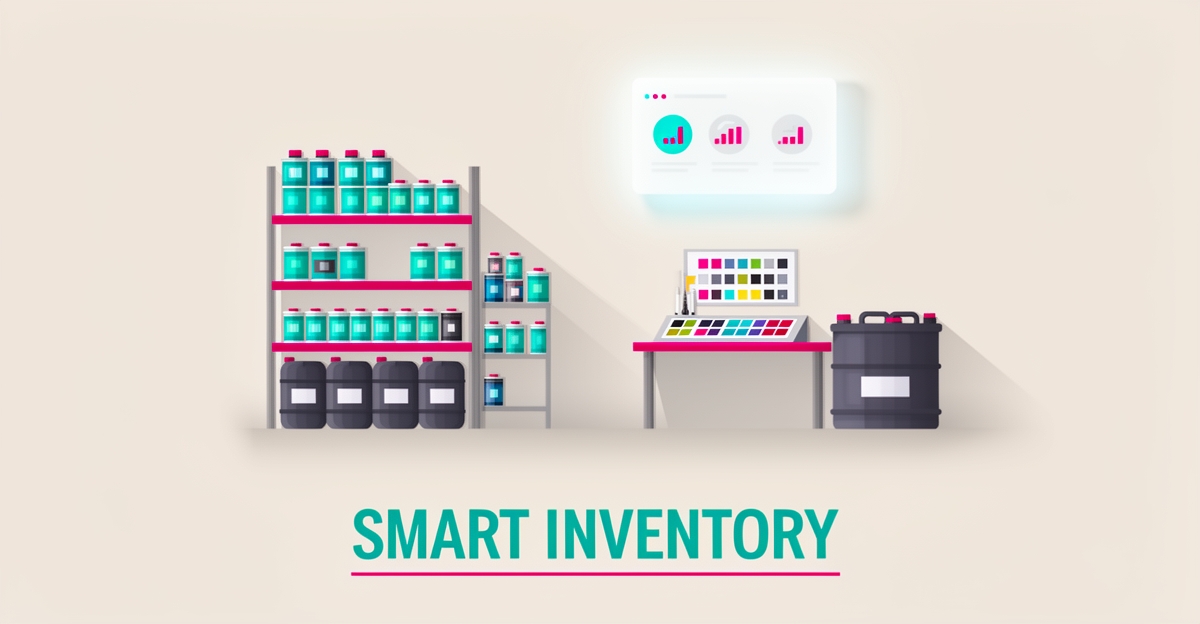
Real-time visibility is the difference between a paint shop that runs smoothly and one that constantly chases shortages. AI-powered systems replace guesswork with continuous monitoring, automated capture, and pattern-based optimization for both inventory and chemicals.
AI inventory monitoring systems provide real-time visibility into inventory levels, enabling paint shops to make informed decisions. Shops using AI-powered inventory monitoring typically reduce stockouts and overstocking, leading to increased productivity and reduced waste.
Automated data entry removes the manual tracking errors that drive costly mistakes. AI-powered inventory management systems can automate tracking and data entry, reducing manual labor and increasing accuracy — fewer errors, higher productivity, lower costs.
Chemical usage becomes predictable instead of reactive. AI-powered chemical management systems help optimize chemical usage by analyzing usage patterns, predicting demand, and recommending optimal usage levels. Shops using these systems can reduce chemical waste and minimize environmental concerns.
The impact extends beyond the shop floor. Industry analyses of AI adoption in paint shop processes consistently report that a large majority of automotive manufacturers see improved efficiency from AI implementation, with faster production cycles and improved quality control as common outcomes.
AI transforms visibility and usage tracking through:
- Continuous real-time monitoring of paint, solvents, and consumables with automated alerts before stockouts occur
- Automated data capture from dispensing, mixing, and repair orders to eliminate manual entry and errors
- Pattern analysis of repair history, seasonal demand, and local vehicle demographics to recommend stock levels
- Predictive chemical demand modeling that optimizes usage and reduces waste
Predictive inventory tools analyze repair history, seasonal patterns, and local vehicle demographics to recommend stock levels. Shops using AI inventory management typically report a meaningful reduction in dead stock and fewer emergency parts runs.
AI tools for auto shop management can also reduce administrative time substantially while improving customer retention through automated service reminders and transparent repair tracking. Most shops can start with one AI tool and expand as they see results.
For shops focused on inventory and supply chain management, this visibility enables data-driven decisions rather than intuition. AIQ Labs helps shops implement intelligent systems that monitor usage and auto-reorder supplies, reducing waste and downtime. The result is fewer emergency runs, tighter chemical control, and consistent availability of critical materials.
From Manual Logs to Predictive Intelligence: Implementing AI in Your Shop
Adopting AI for inventory and chemical management does not require a complete operational overhaul on day one. Most shops can start with one AI tool and expand as they see results, making the transition far less disruptive than most owners expect.
The first phase is a thorough workflow assessment. Before any system goes live, you need a clear picture of how your shop currently tracks paint, solvents, and consumables — where manual logs create gaps, where stockouts originate, and where chemical waste accumulates. This discovery stage mirrors the structured approach AIQ Labs uses in its AI Workflow Builds, where business process analysis and data infrastructure assessment happen before a single line of code is written.
Next comes system integration. AI-powered inventory tools connect with your existing management software to deliver real-time visibility into stock levels, replacing error-prone manual counts. Shops using these systems typically report a meaningful reduction in dead stock and fewer emergency parts runs. For chemical management specifically, AI adoption in paint shop processes can reduce paint usage and overspray, often delivering measurable savings within months.
Staff training is the third critical phase. Even the most sophisticated predictive system fails if your team does not understand how to interpret its recommendations or trust its reorder alerts. A phased rollout typically includes:
- Hands-on training sessions tailored to each role, from painters to parts managers
- Clear documentation of new workflows and escalation procedures
- A feedback loop so technicians can flag inaccuracies early
- Defined performance metrics to track adoption and accuracy improvements
The final phase is continuous optimization. AI inventory systems improve over time as they ingest more of your shop's data, refining demand forecasts and reorder points with each cycle. This is where predictive intelligence replaces reactive guesswork — the system learns your seasonal patterns, job mix, and consumption rates, then adjusts automatically.
The financial barrier is also lower than many owners assume. Rather than a large upfront capital expense, AIQ Labs offers three ways to engage: Start Monthly for ongoing access to managed AI staff and systems, Build in Milestones for a fixed-price rebuild of your costliest workflow, or Own It Outright for a system you keep with no recurring fees. Full details are on the pricing page — no fake prices, no invented case-study numbers. This structure lets shops prove ROI on one workflow before scaling further.
The shops that succeed with AI are not the ones that wait for perfect conditions. They are the ones that pick their most painful bottleneck — whether that is stockouts, chemical waste, or manual tracking — and let measurable results build the case for what comes next.
Still paying for 10+ subscriptions that don’t talk to each other?
We build custom AI systems you own outright. No vendor lock-in. Full control.
Not sure where to start? Ask our AI planner
Frequently Asked Questions
How much can AI reduce stockouts and overstocking in an auto paint shop?
Can AI really help reduce chemical waste in paint shops?
Is implementing AI in a paint shop too disruptive or expensive for small businesses?
What kind of ROI can I expect from AI inventory management in my paint shop?
Do AI systems actually improve efficiency in paint shop processes, or is it just hype?
Will my team need extensive training to use AI inventory and chemical management tools?
Your Next Move: From Signs to Solutions
The five signs are clear: stockouts that stall jobs, overstocking that ties up capital, inconsistent chemical usage, error-prone manual tracking, and decisions made on gut feel instead of data. Left alone, each one quietly drains your bottom line. But the fix doesn't require a full operational overhaul — most shops start with one AI tool and expand as they see results, and shops using AI inventory management typically report meaningful reductions in dead stock along with fewer emergency parts runs. The path forward is simple: pick your most painful bottleneck, whether that's chemical waste or stockout downtime, and prove the value there first. AIQ Labs helps paint shops implement intelligent systems that monitor usage and auto-reorder supplies, with engagement models — Start Monthly, Build in Milestones, or Own It Outright — that let you start with a single workflow and scale only when the numbers justify it. Not sure where your biggest leak is? Take the two-minute Fit Check at aiqlabs.ai/apply, then book a free 30-minute strategy call — a real working session with an AI engineer to map your highest-ROI opportunity. If there isn't a clear win, we'll tell you that too.
Make AI your competitive advantage — not just another tool.
Strategy, implementation and ongoing optimization. One partner, end to end.
Not sure where to start? Ask our AI planner