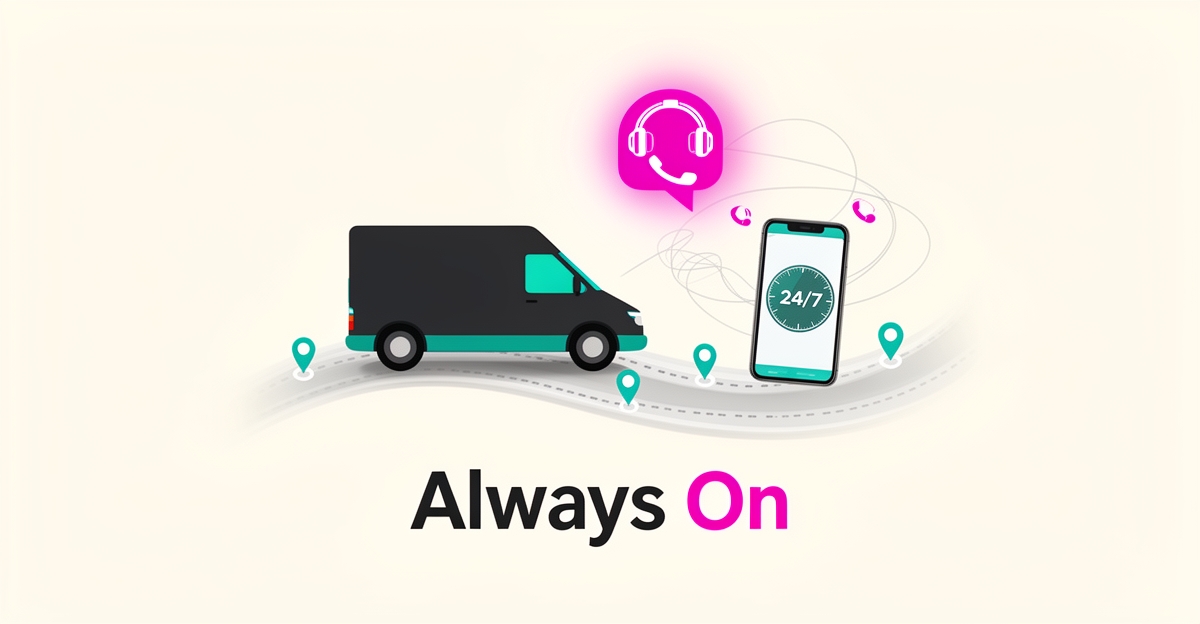
5 Signs Your Delivery Service Needs an AI Receptionist to Handle Customer Inquiries 24/7
Key Facts
- Industry analyses of AI receptionist implementation report that a large majority of callers abandon calls if they can't connect quickly — many within the first few minutes according to implementation research
- A significant share of customers never attempt to call back after a bad phone experience per industry research
- AI receptionists can meaningfully reduce operational costs and improve response times based on industry analysis
- Most small business customers still prefer phone calls for initial contact or time-sensitive matters per Callin research
- The global virtual receptionist market has been growing steadily, with multi-billion-dollar valuations projected through the early 2030s according to step-by-step business research
- AI receptionists can handle multiple calls simultaneously, ensuring no customer inquiries are missed during busy periods as confirmed by Nextiva's analysis
- AI Employees from AIQ Labs cost roughly 80% less than a human hire in an equivalent role while working 24/7/365
Hire a team member that works 24/7 — for less than a part-time wage.
AI receptionists, SDRs, dispatchers and 99+ roles. Trained on your business, fully managed.
Not sure where to start? Ask our AI planner
The Hidden Cost of Missed Calls in Delivery Operations
Missed calls in delivery operations don't just disappear — they turn into lost revenue, negative reviews, and customers who switch to a competitor. When a driver is on the road, dispatch is slammed, or the office is closed, the phone becomes the first point of failure.
Delivery customers call for urgent, time-sensitive reasons. A recent industry guide found that the large majority of small business customers still report that phone calls remain their preferred communication method for initial contact or time-sensitive matters. For delivery services, that means order changes, address corrections, and ETA questions arrive by voice, not chat.
The cost shows up immediately in abandonment. According to step-by-step implementation research, most customers drop calls if they don't get connected quickly — and a significant share never attempt to call back at all after a bad experience, effectively removing themselves from the sales funnel.
Peak dispatch windows magnify the problem. A single human receptionist can only handle one call at a time, so queues build while drivers wait for instructions and customers wait for answers. That delay creates a reputation impact that outlasts any single missed order.
Off-hours exposure is equally damaging. Late evening deliveries, weekend orders, and early morning prep calls hit voicemail when teams are offline. Without 24/7 coverage, delivery services absorb the hidden cost of missed calls in the form of:
- Lost delivery modifications and upsells that never get captured
- Increased driver idle time due to unanswered dispatch questions
- Negative reviews citing poor communication and unresponsiveness
- Repeat calls that overload staff during peak hours
AI-powered inbound call management changes the economics of this problem. Artificial intelligence receptionist analysis suggests AI receptionists can meaningfully reduce operational costs while substantially improving response times. The technology handles multiple calls simultaneously, routes urgent requests to dispatch, and captures messages for follow-up without human intervention.
For delivery operations, that means scheduling changes, route updates, and customer messages are managed continuously. AIQ Labs designs inbound call management AI that works as a managed team member — answering calls 24/7, qualifying inquiries, and integrating with dispatch and order systems. The result is fewer abandoned calls, faster resolution, and protection of revenue during the moments customers need answers most.
5 Signs You Need 24/7 AI-Powered Call Handling
Every missed call is a delivery booking that went to a competitor. For courier and delivery businesses, the warning signs usually show up in the phone logs long before they show up in revenue — and five of them are nearly universal.
Sign one: your phones go quiet after 5 PM — but your customers don't. Delivery customers track packages, reschedule drop-offs, and report problems around the clock, not just during business hours. If your lines roll to voicemail at closing time, you're handing after-hours inquiries to whoever answers first the next morning.
Sign two: callers are hanging up before anyone picks up. According to industry research on AI receptionist implementation, most customers drop calls if they don't connect within the first few minutes — and many never attempt to call back at all. For a delivery service, that abandoned call is often a lost booking or an escalation that lands as a one-star review instead.
Sign three: peak periods overwhelm your front line. Holiday surges, weather delays, and Monday-morning rushes all hit at once. Research from Nextiva's analysis of AI receptionists confirms that AI systems handle multiple calls simultaneously, so no inquiry goes unanswered even during your busiest windows — something a single human receptionist physically cannot do.
These pressure points tend to cluster around the same moments in a delivery operation:
- Drivers calling in for route updates while customers wait on hold
- After-hours "where is my package?" calls going to voicemail
- Seasonal volume spikes that outpace your front-desk staffing
- Repeat inquiries about scheduling, tracking, and delivery windows tying up staff
Sign four: your customers still want to call — and expect an answer. Despite the rise of apps and chat, research from Callin shows most small business customers prefer phone calls for initial contact or time-sensitive matters. Nothing is more time-sensitive than a delivery that's late or a shipment that needs rerouting today.
Sign five: inquiry volume keeps climbing while headcount stays flat. If your team spends its day answering the same scheduling and status questions, you're paying skilled staff to do repetitive work. An AI receptionist handles scheduling, route updates, and message-taking autonomously — and industry data indicates AI receptionists can cut operational costs substantially while improving response times.
This is exactly the gap AIQ Labs' AI Employees were designed to fill — a managed AI receptionist that answers every call, books and reschedules deliveries, and integrates with your dispatch tools around the clock. If two or more of these signs sound familiar, it's worth a conversation about what 24/7 coverage could recover for your business.
How an AI Receptionist Solves Delivery Inquiries Without Adding Staff
When a delivery surge hits, the difference between keeping and losing a customer often comes down to whether the phone gets answered. An AI receptionist answers every call — instantly, around the clock, and without adding a single seat to your payroll.
The core advantage is parallel coverage. Unlike a human dispatcher who can only speak to one caller at a time, AI receptionists can handle multiple calls simultaneously, ensuring no customer inquiries are missed, even during busy periods. That matters given that implementation research shows most customers drop calls if they don't get connected quickly — and many never call back.
For a delivery business, that translates directly into concrete workflows:
- Scheduling and rescheduling handled on the call, without a callback loop
- Instant routing of route-update questions to the right information
- Real-time order status pulled from your existing systems
- Message prioritization so urgent issues reach a human immediately
- Multilingual support for a broader customer base
Integration is what makes this work in practice. Because AI receptionists connect with existing business systems, a caller asking "where's my delivery?" gets an accurate, current answer rather than a vague promise to check. The result, according to industry analysis, is that AI receptionists can reduce operational costs while improving response times.
The phone still matters more than most operators assume. A small business guide reports that most customers prefer phone calls for initial contact or time-sensitive matters — exactly the category a late or rerouted delivery falls into. It's also why AIQ Labs delivers this capability as a managed AI Employee rather than a software subscription: a receptionist role that's built, trained on your delivery processes, integrated with your scheduling and dispatch tools, and monitored continuously, with the ability to pause or adjust anytime.
Beyond answering calls, a well-deployed AI receptionist generates detailed analytics on call patterns and customer inquiries, revealing peak demand windows and recurring complaint themes you can act on. And because the system works 24/7/365, after-hours callers — a major source of missed revenue for delivery services — are handled with the same professionalism as midday ones.
The economics are difficult to argue with. AI Employees cost roughly 80% less than a human hire in an equivalent role while eliminating missed calls entirely, and the global virtual receptionist market reflects that momentum, with steady growth projected through the early 2030s, according to step-by-step business research.
If you want to see whether this fits your operation, take the two-minute Fit Check at aiqlabs.ai/apply and book a free 30-minute strategy call — a working session with an AI engineer to map your biggest bottleneck. If there isn't a clear win, we'll tell you that too.
From Assessment to Live: Implementing an AI Receptionist for Delivery
Moving from idea to live phone coverage requires a clear sequence, not a big bang rollout. Delivery services need a receptionist that understands routes, ETAs, and order status without putting a human on hold.
Start by assessing prerequisites. Map the inquiries that arrive after hours and during peak dispatch windows, and audit the tools the AI must reach — order management, driver app, SMS updates. This inventory defines data access, integration points, and success metrics before any build begins.
Platform selection follows the workflow, not the vendor brochure. For delivery operations, the system must handle multiple calls simultaneously, ensure no customer inquiries are missed even during busy periods, and integrate with existing business systems. According to industry analysis, handling multiple calls at once is a core capability for busy businesses.
Preparation focuses on delivery-specific scripts and FAQs. Build conversation paths for live order tracking, route delays, missed deliveries, rescheduling, and refund requests. Include fallback prompts for human escalation and ensure voice and conversation quality matches brand tone.
Testing and improvement is continuous. Run pilot calls with real scenarios, measure first-contact resolution, and refine intents as drivers and dispatchers provide feedback. Remember that most callers won't wait long on hold, and many won't call back at all after a bad experience — so first-contact resolution is the metric that matters.
AIQ Labs maps this process to three deployment options for owned, scalable delivery coverage:
- Start Monthly — one AI employee with setup plus a flat monthly plan that costs less than a part-time hire, including build, training, integrations, monitoring, and improvements.
- Build in Milestones — one workflow or department system split into phases, approve and pay per phase, stop anytime and keep everything built so far.
- Own It Outright — a full AI operating system with full ownership of code, agents, and data when complete.
With the right setup, AI receptionists can reduce operational costs and improve response times, as noted in market reporting. 24/7 availability means missed calls during off-hours stop costing repeat business, and dispatch updates flow without manual intervention.
Still paying for 10+ subscriptions that don’t talk to each other?
We build custom AI systems you own outright. No vendor lock-in. Full control.
Not sure where to start? Ask our AI planner
Frequently Asked Questions
How quickly do customers hang up when they can't reach someone?
How does an AI receptionist handle multiple calls during peak delivery times?
Do customers still prefer calling delivery services instead of using apps or chat?
Can an AI receptionist reduce operational costs for a delivery business?
What happens to delivery inquiries when the office is closed after 5 PM?
Is an AI receptionist a replacement for human staff in delivery operations?
Stop Losing Deliveries to Voicemail
Missed calls during off-hours, long hold times, and repeat questions about ETAs and rescheduling are not just annoyances — they are lost modifications, idle drivers, and reviews that damage trust. When most small business customers still prefer phone calls for time-sensitive matters research from Callin confirms, every unanswered ring is a booking that can go to a competitor. An AI receptionist changes that equation by answering instantly, handling multiple calls at once, and integrating with dispatch and order systems so changes and status requests are captured 24/7 without adding headcount. AIQ Labs deploys this as a managed AI Employee — built, trained on your delivery processes, and monitored continuously — so inquiries are resolved faster and revenue is protected during peak and after-hours windows. If two or more of the signs above feel familiar, start the two-minute Fit Check at aiqlabs.ai/apply for a free 30-minute strategy call to map your biggest bottleneck and see what 24/7 coverage could recover for your operation.
Make AI your competitive advantage — not just another tool.
Strategy, implementation and ongoing optimization. One partner, end to end.
Not sure where to start? Ask our AI planner