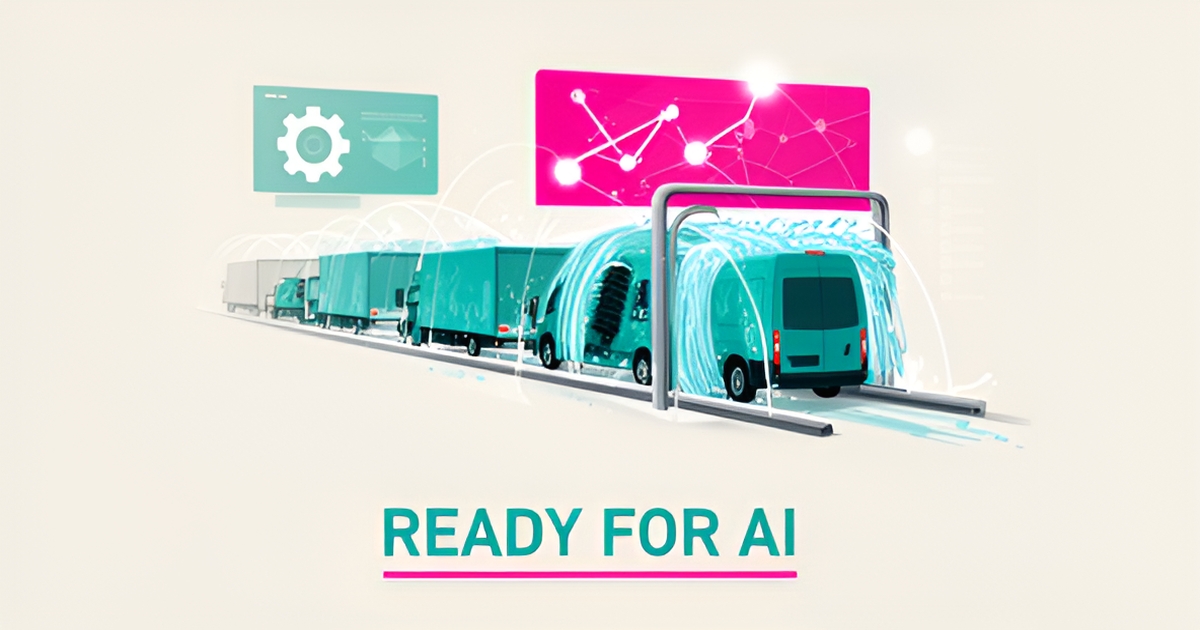
5 Signs Your Fleet Wash Business Is Ready for AI Automation
Key Facts
- Most fleet operations that adopt AI see the biggest gains in scheduling, routing, and dispatch — the same workflows fleet wash businesses run daily
- Predictive maintenance platforms can typically forecast vehicle issues before failure, reducing downtime and missed service windows
- Industry analysis as of late 2026 consistently finds that a large share of companies see little measurable return from AI due to poor data quality and fragmented governance
- AI adoption is now widespread across business functions — the question for fleet wash owners is no longer whether to automate, but in what order
- AI doesn't make integration intelligent by design. It just makes the gaps harder to ignore
Hire a team member that works 24/7 — for less than a part-time wage.
AI receptionists, SDRs, dispatchers and 99+ roles. Trained on your business, fully managed.
Not sure where to start? Ask our AI planner
The Operational Friction Fleet Wash Owners Can’t Ignore Anymore
Manual scheduling, missed washes, and last-minute scrambles are no longer just growing pains for fleet wash owners — they are signals that the operation has outgrown its tools. With AI now common across business functions as of late 2026, the pressure to move from reactive firefighting to proactive control is intensifying across fleet services.
The friction shows up first in the daily workflow. Dispatch relies on phone calls and spreadsheets, service requests get logged in one place and billed in another, and vehicle availability is tracked from memory. That fragmentation creates inconsistent service quality and missed appointments that erode trust with fleet customers.
Data entry errors compound the problem. When maintenance logs, wash bay schedules, and customer billing live in separate systems, manual re-keying introduces mistakes that surface as customer complaints and revenue leakage. Industry analysis as of late 2026 consistently finds that many companies see little measurable return from AI investments due to poor data quality, inadequate architecture, and fragmented governance — a warning that AI will scale those gaps rather than fix them.
Operational friction that fleet wash owners can no longer ignore includes:
- Manual scheduling and reactive dispatch that cause missed appointments and overtime
- Inconsistent service quality from conflicting records across spreadsheets and tools
- Manual data entry errors in billing and maintenance logs that trigger complaints
- Unpredictable vehicle readiness due to reactive maintenance and fragmented tracking
These pain points mirror what AI-enabled fleet management is designed to solve. Route optimization and vehicle tracking typically cut overtime and wasted driving, while predictive maintenance platforms can typically forecast vehicle issues before failure, reducing downtime and missed service windows.
The core issue is not a lack of effort, it is operational fragmentation. As Murali Thiagarajan has noted, AI doesn't make integration intelligent by design — it just makes the gaps harder to ignore. For fleet wash businesses, that means an AI scheduling tool layered on top of messy data will produce fast but wrong decisions.
Recognizing this friction is the first step in an AI readiness assessment. AIQ Labs works with SMBs to map data estates, standardize definitions, and establish clear ownership before automation, ensuring AI amplifies a sound operation instead of scaling its weaknesses. See AIQ Labs' workflow builds for how that looks in practice.
5 Readiness Signals Backed by Fleet Data
Most fleet wash operations don't ignore AI because they doubt the technology — they ignore it because the daily chaos of missed appointments, driver complaints, and spreadsheet fires feels too immediate to pause for strategy. That operational noise is actually the clearest signal that your business has outgrown manual management.
- Inconsistent scheduling that leaves crews idle or overbooked
- High customer complaints tied to missed or late service windows
- Manual data entry errors cascading into billing and compliance issues
- Reactive maintenance and routing waste burning fuel and overtime
- Fragmented data systems that prevent a single source of truth
These aren't isolated problems — they're symptoms of an operational architecture that AI is specifically designed to restructure. Fleet management research shows predictive maintenance platforms can typically forecast vehicle issues before failure, turning unexpected breakdowns into planned downtime. Real-world deployments of route optimization and vehicle tracking have reported meaningful reductions in overtime, inefficient driving habits, and wrong-address deliveries — a direct parallel to missed wash appointments at the wrong bay or site.
The catch? Industry analysis warns that a large share of companies see no measurable AI returns because they automate fragmented data instead of fixing it first. AI doesn't repair broken processes — it scales them faster. That's why the five signals above matter: they identify exactly where your data, workflows, and governance need hardening before any algorithm touches them.
AIQ Labs approaches this through an AI readiness assessment that maps your current systems, quantifies the friction, and builds a phased roadmap — so automation amplifies what works instead of codifying what doesn't.
Why Data Quality and Governance Decide AI Success
Many fleet wash operators rush into AI adoption expecting it to fix broken processes, only to find it amplifies existing weaknesses. AI doesn’t fix operational gaps—it accelerates them, turning fragmented data and unclear ownership into faster, costlier mistakes. This is why so many companies see no measurable results from AI investments — not because the technology fails, but because poor data quality and weak governance undermine value from the start. Industry analysis as of late 2026 confirms that without addressing foundational issues, AI scales inconsistency rather than resolving it.
Before implementing AI, businesses must establish trust in their data, clarify ownership, and control access. If scheduling logs, maintenance records, and customer billing live in separate systems with conflicting definitions, AI will generate authoritative but misleading outputs—like double-booking wash bays or misprioritizing urgent services. The governance imperative isn’t theoretical: without clear answers to “Can we trust the data? Who owns it? Who can access it?” AI initiatives struggle to deliver value, and integration costs can escalate faster than the benefits generated. Diverse data definitions across integrated systems produce inconsistent outputs, turning operational overlap into contradiction.
For fleet wash businesses, this risk is especially acute when scaling across multiple locations or adding new vehicles without standardized data practices. Premature AI deployment can turn manual inefficiencies into systemic errors—such as routing trucks to closed facilities or triggering unnecessary maintenance alerts—because the system acts on flawed inputs at machine speed. The consequence isn’t just wasted effort; it’s eroded confidence in AI among teams who see it as unreliable. To avoid this, organizations must first map their data estates, standardize definitions, assign clear ownership, and enforce access controls. Only then can AI become a force multiplier for efficiency rather than a fast track to fragmentation. The risk isn’t AI failure—it’s scaling fragmentation faster than control.
From Readiness to Implementation with AIQ Labs
Before AI can transform your fleet wash operations, your data foundation must be ready. Start by mapping every system that touches scheduling, maintenance logs, customer billing, and vehicle status—spreadsheets, legacy software, and manual notes—to identify duplicate entries or conflicting definitions. Industry analysis as of late 2026 finds that many companies fail to see measurable results from AI investments due to poor data quality and fragmented architecture, which AI will amplify rather than fix if left unaddressed. Without resolving these gaps, automation efforts scale inconsistency instead of efficiency.
Next, standardize how critical data points are defined across your business. Ensure terms like "service completion," "vehicle downtime," or "customer complaint" mean the same thing whether logged by a dispatcher, technician, or automated sensor. Establish clear ownership: designate who validates AI-generated schedules, audits maintenance predictions, and oversees data access controls. Without this governance, AI-driven decisions can propagate errors silently across operations. Fleet management data shows that standardized inputs are essential for modern fleet AI tools — from natural-language fleet queries to automated compliance document checks — to deliver reliable results.
Finally, select AI tools that match your specific workflow gaps, then pilot them in a controlled environment. Begin with a single use case—such as optimizing wash bay scheduling or predicting chemical inventory needs—using a subset of your fleet and data. Validate outputs against known benchmarks before scaling. AIQ Labs guides this exact process: rebuild the one workflow that costs you the most with a fixed-price AI Workflow Build, add managed AI Employees for dispatch and scheduling coverage, or connect everything into a phased AI Operating System you own outright. Flexible payment models — Start Monthly, Build in Milestones, or Own It Outright — keep the engagement matched to your risk tolerance. This disciplined approach ensures AI solves real problems instead of exposing hidden fractures in your operations.
Still paying for 10+ subscriptions that don’t talk to each other?
We build custom AI systems you own outright. No vendor lock-in. Full control.
Not sure where to start? Ask our AI planner
Frequently Asked Questions
What are the signs my fleet wash business is ready for AI automation?
Will AI fix my broken scheduling and dispatch processes?
What kind of results can AI actually deliver for fleet operations?
Why do so many AI investments fail to show results?
What should I do before implementing AI in my fleet wash business?
How much does fleet management AI software cost?
Your Fleet Wash Is Already Signaling — Now Decide What It Scales
The five readiness signals — inconsistent scheduling, rising customer complaints, manual data entry errors, reactive maintenance waste, and fragmented data — aren't just operational annoyances. They're your business telling you it has outgrown manual management. And the evidence is clear that AI can fix what's broken: predictive maintenance can turn unexpected breakdowns into planned downtime, and route optimization has repeatedly cut overtime and wasted driving. But remember the warning woven through this article: AI doesn't repair broken processes — it scales them faster. With many companies still seeing no measurable results from AI investments due to poor data quality and fragmented governance, the sequence matters: map your systems, standardize your data, establish ownership, then automate. That's exactly how AIQ Labs approaches every engagement — starting with an assessment that quantifies your friction and builds a phased roadmap, so automation amplifies what works instead of codifying what doesn't. Start with the two-minute Fit Check at aiqlabs.ai/apply, then book a free 30-minute strategy call — a real working session with an AI engineer to map your biggest bottleneck. If there isn't a clear win, we'll tell you that too.
Make AI your competitive advantage — not just another tool.
Strategy, implementation and ongoing optimization. One partner, end to end.
Not sure where to start? Ask our AI planner