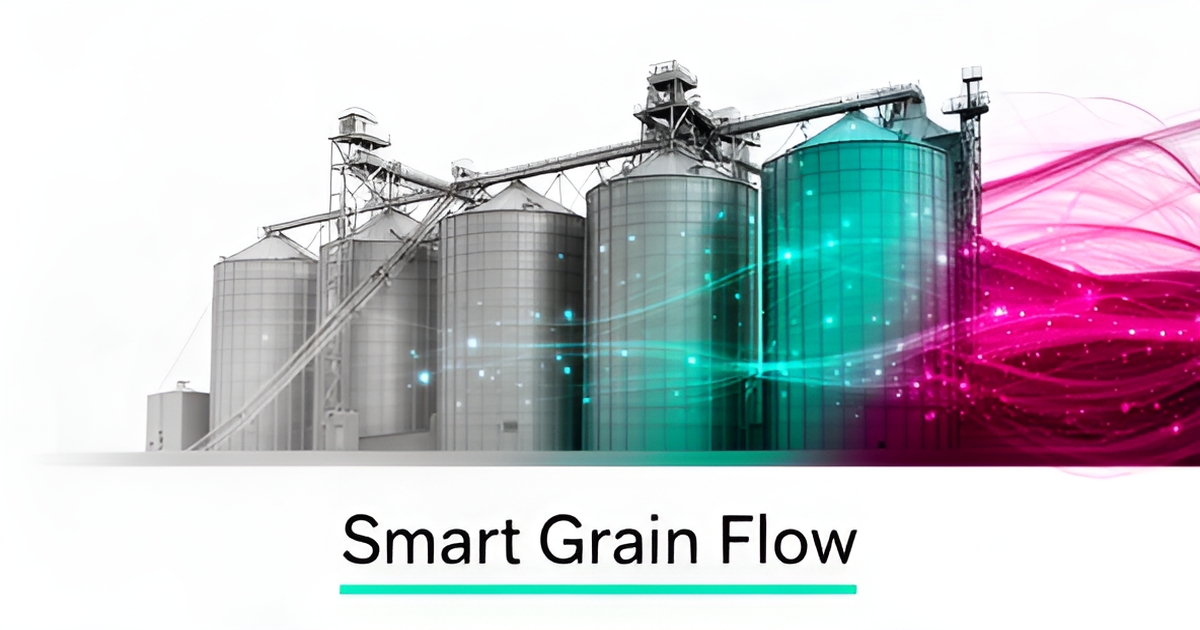
5 Signs Your Grain Elevator Needs AI-Driven Inventory and Flow Management
Key Facts
- Stock discrepancies, delayed dispatches, and inefficient storage are the three most common flow problems reported in grain elevator operations
- Manual reconciliation and reporting typically consume several hours per week that could be automated
- Unmanaged "shadow AI" adoption creates visibility and compliance risks as staff bring their own tools outside centralized controls
- A large share of AI projects underdeliver because tools are chosen before workflows are designed—success depends on starting with a persistent manual problem
- Phased, milestone-based implementation avoids downtime and keeps trucks, trains, and conveyors running during deployment
Hire a team member that works 24/7 — for less than a part-time wage.
AI receptionists, SDRs, dispatchers and 99+ roles. Trained on your business, fully managed.
Not sure where to start? Ask our AI planner
The Hidden Cost of Manual Inventory and Flow in Grain Elevators
Manual counts and paper logs create a visibility gap that compounds every day in a grain elevator. What looks like isolated errors is actually a systemic flow problem that erodes margins, slows trucks, and risks spoilage.
Stock discrepancies start with human error and lag. Manual inventory checks miss partial loads, mislabel bins, and fail to capture real-time movement. The result is phantom inventory, over-commitments to buyers, and emergency re-counts that stall operations. Stock discrepancies are consistently reported as a core pain point in grain operations, alongside delayed dispatches and inefficient storage.
Delayed dispatches follow directly from poor visibility. When elevator managers cannot confirm what is available, where it is, and when it can be loaded, trucks wait and contracts slip. Dispatch decisions become reactive instead of planned, and coordination between receiving, storage, and outbound flow breaks down. This is a flow problem, not a staffing problem.
Inefficient storage drives waste and spoilage. Grains sit too long in the wrong bins, moisture and temperature are monitored intermittently, and rotation logic relies on memory. Without continuous tracking, first-in-first-out is lost and quality degrades. Poor rotation is one of the most common drivers of avoidable waste in grain handling.
These pain points create a cycle that is hard to break with spreadsheets and walk-throughs. Teams spend hours reconciling numbers instead of moving grain. Automating status compilation and reporting typically frees several hours per week—time currently spent chasing inventory.
Operational visibility also suffers from unmanaged tool adoption. Shadow AI is growing as employees bring generative AI and automation platforms into their work outside centralized IT controls. This creates real risks around data handling and compliance, because leadership often has no clear picture of who is using which tools with which data.
At scale, even well-built AI systems face operational limits—capacity constraints, rate limits, and integration gaps cause failures during peak load, not model bugs. For grain elevators, reliability matters more than novelty. Any system you deploy needs to be engineered for peak intake season, not just demos.
The hidden costs show up as:
- Shrinkage from unaccounted loss and spoilage due to poor rotation
- Demurrage and lost contracts from delayed dispatches and poor load planning
- Labor hours tied to manual counts, reconciliations, and emergency investigations
- Risk exposure from inaccurate records and limited auditability
AIQ Labs builds AI inventory and flow systems for agricultural logistics with real-time tracking to address these issues. The focus is on optimizing inventory flow and reducing waste through owned, production-ready systems rather than fragmented subscriptions. If you already know which workflow hurts most, AI Workflow Builds rebuild that one process for a fixed price, in phases.
Implementation must be thoughtful. A large share of AI projects across industries underdeliver, often because organizations chase tools instead of designing systems around persistent manual problems. Success comes from starting with the workflow that costs you the most, not the technology that sounds the most impressive.
Why Traditional Tracking Breaks Down at Scale
When grain volumes climb, manual tracking stops being slow and starts being risky. Spreadsheets and siloed systems that worked for a single site can't keep pace with multi-bin moves, inbound trucks, and outbound loads.
Spreadsheet-based tracking creates data lag the moment teams scale. Updates live in different files, on different shifts, with no single source of truth. The result is stock discrepancies, delayed dispatches, and inefficient storage that compound across locations. These are exactly the pain points where inventory flow optimization and waste reduction deliver the fastest returns.
Siloed tools also invite unmanaged AI usage. As employees search for faster answers, they adopt generative AI and automation platforms outside centralized controls. Shadow AI creates operational visibility challenges, and vendor sprawl piles more point tools on top of an already fragmented technology landscape.
That sprawl is expensive and fragile. Each new point solution adds another login, another data export, another reconciliation step. Teams spend hours moving data instead of moving grain, and leadership loses confidence in what the numbers actually mean.
At scale, reactive tools hit hard capacity limits. AI usage across organizations keeps growing—median users have multiplied their consumption while heavy users have grown it several-fold—which means systems built without headroom fail exactly when demand spikes: peak harvest intake. Capacity planning, rate limits, and concurrency are engineering problems, and they need to be solved before season, not during it.
Traditional tracking breaks down in predictable ways:
- Data lag between bins, trucks and the office creates phantom inventory and dispatch delays
- Shadow AI and vendor sprawl reduce visibility into who is using what data where
- Capacity limits and fragmented systems cause failures and slow response during peak intake
- Manual reconciliation and reporting consume hours every week that could be automated
AIQ Labs addresses these failure points by unifying data, closing the loop between physical flow and digital records, and replacing reactive spreadsheets with owned, operational intelligence that scales with volume. For facilities that want one connected layer across inventory, dispatch, and reporting, AI Operating Systems are built in phases and owned outright.
How AI-Driven Inventory and Flow Management Optimizes Elevator Operations
AI-driven inventory and flow management transforms grain elevator operations by replacing manual tracking with intelligent, real-time systems that anticipate needs and optimize movement. Using multi-agent AI frameworks, these solutions continuously monitor grain levels across silos, predict inbound and outbound flow based on historical patterns and market conditions, and automatically prioritize dispatches to prevent bottlenecks. This approach directly addresses core pain points like stock discrepancies and delayed shipments by creating a dynamic, self-correcting logistics network. AIQ Labs has deployed 200+ multi-agent systems and runs four live SaaS products daily—the same engineering discipline applies to agricultural logistics.
Predictive flow forecasting leverages AI's ability to analyze large datasets—such as seasonal harvest trends, carrier availability, and storage degradation risks—to forecast grain movement. By identifying potential delays before they occur, elevators can proactively adjust labor schedules, equipment use, and storage allocation. Predictive analytics in logistics not only prevents schedule slippage but also enables early warning alerts for operational risks, allowing teams to shift from reactive fixes to strategic planning. This foresight minimizes spoilage and protects grain quality throughout the storage cycle.
Automated dispatch prioritization uses AI to match outgoing shipments with the most efficient routes, carrier capacities, and storage readiness, reducing idle time and demurrage costs. The system continuously recalculates priorities as new data arrives—such as unexpected rail delays or sudden market demand shifts—ensuring that the highest-value or most time-sensitive loads move first. For grain elevators, this means fewer trucks waiting at scales and more consistent flow from silo to transport.
AIQ Labs applies these principles through custom AI inventory systems built specifically for agricultural logistics, integrating real-time sensor data, predictive modeling, and automated workflow controls. By anchoring AI implementation in risk early warning, scenario planning, and continuous performance monitoring, elevators gain not just automation, but a resilient, adaptive operational foundation. The result is a leaner, more responsive system where inventory accuracy improves, waste declines, and logistics teams focus on exception management rather than manual reconciliation. This shift from reactive oversight to intelligent orchestration is what separates elevated performance from ongoing inefficiency in modern grain handling.
From Signs to Action: Implementing AI Without Operational Disruption
Recognizing the warning signs is only half the battle. The real challenge lies in moving from diagnosis to deployment without halting the trucks, trains, and conveyors that keep a facility profitable. A large share of AI projects underdeliver because organizations chase tools before designing systems that fit their existing workflows. A practical path starts with a readiness assessment that maps current ERP, weighbridge, and SCADA touchpoints, then prioritizes the single workflow where predictive inventory control will deliver the fastest return.
- Audit data flows between weighbridge tickets, bin-level sensors, and the ERP to expose gaps AI can close
- Select one high-impact use case — such as real-time grade blending or dynamic dispatch sequencing — for a milestone-based build
- Deploy a managed AI inventory manager that integrates with your existing APIs and is capacity-tested for peak intake, so reliability holds when volume spikes
- Establish governance guardrails and human-in-the-loop checkpoints before expanding to cross-department automation
This phased approach mirrors what works in complex operational environments, where native AI features in existing platforms offer simplicity but risk vendor lock-in, while custom builds provide control without the technical debt of fragmented point solutions. AIQ Labs structures these engagements with three straightforward payment models: Start Monthly, Build in Milestones — where each phase ships, gets approved, and transfers ownership before the next begins — or Own It Outright. No fake prices, no invented case-study numbers. The result is an AI workforce that works inside your current systems — not on top of them — turning inventory blind spots into a live, auditable ledger without a single day of downtime. For roles like dispatch coordination and intake reception, AI Employees can run those workflows at roughly 80% less cost than a human hire.
Still paying for 10+ subscriptions that don’t talk to each other?
We build custom AI systems you own outright. No vendor lock-in. Full control.
Not sure where to start? Ask our AI planner
Frequently Asked Questions
How do I know my grain elevator actually needs AI inventory management?
Will AI really save us time on admin and reconciliations?
What's the biggest risk if we just let staff use their own AI tools?
Are AI systems reliable enough for peak intake season?
Why do so many AI projects fail in operations like ours?
Can we implement AI without shutting down trucks and conveyors?
Turn Inventory Visibility Into Operational Advantage
Manual counts and paper logs create a visibility gap that compounds into phantom inventory, delayed dispatches, and spoilage from poor rotation. At scale, spreadsheets and siloed tools magnify data lag, shadow AI sprawl, and capacity failures that cost hours in reconciliation and risk lost contracts. AI-driven inventory and flow management replaces reactive tracking with real-time monitoring, predictive flow forecasting, and automated dispatch prioritization that keeps grain moving and quality intact. The shift is less about novelty and more about designing systems around persistent manual problems. A practical start is a readiness assessment mapping ERP, weighbridge and SCADA touchpoints, then piloting one high-impact workflow like dynamic dispatch sequencing before expanding with governance and human-in-the-loop controls. AIQ Labs builds owned, production-ready AI inventory systems for agricultural logistics focused on optimizing inventory flow and reducing waste, with 200+ multi-agent systems deployed and four live SaaS products run daily. If you want a clear view of where AI will actually move grain for you, take the 2-minute Fit Check at https://aiqlabs.ai/apply, then book a free 30-minute strategy call to map your bottleneck and highest-ROI opportunities. Most AI projects underdeliver when tools are chosen before workflows are designed—start with the workflow, and the technology follows.
Make AI your competitive advantage — not just another tool.
Strategy, implementation and ongoing optimization. One partner, end to end.
Not sure where to start? Ask our AI planner