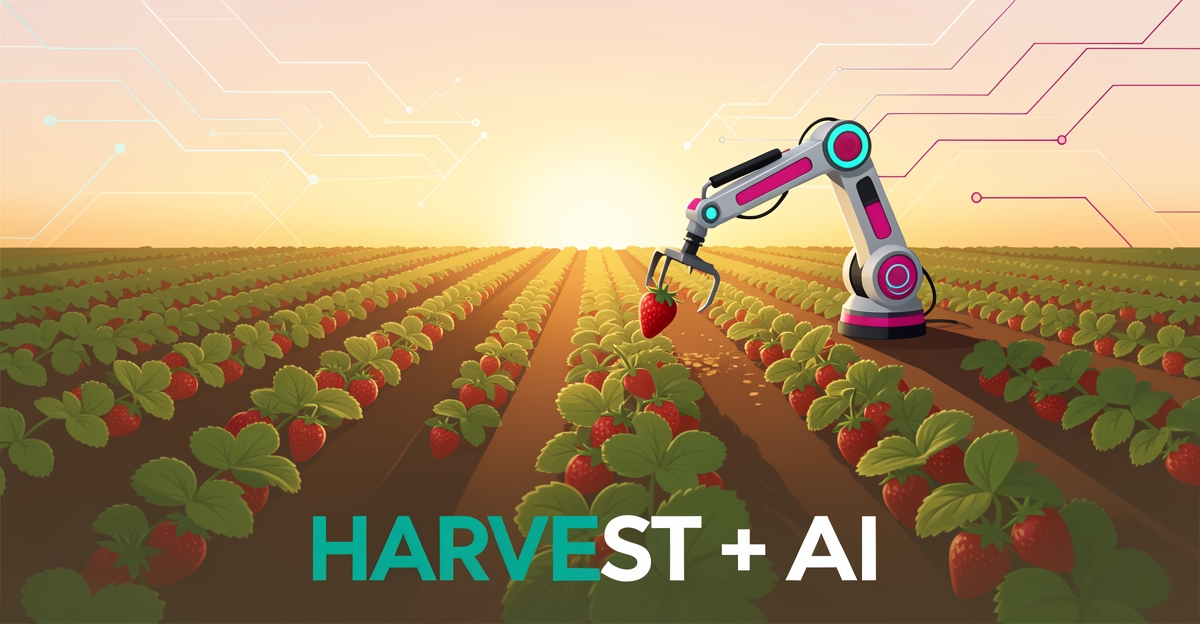
5 Signs Your Harvesting Service Needs AI Automation
Key Facts
- The global harvesting robot market was estimated at roughly $2.2 billion in 2024, with projections toward $6.9 billion by 2030 according to market analysis.
- Hand-harvesting labor represents an estimated $50 billion in annual costs globally, yet robots capture only a small fraction of that work per industry analysis.
- Strawberry harvesting typically requires 400–500 person-hours per acre, with costs commonly cited in the $4,000–$7,000 per acre range per US data.
- AI-driven harvest optimization has been reported to improve yields by up to 30% compared to traditional methods according to precision farming research—treat this as an upper bound, not a guarantee.
- Labor typically represents roughly 40% of specialty crop production costs in California per market reports.
- Robotic fruit pickers and sorting lines typically run $50,000 to $250,000, with ROI commonly achieved within 2–5 years per implementation guides.
Hire a team member that works 24/7 — for less than a part-time wage.
AI receptionists, SDRs, dispatchers and 99+ roles. Trained on your business, fully managed.
Not sure where to start? Ask our AI planner
Harvesting Is Agriculture’s Last Automation Bottleneck
Modern agriculture has automated nearly every stage of crop production—except the one that matters most. While autonomous tractors plant seeds with GPS precision and drones spray with algorithmic efficiency, harvesting remains stubbornly manual, creating a bottleneck that caps operational scalability.
The numbers reveal a striking imbalance. According to industry analysis, hand-harvesting labor represents an estimated $50 billion in annual costs globally, yet robotic solutions capture only a small fraction of that work. That penetration gap persists even as the harvesting robot market—estimated around $2.2 billion in 2024—continues to grow, with projections pointing toward roughly $6.9 billion by 2030.
Why does harvesting resist automation when other farm operations have embraced it? The challenge is fundamentally physical. Fruit grows at unpredictable angles, hidden behind leaves, requiring precise detachment force that machines struggle to replicate. A recent market report notes that while computer vision can identify ripe produce reliably, the mechanical act of reaching, grasping, and removing without bruising remains technically difficult.
This automation gap creates tangible operational friction for harvesting services:
- Labor dependency: Strawberry operations alone typically require 400–500 person-hours per acre, with harvest costs commonly in the $4,000–$7,000 per acre range
- Narrow harvest windows: Manual processes struggle to scale quickly enough when weather and ripeness demand immediate action
- Inconsistent throughput: Human picking speeds vary with fatigue and experience, creating unpredictable daily yields
- Margin pressure: With labor representing roughly 40% of specialty crop production costs in key regions like California, manual harvesting erodes profitability
The contrast between automated and manual operations becomes stark when examining workflow integration. While AI-powered systems can coordinate harvest logistics across multiple fields using real-time data, manual operations rely on handwritten logs and fragmented communication, according to comparative research. This disconnect creates information silos that prevent optimization.
For operations evaluating their automation readiness, the technology landscape offers graduated entry points. Implementation guides indicate that robotic fruit pickers and sorting lines typically range from $50,000 to $250,000, with many operations achieving ROI within 2–5 years through labor reduction and decreased crop loss. The key lies in starting with specific, measurable pilot projects rather than wholesale transformation.
At AIQ Labs, we approach this bottleneck not as a hardware problem but as a systems integration challenge. The same AI orchestration that manages complex workflows in other industries—coordinating data flows, predicting optimal timing, and managing resource allocation—applies directly to harvest logistics. The operations that thrive will be those that recognize harvesting automation isn't about replacing human judgment, but augmenting it with systems that handle the repetitive, time-sensitive tasks humans perform inconsistently.
Five Red Flags Your Harvesting Operation Is Bleeding Efficiency
The most expensive problems in a harvesting operation rarely announce themselves—they show up as overtime hours, bruised fruit, and fields picked three days too late. Here are the five warning signs that your operation is leaking efficiency.
1. Labor costs keep climbing while crews get harder to staff. Hand-harvesting labor in the U.S. typically runs from roughly $1,400 to $6,800 per acre depending on the crop, with strawberries alone demanding 400–500 person-hours per acre. In California, labor commonly accounts for around 40% of specialty crop production costs. If every season starts with a scramble for workers and ends with overtime bills, your biggest input cost is also your least predictable one.
2. You're missing peak harvest windows. Ripeness doesn't wait for your schedule. When crews are short or coordination breaks down, fruit sits past its prime and quality drops before it ever reaches the packing line. AI-guided systems address this directly—autonomous harvesting machines use computer vision and deep learning to identify and pick ripe crops with precision, while drone-based ripeness mapping tells you exactly which blocks to hit first.
3. Quality is inconsistent and crop loss is creeping up. Manual picking quality varies by crew, by hour, and by fatigue level. AI-based grading and sorting systems apply the same standard to every piece of fruit, and research suggests AI-driven harvest optimization can improve yields by up to 30% compared to traditional methods. If your damage and rejection rates are drifting upward, inconsistency is the culprit.
4. Scheduling still runs on whiteboards and phone calls. Coordinating crews, equipment, and field priorities by hand invites errors—double-booked machines, idle crews, missed fields. Manual documentation through handwritten logs or basic apps compounds the problem with accuracy gaps, while AI operating systems coordinate harvest logistics across multiple fields by combining satellite imagery, soil sensors, and weather data into one picture.
5. You're harvesting blind—no data, no optimization. If you can't answer basic questions like cost per harvested unit, throughput per hour, or damage rate by block, you're managing by gut feel. Industry guidance on harvest automation identifies these exact metrics as the foundation for improvement, and operations that instrument their workflows typically see ROI within two to five years through labor reduction and reduced crop loss.
A quick self-audit:
- Do you know your true cost per harvested unit this season?
- Can you see ripeness status across every block in real time?
- Does your scheduling survive a single sick day or weather shift?
- Are quality decisions made by data or by whoever's on the line?
If two or more of these signs sound familiar, the fix isn't necessarily a fleet of robots—experts recommend starting with a single measurable pilot rather than a full overhaul. That's exactly how AIQ Labs works with agricultural operations: we identify the one workflow that costs you the most—scheduling, ripeness monitoring, quality sorting—and rebuild it at a fixed price through AI Workflow Builds, in phases, so you own the system outright and scale only when the numbers prove out.
How AI Automation Transforms Harvest Speed, Quality and Yield
AI automation compresses the harvest window while protecting the crop that makes it profitable. When ripeness peaks for only days, speed and precision decide how much reaches market intact.
Computer vision and robotic arms identify and pick ripe crops with precision, reducing bruising and human error in the field. Autonomous harvesting machines use computer vision, deep learning, and robotic arms to automatically identify and pick ripe crops, and AI-driven harvest optimization has been reported to improve yields by up to 30% compared to traditional farming methods.
Drones for ripeness mapping and field scouting create a real-time harvest plan across acres that manual scouts cannot cover consistently. Drones for field scouting and ripeness mapping are a core automation approach alongside robotic fruit pickers and sorting machines. That aerial data feeds an AI operating system that automates crop monitoring, irrigation scheduling, and supply chain coordination by combining satellite imagery, soil sensors, and weather data.
An AI operating system ties monitoring to action. It automates routine monitoring tasks, freeing experts to focus on strategic decisions and complex problem-solving. Systems can detect crop stress, schedule irrigation, and coordinate harvest logistics across multiple fields—replacing handwritten logs and basic mobile apps, which lead to accuracy variations. This is the idea behind AI Operating Systems: one connected layer across your operation, built in phases and owned outright.
Harvest remains one of the great unsolved problems in agricultural robotics, with significant upside still untapped. The global harvesting robot market was estimated at roughly $2.2 billion in 2024, with projections toward $6.9 billion by 2030. Robots still capture only a small share of total hand-harvesting labor cost, which represents the primary investment opportunity.
The transformation shows up in measurable operations:
- Faster harvest speed with throughput per hour tracked against cost per harvested unit
- Lower damage rate through vision-guided picking and precision detachment force
- Automated monitoring, irrigation and logistics coordination from one AI operating system
- Consistent quality standards via AI-powered grading and sorting that reduces waste
For harvesting services facing labor shortages and rising wages, automation delivers faster speeds, improved product consistency, and better yield optimization through data collection. AIQ Labs builds these systems so agricultural businesses own them outright and can scale them with the operation—no rented software, no lock-in.
From Pilot to Production: A Practical Roadmap for Harvest AI
Moving from a promising pilot to reliable production is where most harvesting automation stalls. A structured roadmap reduces risk, protects yield, and creates measurable ROI from the first season.
Start with measurable pilot goals tied to operational pain. Define a single crop, block, or task and set clear targets for cost per harvested unit, damage rate, throughput per hour, and system uptime. Automation guides recommend defining goals and constraints before any hardware is purchased, because success metrics drive every later decision.
Map the process end-to-end before adding technology. Document harvest windows, labor flows, ripeness variability, and post-harvest handling. Manual processes rely on experienced scouts and local knowledge, offering contextual depth but limited coverage. Comparative analysis shows AI systems can automate routine monitoring while freeing experts for strategic decisions.
Choose tech partners with field-proven hardware and developer ecosystems. The harvesting robot market was estimated around $2.2 billion in 2024, with projections toward $6.9 billion by 2030. Market research notes harvesting remains largely unsolved, with robots capturing only a small share of the estimated $50 billion annual hand-harvesting labor market.
Train and validate models on your own orchard or field conditions. Pre-trained vision models can be fine-tuned on specific images of your crop, variety, and lighting. Precision farming analysis reports AI-driven harvest optimization can improve yields by up to 30% compared to traditional methods—validate against your own blocks before betting a season on it.
Integrate systems so data flows from field sensors to packing and scheduling. Edge compute and connectivity, robotic arms, drones for ripeness mapping, and sorting machines form the core technology stack. Implementation guidance emphasizes integration with existing farm management tools to avoid data silos and manual re-entry.
Production rollout is iterative and metrics-led. Track and optimize continuously:
- Cost per harvested unit versus manual crew rates
- Damage rate and bruising incidents per bin
- Throughput per hour during peak windows
- System uptime and mean time to repair
Labor cost pressure makes the business case urgent. In the US, strawberries commonly cost $4,000–$7,000 per acre to harvest, representing 400–500 person-hours per acre. Industry data suggests North America holds roughly 36–41% of the harvesting robot market, driven in part by California, where labor is around 40% of specialty crop production cost.
AIQ Labs supports the agriculture sector with a phased approach that maps manual workflows to owned, production-ready automation. You can start monthly, build in milestones, or own the system outright—whichever fits how you want to invest. A practical roadmap combines pilot discipline with process mapping, model validation, and system integration so automation scales beyond a demo plot. And if the bottleneck is coordination rather than field labor, AI Employees—dispatchers, schedulers, and coordinators at a fraction of the cost of a human hire—can handle the back-office side of harvest logistics while you evaluate hardware.
Plan for spare parts, field maintenance, operator training, and fallback manual processes. With clear metrics and phased investment, harvesting AI moves from experiment to core operating capability.
Still paying for 10+ subscriptions that don’t talk to each other?
We build custom AI systems you own outright. No vendor lock-in. Full control.
Not sure where to start? Ask our AI planner
Frequently Asked Questions
How much does it cost to automate harvesting, and what kind of ROI can I expect?
Is harvesting automation actually ready for commercial use, or is it still experimental?
Will AI automation replace my harvesting crews entirely?
What specific metrics should I track to know if automation is working?
How does AI improve harvest quality and yield compared to manual picking?
What's the biggest risk of starting a harvesting automation pilot, and how do I mitigate it?
From Bottleneck to Breakthrough: Turning Harvest Inefficiency into Opportunity
The evidence is clear: harvesting remains agriculture’s last major automation bottleneck, with labor costs climbing, peak windows missed, and quality inconsistent—symptoms that drain profitability and scalability. Yet the path forward doesn’t require a full robotic overhaul. Starting with a measurable pilot—whether it’s ripeness mapping, scheduling automation, or quality sorting—lets operations test AI integration on their own terms, track real ROI, and scale only when the numbers prove out. AIQ Labs helps harvesting services identify that first high-impact workflow and build owned, production-ready systems that augment human judgment with precision automation. If you’re seeing two or more of these warning signs in your operation, it’s time to move from gut feel to data-driven harvest. Start the 2-minute Fit Check to map your biggest bottleneck, then book a free 30-minute strategy call to uncover where AI automation can deliver measurable gains this season.
Make AI your competitive advantage — not just another tool.
Strategy, implementation and ongoing optimization. One partner, end to end.
Not sure where to start? Ask our AI planner