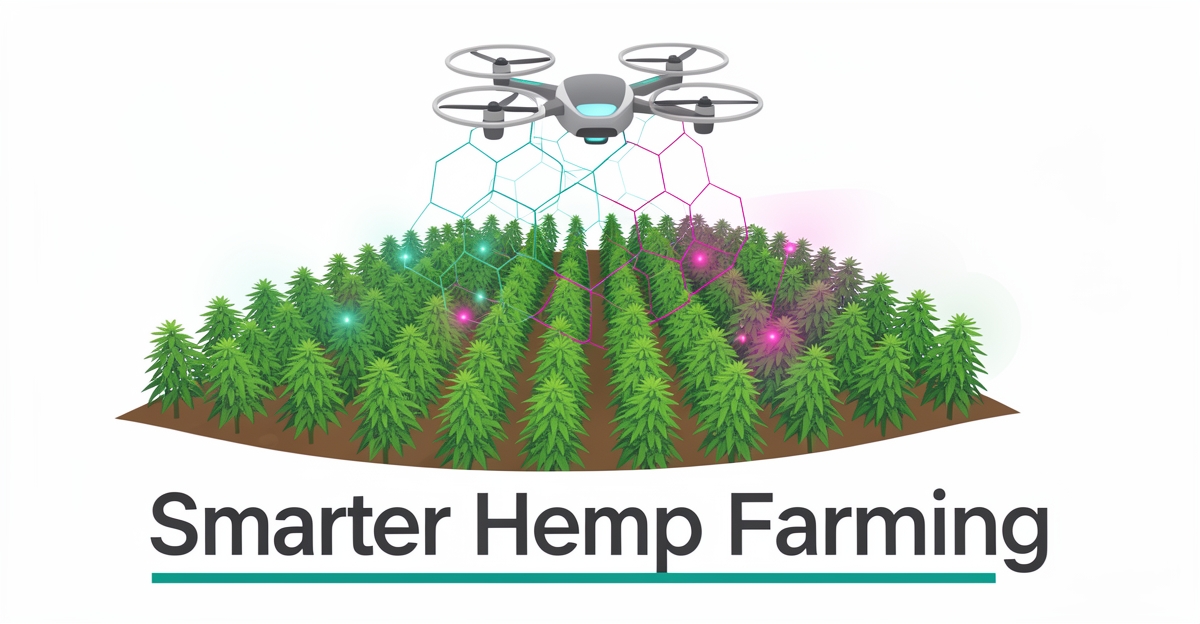
5 Signs Your Hemp Farm Needs AI-Powered Crop Analytics
Key Facts
- AI image recognition can scan thousands of plants per hour, flagging pests and leaf discoloration quickly according to hemp technology analysis.
- Case studies of automated monitoring report significant reductions in labor requirements alongside improved crop yield predictability according to large-scale crop management research.
- A midwestern greenhouse case study reported that automated soil sensors and AI-driven monitoring cut labor hours substantially while improving crop uniformity according to automated monitoring case studies.
- A large-scale vegetable operation using drone-based crop surveillance reported yield-per-acre gains from timely pest and nutrient interventions according to drone surveillance research.
- A 20-acre hemp research farm saved hours per week by replacing manual data collection and aggregation with automated data correlation across plant-level observations according to hemp research farm case studies.
- Predictive modeling can recommend optimal harvest windows for specific cannabinoids like THCA or CBG, helping maximize potency within compliance limits according to hemp cultivation technology analysis.
- AI-powered tools can track soil moisture, pH levels, temperature, and light exposure in real time, helping farmers maintain optimal growing conditions and reduce crop failure according to hemp industry reporting.
Hire a team member that works 24/7 — for less than a part-time wage.
AI receptionists, SDRs, dispatchers and 99+ roles. Trained on your business, fully managed.
Not sure where to start? Ask our AI planner
The Hidden Costs of Guesswork in Hemp Cultivation
Most hemp growers still walk the field, trust their eyes, and make calls based on what they saw yesterday. That operational reality collides with a crop that lives or dies by precision, while margins tighten and compliance pressure grows.
Manual scouting delivers periodic snapshots, not continuous insight. Manual monitoring depends on periodic field inspections, visual plant assessments, and manual data logging, a method that is highly labor-intensive and prone to subjective interpretation. Coverage is limited by time, scale, and consistency, and decisions lag behind plant stress.
The hidden cost shows up in delayed response. Manual processes rely on experienced scouts and local knowledge, offering contextual depth but limited coverage. By the time a problem is visible to the human eye, yield and cannabinoid potential are already compromised. AI image recognition can scan thousands of plants per hour, flagging issues like pests or leaf discoloration quickly, while machine learning models analyze data to predict plant stress before it becomes visible.
Labor and data bottlenecks compound the problem. A 20-acre hemp research farm found its existing workflow relied on manual data collection and aggregation, which created bottlenecks for the research team and limited how many trials could run in parallel. The Grownetics solution provided automated data correlation across plant-level observations and environmental conditions, reducing manual logging and aggregation burden by hours per week. Grownetics saves researchers many hours a week with automated data correlation for every plant grown, allowing botanists and agronomists to focus on plant science instead of data management.
Resource waste is another quiet drain. Without real-time feedback, irrigation and nutrient inputs are often over- or under-applied. AI-powered tools can track soil moisture, pH levels, temperature, and light exposure in real time, helping farmers maintain optimal growing conditions and reduce crop failure. Automated irrigation adjusts water flow based on soil moisture and weather data, and environmental control systems fine-tune temperature and CO₂ to maximize yield and terpene expression.
The scale effect is meaningful. Case studies report farms integrating automated monitoring seeing significant reductions in labor requirements while increasing crop yield predictability. A midwestern greenhouse case study reported that automated soil sensors and AI-driven monitoring cut labor hours substantially while improving crop uniformity, and a large-scale vegetable operation using drone-based crop surveillance reported yield-per-acre gains from timely pest and nutrient interventions.
These red flags — inconsistent yields, delayed pest detection, and reactive rather than predictive management — signal a system running on guesswork. For hemp, where harvest timing for THCA or CBG directly impacts compliance and value, delayed observation equals lost revenue.
Signs your operation is paying the guesswork tax:
- Field walks miss early stress; issues are found after visible damage
- Data lives in notebooks and spreadsheets, creating hours of weekly aggregation
- Irrigation and nutrients are scheduled by routine, not by real-time plant needs
- Yield and cannabinoid outcomes vary lot to lot with no clear, traceable driver
AIQ Labs builds AI systems from the ground up that integrate with existing farm operations, turning fragmented observations into real-time, actionable crop analytics. For farms that want to start smaller, a single AI workflow build can rebuild the one process that costs the most — compliance reporting, scouting data aggregation, or irrigation scheduling — before scaling to a full system. The shift is from upgrading intuition with data to transforming hemp from guesswork to science.
Signs 1–2: You're Finding Pests Too Late and Your Yields Are Unpredictable
Hemp is a crop that lives or dies by precision, and when monitoring relies on boots in the field, problems are often found after the damage is done. Delayed detection and unpredictable harvests are the first red flags that manual oversight is costing you yield and margin.
You're finding pests too late when scouting is periodic and human-limited. Manual monitoring depends on periodic field inspections, visual plant assessments, and manual data logging, which is highly labor-intensive and prone to subjective interpretation. Manual monitoring limitations mean issues are visible only after they have spread.
AI image recognition can scan thousands of plants per hour, flagging issues like pests or leaf discoloration quickly. Hemp tech coverage notes machine learning models analyze data to predict plant stress and detect early signs of mold or nutrient deficiency before they become visible to the human eye. Computer vision technology can identify early signs of pests or diseases, enabling timely intervention and reducing dependency on chemical treatments. Industry reporting on AI and hemp confirms this shift from reactive to pre-symptomatic detection.
Your yields are unpredictable when decisions are based on memory, not data. Weather unpredictability, labor shortages, and razor-thin margins demand maximum efficiency from every acre. Agricultural AI comparisons show manual processes offer contextual depth but limited coverage. Without continuous correlation of plant-level observations and environmental conditions, forecasting breaks down.
Predictive analytics changes that by using historical data, statistical algorithms, and machine learning to forecast future outcomes. Predictive analytics in hemp farming is used to forecast yield outcomes and cannabinoid content, with models recommending optimal harvest windows for specific cannabinoids like THCA or CBG. Grow game analysis highlights this capability.
The operational impact is measurable. A large-scale vegetable operation implementing drone-based crop surveillance reported yield-per-acre gains from timely pest and nutrient interventions. Large-scale crop management research also finds farms integrating automated monitoring report significant labor reductions while increasing crop yield predictability.
Signs you're operating on this risk curve include:
- Pest or disease damage is first noticed after visible spread across rows
- Harvest timing is estimated by calendar rather than cannabinoid maturity data
- Yield forecasts vary widely year to year with no clear data driver
- Scouting teams can't cover the full farm consistently within a 24-hour window
Real-time insights let growers intervene before stress becomes loss. AIQ Labs builds these systems from the ground up, ensuring they integrate with existing farm operations and provide real-time insights to improve crop quality and reduce waste.
Signs 3–4: You're Over-Watering, Over-Feeding, and Drowning in Manual Data
Running a hemp farm on fixed irrigation and feeding schedules is like watering a garden in the rain — wasteful, imprecise, and expensive. Research shows that automated irrigation systems adjust water flow based on real-time soil moisture and weather data, while environmental controls fine-tune temperature and CO₂ levels to maximize yield and terpene expression. When inputs follow the calendar instead of the crop, you're not just over-spending on water and nutrients — you're leaving quality on the table.
The hidden cost isn't just resources. It's time. A 20-acre hemp research farm found that manual data collection and aggregation created bottlenecks that limited how many trials could run in parallel. After implementing automated data correlation across plant-level observations and environmental conditions, researchers reclaimed hours per week previously lost to logging and spreadsheet wrangling. Agronomists could finally focus on plant science instead of data management.
- Irrigation and feeding locked to schedules, not sensor data
- Environmental controls adjusted manually or not at all
- Field notes scattered across notebooks, phones, and spreadsheets
- Hours each week spent aggregating data instead of analyzing it
- Compliance reporting built from scratch every harvest cycle
The labor impact is measurable. Farms that adopt automated monitoring report significant reductions in labor requirements, with one greenhouse case study documenting a substantial drop in labor hours while improving crop uniformity. AIQ Labs builds these systems from the ground up, ensuring they integrate with existing farm operations so the transition from manual logging to real-time intelligence doesn't disrupt what's already working.
Sign 5: Harvest Timing and Compliance Are a Stressful Gamble
Missing the harvest window by even a few days can turn a high-value hemp crop into a compliance liability. Guessing harvest timing and scrambling through paperwork is a costly red flag for any operation.
Hemp is a crop that lives or dies by precision, and cannabinoid levels shift rapidly in the final weeks. Hemp tech coverage notes predictive modeling can recommend optimal harvest windows for specific cannabinoids like THCA or CBG, helping maximize potency within compliance limits. Without that data, farms risk harvesting too early for potency or too late for legal thresholds.
Manual compliance adds stress at the worst possible moment. Batch Certificates of Analysis pile up, irregularities get missed, and reports are built by hand under deadline pressure. Industry analysis of hemp automation shows AI-driven software can cross-reference batch COAs, flag irregularities, and generate compliance reports automatically.
The result is faster testing, cleaner data, and safer products. Automated testing machines can now run hundreds of samples with minimal human input, according to the same hemp technology overview. That throughput matters when a harvest window is narrow and regulators expect documentation.
Real-time monitoring supports the decision. AI systems allow farmers to monitor temperature, humidity, soil nutrients, and light cycles in real time, with machine learning models analyzing data to predict plant stress before it is visible. Grow game reporting highlights this as upgrading intuition rather than replacing it.
Signs you are gambling with harvest and compliance include:
- Harvest dates set by calendar or gut feel instead of cannabinoid trend data
- COA review and reporting done manually, with late submissions or errors
- No automated flagging of out-of-spec batches before they move to processing
- Stress about testing turnaround during peak harvest
AI-powered crop analytics replaces guesswork with predictable harvest timing and auditable compliance. For hemp farms operating under tight legal limits, that shift protects value and reduces risk.
AIQ Labs builds these systems from the ground up to integrate with existing farm operations, focusing on AI for Agriculture & Farming use cases. The goal is real-time insights that improve crop quality and reduce waste without adding manual burden.
From Red Flags to Real-Time Intelligence: What Implementation Actually Looks Like
Spotting the red flags is only half the battle — the real work begins when you decide to act on them. Moving from fragmented spreadsheets and gut-feel decisions to a unified intelligence layer means stitching together soil sensors, aerial imagery, weather feeds, and years of farm records into a single dashboard that surfaces predictive alerts before problems spread. Case studies report that farms integrating automated monitoring see meaningful labor reductions while increasing crop yield predictability, and a midwestern greenhouse case study demonstrated that automated soil sensors and AI-driven monitoring cut labor hours while improving crop uniformity.
- Soil moisture, pH, and nutrient sensors feeding real-time readings
- Drone or satellite imagery analyzed for pest pressure and canopy health
- Weather APIs and hyperlocal forecasts driving irrigation and harvest timing
- Historical yield, input, and compliance records training predictive models
- A unified dashboard with alert thresholds tuned to your genetics and microclimate
The hybrid approach research recommends — sensors plus periodic manual checks, keeping human expertise in the loop — mirrors how AIQ Labs architects these systems. Rather than dropping in off-the-shelf software, we build custom AI operating systems that pull from your existing data sources, integrate with the tools your team already uses, and transfer full ownership of the code, agents, and data to you. That means no vendor lock-in, no platform dependencies, and a system that evolves with your operation whether you run 20 acres or 2,000.
You choose how to engage: start monthly, build in milestones, or own it outright. And if you'd rather begin with people than pipelines, managed AI employees — from dispatchers to data analysts — can handle the routine monitoring and reporting work that currently eats your team's week.
Still paying for 10+ subscriptions that don’t talk to each other?
We build custom AI systems you own outright. No vendor lock-in. Full control.
Not sure where to start? Ask our AI planner
Frequently Asked Questions
How much labor can I actually save by switching to AI-powered crop monitoring on my hemp farm?
Will AI really catch pest and disease problems earlier than my current field walks?
I'm drowning in spreadsheets and manual data entry — can AI actually eliminate that bottleneck?
How does AI help with harvest timing and THC compliance — isn't that still a guessing game?
Is this just for massive operations, or can a 20-50 acre hemp farm see real ROI from AI analytics?
What's the actual yield impact — are there real numbers showing AI increases hemp production?
Stop Paying the Guesswork Tax on Your Hemp Harvest
The red flags are clear: pests discovered after they've spread, yields that swing unpredictably, water and nutrients wasted on calendar-based schedules, hours lost to manual data wrangling, and harvest timing that risks compliance. Each sign points to the same core issue—manual monitoring can't keep pace with a crop that demands precision. The operations seeing real results aren't working harder; they're working with continuous intelligence. Case studies report significant labor reductions from automated monitoring alongside improved yield predictability, and predictive analytics now recommend harvest windows for specific cannabinoids like THCA or CBG. AIQ Labs has deployed 200+ multi-agent systems and runs four live SaaS products daily — we build these farm systems from the ground up, integrating with your existing operations so you own the code, the data, and the competitive advantage. If you're ready to move from reactive scouting to predictive intelligence, start with a two-minute Fit Check at aiqlabs.ai/apply, then book a free 30-minute strategy call to map your highest-ROI opportunity. No obligation—just clarity on whether AI can transform your operation. Questions first? Reach us at [email protected].
Make AI your competitive advantage — not just another tool.
Strategy, implementation and ongoing optimization. One partner, end to end.
Not sure where to start? Ask our AI planner