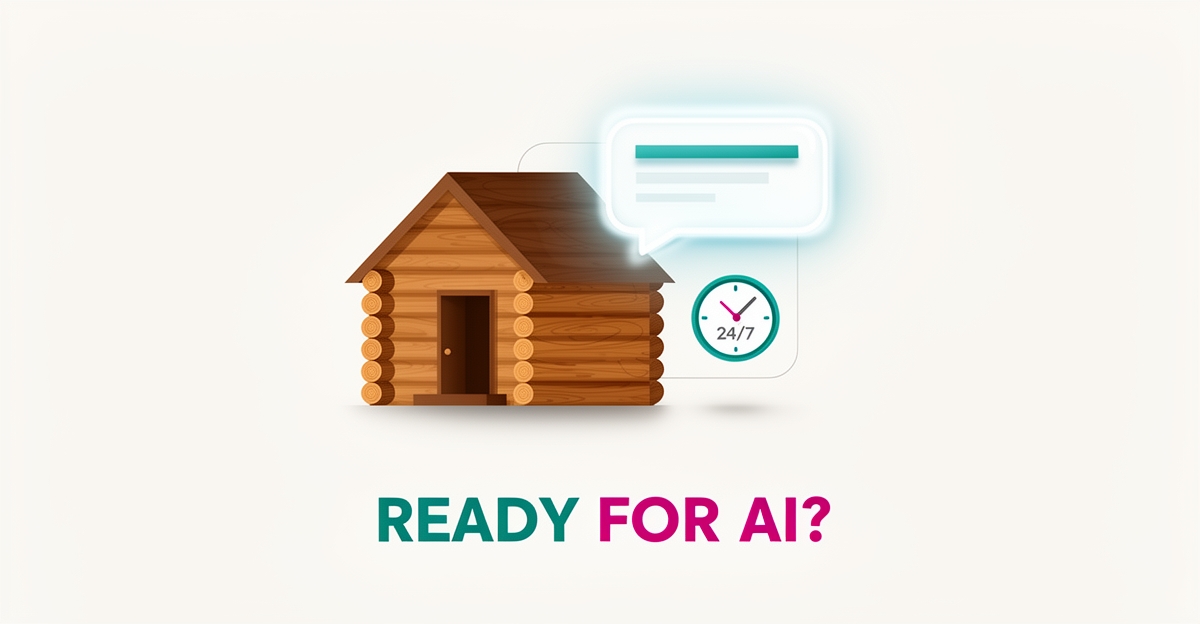
5 Signs Your Log Home Business Is Ready to Adopt AI for Customer Support
Key Facts
- Most buyers now expect responses outside business hours, and after-hours log home inquiries that sit unanswered often become lost quotes — or a competitor's next customer
- In a considered purchase like a log home, a single slow reply can end a months-long nurture; buyers comparing builders at 9pm tend to reward whoever answers first
- AI support typically cuts response times dramatically on routine questions, giving prospects instant answers instead of next-day callbacks
- A large share of routine customer inquiries — timber species, finishes, maintenance, timelines — can typically be handled automatically, freeing specialists for site visits and custom quotes
- AI trained on your own specs can deliver consistent, contextual answers about timber species, finishes, and build sequencing across unlimited simultaneous conversations
- Businesses that automate support workflows typically reduce operational costs meaningfully while improving response consistency across email, phone, and chat
Hire a team member that works 24/7 — for less than a part-time wage.
AI receptionists, SDRs, dispatchers and 99+ roles. Trained on your business, fully managed.
Not sure where to start? Ask our AI planner
The Hidden Cost of Missed Log Home Inquiries
Missed inquiries don't just wait until morning — they turn into lost quotes, delayed builds, and competitors winning the timber conversation.
Log home builders live with seasonal spikes and long sales cycles. Questions about timber species, stain finishes, and construction timelines arrive evenings and weekends when sales teams are offline. That gap creates revenue leakage that compounds over the build season.
Buyers increasingly expect round-the-clock responsiveness. For log homes, that expectation shows up as after-hours emails about delivery windows, foundation requirements, and custom millwork options that sit unanswered for hours — and as of late 2026, most prospects won't wait.
The cost is immediate. In a considered purchase like a log home, a single slow reply can end a months-long nurture. The prospect who emailed at 9pm has usually shortlisted two or three builders by morning.
The operational reality is repetitive, high-volume questions outside business hours. Timber grading, finish maintenance, and timeline estimates repeat across prospects and existing clients. These are exactly the inquiries that erode margin when handled manually.
AI customer support changes the math by covering the gaps without adding headcount. A context-aware AI receptionist or support agent trained on your timber specs, finishes, and construction timelines can answer routine questions instantly and route complex design requests to the right human. AIQ Labs' AI Employees are built exactly for this: managed AI staff that handle inquiries around the clock at a fraction of the cost of a human hire.
Typical after-hours leakage points for log home businesses include:
- Timber species and grade questions about strength, maintenance, and sourcing
- Finish and stain inquiries about color options, reapplication cycles, and climate suitability
- Construction timeline and milestone questions about permitting, foundation, and delivery
- Repeat design clarifications that consume sales hours during core business hours
Speed matters as much as availability. For a prospect comparing builders at 9pm, an instant answer beats a next-day callback almost every time.
Routine volume can be absorbed automatically. A well-trained AI system typically handles the majority of routine customer inquiries, freeing your team to focus on site visits, custom quotes, and complex negotiations.
The hidden cost isn't just lost leads. It's the reputational drag of being unreachable when buyers are most engaged, and the internal drag of sales teams answering the same questions repeatedly.
When inquiry volume, after-hours gaps, and repetitive design questions converge, AI support becomes a revenue protection layer rather than a tech upgrade.
Sign 1 & 2: Drowning in Repetitive Questions and Response Delays
For log home businesses, the first clear signal that AI support is needed is the constant flood of repetitive design questions — floor plans, wood species, finishes, and maintenance queries that consume specialist time daily. When your team spends more than half their day answering the same finish and timber questions, routine inquiries are overwhelming human capacity. A well-trained AI system typically absorbs most of that routine volume, freeing specialists to focus on complex custom builds rather than fielding the same questions over and over.
The second critical indicator is unsustainable response times that regularly exceed 24 hours, leaving potential customers waiting and frustrated. This delay not only risks losing leads to competitors but also strains support teams trying to keep up with volume. AI support delivers immediate answers to common questions about timelines, materials, and pricing while human agents tackle nuanced design consultations. Together, these signs reveal a support system stretched thin — ready for AI to absorb the routine load and restore responsiveness.
Sign 3 & 4: The Personalization-Scalability Paradox
Log home buyers rarely ask simple questions. They want guidance on timber species, finishes, and construction timelines that feels tailored to their lot, budget, and design vision — then they want that same attention during spring build season when inquiry volume surges.
That tension creates the personalization-scalability paradox. Teams can deliver customized advice or keep up with volume, but rarely both without strain.
Sign three appears when personalized support slips. Prospective buyers receive generic replies to detailed design questions, or wait days for a specialist to review a timeline. AI trained on your own specifications can deliver consistent, contextual answers about materials and build sequencing — the nuance buyers expect.
Sign four shows up as scalability breaks. One agent can only handle one conversation at a time, yet demand spikes in peak building season. AI handles unlimited simultaneous conversations, freeing specialists for the high-touch moments that close deals.
AI resolves the paradox by delivering consistent, contextual guidance at scale. A system trained on your timber specifications, finish options, and construction timelines can answer complex questions while maintaining personalized, accurate responses across every conversation.
The result is speed without sacrificing detail. Response times drop sharply on routine questions, while buyers still receive answers that reflect their specific home plans.
For log home businesses, this means:
- Design questions about logs, insulation, and finishes are answered consistently 24/7
- Construction timeline inquiries are handled with context, not canned replies
- Peak season spikes are absorbed without adding headcount
- Specialists focus on site visits and custom proposals instead of repetitive emails
AIQ Labs deploys AI support staff that understand timber, finishes, and construction timelines, fitting naturally into your existing customer relationship workflow. The system maintains brand voice and product accuracy while scaling to every inquiry.
When personalization and scalability compete, businesses either slow down or standardize down. AI lets log home teams do neither.
Sign 5: When Manual Workflows Block Growth
Your business may be drowning in operational chaos without you even realizing it. When customer inquiries arrive through email, phone, social media, and your website — but none of these channels talk to each other — you're not just losing efficiency. You're losing revenue, accuracy, and the ability to scale.
Businesses that automate support workflows typically reduce operational costs meaningfully while improving response consistency. The culprit behind inflated costs? Manual processes that force your team to become human middleware, copying information between systems and relying on whoever happens to answer the phone.
Three warning signs indicate your log home business has outgrown manual workflows:
- Customer details live in multiple places — email threads, spreadsheets, sticky notes — requiring team members to hunt for basic information like timber specifications or delivery timelines
- Critical knowledge about finishes, joinery techniques, or building codes exists only in the heads of your most experienced staff, creating bottlenecks when they're unavailable
- Response quality varies dramatically depending on who handles the inquiry, leading to inconsistent information about construction processes or material options
- Your team spends more time on data entry and administrative tasks than actually helping customers design their dream log home
The solution isn't hiring more people to manage broken processes. AI can typically handle most routine inquiries, which means your team can focus on complex design consultations while intelligent systems manage specification questions, delivery scheduling, and process documentation.
AI integration creates a single source of truth across your entire operation. When a customer asks about kiln-dried versus green timber at 9 PM, they receive the same accurate answer they'd get from your senior designer at 9 AM. When someone emails about foundation requirements, that conversation automatically syncs with their previous chat about log profiles and their phone call about stain options.
This is where AIQ Labs' AI Workflow Builds come in: rebuild the one workflow that costs you the most — inquiry handling, quote follow-up, or scheduling — at a fixed price, in phases. Rather than forcing your team to adapt to rigid software, custom AI workflows adapt to how your log home business actually operates, connecting your CRM, project management tools, and communication channels into one intelligent ecosystem. Businesses that need the full picture can go further with an AI Operating System — one connected operating layer, built in phases and owned outright.
The transition from manual chaos to automated clarity doesn't happen overnight, but it starts with recognizing that your current processes won't support your growth ambitions. If you're turning away inquiries because your team can't keep up, or if onboarding new staff takes months because knowledge isn't documented, your workflows are actively blocking the growth you're working so hard to achieve.
Implementing AI Support That Understands Timber and Timelines
Starting with workflow digitalization and data standardization creates the foundation for AI that truly understands log home specifics. Map your customer journey from initial design inquiries through construction timelines to post-build support, identifying where repetitive questions about wood species, stain options, or seasonal delays consume agent time. Standardize this data across your CRM and project management tools so AI can access consistent information about timber properties, finish curing times, and regional building code variations.
A phased implementation approach reduces risk while building confidence. Begin with the Start Monthly model to deploy an AI assistant handling common design questions — like comparing cedar versus pine durability or explaining chinking maintenance — freeing your team for complex consultations. As volume and accuracy improve, build in milestones by adding capabilities for timeline inquiries and change order processing. Eventually, own it outright with a full system that integrates deeply with your scheduling software to provide real-time build phase updates based on weather delays and material shipments.
Governance ensures AI handles what it can while escalating what it cannot. AI typically absorbs most routine inquiries and cuts response times sharply, but complex construction details require human expertise. Establish clear escalation paths for questions about structural engineering, permit complications, or custom joinery that need builder insight. Monitor AI accuracy on timber-specific queries and continuously retrain using your project logs and material specifications. This creates a support system that scales with your business while preserving the craftsmanship dialogue your customers value.
Ready to build your AI support foundation? Start the 2-minute Fit Check to assess your current workflows and identify where AI can absorb the most repetitive inquiries. Then schedule a free 30-minute strategy call to map a phased implementation that respects your timber expertise while eliminating response delays. AIQ Labs helps log home businesses own AI systems that understand both wood and workflow — no vendor lock-in, just measurable support improvement.
Still paying for 10+ subscriptions that don’t talk to each other?
We build custom AI systems you own outright. No vendor lock-in. Full control.
Not sure where to start? Ask our AI planner
Frequently Asked Questions
How do I know if my log home business is actually ready for AI customer support?
Will AI understand the difference between timber species and finish options?
What happens when a customer asks something the AI can't handle?
How much can AI actually reduce our response times?
Is AI support worth the investment for a seasonal log home business?
Do we need to replace our current CRM and project management tools?
Stop Losing Leads to the 9 PM Silence
Recognizing these signs isn't about admitting defeat — it's about acknowledging that your craftsmanship deserves better than voicemail purgatory and overflowing inboxes. Whether you're drowning in repetitive timber questions, watching prospects ghost after 24-hour delays, or struggling to maintain that personal touch while scaling, the solution isn't hiring more staff to work weekends. It's deploying intelligent support that understands the difference between cedar and pine, knows your construction timelines, and never sleeps. AI typically handles most routine inquiries, freeing your specialists for the custom consultations that actually close deals. AIQ Labs builds context-aware AI employees trained specifically on your materials and workflows — not generic widgets, but managed AI staff that integrate with your systems. Ready to stop choosing between growth and sanity? Start the 2-minute Fit Check to identify your highest-impact automation opportunity, then book your free 30-minute strategy call to map a phased implementation that respects your craft.
Make AI your competitive advantage — not just another tool.
Strategy, implementation and ongoing optimization. One partner, end to end.
Not sure where to start? Ask our AI planner