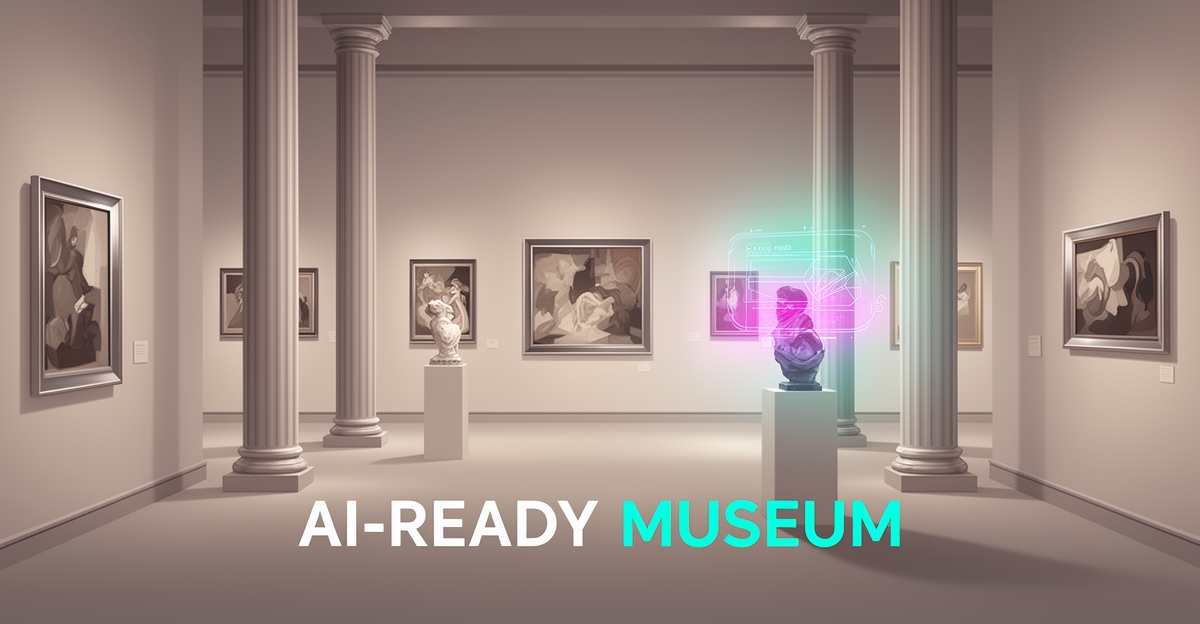
5 Signs Your Museum Is Ready for AI-Powered Visitor Experience
Key Facts
- Over 1 billion people visit museums worldwide annually according to industry tracking.
- The AI in museums market has been projected to reach roughly $794 million by 2028 according to market analysis.
- The Smithsonian's AI guide reportedly attracted 35,000 users in its first three months per published case-study coverage.
- Around 70% of Smithsonian AI guide users were reported to be under age 40 per case-study data.
- The Louvre's Leonardo AR system was reported to lift visitor engagement by 28% per industry analysis.
- A reported 67% of international visitors prefer content in their native language per museum research.
- An AI chatbot at the National Museum of Natural History was reported to cut basic questions to staff by 40% according to museum research.
Hire a team member that works 24/7 — for less than a part-time wage.
AI receptionists, SDRs, dispatchers and 99+ roles. Trained on your business, fully managed.
Not sure where to start? Ask our AI planner
The Visitor Experience Gap Museums Can't Ignore
Visitor expectations for museums have shifted from passive viewing to on-demand, personalized discovery. The institutions that fail to close that gap risk losing relevance with a generation that expects the same immediacy from culture that they get from streaming and retail.
Over 1 billion people visit museums around the world annually according to industry tracking, and those visitors arrive with rising demands for personalization, accessibility and 24/7 engagement. Market analysts have projected the AI in museums market to reach roughly $794 million by 2028 according to market analysis, growing at over 20% annually as institutions race to meet those expectations.
Personalization is no longer a novelty. The Smithsonian's AI guide reportedly attracted 35,000 users in just three months in a published case study, with around 70% under age 40 and a quarter returning for additional engagement. The Louvre's "Leonardo" AR system was reported to increase visitor engagement by 28% and receive 15% more positive feedback, showing how tailored, immersive layers can drive dwell time and satisfaction.
Accessibility pressure compounds the demand. A reported 67% of international visitors prefer content in their native language, yet most museums still rely on static signage and limited guided tours. Real-time translation, image recognition for visually impaired guests, and adaptive learning paths are increasingly baseline expectations, not enhancements.
Behind the scenes, operational strain is intensifying. Front desks and galleries field repetitive inquiries about hours, tickets, accessibility, and collection locations, pulling staff away from high-value interpretation. Museums using AI chatbots have reported a 37% boost in visitor engagement and extended average visits by 22 minutes, while the National Museum of Natural History's "NatureBuddy" was reported to cut basic questions to staff by 40%.
The gap shows up in three persistent pressures:
- High inquiry volumes that overwhelm frontline teams and create inconsistent visitor pathways
- Inconsistent personalization across in-person, mobile and digital touchpoints
- Staff burnout from repetitive tasks instead of storytelling and education
These signals point to readiness for AI integration rather than a technology problem. A structured readiness review helps map where visitor friction and staff load intersect with high-impact automation opportunities, so museums can prioritize personalization, accessibility and 24/7 engagement without overhauling operations. AIQ Labs works with cultural organizations to identify those indicators and design a practical AI strategy aligned to specific visitor needs and operational constraints.
5 Data-Backed Signs You're Ready for AI
Visitor questions are piling up, pathways feel random, and the front desk is running on fumes. Those friction points are measurable signs a museum is ready for AI, not just curious about it.
High visitor inquiries signal readiness. When basic questions overwhelm staff, museum research reports AI chatbots cutting basic questions to staff by 40% while boosting engagement. The National Museum of Natural History's "NatureBuddy" was also reported to lift exhibit engagement by 28% and improve positive feedback by 15%.
Inconsistent visitor pathways create missed opportunities. AI-powered recommendation engines analyze demographics, time on site, and real-time crowd data to build customized itineraries. Industry analysis notes museums using AI chatbots reported a 37% boost in visitor engagement and an average visit extension of 22 minutes.
Staff burnout is a human readiness indicator. Guides repeat the same facts, cover limited hours, and face language barriers. AI guides offer 24/7 availability and support for 20+ languages, freeing teams for storytelling that machines cannot replicate.
Demand for multilingual and accessible experiences is growing fast. A reported 67% of international visitors prefer content in their native language, and the Smithsonian National Air and Space Museum's app reportedly increased international visitor usage by 45% after adding translations. Image recognition and real-time translation also open doors for visually impaired audiences.
Unpredictable traffic strains operations. Predictive analytics using weather, holidays, and social trends help staff and inventory planning. The Louvre's "Leonardo" AR system was reported to increase visitor engagement by 28% and receive 15% more positive feedback, showing how immersive tech can smooth peaks.
These five indicators map directly to a readiness review that evaluates current tech, data, and visitor needs before any build. AIQ Labs uses this practical guide to identify key indicators such as high inquiries, inconsistent pathways, or staff burnout to determine the optimal AI strategy for specific operations.
Signs your museum is ready now:
- High volume of repetitive visitor inquiries that consume front-desk time
- Inconsistent or generic visitor pathways with low dwell time in key galleries
- Staff burnout from covering extended hours and multilingual requests
- Growing demand for multilingual, accessible, and personalized experiences
- Unpredictable traffic making staffing and resource planning difficult
When these patterns appear together, a structured review helps prioritize high-ROI use cases and avoid pilot projects that stall.
From Readiness to Results With a Tailored AI Assessment
Recognizing the signs is only half the battle—the real question is what to do next. A structured readiness review translates those indicators into a concrete roadmap, helping you prioritize investments that deliver measurable returns without overwhelming your team or budget.
The process begins by mapping your specific pain points against proven AI applications. If visitor inquiries are overwhelming your staff, consider that museums using AI chatbots have reported a 37% boost in visitor engagement while extending average visits by 22 minutes. For institutions struggling with inconsistent visitor pathways, the Smithsonian's AI guide reportedly attracted 35,000 users in just three months—around 70% of them under age 40—demonstrating how personalized digital interpretation can capture demographics that traditional signage often misses.
A comprehensive evaluation examines four critical dimensions of readiness:
- Visitor experience gaps: Where do guests disengage, and could AR overlays or personalized itineraries address those drop-off points?
- Operational bottlenecks: Which repetitive tasks—ticketing, FAQs, or wayfinding—could an AI Employee handle to free your staff for high-value interpretation?
- Data infrastructure: Do your current systems capture the visitor insights needed to train effective recommendation engines?
- Accessibility potential: Can real-time translation and audio description tools expand your reach to international visitors and those with visual impairments?
For smaller museums, the assessment phase prevents costly missteps. Rather than investing in a comprehensive transformation immediately, you might start with a single workflow—perhaps an AI receptionist to manage routine visitor questions—then scale based on results. AIQ Labs' Workflow Builds are designed exactly this way: rebuild the one workflow that costs you the most, at a fixed price, in phases. Institutions ready to connect everything—visitor data, ticketing, staffing—can graduate to an AI Operating System built in phases and owned outright.
AIQ Labs structures this evaluation as a collaborative working session, not a sales pitch. We analyze your current visitor journey, staff capacity, and technical infrastructure to identify the highest-ROI opportunities—whether that means deploying conversational AI to handle the routine questions that currently burden your team, or developing AR experiences that extend dwell time. The goal is a tailored strategy that fits your collection, your community, and your budget, ensuring AI enhances rather than replaces the human connections that make your museum essential.
Still paying for 10+ subscriptions that don’t talk to each other?
We build custom AI systems you own outright. No vendor lock-in. Full control.
Not sure where to start? Ask our AI planner
Frequently Asked Questions
How do I know if my museum actually needs AI or if we're just jumping on a trend?
Will AI chatbots really reduce front desk workload, or will they just create more problems?
Do visitors actually want personalized experiences at museums?
Can AI help with multilingual and accessibility needs without hiring more guides?
What kind of engagement lift can we expect from AR or recommendation tools?
Where should we start if we're a small museum with a limited budget?
From Friction to Flow: Turning Readiness Into Visitor Impact
The signs are measurable, not mysterious: repetitive inquiries overwhelming the front desk, generic pathways that shorten dwell time, staff stretched thin by multilingual requests, growing demand for personalization and accessibility, and traffic that's hard to staff for. These are not just operational headaches; they are signals that a museum is ready to move from curiosity about AI to practical, high-ROI use. With over 1 billion people visiting museums around the world annually according to industry tracking, the institutions that close the experience gap will be the ones visitors return to. A structured readiness review translates those pain points into a prioritized roadmap, mapping visitor experience gaps, operational bottlenecks, data infrastructure and accessibility potential before any build. AIQ Labs works with cultural organizations to run this review as a collaborative working session, identifying where conversational AI, personalized itineraries or AR layers can free staff for storytelling while improving engagement. Take the 2-minute Fit Check at aiqlabs.ai/apply—if there's a clear win, we'll map it out with you on a free 30-minute strategy call.
Make AI your competitive advantage — not just another tool.
Strategy, implementation and ongoing optimization. One partner, end to end.
Not sure where to start? Ask our AI planner