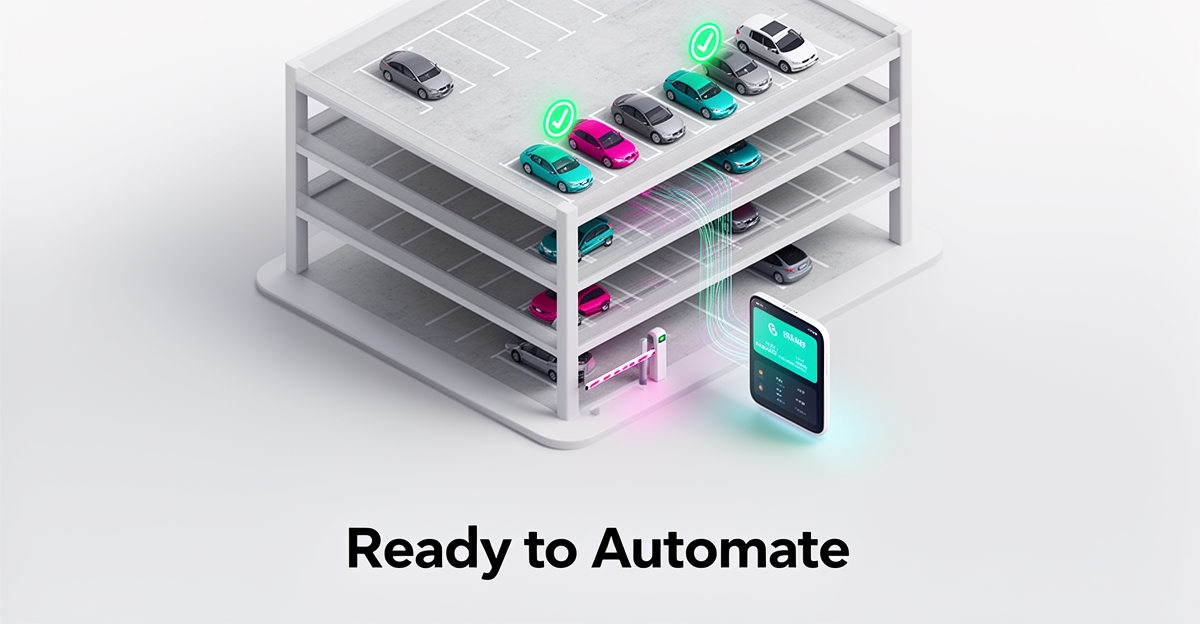
5 Signs Your Parking Garage Is Ready to Automate Pay-Per-Use Billing
Key Facts
- Recurring billing errors and payment delays are among the most common drivers of customer churn in parking facilities
- Manual billing typically increases late payments due to human error and the lack of automated reminders
- License plate recognition and automated access systems can meaningfully reduce staffing requirements at entry, exit, and reconciliation points
- Dynamic, usage-based pricing typically captures revenue that flat-rate manual billing leaves on the table during peak periods
- AI-driven billing automation typically reduces processing errors substantially and shortens payment cycles by removing manual steps
- Integrated billing systems tend to resolve disputes faster and produce fewer late payments than disconnected manual workflows
Hire a team member that works 24/7 — for less than a part-time wage.
AI receptionists, SDRs, dispatchers and 99+ roles. Trained on your business, fully managed.
Not sure where to start? Ask our AI planner
Customer Churn and Payment Delays Signal Billing System Failure
Customer churn and late payments are more than just operational headaches—they're clear indicators that your parking garage's billing system is failing to meet customer expectations. When manual invoicing leads to errors, delays, or confusion, trust erodes quickly, and customers begin looking for alternatives. Recurring payment issues are one of the fastest ways to push monthly parkers toward competitors offering seamless, transparent experiences. This isn't just about lost revenue—it's a signal that your current system is actively damaging customer relationships.
Payment delays compound the problem, creating cash flow instability that makes it harder to cover operational costs or invest in improvements. Manual tracking often results in missed invoices, duplicate charges, or unclear payment statuses, all of which frustrate users and delay revenue collection. Facilities relying on manual billing typically see a meaningful increase in late payments due to human error and the absence of automated reminders, directly impacting monthly cash flow and increasing the administrative burden on staff. These delays aren't just inconvenient—they reflect a system that's not keeping pace with customer expectations for speed and accuracy.
The good news is that automation directly addresses these pain points by eliminating manual errors, enabling real-time invoicing, and triggering timely payment reminders. AI-powered billing systems ensure that every transaction is accurate, transparent, and traceable, reducing disputes and building customer confidence. For parking operators, this means fewer complaints, higher retention rates, and a more predictable revenue stream. By replacing guesswork with precision, automated billing doesn't just fix inefficiencies—it rebuilds trust and positions your garage for sustainable growth in a competitive market.
Manual Billing Creates Hidden Costs That Outweigh Automation Investment
Manual billing in parking garages creates hidden, often-overlooked expenses that quickly surpass the investment required for automation. Labor costs alone are a primary driver, as staff spend significant time processing payments, reconciling discrepancies, and handling customer disputes. Automated tools like license plate recognition can meaningfully reduce staffing requirements at entry, exit, and reconciliation points, directly cutting payroll and associated overhead like benefits and training. Beyond labor, manual systems are prone to human error—miscalculations, lost tickets, and incorrect rate applications lead to revenue leakage that accumulates over time. These errors not only result in immediate financial loss but also require additional labor to investigate and correct, creating a cycle of inefficiency.
Missed revenue opportunities further compound the problem. Without automated systems, garages struggle to implement dynamic pricing strategies that adjust rates based on demand, time of day, or occupancy levels. Usage-based, AI-supported pricing typically captures meaningful additional revenue through optimized space allocation and real-time rate adjustments. Manual billing lacks the agility to capture this upside, leaving money on the table during peak periods while potentially overcharging during low-demand times, which can frustrate customers and drive them to competitors. Additionally, the lack of real-time data prevents operators from identifying underutilized spaces or adjusting promotions to boost occupancy.
The cumulative effect of these hidden costs—excess labor, error-related losses, and unrealized revenue—creates a drag on profitability that many garage owners underestimate. When evaluated against the total cost of automation, including implementation and ongoing management, the return on investment often materializes faster than expected. For SMB garages, this means automation isn't just a long-term upgrade but a near-term financial necessity. By eliminating manual billing inefficiencies, operators gain clearer financial visibility, reduce operational risk, and position themselves to scale with confidence. The shift from reactive, error-prone processes to proactive, data-driven management transforms the garage from a cost center into a more predictable and profitable asset.
How AI-Powered Billing Integrates with Existing Garage Systems Without Disruption
AI-powered billing integration transforms parking garage operations by connecting with existing access control and payment systems. This approach eliminates manual reconciliation while maintaining current workflows. AI-driven billing automation typically reduces processing errors substantially and shortens payment cycles by removing the manual steps where mistakes happen. The integration works through secure APIs that synchronize real-time entry/exit data with invoicing engines, ensuring accurate usage-based charges without disrupting customer flow.
AIQ Labs builds custom AI employees that operate within your current technology stack, acting as intelligent intermediaries between legacy systems and modern billing platforms. These AI agents extract transaction data from access logs, validate payment processor responses, and trigger automated invoices—all while preserving your existing CRM and accounting software. Treating AI as an accountable operational service—with clear ownership, logging, and oversight—minimizes vendor sprawl and governance risk. This model supports zero vendor lock-in, giving garages full ownership of their automated billing logic and data.
The implementation follows a phased approach that prioritizes continuity: first mapping existing data flows, then deploying AI agents to handle exception cases, and finally expanding to full automation. Key integration touchpoints include license plate recognition systems for usage tracking, payment gateways like Stripe or Square for transaction processing, and garage management software for reporting alignment. Garages using integrated AI billing typically see faster dispute resolution and fewer late payments than those juggling disconnected manual workflows. By embedding AI within current infrastructure—not replacing it—garages achieve measurable efficiency gains while maintaining system familiarity for staff and customers alike. If billing is the single workflow costing you the most, a focused workflow build can rebuild it at a fixed price, phased for continuity.
Still paying for 10+ subscriptions that don’t talk to each other?
We build custom AI systems you own outright. No vendor lock-in. Full control.
Not sure where to start? Ask our AI planner
Frequently Asked Questions
How do I know if my parking garage's billing system is actually failing?
Can automation really save money if I'm already paying staff to handle billing?
Will switching to automated billing disrupt my current garage operations or software?
How does AI billing help me earn more money beyond just saving on labor?
Is automated billing only for big parking facilities, or can small garages benefit too?
What's the first step if I want to explore automated billing for my garage without committing to a full overhaul?
Turn Billing Bottlenecks into Growth Opportunities
When customer churn spikes and payments lag, your parking garage's billing system isn't just inefficient—it's actively eroding trust and revenue. Manual processes drive hidden costs through labor waste, error-related losses, and missed dynamic pricing opportunities, while automation directly resolves these pain points with real-time invoicing, fewer errors, and seamless integration via AI agents that work within your existing access control and payment systems. The result? Faster payment cycles, stronger retention, and a predictable revenue stream that turns your garage from a cost center into a scalable asset. If you're seeing these signs, the next step is clarity: start with the free two-minute Fit Check to map your biggest bottleneck and see if there's a clear win for your operation—no obligation, just a real conversation about where AI-driven billing automation delivers the highest ROI.
Make AI your competitive advantage — not just another tool.
Strategy, implementation and ongoing optimization. One partner, end to end.
Not sure where to start? Ask our AI planner