5 Signs Your Pre-Fab Business Is Over-Reliant on Manual Workflows (And How to Fix It)
Key Facts
- Most workflow steps in typical businesses still run on manual or conventional processes, leaving large automation headroom
- Manual workflows carry significant upfront labor investment and often produce higher long-term costs through increased labor requirements
- AI accuracy on repetitive tasks improves over time with consistent data, while human accuracy varies by person and declines under fatigue
- AI systems depend on data quality and governance; manual work carries risks of inconsistency and compounding rework
- AI-powered automation can eliminate duplicate forms by intelligently populating fields and syncing data across platforms
Hire a team member that works 24/7 — for less than a part-time wage.
AI receptionists, SDRs, dispatchers and 99+ roles. Trained on your business, fully managed.
Not sure where to start? Ask our AI planner
The Hidden Cost of Manual Workflows in Pre-Fab Operations
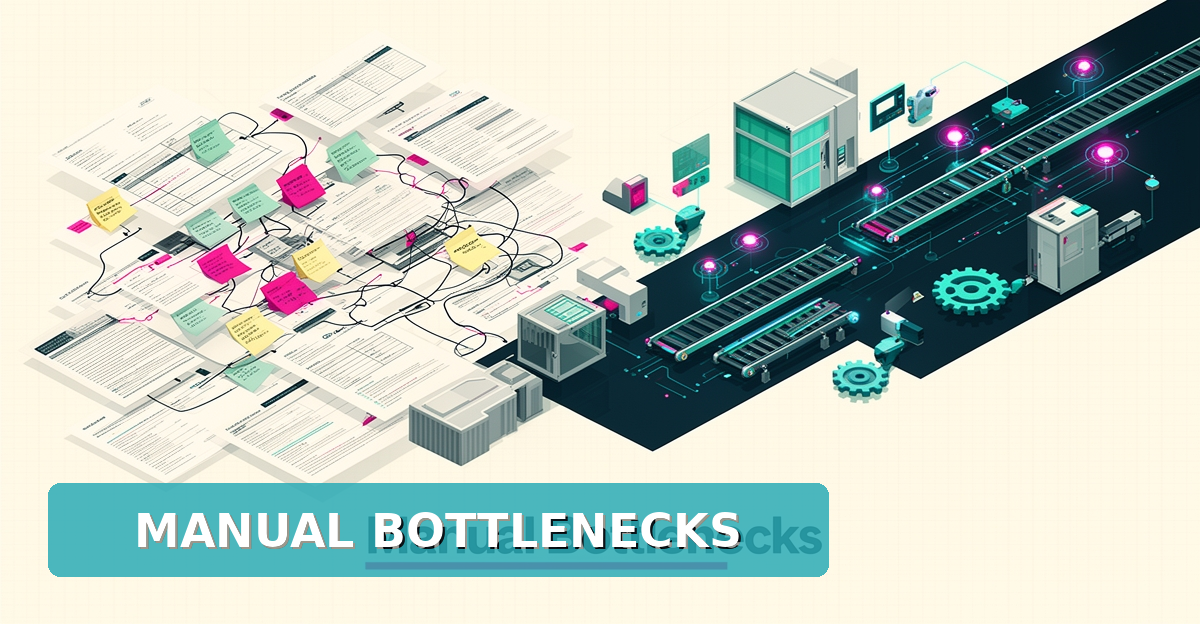
The hidden cost of manual workflows in pre-fab operations often goes unnoticed until delays and errors start piling up. Duplicate forms, slow approvals, and inconsistent data aren’t just minor frustrations—they drain time, inflate costs, and erode team productivity. Many pre-fab businesses are still operating with legacy tools and manual processes that hinder scalability. When workers spend hours re-entering the same data or chasing down signatures, projects stall and resources get wasted. These inefficiencies compound over time, turning small delays into significant financial losses.
Manual workflows also increase the risk of human error, especially when fatigue sets in during repetitive tasks. Unlike AI systems, which improve accuracy over time with consistent data, human performance varies and can decline under pressure. That makes automation a more reliable long-term solution for repetitive operations. Inconsistent data across teams leads to rework, miscommunication, and costly mistakes in fabrication or installation. Without a single source of truth, even small discrepancies can snowball into major project setbacks.
The financial impact is clear: manual workflows require significant upfront labor investment and often result in long-term costs due to increased labor requirements. Every hour spent on manual data entry or approval chasing is an hour not spent on value-added work like design refinement or client engagement. AIQ Labs helps pre-fab businesses uncover these hidden costs through process mining and workflow analysis, identifying exactly where automation can deliver the greatest return. By replacing repetitive manual tasks with intelligent automation, companies reduce errors, accelerate timelines, and free up skilled workers to focus on higher-impact activities. The result isn’t just faster operations—it’s a more resilient, scalable business model built for long-term growth.
5 Signs Your Pre-Fab Business Is Over-Reliant on Manual Workflows
Many pre-fab businesses unknowingly drain time and resources through manual workflows that appear routine but silently undermine efficiency. Recognizing the early signs of over-reliance on these processes is the first step toward meaningful automation.
One of the most visible indicators is the widespread use of duplicate forms across teams or projects. When employees repeatedly enter the same information into multiple systems, it not only wastes hours but increases the risk of transcription errors. Legacy tools and manual processes are still the norm in many hardware and fabrication operations, and that habit directly contributes to redundant data entry and operational drag. AI-powered automation can eliminate this repetition by intelligently populating fields and syncing data across platforms.
Delayed approvals are another critical red flag, often causing project timelines to slip and costs to rise. Whether it’s waiting for signatures on change orders or material specifications, bottlenecks in approval chains disrupt workflow continuity. AI can help automate the approval process, reducing delays and improving productivity by routing requests intelligently and sending timely reminders. Streamlining these steps ensures decisions happen in real time, keeping projects on track.
Inconsistent data further compounds inefficiencies, especially when different departments rely on conflicting versions of the same information. This lack of uniformity leads to errors in ordering, scheduling, and invoicing, ultimately affecting delivery quality and client trust. AI-driven data integration and cleansing tools can harmonize inputs from various sources, ensuring a single source of truth that improves accuracy and reduces rework. When data is reliable, teams spend less time verifying facts and more time executing value-added tasks.
Manual workflows themselves—such as hand-tracking inventory or manually scheduling deliveries—signal a deeper dependency on human intervention that limits scalability. These labor-intensive practices not only increase operational costs but also make it difficult to respond quickly to changes in demand or supply chain disruptions. Automation can take over these repetitive tasks, freeing staff to focus on higher-value activities like client engagement or process improvement. The result is a more agile operation capable of scaling without proportional increases in headcount.
Finally, a lack of visibility into ongoing processes prevents leaders from making informed decisions. Without real-time insights into job status, resource utilization, or bottlenecks, managers operate reactively rather than proactively. AI-powered monitoring and analytics tools can provide dashboards that track key metrics continuously, enabling faster interventions and better forecasting. This transparency transforms guesswork into strategic planning, allowing pre-fab businesses to anticipate issues before they escalate.
Addressing these signs isn’t just about adopting new technology—it’s about rethinking how work gets done. AIQ Labs helps pre-fab companies identify these inefficiencies through process mining and deploy tailored automation solutions that eliminate waste, reduce errors, and create measurable operational gains. By targeting the root causes of manual dependency, businesses can build smoother, more predictable workflows that support sustainable growth.
How AI-Powered Automation Can Transform Pre-Fab Operations
The good news? Every one of these workflow breakdowns has a proven AI-powered solution. Here's how modern automation addresses each challenge:
Eliminating Duplicate Forms Robotic Process Automation (RPA) and intelligent data capture eliminate redundant data entry at the source. When a form enters your system, AI extracts the information once and populates it across all connected platforms—no re-keying, no version conflicts. AI can automate data entry workflows, reducing manual forms while improving accuracy. These systems use optical character recognition and natural language processing to pull data from PDFs, emails, and scanned documents, then route it to your ERP, project management tools, and accounting software simultaneously.
Accelerating Approval Workflows Tools like Microsoft Power Automate and Zapier create intelligent approval chains that route requests based on project value, department, or urgency. Instead of sitting in an inbox, approvals trigger automatic notifications, escalate after set timeframes, and log every decision for audit trails. Industry research suggests only a small fraction of workflow steps are currently automated—meaning most still rely on conventional processes that create bottlenecks. AI-powered workflow automation closes that gap by handling routine approvals instantly while flagging exceptions that genuinely need human judgment.
Ensuring Data Consistency AI-powered integration platforms create a single source of truth by continuously syncing data across systems. These tools don't just move information—they validate it, flag inconsistencies, and cleanse duplicates in real time. As AI workflow research demonstrates, AI accuracy improves over time through machine learning, while manual data handling introduces variability based on who's entering information and when.
Automating Manual Workflows Custom scripts and RPA bots handle repetitive tasks like inventory updates, production scheduling, and quality control documentation. These systems work 24/7, processing orders, updating project statuses, and triggering downstream actions without human intervention. Replacing manual coordination with intelligent automation is where the largest operational savings typically show up—fewer handoffs, fewer errors, and less idle time between steps.
Creating Real-Time Visibility AI-powered dashboards transform scattered data into actionable intelligence. Instead of waiting for weekly reports, operations managers see live production metrics, resource utilization, and potential delays as they develop. Platforms like Tableau and Power BI connect to your existing systems and surface insights through customizable visualizations, predictive analytics, and automated alerts.
At AIQ Labs, we use process mining to map your current workflows first—identifying exactly where bottlenecks occur and which processes will deliver the highest ROI when automated. Then we build custom solutions using enterprise-grade frameworks that integrate with your existing tools, whether that's your CRM, project management platform, or accounting system. You own the code, the agents, and the data. No vendor lock-in, no subscription dependencies—just systems that work the way your business actually operates.
Implementing AI-Driven Automation in Your Pre-Fab Business
Implementing AI-driven automation in your pre-fab business doesn't have to be overwhelming. By following a structured approach, you can identify and address inefficiencies, streamline workflows, and improve overall productivity. Here’s a step-by-step guide to help you get started.
First, identify the pain points in your current workflows. Common issues in pre-fab operations include duplicate forms, delayed approvals, inconsistent data, and manual workflows. By pinpointing these areas, you can prioritize which processes to automate first—and it's usually best to start with the one workflow that costs you the most.
Next, select the right AI-powered tools for your needs. For automating repetitive tasks and reducing manual entry, consider implementing robotic process automation (RPA) or custom scripts. For streamlining approval processes, tools like Microsoft Power Automate or Zapier can be highly effective. Most businesses still have significant room for improvement here, since the majority of workflow steps remain unautomated.
- Identify pain points such as duplicate forms, delayed approvals, and inconsistent data.
- Choose AI-powered tools like RPA, Microsoft Power Automate, or Zapier for automation.
- Implement data integration and cleansing tools like Microsoft Power BI or Databricks.
- Use monitoring and analytics tools like Microsoft Power BI or Tableau for real-time visibility.
Data quality is crucial for the success of AI-driven automation. AI systems depend on data quality and governance, so implement AI-powered data integration and cleansing tools to ensure data consistency and accuracy. This step is essential for reducing errors and improving the reliability of your automated workflows.
Finally, ensure ongoing monitoring and maintenance of your AI systems. AI accuracy improves over time, but it requires continuous oversight to address any issues that arise. By regularly reviewing and optimizing your AI-driven processes, you can sustain long-term efficiency gains and reduce the risk of errors.
At AIQ Labs, we specialize in helping businesses like yours implement AI-driven automation seamlessly. Our process mining techniques map out your workflows, identify inefficiencies, and deploy custom AI solutions tailored to your needs. Ready to take the next step? Start with our two-minute Fit Check and schedule a free 30-minute strategy call to explore how we can help you achieve your automation goals.
The Future of Pre-Fab Operations: AI and Beyond
The pre-fab industry is shifting fast, and AI is at the center of that shift. By automating manual workflows and streamlining operations, businesses can unlock significant efficiency gains, reduce costs, and improve decision-making.
One of the key benefits of AI-driven automation is its ability to learn and improve over time. AI accuracy improves with consistent data, while human accuracy varies by person. This means that businesses can rely on AI to perform repetitive tasks with increasing accuracy, freeing up human workers to focus on higher-value tasks.
So, how can pre-fab businesses start to leverage AI-driven automation? Here are a few key steps:
- Identify areas of manual workflow that are ripe for automation
- Implement AI-powered automation tools, such as RPA or custom scripts
- Use process mining to map workflows and identify areas for optimization
- Continuously monitor and evaluate AI-driven automation to ensure maximum ROI
By taking a proactive approach to AI-driven automation, pre-fab businesses can stay ahead of the curve and reap the benefits of improved efficiency, reduced costs, and enhanced decision-making. At AIQ Labs, we've deployed 200+ multi-agent systems and run four live SaaS products daily, so we've seen firsthand the impact AI can have on operations like yours—from automating manual workflows to providing real-time visibility.
With most workflow steps still handled by conventional processes, there's a significant opportunity for pre-fab businesses to optimize their workflows and improve efficiency. By leveraging AI-driven automation and process mining, businesses can unlock new levels of productivity and competitiveness.
The future of pre-fab operations is undoubtedly tied to AI and automation. As the industry continues to evolve, businesses that fail to adapt risk being left behind. By embracing AI-driven automation and continuously optimizing workflows, pre-fab businesses can position themselves for success in a rapidly changing landscape. With the right approach, the benefits of AI-driven automation can be significant, and the potential for growth and improvement is vast.
From Manual Drag to Scalable Momentum
Manual workflows in pre-fab don’t just slow you down — they compound. Duplicate forms, delayed approvals, inconsistent data, hands-on tracking, and zero real-time visibility create rework, errors, and missed margins that show up as stalled projects and higher labor costs. The five signs in this article are early warnings that your team is spending time on work that should be automated, not on design refinement, client engagement, and growth. Turning those signals into leverage starts with mapping what’s actually happening. Process mining reveals where bottlenecks and repetition live, so automation can be targeted for the highest ROI first, whether that’s eliminating redundant data entry, accelerating approvals, harmonizing data, or creating live dashboards for operations. AIQ Labs helps pre-fab businesses identify those inefficiencies and deploy owned, tailored automation that reduces errors and frees skilled workers for higher-impact work — from a single rebuilt workflow to a fully connected AI operating system. If you’re seeing these signs, start with a focused assessment of your top pain points, then pressure-test them with a process map. Ready for a no-obligation working session? Start the Fit Check at aiqlabs.ai/apply for a free 30-minute strategy call to map your biggest bottleneck and see if there’s a clear automation win.
Make AI your competitive advantage — not just another tool.
Strategy, implementation and ongoing optimization. One partner, end to end.
Not sure where to start? Ask our AI planner