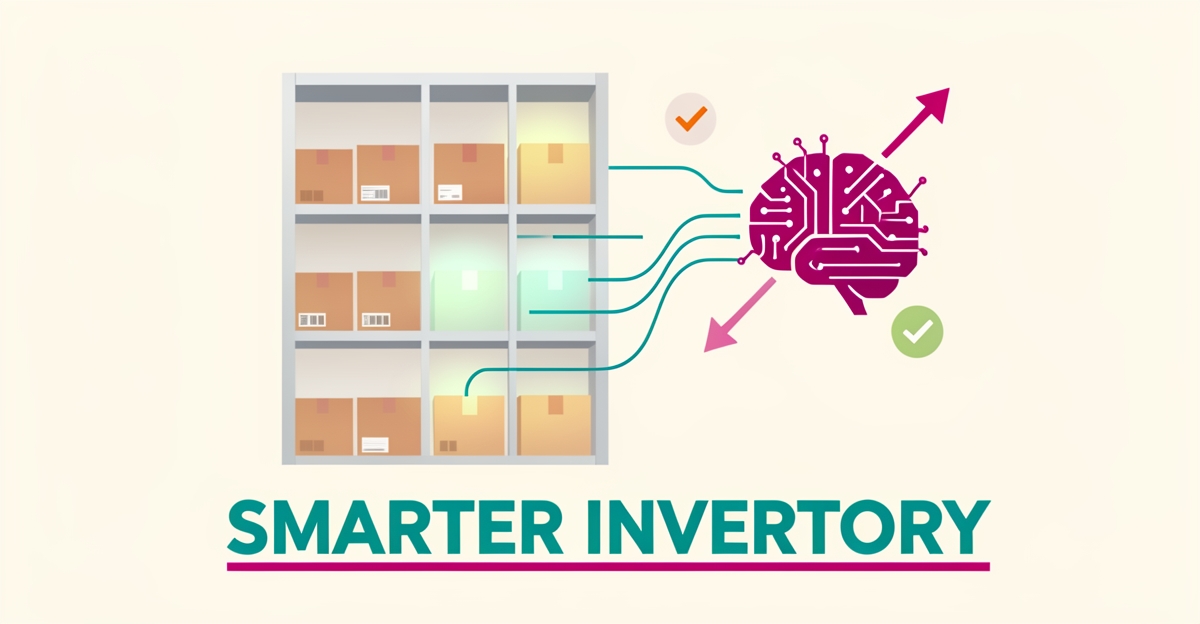
# 5 Signs Your Promotional Distributor Needs AI for Inventory & Order Management
**Quick Answer:** Many promotional distributors operate with inventory accuracy and fill rates below 95%, costing sales and customer trust. AI-powered systems deliver real-time visibility and predictive reordering to meaningfully cut stockouts and excess stock. Start with a free 30-minute strategy call with AIQ Labs to see where automation pays off first.
## Key Facts
n- Industry survey research suggests roughly one-third of industrial distributors report inventory data accuracy below 95% (industry data).
- The same research indicates about 75% of industrial distributors report fill rates below 95%.
- Excess inventory cost businesses worldwide an estimated $758.3 billion in 2022, according to retail analysis.
- Stockouts cause retailers to lose roughly 4% of annual sales on average, per industry research.
- The global supply chain visibility software market was estimated at $1.74 billion in 2025 and is projected to reach $12.94 billion by 2034.
- Supply chain visibility software is projected to grow at a compound annual growth rate of roughly 25% per market projections.
## Table of Contents
- [Inventory Inaccuracy Is Costing You Sales and Trust](#inventory-inaccuracy-is-costing-you-sales-and-trust)
- [AI Delivers Real-Time Visibility and Predictive Reordering](#ai-delivers-real-time-visibility-and-predictive-reordering)
- [From Manual Chaos to AI-Owned Supply Chain Control](#from-manual-chaos-to-ai-owned-supply-chain-control)
## Inventory Inaccuracy Is Costing You Sales and Trust
Inventory inaccuracy is more than a data problem—it's a direct threat to revenue and customer trust. When stock levels don't reflect reality, distributors face the costly dual risk of stockouts that lose sales and overstocking that ties up capital. Industry research suggests roughly one-third of industrial distributors operate with inventory data accuracy below 95%, a gap that undermines even the most careful planning. This lack of precision erodes confidence, as customers grow frustrated when promised items aren't available or arrive delayed.
The financial impact of these inaccuracies compounds quickly. Excess inventory cost businesses worldwide an estimated $758.3 billion in 2022, representing capital that could have been invested elsewhere. Meanwhile, stockouts cause retailers to lose an average of roughly 4% of annual sales—money walked away from due to preventable gaps in availability. For promotional distributors managing time-sensitive campaigns and seasonal spikes, these losses are especially damaging, as missed opportunities during peak demand periods are difficult to recover.
Fill rate failures further expose the consequences of poor inventory visibility. Research indicates more than three-quarters of industrial distributors report fill rates below 95%, meaning a meaningful share of orders cannot be fulfilled completely and on time. This directly impacts customer satisfaction and retention, particularly in promotional distribution where timing and reliability are critical to campaign success. When orders ship incomplete or late, trust diminishes, and buyers begin seeking more dependable suppliers.
- Inaccurate demand planning due to unreliable stock data
- Misallocated promotional spending based on false inventory signals
- Costly inventory write-offs from expired or obsolete stock
- Eroded customer confidence from repeated stockouts or delays
- Increased operational friction from manual reconciliation efforts
Manual tracking methods simply cannot keep pace with the complexity of modern promotional distribution. Spreadsheets and periodic counts create lag between actual inventory and recorded data, leading to decisions based on outdated information. AIQ Labs helps distributors close this gap—whether through [AI Workflow Builds](/workflow-builds) that rebuild the inventory and order workflows costing you the most, or [AI Employees](/ai-employees) that handle the day-to-day processing—turning inventory management from a liability into a competitive advantage.
## AI Delivers Real-Time Visibility and Predictive Reordering
AI-powered inventory systems transform how promotional distributors track stock and manage orders by creating a near-re
AI Employees
Hire a team member that works 24/7 — for less than a part-time wage.
AI receptionists, SDRs, dispatchers and 99+ roles. Trained on your business, fully managed.
See If You’re a Fit — AI Employees from $700/mo
Not sure where to start? Ask our AI planner
al-time view of inventory across all channels. These systems use machine learning to analyze historical sales, seasonality, and promotional activity, enabling predictive reordering that anticipates demand before shortages occur. By integrating data from ERP systems, point-of-sale feeds, and EDI transactions, AI eliminates the lag between inventory changes and system updates, giving distributors the visibility needed to act quickly. According to industry research, AI-driven forecasting models using time-series algorithms and neural networks can predict sell-through rates with greater accuracy, directly supporting optimized ordering decisions.
This predictive capability significantly reduces the risk of stockouts, which remain a costly issue for distributors struggling with inaccurate data. Research suggests one-third of industrial distributors report inventory data accuracy below 95%, and roughly three-quarters experience fill rates under 95%, leading to lost sales and inefficient spending. AI helps close this gap by continuously learning from real-time data streams and adjusting reorder triggers based on actual sell-through patterns. In one documented case, a major building products distributor improved fill rates by five to eight percentage points after deploying an AI-enabled supply chain control tower with generative AI for live inventory queries.
The automation extends beyond forecasting to include intelligent reorder alerts that trigger when stock levels fall below dynamically calculated thresholds. These alerts incorporate lead times, supplier reliability, and upcoming promotions to prevent both overstocking and shortages. Distributors using AI-powered inventory systems have reported meaningful reductions in stockouts and excess inventory—improving cash flow and operational efficiency. For promotional distributors managing high-volume, fast-moving SKUs, this level of automation turns inventory management from a reactive burden into a strategic advantage. AIQ Labs builds custom systems that embed these capabilities directly into a distributor's workflow, ensuring ownership, scalability, and alignment with existing tools like CRM and accounting platforms.
## From Manual Chaos to AI-Owned Supply Chain Control
Recognizing the problem is one thing. Replacing the spreadsheet-and-gut-feel operation with a system that actually runs itself is another — and it's where most promotional distributors stall.
The scale of manual chaos in distribution is well documented. Industry survey research suggests **one-third of industrial distributors operate with inventory data accuracy below 95%**, and roughly three-quarters report fill rates under 95% (industry research). That data gap cascades into misallocated promotional spending, inaccurate demand planning, and costly write-offs. The financial stakes are real: excess inventory cost businesses worldwide an estimated $758.3 billion in 2022 (according to retail analysis).
Closing that gap requires unifying fragmented tools — separate systems for orders, inventory, purchasing, and fulfillment — into a single automated workflow. That's the approach AIQ Labs takes with promotional distributors: instead of layering another subscription on top of the chaos, custom AI systems are built to connect your existing ERP, e-commerce feeds, and communication platforms into one operational hub with a single source of truth.
At the center of these builds are **AI Employees** — production-grade agents with defined roles like Order Processor, Inventory Manager, and Fulfillment Agent. They handle real workflows end to end: processing incoming orders, triggering reorder alerts based on predictive forecasting, updating stock levels in real time, and escalating exceptions to your team when judgment is required. They work around the clock and integrate directly with the tools you already use through deep, two-way API connections.
Implementation follows a phased path, and the payment model flexes to match your risk tolerance:
- **Start Monthly** — deploy a single AI Employee, such as an order processor, on a flat monthly plan that includes the build, training, integrations, and ongoing monitoring. Pause or adjust anytime.
- **Build in Milestones** — rebuild one workflow or an entire department in phases, approving and paying only as each phase ships. Stop anytime and keep everything built so far.
- **Own It Outright** — a full [AI Operating System](/ai-operating-systems) for your supply chain, with complete ownership of the code, agents, and data when complete.
This ownership model matters. Off-the-shelf inventory tools lock you into monthly subscriptions and someone else's roadmap, while a custom system remains an asset your business controls as it grows. It's worth noting that AI-driven supply chain visibility is accelerating industry-wide — the global supply chain visibility software market is projected to grow from $1.74 billion in 2025 to $12.94 billion by 2034, a compound annual growth rate of roughly 25% (
AI Development
Still paying for 10+ subscriptions that don’t talk to each other?
We build custom AI systems you own outright. No vendor lock-in. Full control.
See If You’re a Fit — AI Employees from $700/mo
Not sure where to start? Ask our AI planner
ne decoration-amber hover:decoration-amber-deep hover:text-amber-deep underline-offset-4 transition-colors" href="https://ai-best-practices.com/use-cases/commerce/sell/distributor-inventory-visibility-and-sell-through-analytics">per market projections).
As Ian Heller of Distribution Strategy Group puts it, "Do the basics well, then layer in AI." For promotional distributors still running on manual processes, the basics start with unified automation — and the distributors who build it now will be the ones setting fill-rate benchmarks everyone else chases.
## Frequently Asked Questions
**How do I know if my promotional distribution business actually needs AI for inventory management?**
The clearest signs are inventory accuracy below 95%, frequent stockouts, and orders shipping incomplete or late. According to joint industry survey research, roughly one-third of industrial distributors operate with inventory data accuracy below 95%, and about three-quarters report fill rates under 95% — if that sounds familiar, AI-powered automation can close the gap.
**What is inaccurate inventory data actually costing my business?**
The costs hit from both directions: excess inventory cost businesses worldwide an estimated $758.3 billion in 2022, while stockouts cause retailers to lose roughly 4% of annual sales. For promotional distributors running time-sensitive campaigns, missed demand during peak periods is especially hard to recover.
**How does AI actually improve inventory accuracy and fill rates?**
AI systems unify data from your ERP, point-of-sale feeds, and EDI transactions into a real-time view of stock, then use machine learning to predict demand and trigger reorders automatically. In one documented case study, a major building products distributor improved fill rates by five to eight percentage points after deploying an AI-enabled supply chain control tower.
**Can AI really reduce stockouts and overstocking at the same time?**
Yes — AI forecasting models analyze historical sales, seasonality, and promotional activity to set dynamic reorder thresholds that account for lead times and supplier reliability. Distributors using these systems have reported meaningful reductions in both stockouts and excess inventory, improving both availability and cash flow.
**How long does it take to implement an AI inventory system?**
Timelines vary by complexity, but industry research indicates implementations typically require six to 12 months to achieve stable data pipelines before advanced analytics deliver reliable results. AIQ Labs uses a phased approach — you can start with a single AI Employee like an order processor on a flat monthly plan, or build in milestones and pay only as each phase ships.
**What's the difference between buying inventory software and having a custom AI system built?**
Off-the-shelf tools lock you into monthly subscriptions and someone else's roadmap, while a custom system is an asset your business owns outright. AIQ Labs builds AI Employees — like an Inventory Manager or Order Processor — that integrate directly with your existing ERP, CRM, and accounting tools through deep two-way API connections, and you can choose to own the full system, code and data included, when the build is complete.
## Turn Inventory Chaos into Your Competitive Edge
When inventory inaccuracies erode trust and drain revenue, the path forward isn't about adding more tools—it's about building a system that works for you. AI-powered inventory management transforms reactive guesswork into real-time visibility, predictive reordering, and automated order processing, directly addressing the costly gaps in stock accuracy and fill rates that plague promotional distributors. By unifying fragmented data into a single source of truth and deploying AI Employees that handle workflows end-to-end, businesses gain control over cash flow, reduce waste, and deliver the reliability customers expect. The result is not just efficiency, but a scalable advantage that grows with your operation. If you're ready to move beyond spreadsheets and gut feelings, start with the [2-minute Fit Check](/apply) and then a free 30-minute strategy call to see where AI can deliver the fastest win for your supply chain—no obligation, just clarity on your opportunity.
AI Transformation Partner
Make AI your competitive advantage — not just another tool.
Strategy, implementation and ongoing optimization. One partner, end to end.
See If You’re a Fit — AI Employees from $700/mo
Not sure where to start? Ask our AI planner