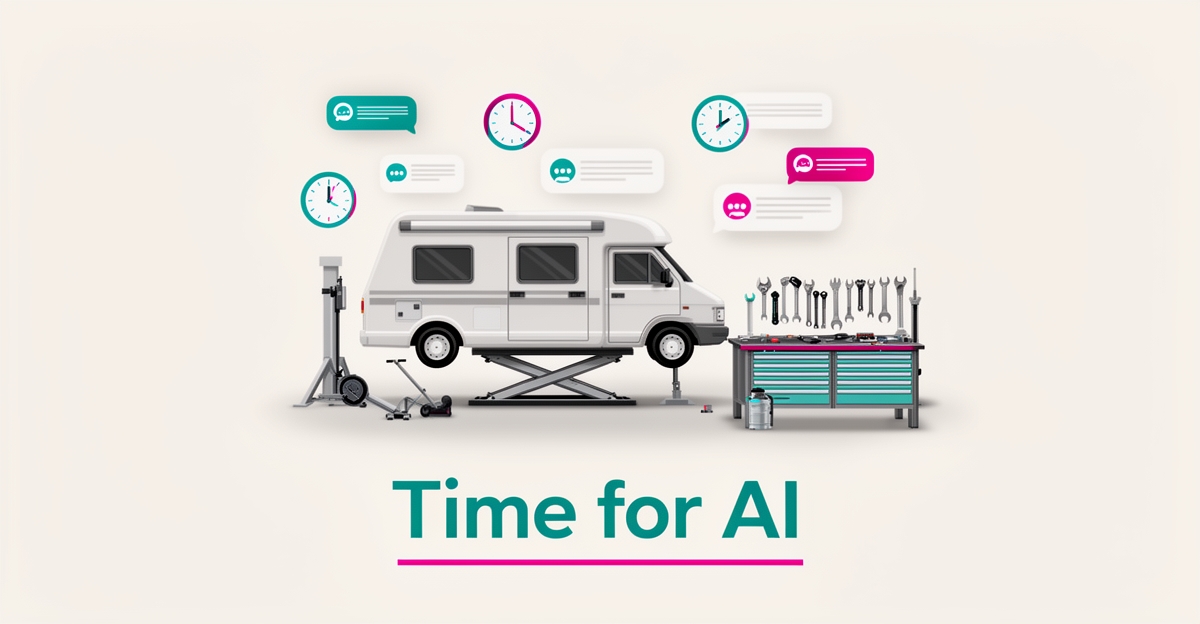
5 Signs Your RV Shop Needs AI for Customer Support and Follow-ups
Key Facts
- Most customers today expect companies to understand their needs and preferences, per widely cited industry research
- A large majority of customers expect a seamless experience across digital and in-person touchpoints
- Self-service demand keeps climbing, and manual teams typically cannot scale to meet it during peak season
- Companies using AI in customer service most often cite faster problem analysis and fewer human errors as top benefits
- AI Employees from AIQ Labs typically cost around 80% less than a human hire in an equivalent role
- AIQ Labs has deployed 200+ multi-agent systems and runs 4 live SaaS products daily
Hire a team member that works 24/7 — for less than a part-time wage.
AI receptionists, SDRs, dispatchers and 99+ roles. Trained on your business, fully managed.
Not sure where to start? Ask our AI planner
The Hidden Cost of Missed Customer Touchpoints
RV shops losing revenue often starts with invisible gaps in the customer journey. When customer churn rises, follow-up becomes inconsistent, or response times stretch, it signals deeper issues in how the shop engages with its clients. These aren’t just operational hiccups—they’re revenue leaks tied directly to unmet expectations. Today, most customers expect companies to understand their needs and preferences, and a large majority demand a seamless experience across digital and in-person touchpoints. When an RV shop fails to deliver on these fronts, satisfaction drops and loyalty erodes.
High customer churn is one of the clearest signs that post-service engagement is breaking down. Customers who feel ignored after a repair or purchase are far more likely to take their business elsewhere—especially when competitors offer faster, more personalized follow-up. AI-powered tools can help close this gap by automating satisfaction check-ins, service reminders, and tailored communications that keep the relationship warm long after the invoice is paid. This isn’t about replacing human interaction—it’s about ensuring no customer falls through the cracks due to oversight or bandwidth limits.
Inconsistent follow-up and long response times compound the problem. When a customer waits days for a simple update on their RV’s service status or receives no confirmation after scheduling maintenance, trust begins to fray. AI can automate routine touchpoints—like appointment confirmations, parts arrival alerts, or post-repair feedback requests—ensuring every customer gets timely, relevant communication without overburdening staff. These systems integrate with existing tools to create a cohesive experience that meets the expectations of customers who move fluidly between digital and in-person interactions.
By addressing these hidden cost drivers—churn, inconsistency, and delay—RV shops can transform reactive service into proactive relationship management. The result isn’t just fewer missed touchpoints; it’s higher retention, stronger referrals, and a reputation for reliability that turns one-time buyers into lifelong advocates. For shops ready to close the gap between expectation and delivery, AI isn’t a luxury—it’s the lever that makes consistent, scalable customer care possible.
Why Traditional Support Fails in the RV Lifecycle
RV service is seasonal, cyclical, and never simple. A shop that runs fine in January can be drowning in tickets in July, and human-only support breaks under that swing.
Traditional customer support offers human touch and empathy, but it remains time-consuming and expensive. Manual teams struggle to keep response times consistent when repair timelines stretch across weeks and customers switch between phone, text, email, and in-person check-ins. Industry research consistently shows customers expect businesses to understand their needs and deliver a seamless experience across channels—expectations that manual processes routinely miss.
That expectation collides with the RV lifecycle. Seasonal spikes flood service bays, complex repairs require multiple updates, and owners expect visibility without calling back. Manual processes create bottlenecks where follow-ups are missed, status requests pile up, and staff spend hours on routine inquiries instead of revenue work.
Human-only workflows typically overwhelm teams in three ways:
- Seasonal volume swings that outpace headcount and create long response times
- Multi-channel communication that fragments history and forces customers to repeat themselves
- Complex repair timelines that need consistent, personalized follow-ups over days or weeks
AI-powered customer support flips the constraint. It automates routine tasks and improves response times while keeping human agents focused on complex, empathetic consultation. Customers increasingly want self-service options—a demand manual teams cannot scale to meet during peak season.
The contrast is clear in daily operations. Traditional support relies on staff availability and memory, so inconsistent follow-up and delayed replies become normal. AI workflows can branch between steps, apply conditional logic, handle errors gracefully, and derive the next step from the result of the previous action. The true art lies in orchestration, not replacement.
For RV shops, this means post-repair communication, satisfaction tracking, and retention can be managed continuously without adding headcount. AIQ Labs helps RV shops implement AI agents to manage post-repair communication, track satisfaction, and ensure customer retention, using AI Customer Relationship Management that aligns with how owners actually engage. For shops that want to start with a single costly process, a targeted AI Workflow Build rebuilds the one workflow that drains the most time.
The result is support that stays consistent when the calendar does not. Automated routine tasks free technicians and service advisors to do the work only humans can do, while customers get faster answers, clearer updates, and the seamless experience they now expect.
What AI-Powered Follow-Up Actually Looks Like
AI-powered follow-up transforms how RV shops engage with customers after service, turning reactive communication into a proactive retention strategy. Instead of relying on staff memory or manual logs, AI agents automatically trigger personalized check-ins via voice, SMS, or email within 24 hours of a repair completion. These systems verify satisfaction, identify unresolved concerns, and even suggest preventative maintenance—all without human intervention. This level of consistency directly addresses the warning sign of inconsistent follow-up, ensuring every customer receives timely attention regardless of shop workload or staff availability.
The technology goes beyond simple reminders by enabling dynamic, multi-channel status updates that keep customers informed throughout the service lifecycle. AI systems can send appointment confirmations, real-time repair progress alerts, and completion notifications through the customer’s preferred channel—whether that’s a text message, automated voice call, or email. This capability tackles long response times by eliminating the delays where information often gets stuck in internal workflows. Companies using AI in customer service most often cite faster and more precise problem analysis as their biggest benefit, allowing shops to anticipate issues before they escalate and communicate solutions proactively.
Perhaps most critically, AI-powered follow-up includes built-in satisfaction tracking that captures feedback at key moments—post-repair, one week later, and pre-season—to detect early signs of dissatisfaction. By analyzing response patterns and sentiment, these systems flag at-risk customers for immediate human intervention, turning potential churn into loyalty opportunities. This directly combats high customer churn by ensuring no concern slips through the cracks. AI-using companies also commonly report fewer human errors as a primary benefit, meaning follow-up tasks like appointment scheduling or parts ordering become significantly more reliable. For RV shops struggling to maintain consistent communication, AI doesn’t just automate follow-up—it makes it intelligent, measurable, and fundamentally more effective at keeping customers coming back.
Implementation Roadmap: From Diagnosis to Deployment
Transforming customer support in an RV shop begins with a clear understanding of where AI can deliver the most impact. Customers now expect timely, personalized follow-ups as a baseline, making gaps—such as delayed responses after service visits or missed satisfaction surveys—clear signals of opportunity. The first step is analyzing customer data and behavior to pinpoint exactly where those gaps cost you retention.
Next, select AI-powered tools designed for seamless integration with existing CRM and dispatch systems, ensuring they can handle multi-step workflows like post-repair check-ins and appointment reminders without disrupting current operations. Integration follows, connecting the AI agent to platforms already in use so data flows bidirectionally, enabling real-time updates on service status and customer history. Staff training then focuses on collaboration—teaching teams how to oversee AI interactions, intervene when needed, and use insights from automated follow-ups to improve service quality. Finally, establish performance monitoring by tracking key metrics like response time reduction, follow-up completion rates, and customer satisfaction scores, using this data to refine the AI agent’s responses and workflows over time. This structured approach ensures AI enhances, rather than replaces, the human touch that builds lasting customer relationships in the RV industry.
The Competitive Advantage of Owning Your AI Workforce
Customer expectations in the RV industry have shifted fast, and support gaps show up directly in retention. When follow-ups slip and response times drag, shops lose the trust that keeps owners coming back for service, upgrades, and referrals.
Owning your support capacity changes the economics of retention. An AI Employee is a production-grade agent that works 24/7/365, books appointments, answers post-repair questions, and follows up on satisfaction — all integrated with your CRM and tools. That continuous coverage closes the gap between service completion and the next visit.
The cost advantage compounds over time. AI Employees typically cost around 80% less than a human hire in an equivalent role, and they never miss a call. Instead of renting a chatbot subscription, you build and own the system, so the asset appreciates with your business rather than expiring with a vendor contract.
That ownership model aligns with how customers want to be treated. Industry research consistently shows customers expect companies to understand their needs, deliver a seamless experience across digital and in-person interactions, and get self-service options that actually work.
For RV shops, consistent post-repair communication is retention work. An owned AI Employee can:
- Automate appointment reminders, order updates, and service follow-ups without manual chasing
- Track satisfaction signals and trigger human escalation only for complex, empathetic cases
- Maintain 24/7/365 availability so customers get answers after hours when problems surface
This is where true ownership beats rented tools. With AIQ Labs, clients receive full ownership of custom-built systems, no vendor lock-in, and complete control over customization and future development. Flexible payment models—Start Monthly, Build in Milestones, or Own It Outright—let you match the investment to your cash flow. For shops that want a fully connected support, scheduling, and retention layer built in phases, AI Operating Systems deliver one connected operating layer you own outright.
Retention becomes a system, not a hope. Faster, consistent follow-ups reduce churn and protect lifetime value while your team focuses on high-value, hands-on work. The competitive advantage is owning a workforce that learns, improves, and stays with you.
Start the 2-minute Fit Check at aiqlabs.ai/apply to identify your highest-ROI automation opportunity and book a free 30-minute strategy call.
Still paying for 10+ subscriptions that don’t talk to each other?
We build custom AI systems you own outright. No vendor lock-in. Full control.
Not sure where to start? Ask our AI planner
Frequently Asked Questions
How do I know if my RV shop actually needs AI for customer support?
Will AI replace my service advisors and technicians?
What customer expectations are RV shops missing without AI?
Can AI handle seasonal volume swings in RV service?
Do customers really want self-service options from an RV shop?
What does AI-powered follow-up look like after a repair?
Turn Missed Touchpoints Into Retention
Missed check-ins, delayed replies, and seasonal overload aren’t just service hiccups for RV shops — they’re visible revenue leaks. The article shows how high churn, inconsistent follow-up, and long response times signal a support system stretched too thin by the RV lifecycle, and how AI can close those gaps with automated confirmations, real-time status updates, and intelligent satisfaction tracking that keeps relationships warm after the invoice is paid. The goal isn’t to replace your service advisors, but to make proactive, consistent care scalable so your team can focus on complex, empathetic work while no customer falls through the cracks. If you’re seeing these signs, start by mapping where follow-ups stall and where customers wait longest for answers, then test automation on one high-impact workflow like post-repair check-ins. AIQ Labs helps RV shops implement owned AI agents for post-repair communication and retention, with full ownership and no vendor lock-in. Start the 2-minute Fit Check at aiqlabs.ai/apply for a free 30-minute strategy call to identify your highest-ROI automation opportunity and map a clear path forward.
Make AI your competitive advantage — not just another tool.
Strategy, implementation and ongoing optimization. One partner, end to end.
Not sure where to start? Ask our AI planner