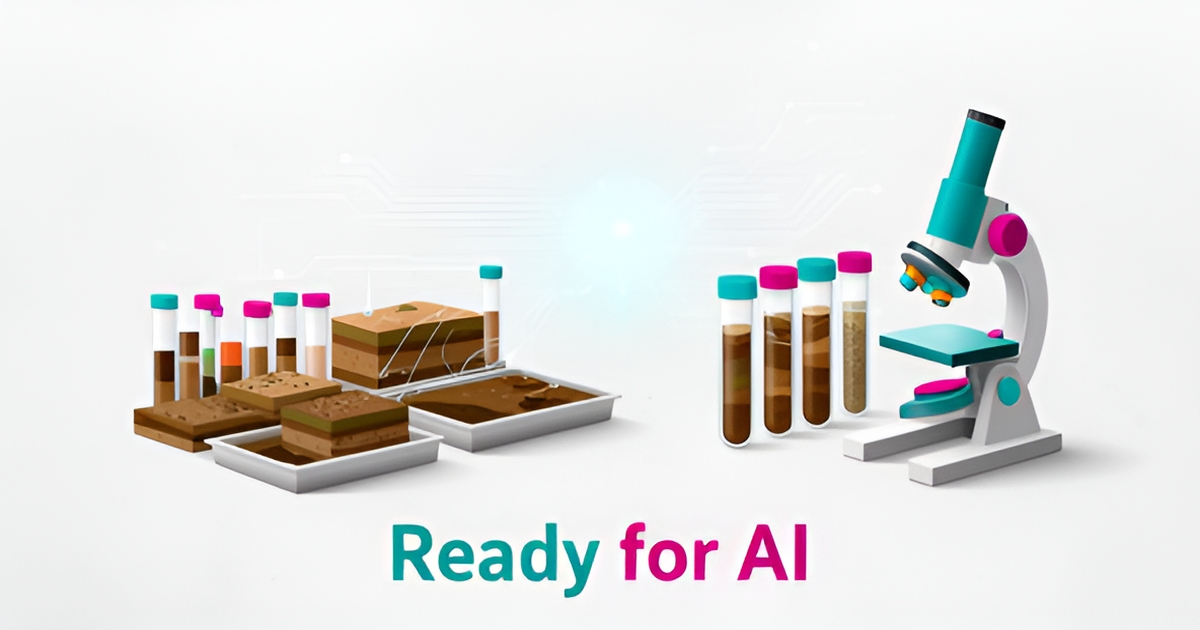
5 Signs Your Soil Testing Business Is Ready for AI Automation
Key Facts
- Labs that automate intake and data entry typically free a substantial share of skilled staff time for high-value analysis instead of transcription work
- The automatic soil testing equipment market has been projected to grow steadily through the early 2030s, driven by precision agriculture and regulatory demands
- AI-assisted soil analysis can cut turnaround from weeks to hours while improving accuracy for faster field decisions
- Peak soil testing seasons—such as North Carolina's, which typically ends December 1—create annual surges that expose bottlenecks in manual sample handling
- AI workflow automation reduces transcription mistakes while giving clients real-time sample status updates
- Portable AI-enabled soil analyzers can detect pH, organic matter, and nutrient deficiencies right in the field for real-time insights
Hire a team member that works 24/7 — for less than a part-time wage.
AI receptionists, SDRs, dispatchers and 99+ roles. Trained on your business, fully managed.
Not sure where to start? Ask our AI planner
The Operational Strain Hitting Soil Testing Labs Now
A soil testing lab’s busiest season shouldn’t feel like a scramble to keep up, but for many, it does. Demand for soil analysis keeps climbing as precision agriculture and regulatory requirements expand. That growth means more samples, more data, and more complexity for labs still relying on manual processes.
The strain shows up first in scheduling and intake. Consider the North Carolina Department of Agriculture’s soil testing program, which handles a massive influx of samples during its peak season, typically ending December 1st. For commercial labs, this seasonal surge translates to a flood of phone calls, emails, and paper forms. Each missed call or delayed email response represents a missed test request and a direct hit to revenue.
Once samples arrive, the operational cracks widen. The core issue is usually a fragmented workflow. In labs we see struggling with manual processes, the pattern is familiar:
- Customer communication fragmented across countless email threads.
- Manual data entry from handwritten forms and paper records.
- No centralized system for tracking sample status.
- Decades of valuable historical data left underutilized.
This manual, disjointed approach creates significant drag. Inconsistent data logging from paper forms leads to errors that require time-consuming verification. Without a central dashboard, lab managers can’t see bottlenecks forming, and customers are left in the dark, leading to more inbound calls asking for status updates. This is the reality of operational friction—every manual handoff and paper form adds another point of failure.
The cost of this status quo is measurable. Labs that automate test validation and data capture routinely report dramatic gains in data accessibility and turnaround—and, most importantly, they free skilled staff from tedious data entry to focus on high-value analysis. This is the hidden tax of manual workflows: your most trained people spend their days on tasks that don’t require their expertise.
These challenges are precisely where AI workflow automation delivers its greatest value. At AIQ Labs, we build custom systems that connect these fragmented pieces, turning manual handoffs into automated, error-free processes. An AI-powered workflow can manage scheduling, digitize incoming forms, and provide a single source of truth for every sample, transforming the entire operational model from reactive to predictive. If one workflow is costing you the most, our AI Workflow Builds rebuild it at a fixed price, in phases.
Why AI Automation Is Accelerating in Soil Analysis
Soil testing is moving from the lab bench to the field in real time, and the market is moving with it. The pressure for faster, field-ready results is reshaping how labs and agronomic services operate.
The global automatic soil testing equipment market has been projected to grow steadily through the early 2030s, with growth driven by technological advancements, regulatory mandates for soil health monitoring, and the rise of precision agriculture.
IoT, AI, and machine learning are enhancing the capabilities of these systems, enabling predictive insights and real-time monitoring. This is not just incremental automation. It is a shift from periodic sampling to continuous soil intelligence that informs nutrient management and protects natural resources.
AI soil analysis tools are providing fast and accurate data in minutes, replacing slow lab tests and enabling timely decisions. As of late 2026, AI-assisted analysis can cut testing times from weeks to hours while improving accuracy. Portable AI-enabled soil analyzers can detect soil pH, organic matter, and nutrient deficiencies right in the field.
That speed changes the business model. AI shifts soil testing from a one-time task to continuous monitoring, allowing real-time updates on soil health and enabling farmers to react faster. The core value proposition lies in streamlining soil analysis workflows, reducing labor costs, and enhancing decision-making accuracy.
For soil testing businesses, the momentum shows up in operational demand:
- Scheduling delays and missed test requests become costlier as clients expect same-day insights
- Inconsistent data logging from handwritten forms and fragmented communications creates rework
- One-time lab runs are replaced by requests for ongoing monitoring and predictive recommendations
- Integration with digital agriculture platforms requires structured, real-time data feeds
These are the exact pain points AI workflow and task automation is built to address. AIQ Labs helps soil testing teams streamline these workflows, reduce manual errors, and increase throughput with custom AI systems that own the process end-to-end.
The market tailwinds are clear. The proliferation of digital agriculture platforms and data-driven farm management systems further catalyzes this growth, as stakeholders seek integrated, real-time soil data to inform operational decisions.
5 Readiness Signals Your Lab Can’t Ignore
1. Peak season keeps breaking your intake process. Soil testing businesses often hit operational walls when manual processes can't keep up with demand. When sample backlogs grow and turnaround times slip, it's a clear signal that current workflows are strained beyond sustainable limits. Seasonal surges—like the annual rush before North Carolina's December 1 cutoff—expose bottlenecks in sample handling and reporting year after year.
2. You're tracking samples on paper or disconnected spreadsheets. Manual sample tracking creates a critical vulnerability. Without real-time visibility into where each sample sits in the testing lifecycle—from receipt to analysis to reporting—labs risk misplaced samples, duplicated efforts, and missed deadlines. OCR-powered data capture and centralized tracking turn a fragmented process into a streamlined, auditable workflow.
3. Decades of historical data sit unused. Data silos from years of past records compound inefficiencies, making it impossible to leverage past results for predictive insights or trend analysis. Digitizing and integrating historical archives is one of the fastest wins automation delivers.
4. Skilled staff are buried in data entry. When labs struggle with error-prone entry from handwritten forms, AI-driven validation eliminates transcription mistakes and redirects trained technicians to analysis work—the tasks you actually hired them for.
5. Clients are calling for status updates. Inconsistent client communication via email threads creates inbound call volume and erodes trust. Automated status workflows give clients real-time updates on sample progress, cutting the noise and keeping accounts happy.
From Signal to System: How AIQ Labs Builds Owned Automation for Soil Testing
Soil testing businesses often hit operational ceilings when manual processes can't keep pace with seasonal demand spikes or growing client volumes. Scheduling delays, inconsistent data logging, and missed test requests aren't just annoyances—they signal that core workflows need intelligent automation to maintain accuracy and throughput. AIQ Labs addresses these signals by building owned automation systems that unify fragmented tools and replace repetitive tasks with AI-driven precision, giving businesses full control over their digital infrastructure.
The implementation follows three entry points, starting with an AI Workflow Build to connect CRM, LIMS, and scheduling systems into a single operational backbone. This eliminates manual data entry between platforms and creates a real-time source of truth for sample status, test results, and client communications. By deploying managed AI Employees for intake coordination, sample tracking, and client updates, businesses gain 24/7 capacity without adding headcount—at a fraction of the cost of a human hire—while reducing errors from handwritten form processing and fragmented email threads. For labs ready to connect the whole operation, AI Operating Systems provide one connected operating layer, built in phases and owned outright.
Progress is structured through flexible payment models that de-risk adoption: Start Monthly with an AI Employee handling sample intake and scheduling; Build in Milestones by approving and paying for each phase of CRM-LIMS integration as it ships; or Own It Outright for full code and data ownership upon completion. This path turns operational pain points into measurable gains—faster data accessibility, fewer transcription errors, and shorter turnaround—while ensuring the business retains complete control of its AI assets. The result isn't just automated tasks, but a self-owned system that scales with demand, protects margins during peak seasons, and turns soil testing complexity into a competitive advantage.
Turn Soil Testing Strain into Strategic Advantage
When peak season exposes scheduling delays, fragmented communication, and manual data entry as recurring bottlenecks, it's not just an operational hiccup—it's a clear signal your soil testing business is ready for AI automation. As we've seen, AI workflow automation directly addresses these pain points by digitizing forms, centralizing sample tracking, and freeing up skilled staff from tedious tasks to focus on high-value analysis. The result is faster turnaround, fewer errors, and the ability to scale during demand surges without adding headcount. For labs looking to move from reactive scrambling to predictive, efficient operations, the path forward starts with identifying your specific workflow friction points. Take the first step with the Fit Check—a 2-minute assessment that maps your biggest bottleneck, followed by a free 30-minute strategy call to uncover high-ROI automation opportunities tailored to your lab’s reality.
Make AI your competitive advantage — not just another tool.
Strategy, implementation and ongoing optimization. One partner, end to end.
Not sure where to start? Ask our AI planner