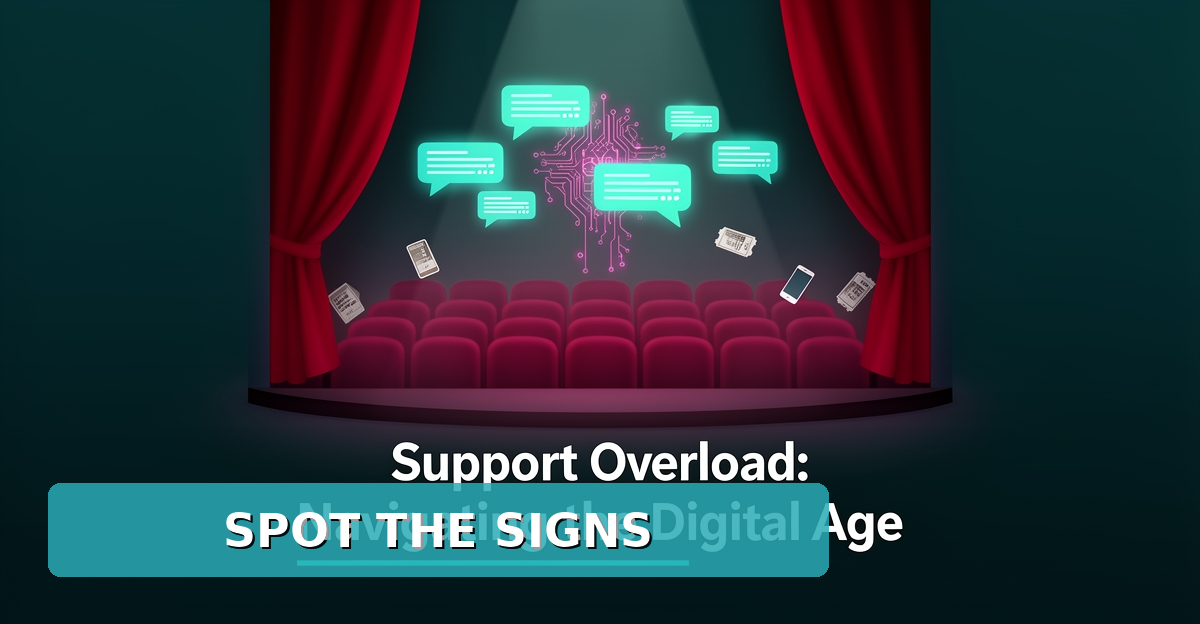
5 Signs Your Theater Needs an AI-Powered Customer Support System
Key Facts
- Roughly three-quarters of customers say they'll switch to a competitor after multiple bad experiences with a business, according to widely cited industry research
- Customer expectations for response and resolution speed have risen sharply in recent years, per recent customer service trend reports
- Nearly half of support teams were already using AI as of recent industry surveys, and adoption has continued to climb through 2026
- Most contact centers now deploy AI chatbots to handle routine, high-volume interactions
- A large majority of customer service agents agree that customers are open to being served by AI for routine needs
- The call center AI market is projected to reach roughly $6 billion by 2032, according to industry projections
Hire a team member that works 24/7 — for less than a part-time wage.
AI receptionists, SDRs, dispatchers and 99+ roles. Trained on your business, fully managed.
Not sure where to start? Ask our AI planner
When Theater Support Breaks Down Under Demand
Picture opening night: the phones are ringing off the hook, the inbox is buried, and a patron who wanted to book group tickets has just given up and gone elsewhere. For live performance venues, this scene plays out far more often than anyone in the box office would like to admit. When demand spikes around a popular production, theater support doesn't just bend — it breaks.
The core problem is that patron expectations have outpaced what a small, human-only support team can deliver. Research on AI chatbots in the performing arts shows theater customer support systems are frequently overwhelmed, producing long response times and frustrated patrons. Meanwhile, recent customer service trend reports show a sharp rise in the speed patrons expect for both responses and resolutions. Patrons no longer accept waiting a day for an answer about seat availability or refund policies — they expect answers in minutes, around the clock.
What makes this worse is the nature of the inquiries themselves. The overwhelming majority of questions theaters receive are repetitive: What time does the curtain go up? Is parking available? Can I exchange my tickets? Do you offer group rates? When staff spend their days answering the same handful of questions, two things happen. First, genuinely complex issues — accessibility requests, billing disputes, season subscription changes — sit unanswered. Second, staff burnout sets in, and response quality slips exactly when demand is highest.
The stakes of letting this continue are higher than many venues realize. Industry research consistently finds that roughly three-quarters of customers will switch to a competitor after multiple bad experiences with a business. For a theater, "switching" might mean choosing a rival venue, a streaming service, or simply staying home. Every slow response during peak booking periods is a quiet contributor to customer churn risk — and churned patrons rarely announce their departure. They just stop buying tickets.
The warning signs tend to cluster around a few familiar patterns:
- A high volume of repetitive questions consuming most of your team's day
- Missed bookings and abandoned inquiries when phones go unanswered
- Response times stretching from minutes to hours — or days — during peak demand
- Staff overwhelmed to the point that complex patron issues fall through the cracks
- Declining satisfaction scores or quiet drop-off in repeat ticket purchases
If several of these sound familiar, your theater has outgrown its current support model. The good news is that this is a solved problem across the service industry: as of late 2026, nearly half of support teams are already using AI, and AI systems can automate repetitive tasks while providing 24/7 availability. Theaters don't need to expand headcount to keep up — scalable, human-like AI support can handle routine inquiries around the clock, freeing your team for the high-touch work that defines a great venue. At AIQ Labs, we've deployed 200+ multi-agent systems and seen this pattern across live-event and service businesses alike: overwhelmed staff and long response times are red flags, not inevitabilities.
The question isn't whether your theater can afford AI-powered support. It's whether it can afford another season of patrons giving up before they ever reach the box office.
Five Red Flags That Signal AI Support Is Needed
Live performance venues operate on razor-thin margins where a single missed booking or frustrated patron can directly impact revenue. Yet many theater managers don't realize their customer support system is failing until it's too late. Here are five warning signs that indicate it's time to consider AI-powered assistance.
If your staff spends hours answering the same questions about showtimes, parking, or ticket policies, you're experiencing the most common red flag. High volumes of repetitive inquiries drain resources that could be spent on complex patron needs.
Industry surveys show the vast majority of contact centers now use AI chatbots specifically to handle these routine interactions. When your human agents are stuck explaining refund policies for the tenth time today, they can't address the nuanced accessibility requests or group sales inquiries that truly require human judgment.
Missed bookings represent direct revenue loss. If patrons call after hours to purchase tickets or modify reservations and reach voicemail, they'll likely book with a competitor instead.
Customer experience research consistently shows that most customers will switch to a competitor after multiple bad experiences. For theaters, this means every unanswered phone call during intermission or every email that sits overnight is a potential lost season subscriber.
Patron expectations have shifted dramatically. Recent customer service trend reports document steep increases in the response and resolution speeds patrons now expect.
If your theater takes 24 hours to respond to ticket exchange requests or accessibility seating questions, you're falling behind. Modern patrons expect immediate answers, especially when they're trying to make last-minute plans or need urgent assistance with their bookings.
Theater doesn't operate on a 9-to-5 schedule. Patrons have questions at midnight about tomorrow's matinee, or they need to change seats at 6 AM before the box office opens. Round-the-clock availability gaps mean missed opportunities and frustrated customers.
AI-powered systems handle inquiries 24/7 without additional staffing costs. AIQ Labs builds managed AI Employees — receptionists, support agents, and dispatchers across 99+ roles — that work alongside your team, ensuring no question goes unanswered regardless of when it arrives, typically at a fraction of the cost of a human hire.
When human agents spend their entire shift answering "What time does the show start?" they burn out quickly. This leads to turnover, training costs, and inconsistent service quality.
Customer experience research consistently finds that a large majority of service agents agree customers are open to AI assistance for routine needs. The goal isn't replacing your team — it's freeing them from repetitive tasks so they can focus on complex patron needs that require empathy and creative problem-solving.
Consider these theater-specific scenarios where AI excels:
- Handling ticket exchange and refund requests automatically
- Providing instant show information, runtimes, and age recommendations
- Answering accessibility questions about wheelchair seating, assisted listening devices, or sensory-friendly performances
- Processing group sales inquiries and coordinating with your sales team
- Managing subscription renewals and season ticket questions
If you recognized your theater in three or more of these signs, it's time to explore AI support options. The technology has matured beyond simple chatbots into sophisticated systems that understand context, take action, and integrate with your existing ticketing platform.
Start with a two-minute fit check to identify your biggest support bottleneck, then book a free 30-minute strategy call to map out a solution. If AI isn't the right fit for your venue, we'll tell you — that's a promise.
How AI-Powered Support Transforms Theater Operations
Theaters today face mounting pressure to deliver seamless customer experiences while managing limited staff and rising inquiry volumes. When patrons face long wait times or unanswered questions, they're more likely to turn to competitors for their entertainment needs. Industry research consistently shows most customers will switch after multiple bad experiences, making responsive support critical for retention. AI-powered customer support systems address these challenges by providing instant, consistent assistance that scales with demand.
AI-driven support transforms theater operations by dramatically improving response and resolution speeds. Recent industry data shows patrons now expect far faster responses and resolutions than they did just a few years ago. This means patrons get answers to showtimes, accessibility questions, or booking changes in seconds rather than minutes, reducing frustration and abandonment during peak booking periods.
Beyond speed, AI support delivers 24/7 availability without adding labor costs — a critical advantage for theaters handling late-night inquiries or out-of-town audiences. As of late 2026, nearly half of support teams already use AI to extend coverage, and most contact centers deploy AI-powered chatbots for round-the-clock assistance. This ensures no inquiry goes unanswered, whether it's a 2 a.m. question about refund policies or a morning request for group booking details.
AI also reduces operational strain by automating repetitive tasks that consume agent time. Common theater inquiries — such as ticket refund processes, seat availability, or concession stand hours — can be resolved instantly by AI, freeing human staff to focus on complex issues like accessibility accommodations or VIP experiences. Industry observers note this shift allows agents to concentrate on high-value interactions where empathy and judgment matter most.
While concerns about losing the human touch are valid, modern AI systems are designed to complement — not replace — human teams. Seamless handoff protocols ensure complex or sensitive issues are transferred to live agents with full context preserved. Additionally, managed AI Employees handle defined workflows like appointment setting or FAQ resolution, working alongside human teams to maintain service quality while scaling capacity. This hybrid approach preserves the warmth of human interaction where it matters most, while leveraging AI for efficiency and consistency.
By adopting AI-powered support, theaters not only meet rising patron expectations but also build a resilient, cost-effective foundation for long-term growth. The result is a support system that's always on, always responsive, and always ready to enhance the audience experience — from first inquiry to final curtain call.
From Assessment to Live AI Support for Theaters
Recognizing the signs is only half the battle — acting on them is where theaters either thrive or continue to struggle. With nearly half of support teams already using AI as of late 2026 and the call center AI market projected to reach roughly $6 billion by 2032, the question isn't whether to implement AI support, but how to do it right.
The implementation process follows a proven path that minimizes disruption while maximizing results. Industry experience shows successful AI customer service transformation starts with a systematic approach rather than a rushed deployment.
Step 1: Assess your current workflow. Map out every patron touchpoint — phone calls, emails, chat inquiries, and in-person interactions. Identify where bottlenecks occur, which questions repeat daily, and when demand spikes hit hardest. This assessment reveals exactly where AI delivers the highest ROI.
Step 2: Select the right approach. Not all AI solutions are created equal. Look for systems that integrate with your existing CRM and ticketing platforms, handle complex queries with contextual understanding, and escalate seamlessly to human staff when needed. The performing arts industry has unique requirements that generic chatbots often miss. If support is just one of several costly workflows, a focused AI Workflow Build can rebuild the single process that costs you the most, at a fixed price and in phases.
Implementation continues with these critical steps:
- Integrate with existing systems: Connect AI to your CRM, ticketing platform, and calendar tools so it can access real-time show information, seat availability, and patron history.
- Automate responses strategically: Start with high-volume, low-complexity queries like showtimes, parking, and refund policies before expanding to more nuanced interactions.
- Train on your specific data: Generic AI fails in specialized contexts. Your system needs to understand your venue's layout, season schedule, membership tiers, and policies.
- Measure and optimize continuously: Track response times, resolution rates, and patron satisfaction to refine performance over time.
The financial commitment doesn't have to be overwhelming. AIQ Labs offers flexible engagement models — Start Monthly, Build in Milestones, or Own It Outright — so you can begin without a large upfront commitment and scale as results prove out. Monthly plans typically cost less than a part-time hire, with build, training, integrations, and ongoing optimization included. For venues ready to own their systems outright, milestone-based builds deliver full ownership of code and data — no vendor lock-in, no subscription dependencies. See pricing details for the current options.
Implementation timelines typically run 4–12 weeks from discovery to deployment, depending on complexity. Theaters that follow this structured approach typically see measurable improvements in response speed, staff workload, and patron satisfaction within the first month of operation.
Still paying for 10+ subscriptions that don’t talk to each other?
We build custom AI systems you own outright. No vendor lock-in. Full control.
Not sure where to start? Ask our AI planner
Frequently Asked Questions
How do I know if my theater's customer support is overwhelmed and needs AI help?
Will using AI for customer support make our theater feel less personal or human?
What kind of theater inquiries can AI actually handle right now?
Is there data showing that customers expect faster responses from theaters today?
What happens if we ignore these support issues and don't implement AI?
How much does it cost to implement AI-powered support for a small or mid-sized theater?
Don't Let Another Curtain Call Be Missed
When repetitive questions, missed bookings, and stretched response times start to define your patron experience, your theater has already outgrown a human-only support model. The five signs — high volumes of repetitive inquiries, abandoned requests, slowing response during peaks, overwhelmed staff letting complex issues slip, and declining repeat purchases — all point to the same business risk: patrons giving up before they reach the box office. With most customers switching to a competitor after multiple bad experiences, slow support directly erodes loyalty and revenue. Scalable, human-like AI support can handle routine inquiries 24/7, freeing your team for the high-touch work that makes a venue memorable. If these patterns feel familiar, start with a two-minute fit check at https://aiqlabs.ai/apply to identify your biggest bottleneck, then book a free 30-minute strategy call at https://aiqlabs.ai/book to map a practical, low-risk path forward. At AIQ Labs we'll tell you honestly if AI is the right fit — no hype, just clarity.
Make AI your competitive advantage — not just another tool.
Strategy, implementation and ongoing optimization. One partner, end to end.
Not sure where to start? Ask our AI planner