5 Signs Your UTV Repair Shop Is Ready for AI Integration
Key Facts
- AI diagnostic assistants can typically compress manual troubleshooting that takes hours into a guided, minutes-long process
- Shops using AI support automation commonly report response times dropping from hours to seconds for routine inquiries
- A large share of Tier-1 customer questions—hours, pricing, parts status—can be resolved without staff involvement
- Predictive inventory tools typically reduce both stockouts and carrying costs by improving reorder timing
- AIQ Labs has deployed 200+ multi-agent systems and runs 4 live SaaS products daily
Hire a team member that works 24/7 — for less than a part-time wage.
AI receptionists, SDRs, dispatchers and 99+ roles. Trained on your business, fully managed.
Not sure where to start? Ask our AI planner
Diagnostic Bottlenecks Are Costing You Time and Money
UTV repair shops that still depend on manual diagnostics are operating with a critical blind spot. When technicians spend hours tracing symptoms through guesswork and trial-and-error, every minute lost translates directly into delayed repairs, frustrated customers, and eroded profitability. This reliance on reactive troubleshooting isn't just inefficient—it's a clear signal that the shop is ripe for AI-driven transformation. The diagnostic bottleneck is where time, money, and customer trust all leak out, and it's often the first place AI delivers measurable relief.
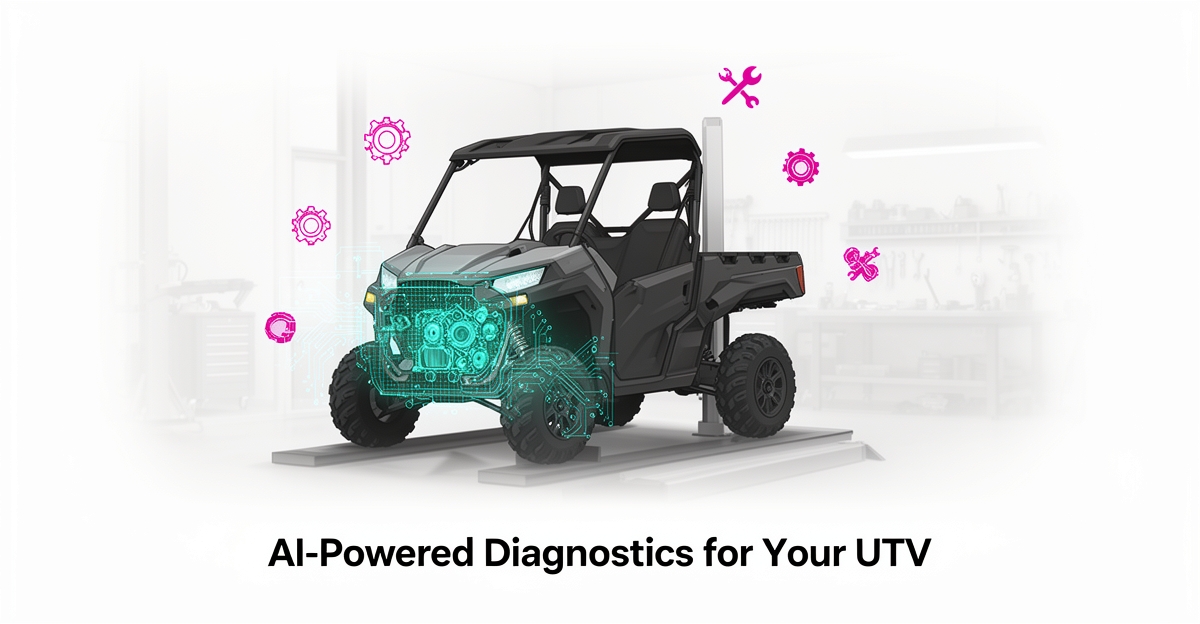
AI-assisted diagnostic workflows are already changing how quickly and accurately issues are identified in powersports vehicles. Instead of teardowns and symptom chasing, a technician can describe symptoms to an AI assistant trained on service manuals, fault codes, and repair history, and get a ranked list of likely causes in minutes. As of late 2026, dealers and independent shops across the powersports industry are adopting these tools to cut diagnostic labor hours and get vehicles back to customers faster. For UTV shops still relying on elimination trails, this gap represents a real competitive disadvantage that AI can close quickly.
The financial impact of slow diagnostics compounds. Every misdiagnosis means wasted parts, rework, and a comeback that ties up a bay a second time. Beyond fixing what's broken, AI excels at prediction—flagging wear items like belts and brake pads before they fail, based on usage patterns and service history. Shops that frequently face unexpected failures or comebacks due to missed issues are experiencing the exact pain point AI is engineered to solve.
These diagnostic inefficiencies create a ripple effect across the entire operation. Long repair cycles tie up bays, delay other jobs, and force technicians into constant context-switching, reducing overall throughput. When diagnostics become a predictable, AI-augmented process—guided by data rather than guesswork—technicians can focus on complex repairs instead of elimination trails. This shift not only improves shop efficiency but also elevates the role of skilled staff, letting them apply their expertise where it matters most. For any UTV repair shop still stuck in the cycle of "wait, what broke now?", the diagnostic bottleneck isn't just a problem—it's the primary sign that AI integration is no longer optional, but overdue.
Customer Support Overload Is Hurting Satisfaction and Retention
When the phone rings and no one can answer, customers notice — and they leave. Long hold times, missed callbacks, and inconsistent answers are daily signals that a UTV repair shop is operating beyond its human capacity.
Support overload shows up as repetitive questions about hours, estimates, and parts availability that pull technicians away from the bay. Staff spend hours sorting messages and drafting the same responses, while customers wait. With an AI support workflow, response times for routine inquiries typically collapse from hours to seconds, freeing the team for high-value work.
The satisfaction impact is real. Customers who get an instant, consistent answer about their repair status or parts ETA tend to stay loyal; customers who get voicemail tend to call the next shop on the list. Retention follows responsiveness, and responsiveness is exactly what AI front-desk staff deliver without adding payroll.
A shop ready for AI typically exhibits:
- Constant phone queues and missed calls during peak service hours
- Inconsistent answers about pricing, turnaround, and parts status across channels
- Technicians interrupted for basic inquiries instead of diagnostics
- High volume of Tier-1 questions that repeat week after week
These patterns match where AI delivers immediate leverage. A large share of Tier-1 queries—hours, location, booking, status checks—can be resolved without human intervention, and shops commonly see manual message volume drop by half once an AI receptionist is in place.
The readiness signal is not just volume, it is the cost of delay. When customers wait for a callback about a brake job or a parts ETA, trust erodes. AI receptionist and support agents handle intake, schedule appointments, and pull service history 24/7, so the human team focuses on repairs, not repetition. AIQ Labs' AI Employees offering covers exactly these roles—receptionists, dispatchers, and service advisors—at a fraction of the cost of a human hire.
AIQ Labs treats these overload signals as the entry point for a phased AI transformation roadmap. The approach often starts with a simple AI receptionist for calls and chat, then scales to full automation across support, dispatch, and parts inquiries. The goal is elevation, not replacement—removing the boring parts of the job so staff can focus on impactful customer conversations.
Inventory Chaos Is Draining Cash Flow and Increasing Costs
Inventory chaos is a silent profit killer in UTV repair shops, where inconsistent part tracking, frequent stockouts, and excess inventory directly drain cash flow and inflate operating costs. When technicians waste time searching for missing parts or rush to expedite shipments due to poor forecasting, repair timelines stretch and customer satisfaction erodes. These symptoms aren't just operational headaches—they're clear signals that a shop is ready for AI-driven transformation.
AI-powered inventory tools directly address these pain points by introducing predictive intelligence into stock management. By analyzing service history and seasonal demand, these systems typically reduce out-of-stock incidents on critical parts while also cutting carrying costs by trimming excess stock of slow-moving items. This dual impact—fewer stockouts and lower holding costs—frees up working capital and streamlines the entire service workflow.
Beyond preventing losses, AI enables proactive revenue opportunities. Anticipating what a customer will need—like recommending preventive maintenance parts during a routine service visit—turns inventory data into a growth lever instead of a cost center. Shops experiencing chronic inventory mismanagement aren't just behind the curve; they're primed for a phased AI integration that starts with smarter parts tracking and scales toward full operational intelligence. AIQ Labs' Workflow Builds are designed for exactly this: rebuilding the one workflow that costs you the most, at a fixed price, in phases.
Your Team Is Stuck in Reactive Firefighting Mode
Your shop is stuck in reactive firefighting mode if technicians spend their days responding to breakdowns instead of preventing them. This constant state of emergency repair—where the question is always "wait, what broke now?"—is a clear signal that AI integration can transform your operations. Shops relying on manual diagnostics are missing out on efficiencies that AI delivers today.
AI-assisted diagnostics compress troubleshooting from hours to minutes, and predictive maintenance scheduling shifts work from unscheduled emergencies to planned service. When your team stops chasing failures, they gain time for higher-value work—and your schedule stops blowing up every time a belt lets go on a Saturday morning.
Predictive capabilities go beyond fixing—they anticipate. AI can flag wear items before they fail and optimize part replacement schedules, turning guesswork into proactive planning. This means fewer surprise failures, smoother workflow, and technicians who can focus on complex repairs instead of repetitive fault-finding. The result is a team elevated from firefighters to problem-solvers.
- Reduces emergency repairs by anticipating part failures
- Cuts diagnostic time from hours to minutes
- Frees staff for skilled, value-added tasks
- Improves schedule predictability and workload balance
- Lowers stress from constant reactive pressure
AIQ Labs helps shops transition from reactive chaos to predictive control through phased AI implementation, starting with tools that target your most painful manual bottlenecks. By grounding the transformation in your actual workflows, we ensure AI elevates your team rather than disrupts it. The shift begins when you recognize that constant firefighting isn't just stressful—it's a sign your shop is ready to operate smarter.
Start Small: A Phased AI Integration Path for UTV Repair Shops
For UTV repair shops ready to adopt AI, the most effective strategy begins with a focused, phased approach that targets high-impact, repetitive tasks. Rather than attempting a full-scale overhaul, start by identifying the specific operational bottlenecks that consume the most staff time—such as answering routine phone calls, scheduling appointments, or manually logging service details. Applied to the right processes, AI shows value within days, not quarters.
Begin by auditing your support history to uncover the most frequent customer inquiries and internal workflow gaps. This data becomes the foundation for a tailored knowledge base that your AI tools will reference. Standard questions about hours, pricing, or part availability are the easiest wins—once this foundation is in place, map AI tools to specific needs: use workflow automation to connect your scheduling and inventory systems, and deploy an AI receptionist to manage front-desk interactions.
Start small with an AI receptionist to handle call routing, appointment booking, and message prioritization—tasks that directly reduce wait times and free staff for higher-value work. Train your team to view AI as a tool for elevation, not replacement, emphasizing how it eliminates repetitive work so technicians can focus on complex diagnostics and repairs. Finally, monitor performance metrics like resolution rates and customer feedback, then iterate based on results. This phased method mirrors AIQ Labs' milestone-based model: start monthly with an AI Employee, build in milestones with a Workflow Build, and eventually own a full AI Operating System outright. Payment details for each path are on our pricing page.
Still paying for 10+ subscriptions that don’t talk to each other?
We build custom AI systems you own outright. No vendor lock-in. Full control.
Not sure where to start? Ask our AI planner
Frequently Asked Questions
How do I know if my UTV repair shop is actually ready for AI integration?
Will AI replace my technicians and staff?
What's the actual ROI of implementing AI in my shop?
Can AI really predict UTV part failures before they happen?
How can AI help with my shop's inventory management problems?
Where should I start with AI implementation if I'm overwhelmed?
Your UTV Shop's AI Moment Is Now
The signs are clear: diagnostic delays, support overload, inventory chaos, and reactive firefighting aren't just daily frustrations—they're indicators that your UTV repair shop is primed for AI-driven transformation. By targeting these bottlenecks with a phased approach—starting with an AI receptionist and scaling into diagnostics and inventory optimization—you capture missed calls, cut wasted labor, and free your best people for the work that pays. AIQ Labs has deployed 200+ multi-agent systems and runs 4 live SaaS products daily, so this isn't theory—it's practice. If you're ready to move from guesswork to growth, take the 2-minute Fit Check and then schedule your free 30-minute strategy call to map your biggest bottleneck and see where AI delivers the fastest return.
Make AI your competitive advantage — not just another tool.
Strategy, implementation and ongoing optimization. One partner, end to end.
Not sure where to start? Ask our AI planner