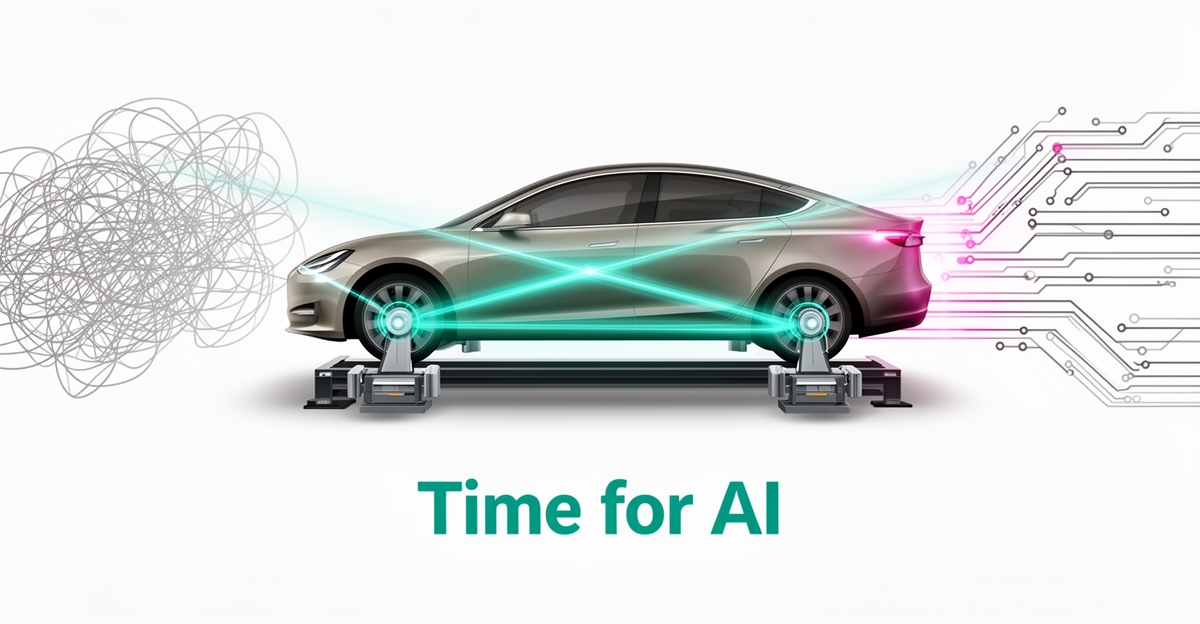
5 Signs Your Wheel Alignment Shop Needs AI for Workflow Automation
Key Facts
- The wheel alignment equipment market is projected to reach USD 6.11 billion by 2030.
- The global wheel alignment automation market is projected to reach USD 4.57 billion by 2034.
- Industry reporting suggests a majority of tire businesses struggle to fill open technician roles, straining alignment shop operations.
- Shops implementing automation typically see payback within roughly 12 to 16 weeks, driven by reduced rework and recovered appointments.
- Manual workflows with paper logs and phone reminders cause inconsistent measurements and lost revenue.
- AI workflow automation improves accuracy, increases productivity, and enhances customer experience according to industry analysis.
- The wheel alignment industry is shifting toward connected and autonomous vehicles requiring more advanced alignment systems.
Hire a team member that works 24/7 — for less than a part-time wage.
AI receptionists, SDRs, dispatchers and 99+ roles. Trained on your business, fully managed.
Not sure where to start? Ask our AI planner
The Hidden Cost of Manual Workflows in Your Alignment Bay
Manual processes in the alignment bay are quietly eroding margin while the market accelerates around you. Shops that rely on paper logs, phone reminders, and technician memory are losing revenue to competitors who move faster, measure cleaner, and follow up automatically.
The wheel alignment equipment market size is expected to reach USD 6.11 billion by 2030, growing at a projected CAGR of roughly 5.3% from 2025 to 2030. At the same time, the broader automation segment is projected to reach USD 4.57 billion by 2034, growing at an estimated 7.8% from 2026 to 2034. Demand is rising for precision maintenance, yet capacity is constrained by people.
Labor inefficiency is now a competitive threat, not an annoyance. Industry reporting indicates most tire businesses struggle to fill open technician roles, and administrative tasks consume time that could go to high-margin service work. When technicians spend hours on scheduling, data entry, and manual follow-ups, the bay sits idle and revenue leaks.
Inconsistent measurements compound the problem. Manual readings introduce variation between techs and shifts, leading to comebacks, wasted alignments, and eroded trust. Without automated capture and standardization, shops struggle to prove accuracy to customers and insurers.
Missed service follow-ups are another hidden cost. Manual reminder systems depend on someone remembering to call, which means inspections expire, rotations are skipped, and repeat business walks away. Automated workflows ensure timely reminders and notifications without adding headcount.
The financial impact is measurable. For tire shops and alignment centers, automation projects typically reach payback within a few months—often cited as 12 to 16 weeks. That payback comes from reduced rework, higher bay utilization, and recovered appointments that would otherwise be lost.
AI-driven workflow and task automation addresses these pain points directly by streamlining operations and reducing technician downtime. Common signals that manual workflows are costing you include:
- Technicians repeating measurements or re-doing alignments due to inconsistent data entry
- Follow-up calls and appointment reminders falling through the cracks
- Service writers spending more time on paperwork than selling high-margin work
- Difficulty tracking bay utilization and labor hours across shifts
Shops that continue with manual processes risk being priced out as equipment adoption rises. Labor inefficiency is now a competitive threat, especially when staffing shortages limit the ability to scale headcount. AIQ Labs works with SMBs to identify these workflow bottlenecks and design AI workflow and task automation that fits existing tools and teams—whether that starts with a single workflow rebuild or grows into a full AI operating system.
With the right automation, alignment bays can capture consistent measurements, trigger automatic follow-ups, and free technicians to focus on billable work. The market is growing; the shops that grow with it are those that remove manual friction first.
Signs 1-3: Inconsistent Measurements, Missed Follow-Ups, and Wasted Technician Hours
Many wheel alignment shops struggle with inconsistent measurements that undermine customer confidence. Manual processes using traditional alignment tools often produce variable results due to human error, calibration drift, or differing technician techniques. These inaccuracies can lead to repeat visits, negative reviews, and lost trust—especially when customers notice uneven tire wear shortly after service. With technician hiring tight across the tire industry, shops increasingly rely on less experienced staff, which raises the likelihood of measurement errors. Automating measurement capture and analysis through AI-driven workflow systems ensures consistent, repeatable results by standardizing data interpretation and reducing dependence on manual input.
Missed service follow-ups represent another critical leak in the revenue wheel. When technicians or service advisors manually track alignment appointments and schedule reminders, follow-ups often fall through the cracks—especially during peak hours. This gap means missed opportunities to encourage return visits for tire rotations, seasonal checks, or complementary services. AI-powered workflow automation can trigger timely, personalized follow-ups via SMS or email based on service history and vehicle mileage, increasing the likelihood of repeat business. Shops that implement such systems commonly report improved customer retention and higher lifetime value per client, directly addressing the revenue loss tied to inefficient manual tracking.
Administrative overload further drains productivity, pulling skilled technicians away from high-margin alignment work. Tasks like logging service notes, updating customer records, processing payments, and managing inventory consume valuable time that could be spent performing alignments. By automating routine backend processes—such as work order creation, invoice generation, and parts ordering—AI workflow systems free up technicians to focus on precision alignment tasks. This shift not only boosts productivity but also improves job satisfaction by reducing repetitive, low-value tasks. For shops aiming to scale without adding headcount, AI-driven workflow optimization offers a path to reclaim billable hours and enhance operational efficiency. To explore how these solutions can be tailored to your shop's specific workflow challenges, start with a two-minute Fit Check to assess your biggest bottlenecks and identify high-ROI automation opportunities.
Signs 4-5: Drowning in Data You Never Use and Falling Behind Connected-Vehicle Demands
Manual logs and scattered spreadsheets create a backlog of information that never turns into action. Shops collect alignment readings, service history, and customer notes, but without real-time analytics the data stays dormant while decisions remain reactive.
Drowning in data you never use Technicians generate measurements every day, yet most shops lack visibility into trends, repeat issues, or technician performance. AI-driven workflow automation can provide real-time data analytics, remote diagnostics, and predictive maintenance capabilities, enabling shops to make data-driven decisions and improve services. The global wheel alignment automation market is projected to reach USD 4.57 billion by 2034, growing at an estimated CAGR of 7.8% from 2026 to 2034 according to industry research.
When insights are delayed, opportunities for upsell and retention slip away. Automated systems consolidate measurements, service history, and follow-up status into a single operational view. That visibility supports the kind of workflow optimization AIQ Labs builds for SMBs, where custom AI workflows and integrations replace manual data entry with automated synchronization across tools. With technician hiring tight across the tire industry, administrative tasks consume time that could go to high-margin service work.
A practical shift looks like:
- Real-time dashboards that surface measurement variance and repeat visits by vehicle
- Automated alerts for vehicles due for recheck based on mileage or driving conditions
- Predictive maintenance prompts generated from historical alignment drift patterns
- Centralized knowledge base that captures tribal knowledge and reduces repetitive questions
Shops that activate their data see faster payback. Automation projects for tire shops and alignment centers typically reach ROI within a few months, with 12-16 weeks a commonly cited benchmark.
Falling behind connected-vehicle demands The wheel alignment equipment market size is expected to reach USD 6.11 billion by 2030, growing at a projected CAGR of roughly 5.3% from 2025 to 2030 per market forecasts. Growth is tied to increasing automotive production and rising demand for precision maintenance solutions. The industry is also shifting toward connected and autonomous vehicles, which require more advanced wheel alignment systems.
ADAS-equipped vehicles need documented, repeatable alignment procedures and calibration records that manual workflows struggle to provide consistently. Connected-vehicle diagnostics increasingly feed alignment data back to service platforms, and shops without integrated capture and reporting risk losing referrals and warranty-related work.
AI workflow and task automation bridges this gap by standardizing measurements, logging calibration steps, and triggering automated follow-ups without adding headcount. For shops navigating this transition, the signal is clear: reactive processes and unused data create cost, while data-driven operations create competitive advantage.
What AI Workflow Automation Actually Looks Like in an Alignment Shop
What AI workflow automation actually looks like in an alignment shop begins with replacing manual appointment books and scattered service reminders with intelligent sequencing. Instead of technicians spending long stretches each week on data entry and follow-up calls, AI-powered systems automatically schedule appointments based on real-time bay availability, send personalized service reminders via SMS or email, and trigger post-service check-ins without human intervention. This shift directly addresses the labor inefficiencies where administrative tasks consume time that could go to high-margin service work—a pain point amplified by today's tight technician labor market.
AI voice agents handle the front-line communication burden, answering scheduling calls 24/7 with natural language understanding, qualifying service needs, and booking directly into the shop's calendar—eliminating missed calls and reducing front desk strain. Digital inspection records replace paper checklists, capturing alignment measurements with consistent accuracy and syncing results instantly to the customer's profile. Meanwhile, real-time KPI dashboards display critical metrics like first-time fix rates, average service duration, and follow-up conversion percentages, giving managers immediate visibility into operational health.
The contrast between manual and AI-enhanced workflows is stark: where human error leads to inconsistent measurements and missed follow-ups, automation delivers improved accuracy, increased productivity, and enhanced customer experience. Shops implementing these systems commonly see returns quickly, with payback often achieved within a few months. This rapid payoff stems from reduced labor costs, higher throughput, and fewer lost revenue opportunities from scheduling gaps or service oversights. For alignment shops ready to move beyond guesswork, AI workflow automation isn't a futuristic concept—it's a practical upgrade that turns daily inefficiencies into streamlined, revenue-generating processes.
Start the Fit Check at https://aiqlabs.ai/apply to identify your shop's specific automation opportunities, then schedule a Free 30-Minute Strategy Call at https://aiqlabs.ai/book to map a clear path forward.
How to Get Started Without Disrupting Your Bays
Getting started with AI workflow automation doesn't require shutting down your bays or overhauling everything at once. Begin by auditing your current processes to pinpoint where time is lost—whether it's technicians chasing down parts, missed follow-up calls, or inconsistent data entry across systems. These inefficiencies often hide in plain sight but add up to significant revenue leakage over time. Focus on one critical workflow that, if fixed, would create immediate relief—like automating service reminders or synchronizing alignment specs with your shop management software.
Start small with a targeted AI workflow build, such as an intelligent follow-up system that sends personalized service reminders via SMS or email based on vehicle history and mileage. AIQ Labs builds these as fixed-price workflow rebuilds delivered in phases—you own the system outright, so you retain full control and can scale or modify it as your shop evolves. The team handles the build, integration with your existing tools (like your CRM or scheduling software), and staff training—all designed to run in parallel with daily operations so there's no disruption to bay throughput. If you'd rather start with front-desk relief, AI Employees like an AI receptionist or dispatcher can handle calls and scheduling at a fraction of the cost of a human hire.
Once deployed, measure results using clear benchmarks: reduction in missed appointments, time saved per follow-up task, or increase in repeat service visits. With automation payback for tire and alignment shops commonly landing within a few months, you'll quickly see whether the solution is delivering value. From there, you can expand to adjacent workflows—like parts ordering or technician dispatch—using the same ownership-first approach, or grow into a connected AI operating system built in phases. The key is to start with a single, high-impact fix, prove it works, and let confidence guide the next step. To map your highest-ROI starting point without obligation, begin with the free strategy call after completing the two-minute Fit Check.
Still paying for 10+ subscriptions that don’t talk to each other?
We build custom AI systems you own outright. No vendor lock-in. Full control.
Not sure where to start? Ask our AI planner
Frequently Asked Questions
What are the main signs that my wheel alignment shop needs AI workflow automation?
How does AI workflow automation improve measurement accuracy in alignment bays?
Can AI automation help with missed service follow-ups and customer retention?
What is the typical return on investment timeline for AI workflow automation in a tire or alignment shop?
How does AI workflow automation address labor shortages in alignment shops?
Is it necessary to overhaul my entire shop to start using AI workflow automation?
Ready to Shift from Reactive to Revenue-Driven?
The evidence is clear: manual workflows are quietly bleeding margin from alignment bays while the market accelerates toward connected, precision-driven service. Whether it's inconsistent measurements eroding trust, follow-ups falling through the cracks, or technicians buried in admin work instead of turning wrenches, these friction points compound daily. The shops capturing growth aren't necessarily the ones with the newest equipment—they're the ones removing operational drag first. With the wheel alignment automation market projected to reach USD 4.57 billion by 2034, the gap between automated and manual operations will only widen. You don't need to overhaul everything overnight. Start by identifying your single biggest bottleneck—perhaps missed reminders or inconsistent data entry—and explore how targeted AI workflow automation can reclaim those lost hours. AIQ Labs builds custom, owned automation systems that fit your existing tools without disrupting bay throughput. If you're ready to map your highest-ROI opportunity, begin with the two-minute Fit Check at https://aiqlabs.ai/apply, then schedule a free strategy call at https://aiqlabs.ai/book to identify exactly where automation can pay for itself in weeks, not years.
Make AI your competitive advantage — not just another tool.
Strategy, implementation and ongoing optimization. One partner, end to end.
Not sure where to start? Ask our AI planner