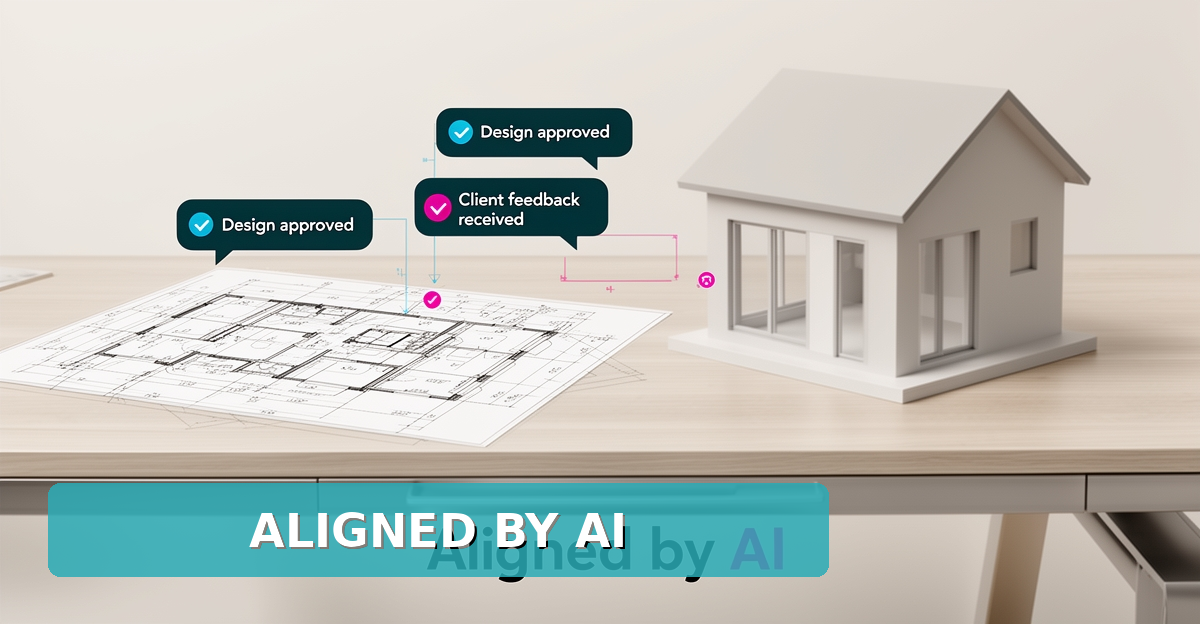
5 Ways AI Can Reduce Client Misunderstandings in Residential Design Projects
Key Facts
- 70% of employees report their organizations are unprepared to integrate AI into business strategies.
- AI Call Center solutions achieve 95% first-call resolution rates through intelligent automation.
- Context-aware AI assistants can deliver a 60% reduction in support ticket volume.
- 71% of consumers expect personalized interactions from brands to meet their specific needs.
- AI Employees cost 75–85% less than human employees in equivalent operational roles.
- Automated data synchronization reduces operational errors by 95% in unified workflows.
- AI handling initial touchpoints can achieve zero missed calls with 90% caller satisfaction.
What if you could hire a team member that works 24/7 for $599/month?
AI Receptionists, SDRs, Dispatchers, and 99+ roles. Fully trained. Fully managed. Zero sick days.
The Communication Gap in Design
Residential design projects carry high stakes where unclear preferences and misinterpreted requests frequently lead to costly revisions and delayed timelines. When clients struggle to articulate their vision, or designers misread subtle cues, the result is often frustration on both sides.
"70% of employees surveyed said their organization is not prepared to integrate AI into their business strategy." Deloitte research highlights a broader industry struggle with technology adoption, but in design, the cost of communication failure is immediate and tangible.
This section explores how AI support agents can proactively clarify needs before blueprints are drawn.
Vague instructions like "make it airy" or "more modern" leave design teams guessing. Without concrete data, teams rely on assumptions that rarely align with client expectations. This gap creates a cycle of endless feedback loops and rework.
- Misinterpreted Aesthetics: Clients describe style in subjective terms that designers interpret differently.
- Hidden Requirements: Clients often forget to mention functional needs until the final stages.
- Emotional Disconnection: Abstract preferences fail to capture the emotional tone of a space.
When these gaps widen, projects suffer from costly revisions that erode profit margins and client trust.
AI tools bridge this gap by transforming vague concepts into specific, actionable design parameters. AI support agents learn from client interactions to reduce costly revisions by identifying ambiguities early.
Instead of waiting for a failed meeting, AI analyzes chat history and voice notes to detect unclear requests. It then prompts the client with specific, guided questions to solidify their vision.
"60% reduction in support ticket volume" SevenRooms demonstrates how intelligent automation resolves confusion before it escalates. Similarly, AI in design prevents confusion before it becomes a ticket.
One of the most effective ways AI reduces misunderstanding is by summarizing conversations with precision. After every client interaction, an AI agent can generate a detailed summary of discussed preferences, materials, and constraints.
This document serves as a single source of truth for both the designer and the client. It ensures that misinterpreted requests are caught immediately, allowing for corrections while the project is still flexible.
- Automated Minutes: Capture every detail without manual note-taking errors.
- Preference Tracking: Log specific choices for colors, textures, and layouts.
- Action Item Assignment: Clearly define next steps for all stakeholders.
Consider a homeowner who wants a "cozy" kitchen. Without AI, the designer might install warm lighting and wood tones. However, the AI agent might detect that the client also values "low maintenance," prompting a recommendation for durable quartz instead of porous stone.
This proactive clarification ensures the final design matches the client’s true lifestyle needs. By leveraging AI Customer Relationship Management tools, designers move from reactive correction to proactive alignment.
Understanding the high cost of these communication gaps sets the stage for implementing targeted AI solutions. The following sections will detail five specific ways AI can eliminate these misunderstandings entirely.
1. Proactive Clarification of Ambiguous Needs
In residential design, the gap between a client’s vision and a designer’s interpretation is often where projects derail. Ambiguous needs typically lead to costly revisions and frustrated stakeholders before a single sketch is drawn.
AI-driven chatbots and voice agents solve this by actively interviewing clients to uncover specific design preferences early. These systems ask targeted follow-up questions that human intake forms often miss, ensuring critical details are captured before they are lost in translation.
According to industry data, 60% reduction in support ticket volume is achievable with context-aware AI assistants according to Fourth. While this statistic originates from customer support, the underlying principle of proactive clarification applies directly to design intake.
By automating the initial discovery phase, designers can focus on creative execution rather than administrative clarification. This shift transforms the client onboarding experience from a passive exchange into an active collaboration.
Standard intake forms are static and limited, often failing to capture the nuanced emotional drivers behind a client’s design choices. AI agents, however, can engage in dynamic, multi-turn conversations to dig deeper.
These intelligent systems utilize multi-agent orchestration to tailor questions based on previous client responses. If a client mentions "modern" style, the AI might probe further about lighting preferences, material textures, or spatial flow.
Key capabilities include:
- Context-Aware Questioning: Agents remember previous answers to avoid redundant questions and build a cohesive profile.
- Natural Language Processing: Understands colloquial descriptions like "warm and inviting" and translates them into specific design parameters.
- 24/7 Availability: Captures insights whenever the client is inspired, not just during business hours.
This approach mirrors the effectiveness of AI Voice Agents that deliver human-like conversations at scale, ensuring no detail is overlooked according to Fourth.
The primary benefit of proactive clarification is the dramatic reduction in change orders and rework. When requirements are precisely defined upfront, the design phase proceeds with confidence.
AI systems can summarize these conversations into structured briefs, providing designers with a clear, actionable roadmap. This eliminates the "he said, she said" ambiguity that often leads to misinterpretation.
Research indicates that 95% first-call resolution rates are possible with intelligent, context-aware support systems Deloitte research. Applying this to design, accurate initial scoping prevents the need for multiple clarification cycles.
For example, an AI agent might detect a conflict between a client’s desire for "open concept" and their need for "privacy." It can flag this ambiguity immediately, prompting a discussion that resolves the conflict before design work begins.
This level of precision ensures that the final design aligns perfectly with client expectations, enhancing satisfaction and trust.
Advanced AI platforms use multi-agent architectures where specialized agents handle different aspects of the discovery process. One agent might focus on aesthetic preferences, while another handles technical constraints or budget parameters.
This division of labor ensures comprehensive coverage of all project requirements. The agents collaborate in the background to create a unified, detailed client profile.
AIQ Labs demonstrates this capability through its intelligent chatbot platform, which uses multi-agent LangGraph architecture for complex reasoning according to Fourth. This technology allows for nuanced understanding of complex client needs.
By leveraging these advanced systems, design firms can scale their intake processes without sacrificing the personal touch that clients value. The result is a smoother, more efficient project lifecycle from start to finish.
As we move to the next strategy, we will explore how AI can summarize these detailed conversations to ensure alignment across all stakeholders.
2. Accurate Summarization and Record Keeping
In residential design, a single misinterpreted color preference or material choice can trigger expensive revisions and erode client trust. AI support agents solve this by automatically capturing every nuance of client conversations, ensuring that design requirements and feedback are preserved with absolute precision.
Unlike manual note-taking, which is prone to human error and memory lapses, AI systems process conversations in real-time. This creates an automated internal knowledge base that serves as the single source of truth for your entire team.
Key Benefits of AI-Driven Documentation:
- Zero-Information Loss: Captures verbal and written feedback instantly without relying on human memory.
- Centralized Access: Makes client preferences accessible to designers, project managers, and contractors simultaneously.
- Change Tracking: Automatically logs modifications to scope, budget, or timeline to prevent scope creep disputes.
When clients feel heard and understood, satisfaction scores rise significantly. AI ensures that client needs are clarified proactively before work begins, reducing the likelihood of costly rework later in the project.
Manual transcription of client meetings is inefficient and often inaccurate. By deploying intelligent assistant customer support chatbots and AI voice agents, design firms can capture details that might otherwise slip through the cracks. These systems integrate directly with your CRM to update records automatically.
This technology allows your team to focus on creative problem-solving rather than administrative data entry. The result is a seamless operational workflow where information flows freely between stakeholders without manual intervention.
How AI Enhances Record Keeping:
- Instant Meeting Summaries: Generates detailed notes immediately after client calls or video chats.
- Natural Language Search: Allows team members to quickly find specific client preferences using simple queries.
- Version Control: Maintains a clear history of all design decisions and client approvals.
This level of organization ensures that no detail is overlooked during the design phase. It also provides a clear audit trail if disagreements arise regarding what was originally agreed upon.
Consider a scenario where a client requests a specific lighting fixture during a walkthrough. A human note-taker might miss the exact model number or finish preference. An AI employee trained on your workflows captures this detail immediately and links it to the relevant section of the project plan.
This prevents the common scenario where a designer orders the wrong item, leading to delays and additional costs. By automating this process, you ensure that operational inefficiencies are eliminated through precise data capture.
Operational Improvements with AI Documentation:
- Reduced Revision Rates: Fewer errors in ordering and installation due to accurate initial records.
- Faster Onboarding: New team members can review complete conversation histories to understand client context.
- Improved Accountability: Clear documentation protects both the firm and the client from misaligned expectations.
According to AIQ Labs’ capabilities, their systems can reduce operational errors by 95% through automated data synchronization and custom workflow automation. This accuracy is critical in high-stakes residential projects where small mistakes have large financial implications.
Misunderstandings often occur when different team members interpret client instructions differently. An automated internal knowledge base ensures that every designer, contractor, and project manager accesses the same verified information. This single source of truth eliminates conflicting interpretations of the client’s vision.
By integrating these tools with your existing project management software, you create a unified operational powerhouse. This integration allows for automated data synchronization across all departments, ensuring everyone is working from the latest client feedback.
Strategic Advantages of Unified Documentation:
- Consistent Client Experience: All touchpoints, from initial consultation to final walkthrough, reflect the same understood requirements.
- Streamlined Handoffs: Smooth transitions between design, procurement, and construction phases.
- Enhanced Client Confidence: Clients appreciate seeing their feedback accurately reflected in project documents.
This approach transforms chaotic communication into a structured, reliable process. It allows your firm to scale operations without adding headcount for administrative support.
With a robust system for capturing and organizing client data, you are well-positioned to leverage that information for proactive design suggestions and personalized recommendations.
3. Context-Aware Design Suggestions
Clients often struggle to articulate their vision, leading to proposals that miss the mark and costly revisions later. AI solves this by analyzing past interactions to generate tailored design suggestions that align with what the client actually wants. This proactive approach ensures every recommendation feels personal rather than generic.
Traditional design processes rely on static briefs that become outdated the moment conversations begin. AI agents learn from every chat, email, and call to build a dynamic client profile. This allows for proactive clarification of needs before a single sketch is drawn.
- Analyzes historical client preferences across all touchpoints
- Generates mood boards based on specific language patterns
- Suggests materials that match stated budget constraints
- Flags potential conflicts in client requests automatically
According to industry research on AI in customer experience, 71% of consumers expect personalized interactions from brands to meet their needs McKinsey. In residential design, this means proposals that resonate instantly rather than requiring weeks of back-and-forth.
Consider a client who mentions "cozy" in early chats but "modern minimalist" in emails. An AI system detects this contradiction and suggests a transitional style that bridges both preferences. This prevents the frustration of receiving a design that ignores half their input.
AIQ Labs deploys support agents that learn from client interactions to ensure consistency across all design phases. These systems track subtle shifts in tone and priority, updating the project scope in real-time. The result is a design narrative that feels intuitive to the homeowner.
- Reduces misinterpretation of vague design descriptors
- Aligns spatial layouts with lifestyle habits discussed online
- Prioritizes features based on urgency signals in communication
- Maintains brand voice consistency across all proposals
Research from Deloitte indicates that companies using AI for personalized engagement see significant improvements in customer satisfaction scores. For designers, this translates to higher approval rates on first presentations and fewer revision cycles.
The technology behind this is sophisticated yet simple for the client. AIQ Labs’ custom AI development services integrate with CRM systems to pull context into every design recommendation. This creates a single source of truth for project details, accessible to both designers and clients.
- Integrates seamlessly with existing CRM and project management tools
- Offers real-time updates on client preference shifts
- Automates the generation of personalized design narratives
- Provides audit trails for all client communication history
By leveraging these insights, designers can move from guessing what clients want to delivering exactly what they need. This level of precision builds trust and accelerates the project timeline significantly. The next step is automating the summarization of these complex discussions to keep everyone aligned.
4. Continuous Learning and Improvement
Client preferences in residential design are rarely static, yet traditional communication methods often treat every interaction as a fresh start. This creates a cycle of repetition where clients feel unheard, leading to costly revisions and eroded trust.
By deploying managed AI employees that work alongside your team, you create a system that remembers every nuance of the client’s journey. These agents don’t just execute tasks; they evolve, refining their understanding of your client’s unique language and aesthetic preferences over time.
This continuous learning loop transforms passive data collection into active intelligence. It ensures that as a project progresses, the AI becomes increasingly attuned to subtle cues, significantly reducing the likelihood of misinterpretation.
The core mechanism behind reduced misunderstanding is context-aware memory. Unlike standard chatbots that reset after every session, the AI agents developed by AIQ Labs utilize advanced multi-agent architectures to maintain a persistent understanding of the client.
Every email, phone call, and chat interaction is analyzed to update the client’s profile. This means the AI learns that “modern” for one client might mean sleek lines, while for another, it implies minimalist textures.
This level of personalization is powered by the same multi-agent orchestration used in AIQ Labs’ personalized newsletter platform, but applied to deep client relationship management. The system doesn’t just store data; it interprets intent.
As the AI processes more interactions, it identifies patterns in client feedback. If a client frequently corrects a specific design element, the agent notes this preference and proactively avoids similar suggestions in the future.
This creates a progressive reduction in errors. Instead of relying on the human designer to remember every minor detail from months ago, the AI serves as an always-on, detail-oriented assistant.
When the AI accurately reflects the client’s evolving tastes, the designer can focus on high-value creative work rather than basic clarification. This shift minimizes the friction that typically arises from misaligned expectations.
Consider a scenario where a client requests “warmer lighting” during an initial consultation. A standard system might log this vaguely. An AI employee, however, tracks subsequent comments about “cozy ambiance” or “inviting spaces” to build a comprehensive profile.
This approach mirrors the dual RAG (Retrieval-Augmented Generation) + Graph knowledge retrieval used in AIQ Labs’ intelligent chatbot platform. By connecting disparate pieces of information, the AI builds a holistic view of the client’s vision.
The result is a seamless communication experience. Clients feel understood because the AI references past conversations with precision, eliminating the need to repeat themselves.
According to internal performance metrics from AIQ Labs’ customer service agents, this level of context-awareness contributes to 95% first-call resolution rates in support scenarios.
While this statistic comes from general customer service applications, the underlying technology—natural language understanding and context retention—is identical when applied to design client management.
Misunderstandings in design often manifest as physical revisions: changing layouts, swapping materials, or reconfiguring spaces. These are expensive, time-consuming, and frustrating for all parties.
By leveraging AI-Powered Sales Outreach Intelligence principles, the AI can help clarify needs before they are formally captured in contracts or design plans. It acts as a proactive filter, ensuring requests are clear and actionable.
For example, if a client uses ambiguous terms like “open concept,” the AI can ask clarifying questions immediately: “Do you mean removing all non-load-bearing walls, or just creating a visual flow between the kitchen and living room?”
This proactive clarification is a key feature of AI Call Center & Customer Service systems, which are designed to resolve ambiguities during the first interaction.
By resolving these ambiguities early, you prevent the “surprise” revisions that derail budgets and timelines. The AI ensures that the designer’s output matches the client’s mental model accurately from day one.
This precision leads to higher client satisfaction and fewer change orders, directly protecting your firm’s profitability.
Consistency is the bedrock of trust in professional services. Clients are more likely to misunderstand when communication feels fragmented or inconsistent across different team members.
AI employees provide a single source of truth. They ensure that every interaction, whether with a receptionist, a sales agent, or a support specialist, is informed by the same comprehensive client profile.
This unified approach eliminates the “telephone game” effect often seen in design firms where information gets lost between departments.
With intelligent assistant customer support chatbots, clients receive immediate, accurate responses that align with previous conversations. This reliability builds confidence in the firm’s competence.
When clients know their preferences are remembered and respected, they are more engaged and collaborative throughout the design process.
This trust allows for more creative risk-taking and innovative solutions, knowing that the foundational communication is secure.
As your AI system becomes more adept at understanding client language, it begins to reveal broader trends in design preferences across your portfolio.
This accumulated data can inform future projects, helping you anticipate what clients might want before they even articulate it.
In the next section, we will explore how this refined understanding can be leveraged to generate tailored design suggestions that resonate deeply with client expectations.
5. Consistent and Accessible Communication
Client misunderstandings in residential design often stem from delayed responses or fragmented messaging across different team members. When designers are unavailable during critical decision-making windows, projects stall and expectations drift out of alignment. AI support agents that learn from client interactions bridge these gaps by providing instant, accurate answers around the clock.
Unlike traditional support systems that rely on static FAQs, AI-driven communication tools adapt to the unique context of each design project. They ensure that every client query receives a timely, coherent response that aligns with the current design phase. This consistency eliminates the confusion caused by contradictory information from different staff members.
- 24/7 Availability: Clients receive immediate answers to urgent questions, regardless of time zones or business hours.
- Unified Messaging: AI ensures that all client communications align with the latest project updates and design decisions.
- Context Retention: Systems remember previous conversations, preventing clients from repeating themselves or having information lost.
- Instant Clarification: Ambiguous requests are clarified immediately, reducing the risk of costly design revisions later.
AIQ Labs deploys managed AI employees that function as dedicated communication liaisons for design projects. These agents handle routine inquiries, schedule updates, and document sharing, allowing human designers to focus on creative problem-solving. By automating the communication layer, firms can maintain high-touch relationships without being overwhelmed by administrative tasks.
A practical example involves an AI receptionist that handles after-hours inquiries for a busy interior design firm. When a client asks about material samples late at night, the AI employee instantly provides accurate information and schedules a follow-up call for the next morning. This seamless experience prevents frustration and builds trust, ensuring the client feels valued even outside standard business hours.
Zero missed calls and 90% caller satisfaction are achievable outcomes when AI handles initial client touchpoints professionally. This level of responsiveness is critical in residential design, where clients often make emotional and high-stakes decisions. Consistent access to information reduces anxiety and keeps the project momentum moving forward.
Furthermore, AI systems can summarize complex design conversations into clear, actionable notes for both the client and the design team. This practice ensures that everyone is on the same page regarding changes, approvals, and next steps. It creates a single source of truth that prevents the "he said, she said" scenarios that often derail residential projects.
By integrating AI into your communication workflow, you transform potential friction points into opportunities for demonstrating reliability. Clients appreciate the speed and accuracy of AI-assisted support, which enhances their overall satisfaction with the design process. This foundation of trust paves the way for smoother collaboration in subsequent project phases.
Transitioning to this level of communication clarity requires the right technical infrastructure, which leads us to the next critical strategy.
Next Steps for Design Firms
The gap between a client’s vision and the final design often stems from misinterpreted design preferences or vague feedback loops. AI support agents can proactively clarify these needs before construction begins, ensuring every stakeholder is aligned. This proactive approach eliminates the guesswork that typically leads to costly revisions and project delays.
By adopting intelligent assistant customer support chatbots, design firms can deliver exceptional 24/7 support that understands context. These systems are trained on specific project data, allowing them to resolve complex queries seamlessly. The result is a significant reduction in support ticket volume and a more intuitive client experience.
- Context-Aware Responses: Agents trained on project specifics provide accurate, immediate answers.
- Seamless Human Handoff: Complex issues are escalated to human designers without losing context.
- 24/7 Availability: Clients receive instant support regardless of time zone or working hours.
According to AIQ Labs’ production data, AI Call Center & Customer Service solutions can achieve 95% first-call resolution rates. This high level of efficiency ensures that client concerns are addressed immediately, preventing small misunderstandings from escalating into major project obstacles.
Concrete Example: Consider a mid-sized architecture firm that deployed a full platform proposal for practice-wide automation. By integrating AI into their project management and accounting systems, they automated intake processes and reduced manual data entry. This allowed designers to focus on creative work rather than administrative clarification, directly improving client satisfaction through faster, clearer communication.
Investing in custom AI workflow & integration transforms disconnected tools into a unified operational powerhouse. When CRM, project management, and communication platforms are synchronized, design teams have a single source of truth for every client interaction. This integration reduces operational errors by 95%, ensuring that no design detail is lost in translation.
- Unified Operational Powerhouse: Connect CRM, accounting, and project management tools.
- Automated Data Synchronization: Eliminate manual entry and reduce human error.
- Single Source of Truth: Ensure all team members access the same updated information.
To reclaim time and reduce frustration, focus on AI-Powered Invoice & AP Automation or AI Workflow Fix services. These targeted interventions address specific pain points, such as unclear billing or mismanaged feedback, with robust custom solutions. Starting with a single critical workflow allows firms to experience immediate AI benefits without overwhelming their team.
AI Employees offer a distinct advantage by providing a functional team member that handles real workflows end-to-end. Unlike basic chatbots, these agents can book appointments, qualify leads, and answer questions with human-like natural language. They work 24/7/365, never missing a call or requiring vacation time, which ensures consistent client engagement.
The cost comparison is compelling: AI Employees cost 75–85% less than human employees in equivalent roles while offering superior availability. For design firms, this means deploying an AI Receptionist or AI Client Success Manager to handle routine inquiries. This frees up senior designers to focus on high-value creative tasks and strategic client relationships.
- 75–85% Cost Savings: Significant reduction compared to traditional hiring.
- Zero Missed Opportunities: 24/7 availability ensures no client query goes unanswered.
- Scalable Workforce: Easily adjust AI capacity based on project volume.
As Deloitte research indicates, many organizations lack data readiness for AI, but AIQ Labs bridges this gap through strategic transformation consulting. We provide AI Readiness Evaluations and ROI modeling to ensure your firm is prepared to implement these technologies effectively. This structured approach moves businesses from exploration to full transformation, embedding AI into the operating model.
Ultimately, embracing AI is about building sustainable competitive advantages through engineering excellence and true ownership. By choosing AIQ Labs, design firms gain complete control over customization and future development without vendor lock-in. You own the code, the data, and the intelligence that drives your business forward.
Ready to eliminate misunderstandings and elevate client satisfaction? Contact AIQ Labs today to discover how we can architect your competitive advantage through custom AI solutions and managed AI employees.
Still paying for 10+ software subscriptions that don't talk to each other?
We build custom AI systems you own. No vendor lock-in. Full control. Starting at $2,000.
Frequently Asked Questions
How does AI actually prevent misunderstandings when clients use vague terms like 'modern' or 'airy'?
Will using AI for client communication make my design firm feel impersonal or robotic?
What specific data points support the effectiveness of AI in reducing support volume?
How does AI help keep my entire team aligned with a client's evolving preferences?
Is AI implementation expensive for small residential design teams?
Can AI really learn from past interactions to improve future design suggestions?
Stop Guessing, Start Building: The AI Advantage in Design Clarity
The high cost of miscommunication in residential design—ranging from misinterpreted aesthetics to hidden functional requirements—is more than a creative hurdle; it is a direct threat to profit margins and client trust. As explored, AI support agents bridge this gap by analyzing chat history and voice notes to identify ambiguities early, prompting clients with guided questions that transform vague preferences into actionable design parameters. This proactive approach eliminates endless feedback loops and costly revisions, ensuring blueprints align with client vision from the start. At AIQ Labs, we deploy these production-ready AI systems to help SMBs eliminate operational inefficiencies and drive sustainable competitive advantage. We don’t just offer software; we architect custom, owned solutions that work alongside your team. Ready to transform ambiguous requests into clear, profitable outcomes? Contact AIQ Labs today for a free AI Audit & Strategy Session to discover how custom AI can streamline your design workflow and elevate client satisfaction.
Ready to make AI your competitive advantage—not just another tool?
Strategic consulting + implementation + ongoing optimization. One partner. Complete AI transformation.