7 Signs Your ADU Business Is Ready for AI-Driven Workflow Automation
Key Facts
- A large majority of organizations now use AI automation in at least one function, according to industry research
- Only a minority of organizations report meaningful EBIT impact from AI, revealing a critical execution gap
- Roughly half of businesses using AI in service operations report measurable cost savings, according to recent data
- A strong majority of companies applying AI in marketing and sales see revenue gains, research shows
- Most global enterprises are actively experimenting with AI agents, validating targeted pilots as the entry point
- Traditional automation follows fixed rules while AI workflows learn and adapt in real time, explaining why ADU projects demand intelligent systems
- The AI automation market is projected to keep growing sharply through the late 2020s, signaling massive operational transformation ahead
Hire a team member that works 24/7 — for less than a part-time wage.
AI receptionists, SDRs, dispatchers and 99+ roles. Trained on your business, fully managed.
Not sure where to start? Ask our AI planner
The Operational Bottlenecks ADU Businesses Hit First
ADU businesses often hit operational walls before they realize it—missed scheduling conflicts, delayed documentation, and fragmented client follow-ups create silent inefficiencies that compound over time. These bottlenecks aren't just annoying; they directly erode profitability and scalability, especially as project volumes grow. What starts as manageable at five projects a month becomes untenable at fifteen, with manual handoffs between teams becoming points of failure rather than process.
The strain typically appears first in scheduling—coordinating permits, contractor availability, and client meetings across disparate tools like spreadsheets and email chains. Documentation follows, where change orders, inspection reports, and client approvals get lost in inboxes or filed inconsistently. Client communication then suffers: status updates are delayed, questions go unanswered, and trust erodes. These aren't isolated issues; they're interconnected symptoms of a workflow straining under manual load. When teams spend more time chasing updates than delivering value, the business hits a ceiling no amount of overtime can fix.
Industry research suggests that roughly half of enterprises using AI in service operations report measurable cost savings, with additional gains in engineering-heavy workflows—evidence that targeted automation delivers real ROI where repetitive, rule-based tasks dominate. For ADU businesses, this means automating scheduling conflicts, auto-generating compliance documentation, and triggering timely client follow-ups can reclaim hours weekly per team member. AI doesn't just replace manual steps; it creates a single source of truth that reduces errors, accelerates approvals, and keeps clients informed without constant human oversight. The businesses that recognize these bottlenecks early aren't just fixing pain points—they're building the foundation to scale without adding headcount or complexity.
Why Manual Workflows Limit Growth and Margins
Manual workflows in ADU operations create friction that directly limits growth and erodes margins. Repetitive tasks like scheduling consultations, managing documentation, and following up with clients consume valuable team time while introducing avoidable errors and delays. These rule-based processes may seem simple, but their cumulative effect strains headcount, slows project timelines, and increases operational costs without adding strategic value. As demand grows, scaling through hiring becomes unsustainable, turning efficiency into a constant bottleneck.
Traditional automation offers limited relief because it follows fixed rules and cannot adapt to changing conditions or exceptions. It handles repetitive steps but still requires human oversight for edge cases, decision-making, or process adjustments. In contrast, AI-driven workflow automation learns from data, adapts to variations, and makes intelligent decisions—reducing the need for constant intervention. This shift transforms brittle, manual-heavy systems into resilient, self-optimizing processes that scale with the business.
The adoption trend is clear: a large majority of organizations now use AI automation in at least one function, recognizing its potential to streamline operations and reduce human error. Among those applying AI in service operations, roughly half report tangible cost savings, while a strong majority using AI in marketing and sales see revenue gains. These outcomes aren't theoretical—they reflect real efficiency gains from systems that execute in real time, operate autonomously, and handle complexity beyond rote repetition. For ADU businesses, this means faster project delivery, fewer administrative delays, and teams freed to focus on client relationships and design innovation rather than paperwork.
AIQ Labs helps ADU operators move beyond manual limitations through Workflow Builds that rebuild the one workflow costing you the most—at a fixed price, in phases—turning operational drag into a competitive advantage.
How AI-Driven Workflow Automation Transforms ADU Delivery
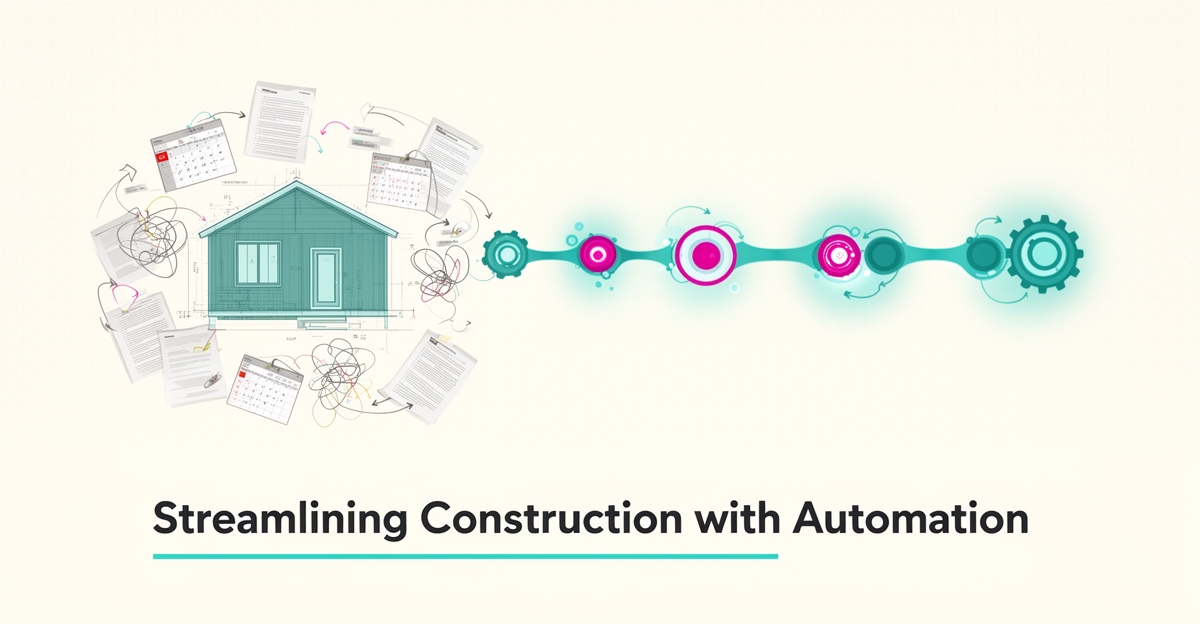
When ADU projects stall, it's rarely because of design complexity — it's the invisible administrative weight of permit tracking, vendor coordination, and client updates that drags timelines out by weeks. AI-driven workflow automation replaces that fragmented manual effort with intelligent systems that execute, monitor, and adapt across every project phase.
According to industry research, a large majority of organizations now use AI automation in at least one function, yet only a minority report meaningful EBIT impact — the gap comes down to whether automation is deployed as disconnected tools or as integrated workflows. Traditional automation follows fixed rules; AI workflows learn, adapt, and make decisions in real time, which is exactly what ADU delivery demands when city reviewers change requirements mid-process or subcontractors shift schedules.
- Custom AI workflows that connect permitting, scheduling, and documentation into a single source of truth
- Managed AI employees handling client communications, vendor follow-ups, and compliance tracking 24/7—at a fraction of the cost of a human hire
- Integrated systems eliminating double-entry across CRM, project management, and accounting platforms
Research shows roughly half of organizations using AI in service operations report cost savings, and a strong majority in marketing and sales see revenue gains — outcomes that mirror what happens when ADU firms automate intake, design revisions, and handoff workflows. AIQ Labs builds these systems through three entry points: AI Employees for managed AI staff covering reception, scheduling, dispatch, and 99+ roles; Workflow Builds to rebuild your single most expensive workflow at a fixed price; and AI Operating Systems for one connected operating layer you own outright. With 200+ multi-agent systems deployed, the result is an ADU delivery engine that scales without adding headcount.
From Signal to System: A Practical Path to Implementation
You've spotted the signs—now it's time to act. Turning AI readiness into real workflow automation starts with a lean, structured approach that minimizes risk and maximizes learning. Begin by pinpointing one high-impact, repetitive task—like scheduling consultations or generating project documentation—that consistently drains time and creates bottlenecks. Industry research shows most global enterprises are actively experimenting with AI agents, proving that targeted pilots are the most effective entry point. Next, assess your data readiness: ensure the information feeding the AI—such as client intake forms, past project timelines, or communication logs—is clean, consistent, and accessible. Without reliable data, even the smartest AI will stumble. Then, start with AIQ Labs' 2-minute Fit Check and a free 30-minute strategy call to scope a pilot workflow, using the Build in Milestones model so you validate results phase by phase before scaling. Measure success through clear KPIs—reduced manual hours, faster turnaround times, or fewer errors—and use those insights to refine and expand. As experts note, continuous monitoring and iteration are essential to unlocking lasting value. This methodical path turns signals into systems, setting the foundation for sustainable AI-driven growth.
Still paying for 10+ subscriptions that don’t talk to each other?
We build custom AI systems you own outright. No vendor lock-in. Full control.
Not sure where to start? Ask our AI planner
Frequently Asked Questions
How do I know if my ADU business is actually ready for AI workflow automation?
What's the difference between traditional automation and AI-driven workflow automation?
Will AI automation actually save my ADU business money, or is it just hype?
What should I automate first in my ADU business?
How long does it take to see ROI from AI workflow automation?
Do I need perfect data before implementing AI automation?
From Bottlenecks to Breakthrough: Your ADU Workflow's AI Moment
Recognizing the signs—scheduling chaos, documentation delays, and fragmented communication—is the first step toward transforming your ADU business from reactive to resilient. These operational friction points don't just waste time; they cap your growth and inflate costs as project volume rises. The good news? AI-driven workflow automation turns these pain points into leverage: by automating repetitive tasks like permit tracking, client follow-ups, and data synchronization, you reclaim hours weekly, reduce errors, and create a single source of truth that scales with your demand—without adding headcount. AIQ Labs helps ADU operators make this shift through three entry points—AI Employees, Workflow Builds, and AI Operating Systems—with payment models that let you Start Monthly, Build in Milestones, or Own It Outright. With 200+ multi-agent systems deployed and four live SaaS products running daily, the proof is in production, not promises. If you've seen these signals in your operations, the next step is clear: take the 2-minute Fit Check, then book your free 30-minute strategy call to pinpoint your highest-impact automation opportunity and map a low-risk path forward—no obligation, just clarity.
Make AI your competitive advantage — not just another tool.
Strategy, implementation and ongoing optimization. One partner, end to end.
Not sure where to start? Ask our AI planner