7 Signs Your Art Gallery Needs AI to Improve Visitor Engagement
Key Facts
- Dozens of AI-powered art gallery software options now compete in the market as of late 2026, reflecting strong demand for centralized inventory, sales, and client relations tools
- Gallery software pricing typically spans from entry-level plans in the low tens of dollars per month to enterprise suites at several hundred dollars monthly
- Personalized outreach consistently outperforms generic broadcast messaging for engagement and conversion
- AI features are rarely accessible by default and often require deliberate, inclusive design to serve all visitors
- AIQ Labs has deployed 200+ multi-agent systems and runs 4 live SaaS products daily
Hire a team member that works 24/7 — for less than a part-time wage.
AI receptionists, SDRs, dispatchers and 99+ roles. Trained on your business, fully managed.
Not sure where to start? Ask our AI planner
The Engagement Gap: Why Gallery Visitors Slip Through the Cracks
Visitor engagement in galleries often looks strong on the floor and disappears the moment a guest leaves. Without a system to capture intent, follow up consistently, and connect visits to sales, potential collectors slip away unnoticed.
Manual tracking creates the engagement gap. Staff rely on paper sign-ins, memory, or disconnected spreadsheets, so visitor data is fragmented and incomplete. The market for AI-powered gallery software has grown steadily through 2026, reflecting how widespread the search for better tools has become. Yet many galleries still operate with tools that were never built for relationship continuity.
The result is inconsistent follow-ups and poor lead tracking. A first-time visitor who spends time with a specific artist may never receive a tailored update, while a serious collector's interest is logged inconsistently across shows. Software pricing alone does not solve the process problem. Without automated capture and scoring, high-value prospects are treated the same as casual browsers.
Missed sales opportunities compound over time. Galleries lose the ability to map the customer journey from visit to return, which is central to AI Customer Journey Optimization. Manual systems cannot analyze behavior patterns, trigger timely touchpoints, or personalize recommendations based on historical preferences. That inefficiency drains gallery resources and limits revenue growth.
AI Customer Relationship Management can close these gaps by analyzing visitor behavior and automating touchpoints. AIQ Labs builds tailored AI systems to map and enhance the customer journey from visit to return, turning fragmented interactions into continuous engagement. With the right approach, galleries can deepen relationships without adding headcount.
Common failure points include:
- Visitor data captured on paper or lost between events and CRM
- No automated follow-up after a gallery visit or inquiry
- Inability to prioritize leads based on engagement signals
- Disjointed communication across email, phone, and in-person visits
The scale of the opportunity is clear. Established gallery platforms are used by thousands of institutions worldwide, indicating strong demand for centralized inventory, sales tracking, and client relations. Galleries that modernize operations with intelligent automation can automate cataloging, receive predictive insights, and tailor collector recommendations based on historical preferences.
Closing the engagement gap starts with visibility. When every visit is captured, scored, and nurtured automatically, galleries stop losing connections and start building lasting collector relationships.
7 Warning Signs Your Gallery Is Losing Visitors to Inefficiency
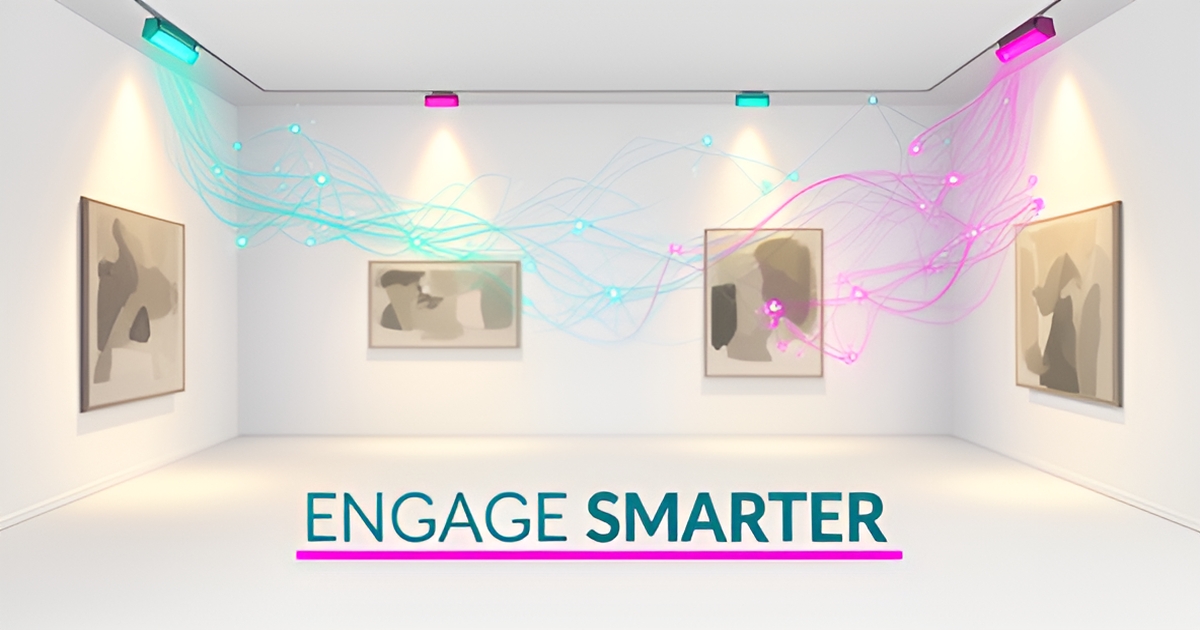
Many galleries operate without a clear view of how visitors actually engage with exhibits, leading to missed opportunities for connection. Without tracking movement patterns, dwell times, or repeat visit data, curators rely on guesswork rather than insight when designing experiences. This lack of behavioral tracking means galleries can't identify which artworks resonate or where visitors lose interest, resulting in static layouts that fail to evolve with audience preferences. AI-powered gallery software changes this by using sensors and analytics to map visitor journeys in real time, revealing which pieces draw attention and which are overlooked. When galleries ignore these behavioral signals, they risk delivering experiences that feel disconnected from what visitors actually want to see.
Generic communication further widens the gap between galleries and their audiences. Sending the same event announcements or artwork highlights to every subscriber ignores individual tastes, making messages feel irrelevant and increasing the likelihood they'll be ignored or marked as spam. Personalized content consistently outperforms broadcast messaging, as AI tailors messaging based on past interactions and preferences. AI in galleries can analyze past visits to recommend exhibitions that align with a visitor's history. Without this personalization, galleries miss chances to turn casual visitors into loyal patrons who feel truly understood.
Another sign of inefficiency is the inability to follow up meaningfully after a visit. When galleries lack systems to track leads or automate post-visit touchpoints, valuable connections fade quickly. Manual follow-ups are inconsistent and often delayed, reducing the chance of converting interest into return visits or sales. AI can automate personalized emails or messages based on what a visitor viewed, ensuring timely and relevant outreach. Galleries that rely on staff memory or scattered spreadsheets risk losing touch with collectors who might otherwise become repeat visitors or advocates. By integrating AI into the customer journey, galleries transform fleeting interactions into ongoing relationships.
Finally, galleries that can't adapt recommendations in real time fall short of modern expectations. Visitors today expect experiences that respond to their interests—whether suggesting similar artists, highlighting upcoming events, or offering deeper context on pieces they lingered over. Without AI, these suggestions remain static or absent, making the gallery feel unresponsive. When recommendations don't evolve with visitor behavior, the experience feels one-size-fits-all, pushing audiences toward venues that use data to create more dynamic, individualized journeys. AI closes this gap by turning passive viewing into an interactive dialogue. Schedule a free 30-minute strategy call to explore how AI can refine your gallery's visitor journey.
How AI Transforms Visitor Engagement: From Data to Personalized Journeys
Visitor engagement in galleries is no longer about foot traffic alone. It is about understanding intent, remembering preferences, and returning the right artwork to the right collector at the right moment.
AI turns fragmented visitor signals into a continuous customer journey. Behavior analytics track how guests move through exhibitions, which pieces hold attention longest, and where drop-off occurs. That data replaces assumptions with patterns that can be acted on immediately.
Automated follow-ups close the gap between a visit and a second action. Instead of manual spreadsheets or delayed emails, systems can trigger personalized messages after a viewing, send exhibition recaps tied to interests shown, and invite collectors back for private viewings. AI-powered art gallery software enables art institutions to modernize operations by integrating intelligent automation into inventory management, sales tracking, and client relations.
Predictive lead scoring prioritizes the next steps. By analyzing historical preferences, dwell time, and engagement history, AI can identify high-intent visitors and tailor collector recommendations based on historical preferences. This moves outreach from broadcast to one-to-one.
The journey mapping works across touchpoints:
- First visit capture via check-in, scanning, or digital interactions
- Behavior analysis on artwork engagement and dwell time
- Automated, personalized follow-up with relevant works and events
- Predictive scoring to prioritize sales and curatorial outreach
Accessibility is also part of engagement. AI innovations are improving user experience at scale, for example AI-powered hearing technologies that distinguish speech from background noise in real time. The World Health Organization estimates that over a billion people globally live with some degree of hearing loss, underscoring why inclusive design expands audience reach.
AIQ Labs approaches this as AI Customer Journey Optimization within AI Customer Relationship Management. The focus is on mapping the customer journey from first visit to repeat engagement, using data to tailor interactions and increase conversion rates. Systems are built to automate touchpoints while preserving curatorial voice.
The result is deeper engagement without added headcount. Galleries can centralize exhibition planning, digital marketing, and financial reporting while staff focus on curation and strategy. With behavior-informed personalization and automated follow-through, visitors feel recognized, collectors stay active, and the gallery builds a compounding relationship over time.
Implementing AI in Your Gallery: Practical Steps and Tools
Recognizing the gaps in your visitor engagement strategy is only half the battle; the real transformation happens when you move from diagnosis to deliberate, phased implementation. Galleries that succeed with AI rarely overhaul everything at once—they start with a single friction point and scale intelligently.
Begin by auditing your existing technology stack. Many galleries already use specialized platforms to manage inventory and contacts, yet these systems often operate in isolation from marketing and sales efforts. Modern AI-powered gallery software can centralize exhibition planning, predictive valuation insights, and collector recommendations, with entry-level options typically starting in the low tens of dollars monthly and comprehensive suites reaching several hundred dollars. Evaluate whether your current tools offer open APIs or if you need a bridge solution to connect your CRM with email platforms and ticketing systems.
Once you identify your primary bottleneck—whether that is inconsistent follow-ups or poor lead tracking—pilot a targeted solution. Start with one AI employee or a single automated workflow rather than a complete system overhaul. For example, deploying an intelligent assistant to handle initial inquiries can reduce response times significantly while capturing visitor data for future personalization. AIQ Labs offers AI Employees—managed AI staff covering reception, outreach, and dozens of other roles at a fraction of the cost of a human hire—and AI Workflow Builds that rebuild the one workflow costing you the most, at a fixed price and in phases. When implementing generative AI tools, specificity in setup and iterative refinement yield the best results, a principle that applies equally to customer-facing assistants and recommendation engines.
As you expand, prioritize accessibility and inclusive design. AI systems must accommodate diverse visitor needs, from screen reader compatibility to intuitive navigation structures. Poorly designed AI interfaces create barriers, whereas thoughtful implementation—such as clear navigation landmarks and adjustable verbosity—ensures all patrons can engage with your digital content.
Follow this phased approach to integration:
- Assess current data flows between your inventory management and CRM systems
- Select a pilot project targeting one specific pain point, such as post-visit follow-up
- Choose tools that integrate with existing platforms rather than replacing them entirely
- Train staff on new workflows before full deployment
- Measure engagement metrics weekly and adjust automation rules based on visitor behavior
AIQ Labs specializes in this customer journey optimization, helping galleries map touchpoints from initial visit to collector conversion through tailored AI systems. Whether you start monthly with a single AI employee, build in milestones, or eventually own an AI Operating System outright, the goal remains consistent: create a seamless, responsive experience that turns casual visitors into lifelong patrons. Start with the 2-minute Fit Check to see which entry point fits your gallery.
Future-Proofing Your Gallery: Building a Sustainable AI Strategy
Building an AI strategy that lasts means treating AI as an ongoing partnership, not a one-time installation. Galleries that pause after launch lose the engagement gains they worked to create.
AI art gallery software enables art institutions and commercial galleries to modernize operations by integrating intelligent automation into inventory management, sales tracking, and client relations. By embedding artificial intelligence into daily workflows, gallery owners can automate cataloging, receive predictive insights on artwork valuation, and tailor collector recommendations based on historical preferences.
Staff training is the foundation of sustainable adoption. AI features are rarely accessible by default, and without deliberate design, AI interactions can be barely usable or inclusive. Investing in role-specific training turns tools into habits and protects the visitor experience.
Data privacy and governance must be designed in from the start. AI-powered systems that centralize exhibition planning, digital marketing, and financial reporting require clear policies for collector data, image rights, and consent. Prioritize vendors and partners with transparent data handling and ownership models.
Measuring ROI keeps the strategy honest and adaptable. Long-term value shows up in repeat visits, deeper collector relationships, and reduced manual overhead, not just initial automation.
A sustainable approach focuses on continuous optimization:
- Map the full customer journey from first visit to return, with automated touchpoints for follow-up and re-engagement
- Review engagement data monthly to refine recommendations and personalize communications
- Audit privacy, accessibility, and performance quarterly to maintain trust and compliance
- Upskill staff on prompt writing and AI-assisted curation to improve output quality
Accessibility expands reach and reflects gallery values. The World Health Organization estimates that over a billion people globally live with some degree of hearing loss. AI can distinguish speech from background noise in real time and adapt to different environments, supporting inclusive visitor experiences.
AIQ Labs approaches gallery transformation as a lifecycle partnership, aligning AI Customer Journey Optimization with long-term operational goals. With 200+ multi-agent systems deployed and 4 live SaaS products the company runs daily, the focus is on true ownership and continuous improvement—systems you own outright that evolve with your collection and audience.
Future-proofing is about disciplined iteration, clear metrics, and human oversight. Galleries that commit to learning loops and ethical data use build sustainable engagement that compounds over time.
Still paying for 10+ subscriptions that don’t talk to each other?
We build custom AI systems you own outright. No vendor lock-in. Full control.
Not sure where to start? Ask our AI planner
Frequently Asked Questions
How can I tell if my gallery actually needs AI for visitor engagement?
What's the real cost difference between manual tracking and AI gallery software?
Will AI make our gallery feel impersonal or robotic to collectors?
How does AI actually track visitor behavior without being intrusive?
We're a small gallery—is AI implementation too complex or expensive for us?
What about accessibility—can AI actually help us reach more diverse audiences?
From Fragmented Visits to Lasting Collector Relationships
The signs are clear: without AI-driven engagement, galleries risk losing valuable connections the moment visitors walk out the door. From missed follow-ups and generic communications to static recommendations and blind spots in visitor behavior, these gaps compound into lost opportunities over time. AI doesn't replace the curator's eye—it amplifies it by turning every interaction into data that informs smarter, more personal outreach. By capturing intent, automating touchpoints, and prioritizing high-intent visitors, galleries can build deeper relationships without adding headcount. The path forward starts with visibility: mapping the customer journey from first visit to return. Take the first step with AIQ Labs' 2-minute Fit Check, then book a free 30-minute strategy call to explore how tailored AI systems can close your engagement gap and turn casual visitors into lifelong patrons.
Make AI your competitive advantage — not just another tool.
Strategy, implementation and ongoing optimization. One partner, end to end.
Not sure where to start? Ask our AI planner