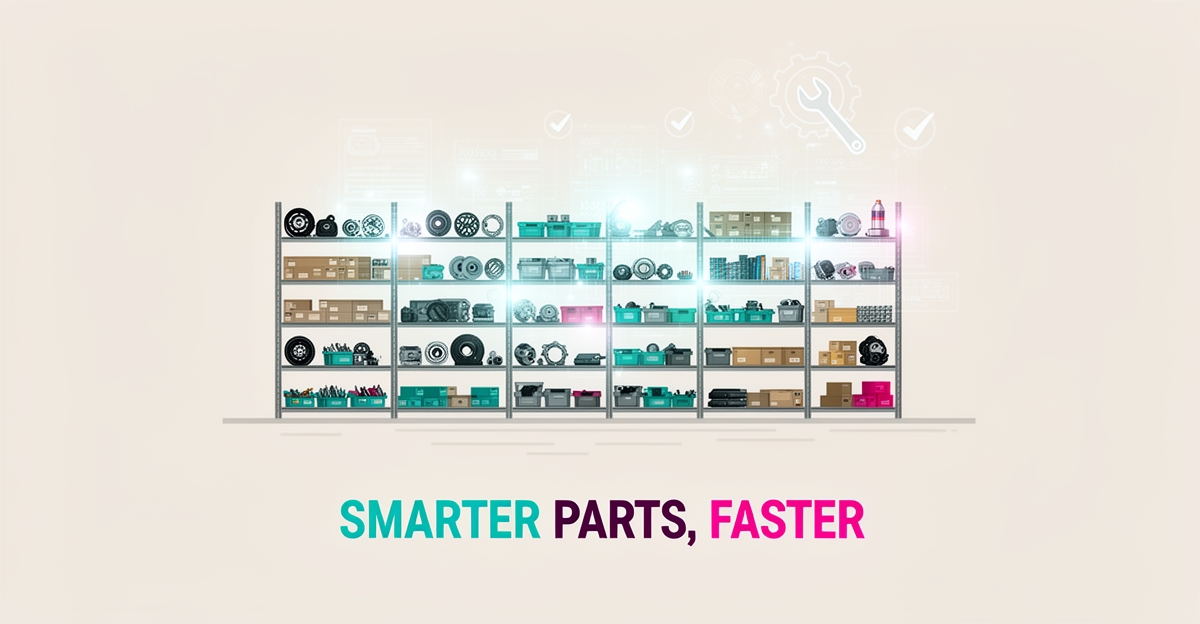
7 Signs Your Auto Repair Shop Needs AI for Inventory and Part Management
Key Facts
- AI-driven demand forecasting typically reduces stockouts and cuts excess inventory by analyzing service history, seasonal trends, and supplier lead times according to Shopmonkey
- AI inventory systems account for four key data streams: service records, seasonal demand, local vehicle age distribution, and supplier lead times according to Trusted Local Auto
- AI adoption in the automotive aftermarket has been climbing steadily since 2023 as shops seek proactive parts control
- Proactive reordering minimizes emergency supplier orders and premium freight costs according to Trusted Local Auto
- AI chatbots and assistants handle routine parts inquiries, freeing staff for revenue work and improving customer response times
Hire a team member that works 24/7 — for less than a part-time wage.
AI receptionists, SDRs, dispatchers and 99+ roles. Trained on your business, fully managed.
Not sure where to start? Ask our AI planner
The Inventory Pain Points Costing Auto Shops Money
Auto repair shops that rely on manual inventory tracking often face a cycle of costly inefficiencies that erode profitability and customer trust. Chronic stockouts force technicians to wait for parts, delaying repairs and frustrating customers who expect timely service. At the same time, overstocking ties up working capital in slow-moving inventory, reducing cash flow and increasing storage costs. Emergency parts orders—placed when critical components are unavailable—come with premium shipping fees and disrupt workflow efficiency. Manual tracking errors compound these issues, leading to duplicate orders, misplaced parts, and inaccurate stock levels that undermine decision-making.
These pain points directly impact revenue and customer retention. When repairs stall due to missing parts, shops lose billable hours and risk damaging their reputation for reliability. Customers experiencing repeated delays are more likely to seek service elsewhere, contributing to churn in a competitive market. Industry research consistently shows that AI-based inventory optimization reduces these avoidable costs by predicting demand before shortages occur. Shops using AI-driven demand forecasting typically see faster inventory turnover, ensuring parts are available when needed without excess buildup. By analyzing historical service records, seasonal trends, and vehicle age distribution, AI systems predict demand proactively—eliminating the guesswork that leads to stockouts and overstock.
Traditional inventory management is reactive by design, responding to shortages after they occur rather than preventing them. This approach leaves shops vulnerable to supply chain fluctuations and unpredictable demand spikes. In contrast, AI-powered systems continuously learn from service history and supplier lead times to auto-reorder parts at optimal levels. The result is a leaner, more responsive inventory that supports faster repairs, improves technician productivity, and enhances the customer experience. For auto shops aiming to scale sustainably, moving beyond manual tracking isn't just an upgrade—it's a necessity for long-term competitiveness. AIQ Labs helps shops implement intelligent inventory systems that turn these pain points into opportunities for efficiency and growth.
How AI Demand Forecasting Prevents Stockouts and Overstock
Most auto repair shops still manage inventory by gut feel — ordering parts when shelves look thin or after a job gets delayed because a component wasn't in stock. AI demand forecasting flips that reactive cycle into a predictive system that knows what you'll need before you do.
The technology works by analyzing your shop's own historical service records, then layering in external variables that human parts managers can't track simultaneously. According to industry analysis, AI-driven systems account for four critical data streams:
- Historical service records showing which repairs your shop performs most frequently
- Seasonal demand trends that shift parts needs throughout the year
- Vehicle age distribution in your service area, which predicts failure patterns
- Supplier lead times that determine when orders must be placed to avoid gaps
The result is proactive inventory control that eliminates the two costliest inventory failures: stockouts that delay customer vehicles and overstock that ties up cash in parts sitting unused on shelves.
The financial impact is real. Shops that adopt AI-driven forecasting typically reduce emergency orders, improve inventory turnover, and free up capital that was previously buried in slow-moving stock — meaning parts move faster, cash stays liquid, and you stop paying to store components you won't use for months.
This shift from reactive to predictive management is accelerating across the aftermarket. Shops that implement forecasting systems now gain a competitive advantage in parts availability while competitors continue scrambling with emergency orders and delayed repairs.
At AIQ Labs, we build custom AI inventory systems that integrate directly with your existing shop management software, learning your specific service patterns and local vehicle demographics. The system automatically generates reorder recommendations based on predicted demand, factoring in your suppliers' actual delivery timelines — not generic industry averages. For shops that want to start smaller, a single managed AI Employee can handle parts inquiries and reorder tracking before you commit to a full forecasting build.
The difference between reactive and proactive inventory management shows up immediately in your bay utilization. When the right parts are already on the shelf, technicians spend time turning wrenches instead of waiting for deliveries, and customers get their vehicles back on schedule.
7 Warning Signs Your Shop Is Ready for AI Inventory
Inventory problems rarely announce themselves. They show up as delayed jobs, frustrated technicians, and cash tied up in parts that never move.
When these patterns persist, AI-powered inventory tracking shifts from optional to essential. As of late 2026, more aftermarket shops are adopting AI for proactive control over parts and cash flow — and the gap between early adopters and everyone else is widening.
Frequent stockouts on fast-moving parts signal a reactive reorder process. AI-driven demand forecasting uses historical service records to predict which parts will be needed, accounting for seasonal demand trends, vehicle age distribution, and supplier lead times. This proactive approach helps avoid stockouts and minimize emergency supplier orders.
Overstocked slow-movers tie up working capital. AI-based inventory optimization reduces excess inventory and improves cash flow by matching stock levels to actual predicted demand rather than rough estimates.
Manual reorder delays create a cascade of inefficiencies. Staff time spent checking bins, calling suppliers, and chasing purchase orders is time not spent on revenue work. AI systems analyze historical data and seasonal trends to predict need and trigger auto-reorders before thresholds are hit.
Seasonal demand misses are costly in automotive repair. Demand for tires, batteries, and cooling components shifts predictably, yet many shops plan by gut feel. AI models trained on service history adjust forecasts in real time, ensuring the right parts are in stock at the right time.
Rising emergency shipping costs are a clear financial warning sign. Trusted Local Auto notes AI-driven demand forecasting can help shops avoid stockouts, reduce overstocking, and minimize emergency supplier orders.
The seven warning signs shops should monitor are:
- Frequent stockouts on fast-moving parts that delay repairs
- Overstocked slow-movers tying up cash and shelf space
- Manual reorder delays and spreadsheet-based purchasing
- Seasonal demand misses on tires, batteries, and cooling parts
- Rising emergency shipping costs and expedited freight
- Poor parts visibility across bays and technicians
- Staff time wasted on inventory admin instead of service
Shops using AI demand forecasting typically see faster inventory turnover, freeing capital for growth. Predictive intelligence replaces guesswork with service-history-driven reordering and optimized cash flow.
AIQ Labs helps shops implement intelligent systems that predict demand and auto-reorder parts based on service history and seasonal trends. If inventory is just one of several workflows bleeding time and money, a targeted AI Workflow Build can rebuild the costliest one first, at a fixed price.
From Insight to Action: Implementing AI Inventory at Your Shop
Turning AI inventory insights into real shop improvements starts with a clear data audit. AI-driven demand forecasting helps auto repair shops avoid stockouts, reduce overstocking, and minimize emergency supplier orders by analyzing historical service records, seasonal trends, and supplier lead times. Shops should first audit their parts usage logs, service history, and inventory records to identify gaps and inaccuracies before implementation. This foundational step ensures the AI model has reliable inputs for accurate forecasting.
Next, integrate the AI forecasting system with existing shop management software to create seamless workflows. AIQ Labs specializes in building custom AI systems that connect deeply with tools like CRM, accounting, and scheduling platforms through two-way API integrations, eliminating manual data entry and creating a single source of truth. Once integrated, automate reorder points based on predictive insights—setting dynamic thresholds that adjust for seasonal demand and vehicle age distribution. This proactive approach typically reduces stockouts and cuts excess inventory substantially in the first months of operation.
Finally, enhance customer service with an AI assistant for 24/7 parts inquiries. AI-powered assistants can respond to routine questions, check part availability, and even schedule service appointments using natural language understanding. These tools handle routine interactions while freeing staff for complex tasks, improving response times and customer retention. For shops ready to begin, AIQ Labs offers three payment models: Start Monthly with a single managed AI Employee, Build in Milestones for a full forecasting system, or Own It Outright—each designed for SMB-friendly adoption without vendor lock-in. Shops with broader ambitions can graduate to a connected AI Operating System, built in phases and owned outright.
Still paying for 10+ subscriptions that don’t talk to each other?
We build custom AI systems you own outright. No vendor lock-in. Full control.
Not sure where to start? Ask our AI planner
Frequently Asked Questions
How much can AI-based inventory optimization save auto repair shops?
Will implementing AI inventory systems require me to replace my current shop management software?
How does AI demand forecasting prevent both stockouts and overstocking in auto repair shops?
What improvement in inventory turnover can shops expect from AI-driven demand forecasting?
Is AI inventory management only for large auto repair chains, or can small shops benefit too?
How quickly can I expect to see improvements in technician productivity after implementing AI inventory tracking?
Your Shelves Are Talking. It's Time to Listen.
If your shop is showing even two or three of the seven warning signs—stockouts on fast-moving parts, cash buried in slow-movers, rising emergency freight—the pattern won't fix itself. Manual inventory management is reactive by design, and as AI adoption spreads across the automotive aftermarket in 2026, the shops that move first gain a lasting edge in parts availability, technician productivity, and customer retention. The good news: you don't need to overhaul everything at once. Start with a data audit of your parts usage and service history, then explore how AI-driven demand forecasting could fit your shop. At AIQ Labs, we build custom inventory systems that integrate with your existing shop management software and auto-reorder parts based on your actual service patterns—systems you own outright, with flexible engagement models that let you start small or build in phases. Take the two-minute Fit Check at aiqlabs.ai/apply, then book a free 30-minute strategy call. It's a real working session with an AI engineer—and if there isn't a clear win for your shop, we'll tell you that too.
Make AI your competitive advantage — not just another tool.
Strategy, implementation and ongoing optimization. One partner, end to end.
Not sure where to start? Ask our AI planner