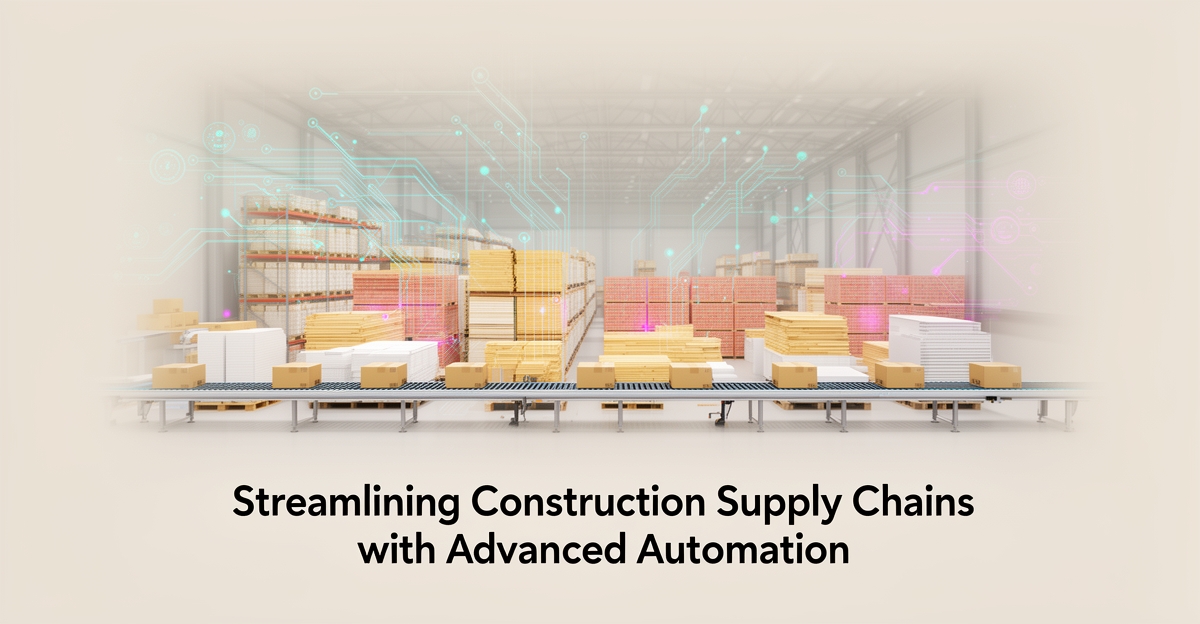
7 Signs Your Construction Supply Business Needs AI for Order Fulfillment Automation
Key Facts
- AI-powered order processing reduces fulfillment time by 30-50% according to industry research
- Some operations run 85% faster using AI agents compared to manual workflows according to processing analysis
- Businesses using AI logistics save 12-18% on shipping costs during peak periods according to logistics benchmarks
- Large enterprises save 28.2% on total monthly costs with AI logistics according to cost analysis
- Medium-sized businesses save 22.7% on monthly costs using AI-powered fulfillment according to comparative research
- Small e-commerce businesses save 17.5% on total monthly costs with AI logistics according to industry data
- 65% or more of repetitive data and decision workflows can be automated with AI according to workflow analysis
Hire a team member that works 24/7 — for less than a part-time wage.
AI receptionists, SDRs, dispatchers and 99+ roles. Trained on your business, fully managed.
Not sure where to start? Ask our AI planner
The Fulfillment Bottlenecks Costing Construction Suppliers
Construction supply businesses are hitting a wall with manual order fulfillment—deliveries are late, tracking is inconsistent, and administrative teams are drowning in paperwork. These bottlenecks don’t just slow operations; they erode customer trust and eat into margins as order volume grows.
Manual processes simply can’t keep up with the complexity of construction supply chains. Orders get misrouted, stock checks happen too late, and teams spend hours reconciling data across systems instead of solving problems. As one industry analysis found, businesses using manual fulfillment see order processing times that are 30-50% slower than those leveraging AI-powered automation (industry research). That delay compounds across every shipment, turning routine orders into customer service headaches.
The administrative burden is equally costly. Teams manually enter order details, chase down inventory updates, and field constant status inquiries—work that adds no value but consumes significant time. Research shows that 65%+ of repetitive data and decision workflows in fulfillment can be automated with AI (industry analysis). When staff are stuck in these loops, they can’t focus on exception handling, supplier negotiations, or proactive customer outreach—activities that actually move the needle.
These inefficiencies hit hardest during peak seasons or unexpected demand spikes. Without real-time visibility into stock levels or automated routing logic, suppliers face stockouts, expedited shipping costs, and delayed deliveries. Studies confirm that AI logistics can reduce shipping costs by 12-18% during peak periods while improving accuracy and scalability (industry benchmark). For construction suppliers juggling just-in-time delivery needs and bulky, high-value materials, those gains aren’t optional—they’re survival.
When fulfillment breaks down, the ripple effects touch every part of the business. Sales teams lose credibility with contractors who can’t rely on delivery dates. Accounting deals with billing disputes from incorrect shipments. Warehouse staff work overtime to fix preventable errors. AIQ Labs sees these patterns repeatedly in construction supply clients—where manual workflows aren’t just inefficient, they’re actively undermining growth.
The good news? These pain points are clear signals that AI-driven fulfillment automation isn’t a luxury—it’s the next logical step. Businesses that recognize these bottlenecks early can replace reactive firefighting with proactive, intelligent workflows that scale with demand.
7 Signs AI Order Fulfillment Automation Is No Longer Optional
Construction supply businesses often reach a tipping point where manual order fulfillment stops being merely inefficient and starts actively eroding margins. Recognizing the warning signs early can mean the difference between scaling smoothly and drowning in administrative chaos.
Here are seven indicators that AI order fulfillment automation has moved from "nice to have" to business-critical.
1. Order processing consumes your team's day – When staff spend hours manually entering orders, checking stock levels, and coordinating deliveries, you're paying skilled workers to do work machines handle better. According to research on AI versus manual order processing, businesses using AI-powered systems see a 30-50% reduction in order processing time, with some operations running 85% faster than manual workflows.
2. Delivery delays trigger customer complaints – Late shipments damage relationships in an industry where contractors operate on tight timelines. AI routing systems analyze real-time inventory across warehouses and field locations, directing orders to the optimal fulfillment point before delays cascade into project stoppages.
3. Administrative costs keep climbing – If your overhead grows faster than revenue, manual fulfillment is likely the culprit. A comparative analysis of AI logistics found that businesses save between 17.5% and 28.2% on total monthly costs depending on size, with additional shipping cost reductions of 12-18% during peak periods.
4. Inventory surprises cause stockouts – Discovering you're out of critical materials after an order is placed creates emergency procurement costs and broken promises. Automated systems monitor stock levels continuously and alert managers before shortages impact fulfillment.
5. Order tracking requires detective work – When customers call asking "where's my order?" and your team can't answer without multiple phone calls and spreadsheet checks, you've lost control of your fulfillment visibility. Modern AI systems provide real-time tracking that updates automatically as orders move through each stage.
6. Repetitive data entry breeds errors – Manual order processing invites mistakes that compound into shipping errors, billing disputes, and inventory discrepancies. Research indicates that 65% or more of repetitive data workflows can be automated, eliminating these error-prone manual touchpoints.
7. Growth means hiring more administrators – If scaling requires proportionally scaling back-office staff, your fulfillment process isn't scalable. AI automation handles increased order volume without linear headcount growth, letting you expand revenue without expanding overhead.
Recognizing these signs is the first step. Construction supply businesses ready to address them can explore how tailored automation handles real-time stock checks, shortage alerts, and intelligent order routing to warehouses or field teams. Start the Fit Check to identify which workflows offer the highest-ROI automation opportunity for your operation.
How AI Transforms Order Routing, Stock Checks, and Field Dispatch
Construction supply fulfillment breaks down when orders sit waiting for manual stock checks and routing decisions. AI removes that friction by connecting inventory, orders, and dispatch in real time.
AI-driven order routing matches each order to the optimal source based on live inventory, proximity to job site, and carrier capacity. The system evaluates multiple warehouses and field teams instantly, reducing delays and shipping costs. Businesses using AI logistics see 12-18% shipping cost reduction during peak periods according to industry research.
Real-time stock checks happen automatically at order entry, not after a phone call. AI validates availability across locations, flags partial fills, and triggers replenishment signals before shortages impact customers. This visibility supports AI-driven real-time stock checks that prevent overselling and last-minute substitutions.
Shortage alerts are proactive, not reactive. When inventory falls below threshold or demand spikes, managers receive prioritized alerts with suggested actions such as transfer from another warehouse or field dispatch. The approach cuts manual monitoring and protects delivery commitments.
Intelligent routing to warehouses or field teams balances service speed with cost. AI considers stock levels, lead times, and job site access to assign fulfillment, then updates dispatchers and drivers automatically. Order processing accelerates as a result, with AI-powered order processing reducing order processing time by 30-50%.
Accuracy and scalability improve together. AI can process large volumes of orders quickly and accurately, reducing manual intervention and minimizing errors. Analysis of AI logistics shows total monthly cost savings up to 28.2% for large enterprises, with 17.5% for small e-commerce businesses and 22.7% for medium-sized businesses.
For construction supply workflows, this translates into fewer missed deliveries, cleaner inventory records, and higher customer satisfaction. The system handles repetitive data and decision workflows that otherwise consume admin time, with research indicating 65%+ of repetitive data and decision workflows can be automated with AI.
Key capabilities AI brings to routing, stock, and dispatch include:
- Live inventory validation across warehouses and field stock at order entry
- Automated shortage alerts with recommended transfers or substitutions
- Intelligent order routing to nearest available stock or best-suited field team
- Real-time dispatch updates and work order creation for crews
AIQ Labs designs tailored automation solutions that handle real-time stock checks, alert managers of shortages, and route orders to the right warehouses or field teams within existing construction supply operations. The result is faster fulfillment, lower cost, and consistent service as demand scales.
From Assessment to Live Automation: A Practical Implementation Path
Embarking on the journey from manual chaos to automated efficiency in your construction supply business starts with a clear, actionable plan. By following a structured path, you can harness AI to transform order fulfillment without overwhelming your team.
First, assess your current operations to pinpoint bottlenecks, such as delayed deliveries or high admin workloads. According to industry research, businesses adopting AI logistics see up to 28.2% in total monthly cost savings, making this step essential for identifying high-ROI opportunities.
Next, prioritize data quality, as poor data can lead to systematic errors in AI systems. Ensure your inventory, order histories, and supplier details are accurate and centralized before proceeding.
Evaluate AI solutions that fit your scale, focusing on those offering real-time stock checks and order routing. A recent analysis shows AI-powered order processing reduces time by 30-50%, far outpacing manual methods.
Train your staff thoroughly on the new system to maximize adoption and minimize resistance. Hands-on sessions tailored to roles like warehouse managers and dispatchers ensure smooth integration.
Finally, monitor performance post-launch with regular audits and adjustments. Track metrics like order accuracy and fulfillment speed to refine the system over time.
- Conduct a thorough needs assessment to map bottlenecks.
- Clean and centralize data for reliable AI inputs.
- Select scalable AI tools with proven fulfillment features.
- Deliver role-specific training for seamless adoption.
- Set up ongoing monitoring for continuous improvement.
At AIQ Labs, we guide SMBs through this exact path with our phased implementation process, from discovery and architecture to deployment and optimization. Our tailored automation models handle real-time stock checks, shortage alerts, and order routing to warehouses or field teams, all built for your ownership without vendor lock-in.
Businesses using AI agents report 85% faster order processing, proving the value of a methodical rollout. This approach minimizes risks while delivering quick wins.
Ready to map your implementation? Start with our two-minute Fit Check at https://aiqlabs.ai/apply, then book a free 30-minute strategy call at https://aiqlabs.ai/book. Our AI engineers will identify your biggest bottlenecks and outline high-ROI opportunities—no obligation, just clarity.
Still paying for 10+ subscriptions that don’t talk to each other?
We build custom AI systems you own outright. No vendor lock-in. Full control.
Not sure where to start? Ask our AI planner
Frequently Asked Questions
How do I know if manual order fulfillment is actually costing us money?
Will AI really speed up order processing for construction supplies?
Can AI help with stockouts and inventory surprises?
Is our data too messy for AI to work?
What’s the first step to move from manual to AI fulfillment without disrupting the team?
How much can we realistically save with AI logistics?
Turn Fulfillment Friction Into Your Competitive Edge
When order processing consumes your team’s day, delivery delays spark complaints, or scaling means hiring more administrators just to keep up, it’s clear: manual fulfillment is no longer just inefficient—it’s actively holding your construction supply business back. The signs are unmistakable, from inventory surprises and tracking headaches to rising administrative costs that outpace revenue growth. AI-driven automation doesn’t just fix these bottlenecks—it transforms them into opportunities for faster, more accurate fulfillment, lower operational costs, and scalable growth without linear headcount increases. By recognizing these signals early, you can shift from reactive firefighting to proactive, intelligent workflows that keep pace with demand. The next step is simple: see where AI can make the biggest impact in your operation. Start with our two-minute Fit Check to uncover your highest-ROI automation opportunities—no obligation, just clarity on how to move forward.
Make AI your competitive advantage — not just another tool.
Strategy, implementation and ongoing optimization. One partner, end to end.
Not sure where to start? Ask our AI planner