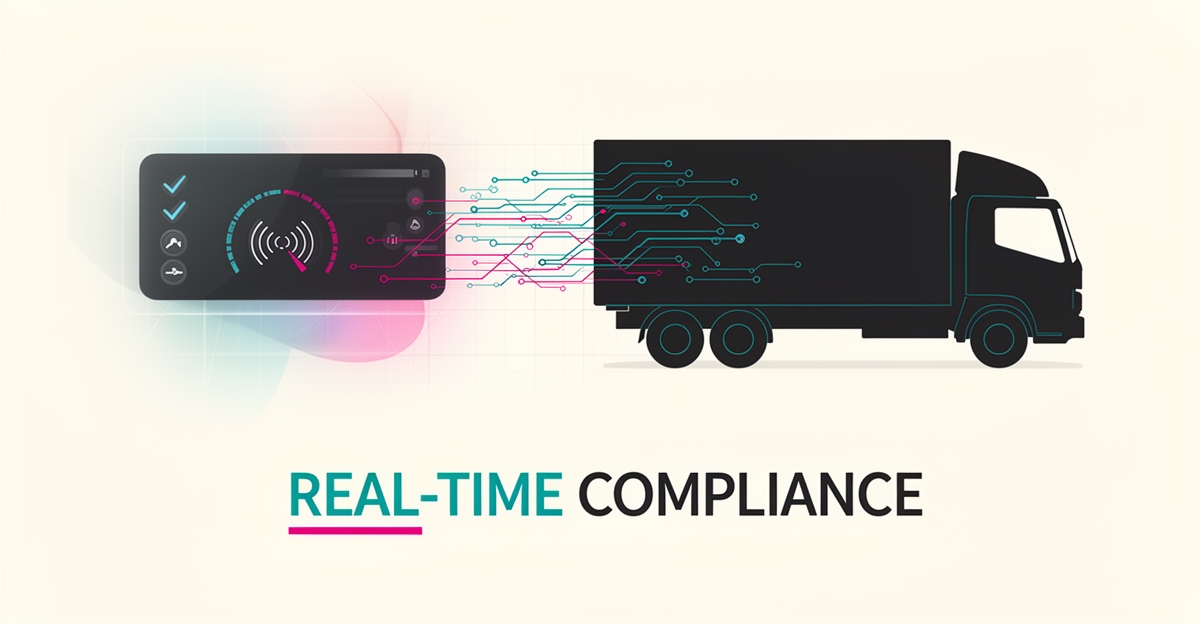
7 Signs Your DOT Compliance Firm Needs AI for Real-Time Regulatory Updates
Key Facts
- A large share of DOT roadside violations trace back to incomplete repair records, fleet documentation research suggests.
- Carriers with poor repair documentation are significantly more likely to receive conditional safety ratings from the FMCSA, per fleet management analysis.
- Many fleets using manual systems struggle to produce repair records within the 48-hour FMCSA audit window, industry analysis indicates.
- AI-powered compliance typically delivers materially higher accuracy than manual processes, compliance research suggests.
- Companies using AI report substantial reductions in manual compliance effort and regulatory fines, monitoring analysis suggests.
- Non-compliance costs can run into the millions annually for firms with weak processes, per compliance research.
- Regulatory updates have grown dramatically over the past two decades, making manual tracking unsustainable, industry data suggests.
Hire a team member that works 24/7 — for less than a part-time wage.
AI receptionists, SDRs, dispatchers and 99+ roles. Trained on your business, fully managed.
Not sure where to start? Ask our AI planner
Introduction
Imagine an FMCSA auditor walks into your office and requests repair records from 18 months ago. You have 48 hours. Your team scrambles through filing cabinets and spreadsheets, but a crucial certification is missing. That single oversight can trigger a violation, costing your firm thousands and damaging its safety rating.
This scenario is not a far-fetched nightmare; it's a daily reality for firms relying on outdated compliance methods. The regulatory landscape is not just complex—it's relentlessly expanding. According to one industry analysis, businesses now face a volume of regulatory updates that manual teams simply cannot absorb. For DOT compliance, this constant flux means that a process that was adequate last year may be a liability today.
The core issue is that manual tracking cannot keep pace. Spreadsheets and paper logs are prone to human error, difficult to scale, and create dangerous information gaps. A review of DOT documentation workflows suggests that a large share of roadside violations trace back to incomplete repair records. These seemingly small administrative misses carry significant financial consequences, with the cost of non-compliance running into the millions for firms that fall behind.
The warning signs that your current system is failing are often subtle at first, but they compound over time. If your firm is experiencing any of the following, your compliance framework is at risk:
- Frequent audit findings or citations for documentation errors.
- Difficulty producing complete records within the 48-hour audit window.
- Uncertainty about whether your team is aware of the latest federal and state mandates.
- Excessive hours spent manually compiling reports and tracking regulatory changes.
The alternative is a proactive, technology-driven approach. Modern compliance is no longer about periodic reviews; it's about continuous, real-time monitoring. This is where AI offers a fundamental advantage. Instead of relying on manual checks, AI-powered systems can automatically track regulatory sources, flag relevant changes, and ensure documentation is always audit-ready. Research suggests AI-powered compliance delivers materially higher accuracy than the 60-70% range typical of manual processes.
At AIQ Labs, we build AI systems that move firms from a reactive to a proactive compliance posture. These systems work 24/7 to monitor federal and state DOT regulations, alerting your team to new mandates the moment they are published. This ensures you are not just catching up with compliance but staying consistently ahead of it, protecting your business from unnecessary risk and freeing your team to focus on strategic priorities.
Key Concepts
DOT compliance is no longer a paperwork exercise — it is a real-time race against a flood of federal and state rule changes. Firms that rely on manual tracking are already falling behind, and the warning signs show up long before an audit.
Manual processes create a predictable compliance gap. Fleet management research indicates carriers with poor repair documentation are markedly more likely to receive conditional safety ratings from FMCSA. The same analysis links a majority of DOT roadside violations to incomplete repair records, with repeat documentation violations carrying fines that climb quickly per vehicle.
Accuracy and speed diverge sharply between methods. Industry research puts manual compliance processes in the 60-70% accuracy range, while AI-powered systems can perform substantially better. Processing shifts from days or weeks down to minutes or hours, and monitoring moves from scheduled reviews to continuous, real-time surveillance.
The regulatory volume makes manual upkeep unsustainable. Thousands of new final rules are published annually across federal agencies, and compliance monitoring analysis notes that organizations using manual systems are more likely to face audit delays and unplanned compliance costs.
AI changes the model from reactive to proactive. Instead of staff scanning bulletins and updating spreadsheets, AI agents monitor federal and state DOT regulations in real time, flag changes by jurisdiction, vehicle type, and operation, and push alerts before a deadline becomes a violation.
Key concepts that define the shift include:
- Real-time regulatory monitoring that replaces periodic manual reviews with continuous surveillance
- Automated documentation workflows that capture DVIRs, repair certifications, and maintenance intervals with timestamps and audit trails
- Proactive risk detection that identifies interval drift, certification gaps, and multi-location blind spots before auditors do
- Instant retrieval for 48-hour FMCSA requests, reducing retrieval time from hours to minutes
For DOT compliance firms, continuous monitoring is the difference between passing an audit and paying for it. AI-powered systems can substantially reduce manual effort and cut regulatory fines through early detection. AIQ Labs builds AI systems that proactively track and alert teams to new mandates, turning regulatory change into an actionable workflow rather than a surprise finding.
The business case is risk reduction as much as efficiency. With a single non-compliance event potentially costing millions, the cost of staying manual far exceeds the investment in automation.
Best Practices
Implementing AI for real-time DOT regulatory updates requires a strategic approach that maximizes accuracy and minimizes disruption. Start by conducting a comprehensive audit of your current compliance workflow to identify specific pain points, such as delayed documentation retrieval or inconsistent repair certifications. This assessment should quantify the time spent on manual tracking and the frequency of audit findings related to outdated records. Prioritize integrating AI tools that automate regulatory monitoring and alerting, ensuring they connect directly to your existing document management systems for seamless data flow. Focus on solutions that provide real-time updates on federal and state mandates, reducing reliance on periodic manual reviews that often miss critical changes.
Establish clear protocols for how AI-generated alerts are reviewed and acted upon by your compliance team. Define ownership for validating new regulations, updating internal policies, and communicating changes to operational staff. Implement a tiered response system where high-risk updates trigger immediate review, while routine changes follow a scheduled validation cycle. This balances AI's speed with necessary human oversight for nuanced interpretation. Additionally, invest in training programs that familiarize your team with the AI dashboard and alert system, emphasizing how to interpret confidence levels and prioritize actions. Regularly measure key metrics like alert response time, documentation accuracy, and audit pass rates to refine the system and demonstrate ROI. AIQ Labs supports this through AI Workflow Builds — a fixed-price rebuild of the one workflow that costs you the most, delivered in phases.
- Fleets using structured digital documentation report substantially higher audit pass rates than manual systems, where many cannot produce records within the 48-hour audit window.
- AI-powered compliance processes typically outperform the 60-70% accuracy range of manual methods.
- Organizations using AI report major reductions in manual compliance effort and operational costs.
Implementation
Manual tracking collapses the moment DOT regulations change, and compliance teams are left chasing updates they never saw coming. Implementation starts by replacing reactive spreadsheets with continuous, AI-driven monitoring that turns regulatory change into an actionable alert.
First, map the current compliance workflow and identify the failure points. Most firms discover gaps in DVIR certification tracking, 48-hour record retrieval, and multi-location visibility. Fleet management research suggests many fleets using manual systems cannot produce all vehicle repair records within the 48-hour audit request window. Those gaps become violations.
Next, deploy an AI system that monitors federal and state DOT sources in real time and translates changes into role-specific tasks. AI agents can proactively track and alert teams to new mandates, replacing manual review of the thousands of new final rules published annually across federal agencies.
The system should ingest existing records, standardize documentation, and enforce certification workflows. With structured digital documentation, audit pass rates improve measurably, while carriers with poor repair documentation are far more likely to receive conditional safety ratings from FMCSA. Industry analysis links a large share of DOT roadside violations to incomplete repair records.
Implementation works best as a phased build that mirrors how AIQ Labs delivers AI systems. Teams start with one critical workflow, prove value, then scale. A typical rollout includes:
- Discovery and architecture of current DOT processes, data sources, and integration points
- Build of multi-agent monitoring that tracks regulations and auto-creates work orders from DVIR submissions
- Integration with existing CRM, maintenance, and telematics tools for a single source of truth
- Training, deployment, and continuous optimization with human-in-the-loop oversight
Accuracy improves immediately. Compliance reporting comparisons show AI-powered processes substantially outperform manual processes on accuracy. Real-time monitoring replaces periodic reviews, and automated reporting can cut evidence collection effort dramatically.
With real-time regulatory monitoring in place, compliance shifts from firefighting to prevention. Alerts trigger before deadlines slip, certifications are enforced before vehicles return to service, and audit requests are answered in minutes instead of days. The result is lower fines, fewer conditional ratings, and a compliance program that scales with the business.
Conclusion
The warning signs are clear: frequent audit findings, manual tracking struggles, and an inability to keep pace with regulatory volume indicate your DOT compliance processes are at risk. Manual methods typically achieve only 60-70% accuracy, while AI-powered systems perform substantially better, directly reducing the likelihood of costly violations and conditional safety ratings. Continuing with outdated workflows exposes your firm to preventable errors, delayed audit responses, and financial penalties that can run into the millions for firms that fall behind.
AI transforms this landscape by providing real-time monitoring of federal and state DOT regulations, automating alert systems for new mandates, and ensuring documentation is always audit-ready. This proactive approach cuts manual effort dramatically and enables compliance reports in minutes — critical when FMCSA auditors can request records with just 48 hours' notice. By eliminating gaps in repair certification tracking and retrieval failures, AI addresses a root cause of DOT roadside violations tied to incomplete records.
For firms ready to move beyond reactive compliance, the path forward begins with assessing your current workflow's vulnerabilities. AIQ Labs partners with DOT compliance providers through three entry points: AI Employees for managed AI staff, AI Workflow Builds for a fixed-price rebuild of your costliest workflow, and AI Operating Systems for one connected operating layer you own outright. Take the first step with the 2-minute Fit Check, which leads to a free 30-minute strategy call to assess your systems and uncover where AI can deliver immediate value. This is how you turn compliance from a cost center into a competitive advantage.
Still paying for 10+ subscriptions that don’t talk to each other?
We build custom AI systems you own outright. No vendor lock-in. Full control.
Not sure where to start? Ask our AI planner
Frequently Asked Questions
What are the warning signs that my DOT compliance firm needs AI for real-time regulatory updates?
How much more accurate are AI-powered compliance systems compared to manual processes?
What share of DOT roadside violations are linked to incomplete repair records?
How much can AI reduce manual compliance effort and operational costs for DOT firms?
How costly is non-compliance for DOT firms relying on manual tracking?
How quickly can AI-powered systems retrieve repair records for a 48-hour FMCSA audit request?
From Reactive Fixes to Proactive Compliance: Your Path Forward
The signs are clear: if your team is drowning in manual tracking, missing regulatory updates, or struggling to produce records within the 48-hour audit window, your DOT compliance process is exposing your business to preventable risk. Manual methods, with their typical 60-70% accuracy, simply cannot keep pace with the volume and velocity of today's regulatory changes, leading to costly violations and damaged safety ratings. AI-powered systems offer a proven alternative — real-time monitoring and automated workflows that cut manual effort dramatically and keep documentation audit-ready. For firms ready to shift from firefighting to prevention, the first step is a clear-eyed assessment of your current vulnerabilities. AIQ Labs helps DOT compliance providers identify high-impact automation opportunities, starting with the 2-minute Fit Check and a free 30-minute strategy call, mapping a path to owned, scalable AI solutions that turn compliance from a liability into a competitive advantage.
Make AI your competitive advantage — not just another tool.
Strategy, implementation and ongoing optimization. One partner, end to end.
Not sure where to start? Ask our AI planner