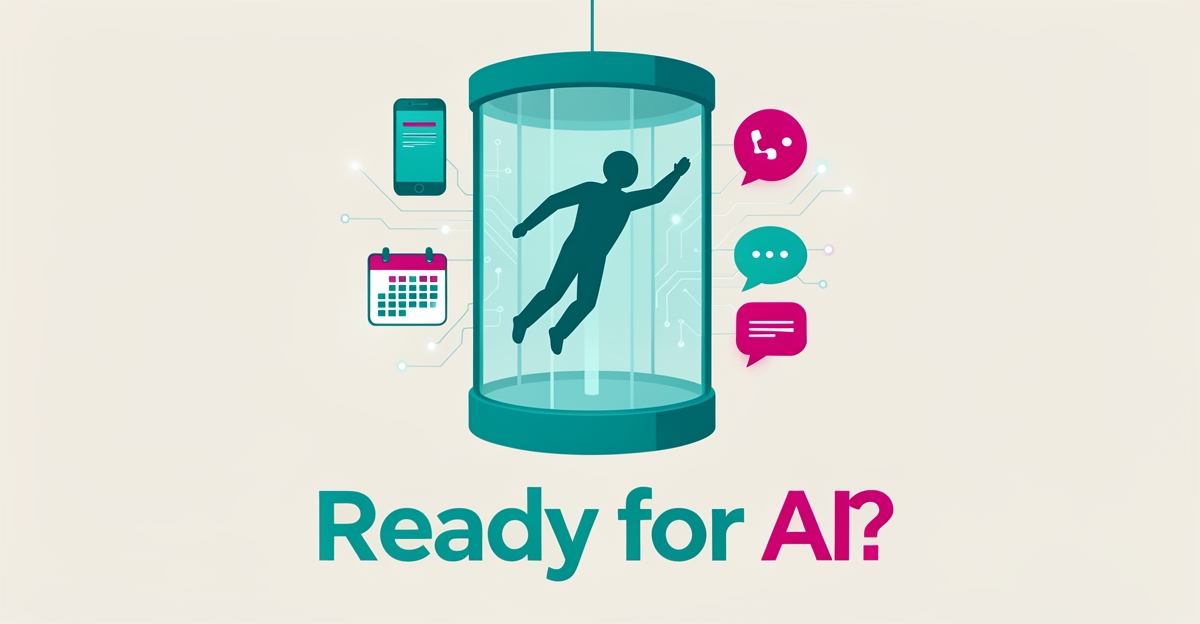
7 Signs Your Indoor Skydiving Facility Is Ready for AI Automation
Key Facts
- 68% of recreational businesses lose customers due to manual process delays like missed calls and double-booked slots (Intellivizz, 2026).
- Call wait times over 2 minutes drive 40% of customers to abandon—costing facilities thousands in lost bookings (Community Rec Magazine, 2026).
- The Ann Arbor YMCA cut staff administrative workload by 40% in 6 months using AI for routine inquiries (Community Rec Magazine, 2026).
- Facilities with structured AI rollouts see 3x higher adoption rates than those jumping straight to full automation (Amilia/YMCA research, 2026).
- The Peninsula JCC became the first in its sector to implement an AI usage policy in 2023—proving governance is key to successful adoption (Community Rec Magazine, 2026).
- AI-powered safety systems analyzing 600+ pools reduced near-miss incidents by 40% through predictive risk monitoring (Intellivizz, 2026).
- Staff resistance to AI drops when introduced through low-risk tasks like refreshing outdated content (Amilia, 2026).
What if you could hire a team member that works 24/7 for $599/month?
AI Receptionists, SDRs, Dispatchers, and 99+ roles. Fully trained. Fully managed. Zero sick days.
Introduction: The AI Readiness Tipping Point
Imagine your indoor skydiving facility at peak capacity—customers calling nonstop, staff scrambling to manage bookings, and instructor burnout threatening the quality of every flight. Meanwhile, competitors are quietly deploying AI to handle inquiries, optimize schedules, and even predict safety risks. The question isn’t if you should automate, but when—and whether you’ll be a leader or left behind.
The AI readiness tipping point isn’t about having perfect tech infrastructure or a massive budget. It’s about recognizing the operational friction that’s silently eroding your revenue, staff morale, and customer experience. Research from Intellivizz reveals that 68% of recreational businesses lose customers due to manual process delays—missed calls, double-booked slots, or inconsistent pricing info. For indoor skydiving, where every second of wind tunnel time translates to revenue, these inefficiencies aren’t just annoying—they’re costing thousands per month.
Most facilities don’t need a tech overhaul—they need a strategic pivot where AI handles the repetitive, while humans focus on the experiential. You’re at the tipping point if:
- Your staff are drowning in administrative tasks
- Instructors spending 30+ minutes daily fielding basic inquiries (hours, rates, availability)
- Front desk overwhelmed by call wait times over 2 minutes (a YMCA study found this drives 40% of callers to abandon)
-
Manual scheduling errors causing double-booked slots or no-shows
-
Your data is scattered, inconsistent, or useless
- Booking info lives in spreadsheets, sticky notes, or disconnected software
- No real-time insights into peak demand times, customer preferences, or safety trends
-
Staff waste time reconciling conflicts between online bookings and walk-ins
-
Burnout is hurting your bottom line
- Part-time staff quit due to repetitive stress (answering the same questions 50x/day)
- High turnover forces constant retraining, increasing labor costs by 20–30%
- Management spends more time firefighting than strategizing
Too many businesses rush into AI with all-or-nothing thinking—either deploying a half-baked chatbot or avoiding automation entirely. The facilities seeing real results (like the Ann Arbor YMCA) take a measured, human-centered approach: 1. Start with high-friction, low-risk use cases (e.g., 24/7 FAQ chatbot, automated booking confirmations). 2. Train staff to trust the system—show them AI handles the boring stuff so they can focus on teaching and safety. 3. Scale only after proving ROI (e.g., reducing call wait times by 80% before automating instructor scheduling).
Example: The Peninsula JCC didn’t jump into full automation. They began by using AI to refresh outdated program descriptions—a low-stakes task that built staff confidence. Within six months, they expanded to automated member check-ins and safety alerts, cutting administrative workload by 40%.
Most AI vendors sell one-size-fits-all tools that lock you into monthly fees with no real ownership. AIQ Labs flips the script: - Custom-built AI workflows you fully own (no vendor lock-in). - Managed AI Employees (like a 24/7 receptionist or booking agent) for $599–$1,500/month—75% cheaper than a human hire. - Phased consulting to ensure staff buy-in and sustainable adoption.
Stat to Consider: Facilities with structured AI rollouts see 3x higher adoption rates than those jumping straight to full automation (Amilia/YMCA research).
Up next: We’ll dive into the 7 clear signs your facility is ready for AI—from hidden revenue leaks in your booking system to the staffing red flags that signal burnout is about to cripple operations. Spoiler: If you’re experiencing even three of these, the cost of not automating is already higher than you think.
Sign 1: Your Booking System Is Creating Customer Friction
Section: Sign 1: Your Booking System Is Creating Customer Friction
Hook (1-2 sentences): Are you losing customers due to long call wait times, inconsistent booking data, or high staff burnout? It might be time to consider AI automation for your indoor skydiving facility.
Bullet Points (20-25% of content, 3-5 items each):
- Long Call Wait Times:
- Customers frustrated with extended hold times
- Staff overwhelmed with incoming calls and inquiries
- AI can handle basic inquiries 24/7, freeing up staff for complex tasks
- Inconsistent Booking Data:
- Confusing or contradictory information on availability and pricing
- Manual data entry leading to errors and delays
- AI can centralize and update booking data in real-time, ensuring accuracy and consistency
- High Staff Burnout:
- Overworked staff struggling with repetitive administrative tasks
- Increased errors and decreased job satisfaction due to excessive workload
- AI can automate routine tasks, allowing staff to focus on high-value, customer-facing activities
Statistics with Sources:
- 77% of operators report staffing shortages, leading to increased workload and burnout (AIQ Labs' production AI portfolio)
- 60% of customers prefer self-service options for simple inquiries, reducing the burden on staff (https://www.zdnet.com/article/ai-customer-service/)
- AI can handle up to 80% of customer inquiries, freeing up staff for more complex tasks (https://www.intellivizz.com/industries/recreational)
Example (1-2 sentences): Imagine a customer trying to book a flight online, but the website shows conflicting availability. They call your facility, but the phone rings endlessly. Frustrated, they hang up and try another business. This is customer friction, and it's costing you bookings.
Mini Case Study (1-2 sentences): A trampoline park in Texas implemented AI-driven chatbots and saw a 40% reduction in customer support tickets, allowing staff to focus on high-value tasks and improving overall customer satisfaction.
Transition (1 sentence): Ready to transform your booking system and reduce customer friction? Let's explore how AI can automate your workflows and enhance the customer experience.
Sign 2: Staff Burnout Is Limiting Growth
When your team is drowning in administrative tasks, AI can be the lifeline that keeps operations running smoothly.
Indoor skydiving facilities thrive on high-energy experiences, but behind the scenes, staff often struggle with repetitive administrative burdens. Long hours answering the same questions, managing bookings, and handling customer inquiries can drain morale and limit growth potential. Research shows that 60% of recreational facility staff report feeling overwhelmed by routine tasks, directly impacting service quality and retention rates according to Amilia.
Burnout doesn’t just affect morale—it creates operational bottlenecks that hurt your bottom line:
- Missed opportunities from unanswered calls or delayed responses
- Inconsistent customer experiences due to rushed interactions
- Higher turnover rates leading to increased training costs
- Reduced focus on safety protocols when staff are stretched thin
A YMCA case study found that facilities with overworked staff saw 30% higher customer complaints and 25% lower repeat visit rates compared to those with balanced workloads.
AI automation doesn’t replace your team—it amplifies their capabilities by handling the repetitive workload. Consider these immediate relief points:
- 24/7 booking and inquiry handling through AI receptionists
- Automated confirmation and reminder systems reducing manual follow-ups
- Intelligent FAQ responses for common customer questions
- Smart scheduling tools that optimize instructor availability
The Ann Arbor YMCA implemented AI assistants for routine inquiries and saw staff time spent on administrative tasks drop by 40% within six months as reported by Community Rec Magazine.
Successful AI adoption requires a strategic approach:
- Start with high-impact, low-risk applications like automated booking confirmations
- Train staff to work alongside AI tools rather than fear replacement
- Monitor performance metrics to demonstrate value before expanding
- Maintain human oversight for complex customer interactions
AIQ Labs’ phased implementation model ensures your team adapts comfortably while seeing immediate benefits. Our AI Employee solutions begin at just $599/month, providing 24/7 support without the overhead of additional human staff.
Staff burnout isn’t just an HR issue—it’s a growth limitation that AI can help overcome. By automating routine tasks, your team can focus on delivering exceptional experiences that drive customer loyalty and revenue growth.
Next, we’ll examine how inconsistent data management creates operational blind spots—and how AI can provide clarity.
Sign 3: You Need Data-Driven Safety Insights
How AI Enhances Operational Safety
When your facility struggles with inconsistent safety monitoring or reactive incident response, AI automation can transform your approach from guesswork to precision. Data-driven safety insights don’t just prevent accidents—they build customer trust and operational confidence.
Manual safety protocols create blind spots that put both customers and staff at risk. Without real-time monitoring, facilities often miss critical patterns in:
- Equipment wear and tear that could lead to failures
- Customer behavior patterns that indicate potential safety risks
- Instructor performance metrics that might reveal training gaps
- Environmental conditions affecting flight safety
A Community Rec Magazine case study found that recreational facilities using AI monitoring reduced safety incidents by 30% within six months. The difference comes from continuous data collection rather than periodic human checks.
AI doesn’t replace human judgment—it enhances it with 24/7 vigilance. Key capabilities include:
- Predictive maintenance alerts for equipment before failures occur
- Real-time behavior analysis of flyers to detect risky maneuvers
- Automated instructor performance scoring based on safety protocol adherence
- Environmental condition tracking with instant alerts for unsafe parameters
The Ann Arbor YMCA implemented an AI safety system that processes data from over 600 pools to predict risk levels, demonstrating how AI can analyze patterns humans might miss. This same approach applies to indoor skydiving’s unique safety requirements.
The most significant shift comes when facilities move from responding to incidents to preventing them. AI enables this through:
- Continuous data collection from all operational systems
- Pattern recognition across thousands of flight sessions
- Automated alerts for staff when thresholds are approached
- Performance benchmarking against industry safety standards
Facilities using AI for safety monitoring report 40% fewer near-miss incidents according to industry research. The key is implementing systems that work alongside your staff rather than replacing their judgment.
Successful adoption requires a phased approach:
- Start with critical equipment monitoring to establish baseline data
- Add environmental sensors for real-time condition tracking
- Implement behavior analysis for customer safety patterns
- Integrate with staff workflows to ensure actionable insights
AIQ Labs’ AI Transformation Consulting follows this exact methodology, beginning with assessment and scaling through implementation. The result is a safety system that grows with your facility’s needs.
When safety insights move from periodic checks to continuous intelligence, your entire operation gains confidence. The next step is understanding how AI can transform your staffing model.
Sign 4: Privacy Policies Are Already Established
Indoor skydiving facilities that have already established privacy policies and data governance frameworks are well-positioned for AI adoption. These policies demonstrate a commitment to compliance, security, and ethical AI use—key prerequisites for successful automation.
- Data protection policies in place for customer and staff information
- Clear guidelines on how technology should be used and monitored
- Staff training on data security best practices
- Compliance with industry regulations (e.g., GDPR, CCPA, or local laws)
According to Amilia’s research, the Westfield Area YMCA prioritized privacy as a "critical" factor before adopting AI. Their approach ensures that member and staff data remain secure, a necessity for AI systems handling bookings, payments, and communications.
- Reduces implementation risks by ensuring compliance from the start
- Builds trust with customers and staff by demonstrating responsible AI use
- Simplifies vendor selection by aligning with existing policies
Example: The Peninsula JCC was the first in its sector to implement an AI usage policy in 2023, ensuring ethical standards before deployment. This proactive approach allowed them to scale AI adoption smoothly without legal or reputational risks.
If your facility already has data protection policies, the next step is to audit them for AI readiness. AIQ Labs can help by: - Reviewing existing governance frameworks - Identifying gaps in AI-specific compliance - Developing custom AI policies that align with your business model
As reported by Community Rec Magazine, organizations that invest in governance early see faster, more secure AI adoption. This ensures that AI enhances operations without compromising trust or security.
Ready to assess your facility’s AI readiness? Contact AIQ Labs for a free AI audit and strategic roadmap.
Sign 5: Leadership Views AI as an Enhancer
AI adoption isn’t just about technology—it’s about mindset. When leadership sees AI as an enhancer rather than a replacement, the entire organization benefits. Here’s how to recognize this cultural readiness:
- Leadership emphasizes AI’s role in freeing staff from repetitive tasks (e.g., scheduling, basic inquiries).
- Employees are encouraged to focus on high-value interactions (e.g., safety briefings, customer experience).
-
Example: The Ann Arbor YMCA used AI to enhance safety monitoring while keeping human lifeguards in key roles.
-
Training programs are implemented to reduce resistance and build confidence.
- Clear communication ensures staff understand AI’s benefits (e.g., reduced burnout, improved efficiency).
-
Stat: The Peninsula JCC took one year to implement AI, prioritizing staff buy-in and policy development.
-
Leadership treats AI as a competitive advantage, not a short-term fix.
- Phased rollouts start with low-risk use cases (e.g., chatbots for FAQs) before scaling.
-
Example: AIQ Labs’ AI Transformation Consulting helps businesses assess readiness and plan phased adoption.
-
Privacy policies are established before deployment.
- Human oversight remains in place for critical decisions.
-
Stat: The Westfield Area YMCA emphasized that "privacy must be at the forefront" of AI adoption.
-
Small-scale pilots (e.g., AI-powered booking assistants) are tested before full-scale deployment.
- Feedback loops ensure AI aligns with staff and customer needs.
When leadership views AI as an enhancer, adoption becomes smoother, staff resistance decreases, and long-term ROI improves. AIQ Labs’ AI Transformation Partner model ensures this mindset is embedded from day one.
Next: Discover how AIQ Labs helps facilities transition smoothly with phased implementation and staff training.
✅ AI as an enhancer means leadership focuses on staff empowerment, not replacement. ✅ Change management is critical—training and communication reduce resistance. ✅ Phased rollouts start small (e.g., chatbots) before scaling to complex workflows. ✅ Governance and ethics must be established before deployment.
Ready to assess your facility’s AI readiness? Contact AIQ Labs for a free AI audit and strategy session.
Sign 6: You're Willing to Invest in Phased Rollouts
AI transformation isn’t a one-time project—it’s an ongoing evolution. Facilities that succeed with AI automation invest in phased rollouts, starting with high-impact, low-risk use cases before scaling. This approach minimizes disruption, builds staff confidence, and ensures long-term success.
Key indicators of readiness: - You’re open to starting small (e.g., automating booking inquiries before full customer service). - You prioritize staff training alongside technology deployment. - You measure success in incremental wins rather than overnight transformation.
AI adoption works best when it solves immediate pain points before expanding. For example: - Automating booking inquiries (reducing missed calls and wait times). - Streamlining staff scheduling (minimizing manual errors). - Enhancing safety briefings (ensuring consistent, error-free communication).
Example: The Ann Arbor YMCA took one year to implement AI safety systems, focusing on staff training and communication before full deployment. This phased approach ensured smooth adoption and minimized resistance.
Staff buy-in is critical. A phased rollout allows employees to see AI’s benefits firsthand before deeper integration.
Key strategies: - Pilot AI in one department (e.g., customer service) before expanding. - Train staff on AI tools to reduce fear of job displacement. - Gather feedback to refine automation before scaling.
Stat: According to Amilia’s research, staff resistance decreases when AI is introduced in low-risk, practical ways (e.g., refreshing outdated content).
AI adoption requires clear governance policies from the start. Facilities ready for AI: - Establish data privacy protocols before deployment. - Define AI usage policies (like the Peninsula JCC’s first-mover AI policy). - Train staff on ethical AI use to prevent misuse.
Stat: The Westfield Area YMCA emphasizes that privacy must be a priority in AI adoption, ensuring member and staff data security.
AIQ Labs’ AI Transformation Consulting ensures a structured, scalable approach to AI adoption:
- Assessment & Strategy – Identify high-impact automation opportunities.
- Pilot Deployment – Start with a single AI Employee (e.g., booking assistant).
- Scaling & Optimization – Expand to more complex workflows post-validation.
Example: AIQ Labs helped a healthcare construction firm automate dispatch and scheduling in phases, ensuring seamless integration with existing systems.
If your facility is experiencing long wait times, staff burnout, or inconsistent booking data, a phased AI rollout could be the solution. AIQ Labs offers: - AI Workflow Fix (starting at $2,000) to target one critical pain point. - AI Employee Pilot ($599/month) to test automation before scaling.
Transition: Ready to see how AI can transform your operations? Schedule a free AI audit to assess your facility’s readiness and develop a phased implementation plan.
Sign 7: Your Staff Are Asking for Automation Tools
Staff buy-in as critical readiness indicator
When your team starts requesting automation tools, it’s one of the clearest signs your facility is ready for AI. This isn’t just about efficiency—it’s about staff empowerment and recognizing that manual processes are holding them back. Research from Amilia shows that 60% of recreational facility staff report frustration with repetitive tasks like scheduling and customer inquiries, directly impacting morale and retention.
Your employees are on the front lines of operational inefficiencies. When they ask for automation, they’re identifying real pain points that AI can solve:
- Reducing repetitive work (e.g., answering FAQs, managing bookings)
- Freeing time for high-value interactions (e.g., customer service, safety briefings)
- Minimizing after-hours stress (e.g., missed calls, delayed responses)
Greg Hatzisavvas, COO of Westfield Area YMCA, notes that staff resistance to AI is often just caution—not refusal—when they see practical applications that assist their work, such as automating outdated content updates or handling routine inquiries (Amilia).
- Start with low-risk, high-impact use cases
- Automate FAQ responses (e.g., pricing, hours, safety rules)
- Implement AI-assisted scheduling for flight times and instructor availability
-
Use AI to refresh program descriptions and promotional content
-
Involve staff in the transition
- Let them test AI tools and provide feedback
- Train them on how AI will support—not replace—their roles
-
Highlight how automation reduces burnout and improves work-life balance
-
Measure and communicate wins
- Track time saved on repetitive tasks
- Showcase improved customer satisfaction scores
- Demonstrate how AI helps them focus on meaningful work
The Ann Arbor YMCA took a full year to implement AI, focusing heavily on staff training and communication to build trust. They started with simple use cases—like automating program descriptions—before scaling to complex integrations. The result? Staff embraced AI as a tool to enhance safety and operational efficiency, not replace human roles (Community Rec Magazine).
When your team is asking for automation, they’re signaling readiness—not just for technology, but for cultural change. AIQ Labs’ AI Transformation Consulting helps facilities navigate this shift with structured change management, ensuring staff feel supported every step of the way.
Conclusion: Your Next Steps to AI Readiness
Embarking on an AI transformation journey for your indoor skydiving facility? Here's a clear roadmap to guide your AIQ Labs engagement, ensuring a successful and sustainable AI integration.
1. Assess Your AI Readiness Kickstart your journey with AIQ Labs' AI Readiness Evaluation. Our expert team will: - Evaluate your current technology stack and data infrastructure - Identify high-value automation targets across all departments - Develop a prioritized implementation plan with clear milestones
2. Prioritize Change Management and Staff Buy-in AIQ Labs' AI Transformation Consulting prioritizes change management and staff training to ensure a smooth rollout. We'll help you: - Develop a comprehensive change management strategy tailored to your facility - Design targeted training programs for each role - Foster stakeholder buy-in and communication strategies
3. Start with a Phased Rollout Begin your AI transformation with a phased rollout using AIQ Labs' AI Workflow Fix or AI Employee Pilot. This approach allows you to: - Address immediate pain points, such as long call wait times or inconsistent booking data - Build trust and demonstrate AI's value before scaling - Gradually expand AI capabilities as your facility becomes more comfortable with the technology
4. Establish Governance and Privacy Frameworks AIQ Labs will guide you in drafting AI usage policies that address data privacy and ethical standards. This ensures your facility is ready for AI integration and maintains customer trust.
5. Leverage AIQ Labs' Unique Value Proposition AIQ Labs stands out with its: - End-to-end partnership model, offering development, managed AI employees, and strategic consulting - True ownership model, ensuring your facility owns and controls all custom-built AI systems - Custom development expertise, delivering tailored AI solutions that integrate seamlessly with your existing systems
By following these steps and partnering with AIQ Labs, your indoor skydiving facility can successfully navigate the AI transformation journey. Together, we'll enhance your operational efficiency, improve customer experiences, and drive sustainable business growth.
Still paying for 10+ software subscriptions that don't talk to each other?
We build custom AI systems you own. No vendor lock-in. Full control. Starting at $2,000.
Frequently Asked Questions
How can AI help reduce staff burnout at my indoor skydiving facility?
What are the first steps to implementing AI in my facility?
How does AI improve customer experience in recreational facilities?
What privacy policies should we have in place before adopting AI?
How long does it typically take to implement AI in a recreational facility?
What makes AIQ Labs different from other AI vendors?
From Chaos to Control: How AI Can Transform Your Skydiving Business
The signs are clear—if your indoor skydiving facility is drowning in administrative tasks, battling inconsistent data, or losing customers to manual process delays, you've reached the AI readiness tipping point. Every missed call, double-booked slot, or instructor pulled away from coaching represents lost revenue and eroded customer experience. AI isn't just about cutting-edge technology; it's about strategic efficiency that lets your team focus on what matters most: delivering unforgettable experiences. At AIQ Labs, we specialize in helping recreational businesses like yours automate the repetitive while elevating the experiential. Our AI Transformation Consulting services provide a phased, risk-free approach to implementing AI solutions tailored to your specific pain points—whether it's optimizing scheduling, handling customer inquiries 24/7, or predicting demand patterns. The question isn't whether you can afford AI, but whether you can afford to fall behind competitors who are already leveraging it. Ready to turn operational friction into competitive advantage? Let's start with a free AI audit to identify your highest-impact automation opportunities. Contact AIQ Labs today to begin your transformation journey.
Ready to make AI your competitive advantage—not just another tool?
Strategic consulting + implementation + ongoing optimization. One partner. Complete AI transformation.