7 Signs Your Last-Mile Delivery Business Needs AI for Dispatch and Load Balancing
Key Facts
- Last-mile delivery is widely cited as the costliest leg of the supply chain — industry analyses commonly attribute roughly half of total shipping expenses to it.
- Industry surveys suggest the large majority of American consumers prioritize speed, convenience, and friendly service in their delivery experience.
- AI adoption in last-mile delivery has grown year-over-year as of late 2026, with operators turning to automation for dispatch and routing.
- A large share of major global enterprises are expected to adopt smart logistics solutions to manage carrier fragmentation.
- The autonomous last-mile delivery market is projected to grow steadily through 2030, per recent market-research estimates.
- AI-powered dispatch analyzes live traffic, weather, vehicle capacity, and delivery locations to optimize routes in real time.
- Manual dispatching leads to inconsistent dispatch times, missed delivery windows, and uneven driver workloads that inflate fuel and overtime costs.
Hire a team member that works 24/7 — for less than a part-time wage.
AI receptionists, SDRs, dispatchers and 99+ roles. Trained on your business, fully managed.
Not sure where to start? Ask our AI planner
The Hidden Costs of Manual Dispatch: Why Last-Mile Is Bleeding Your Margins
Manual dispatching, inconsistent dispatch times, and overloaded drivers are quietly inflating costs in an industry where the last mile is already the most expensive leg of the supply chain — commonly cited as roughly half of total shipping expenses. With most American consumers prioritizing speed, convenience, and friendly service, inefficiencies are no longer tolerable as expectations for rapid, reliable delivery keep rising. These hidden operational drains erode margins while competitors leverage automation to stay agile.
The financial toll of manual processes compounds quickly: dispatch delays lead to missed delivery windows, increased fuel consumption from suboptimal routing, and overtime costs when drivers are unevenly loaded. Overburdened drivers face burnout and higher turnover, while underutilized capacity wastes resources—both scenarios directly impact profitability. Without real-time visibility into traffic, weather, or order fluctuations, dispatchers react instead of anticipate, creating a cycle of inefficiency that scales with every delivery.
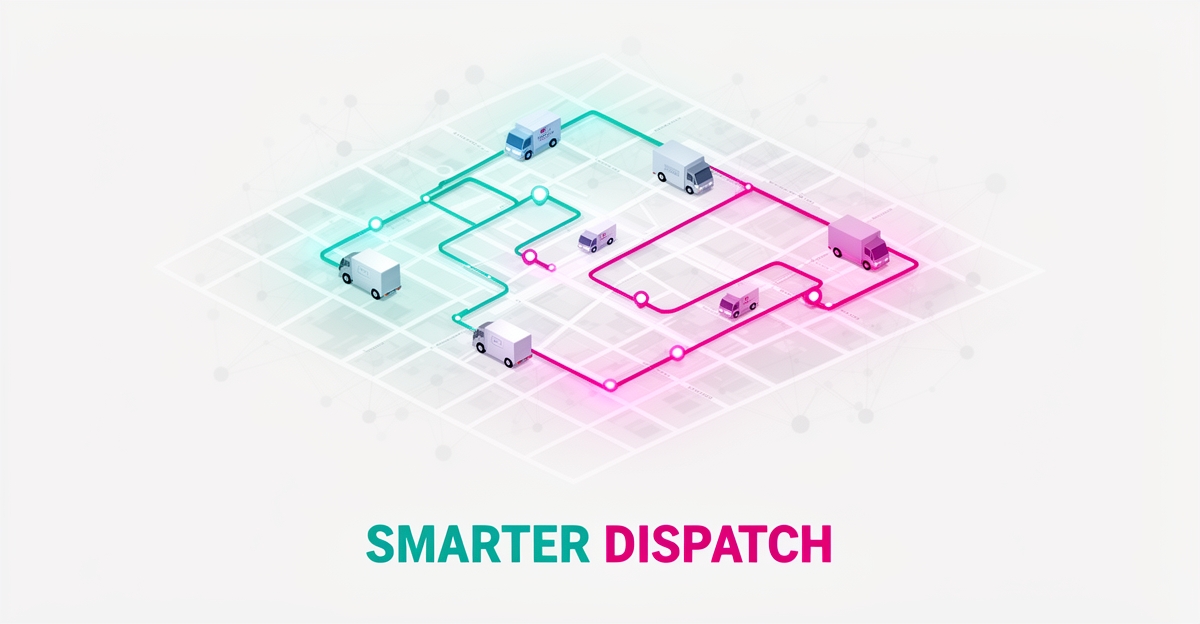
AI-driven dispatch and load balancing transform this reactive model into a proactive system. By analyzing live traffic patterns, delivery locations, vehicle capacity, and weather conditions, AI optimizes routes in real time, reducing idle time and fuel use. Predictive analytics forecast delivery volumes, enabling smarter resource assignment and preventing driver overload before it happens. This dynamic adjustment ensures consistent dispatch times and balanced workloads—key factors in maintaining service reliability and controlling last-mile costs.
For delivery managers spotting these inefficiencies, a practical self-assessment can reveal where AI delivers the greatest impact:
- Inconsistent dispatch times causing missed SLAs or customer complaints
- Drivers regularly exceeding 10-hour shifts while others remain underutilized
- Frequent last-minute route changes due to poor real-time adaptation
- High fuel costs per mile despite stable delivery volumes
- Reliance on spreadsheets or manual tools for daily dispatch planning
Identifying these patterns is the first step toward building a dispatch system that adapts to real-world complexity. AIQ Labs helps delivery businesses move beyond manual bottlenecks through AI Workflow Builds — rebuilding the one workflow that costs you the most, like dispatch, at a fixed price and in phases, with the finished system owned outright and no vendor lock-in. The result is a scalable, intelligent workflow that protects margins while meeting rising customer expectations. Ready to pinpoint your biggest bottleneck? Start the Fit Check — https://aiqlabs.ai/apply, then schedule a free 30-minute strategy call — https://aiqlabs.ai/book to see where AI can unlock measurable savings in your last-mile operations.
The 7 Warning Signs: From Overloaded Drivers to Missed Delivery Windows
When delivery operations start to feel like they're running on instinct rather than insight, it's often a sign that AI-powered dispatch and load balancing are overdue. Manual processes and reactive decision-making create friction that erodes efficiency, increases costs, and frustrates both drivers and customers. Recognizing these warning signs early can help delivery managers act before small inefficiencies snowball into systemic problems.
One of the most telling indicators is reliance on manual route planning, which consumes valuable time and limits adaptability. When dispatchers spend hours each day assigning stops based on static maps or spreadsheets, they can't respond to real-time changes like traffic delays or last-minute order additions. This rigidity contributes to inconsistent dispatch times and missed delivery windows, directly impacting customer satisfaction. AI-powered tools address these challenges by enabling smarter routing and predictive delivery windows that adjust dynamically to changing conditions.
Another critical red flag is driver overload, where routes are unevenly distributed and some drivers consistently carry more stops than others. This imbalance not only increases fatigue and error rates but also leads to higher fuel consumption and vehicle wear. Over time, overburdened drivers are more likely to miss deliveries or require unscheduled breaks, disrupting schedules and increasing failed-delivery rates. AI-driven load balancing ensures deliveries are assigned based on real-time capacity, location, and availability, promoting fairness and operational stability.
High failed-delivery rates themselves serve as a clear signal that current dispatch methods aren't keeping pace with demand. Failed attempts often stem from poor timing, incorrect address data, or lack of customer communication—all areas where AI can add predictive intelligence. By analyzing historical patterns and real-time inputs, AI systems can forecast optimal delivery windows and proactively notify customers, reducing the likelihood of missed connections. A large share of major global enterprises are expected to adopt smart logistics solutions to tackle carrier fragmentation and improve first-attempt success rates.
Delayed or generic customer updates further erode trust, especially when shoppers receive vague estimates or no notifications at all. Modern consumers expect transparency—industry surveys consistently find that most American consumers cite speed, convenience, and friendly service as key to a positive experience. When delivery businesses fail to meet these expectations, they risk losing loyalty to competitors who offer real-time tracking and proactive communication.
- Manual route planning that ignores real-time variables
- Uneven workloads leading to driver burnout and inefficiency
- Rising failed-delivery rates due to poor timing or communication
- Delayed or generic customer updates that damage trust
- Dispatch decisions based on gut feel rather than data
The final sign—dispatch decisions made on gut feel—reflects a reliance on experience over data. While veteran dispatchers bring valuable intuition, human judgment alone can't scale with growing order volumes or complex variables like weather, road closures, or shift changes. AI augments this expertise by processing vast amounts of data in seconds to recommend optimal assignments, reducing guesswork and improving consistency. Businesses that recognize these signs early are the ones driving the steady year-over-year growth in AI adoption among last-mile delivery operators as of late 2026.
For delivery managers evaluating their readiness for AI transformation, AIQ Labs builds tailored dispatch automation systems that dynamically assign deliveries based on real-time conditions, driver availability, and service commitments. By addressing these seven warning signs with intelligent automation, businesses can build more resilient, responsive, and customer-centric last-mile operations.
How AI Dispatch and Load Balancing Actually Solves These Problems
Last-mile delivery businesses face mounting pressure to deliver faster while controlling costs, yet many still rely on static routing plans that can't adapt when conditions change mid-shift. This inflexibility leads to missed delivery windows, driver burnout, and unnecessary fuel consumption—problems that compound as order volumes fluctuate throughout the day. AI-powered dispatch and load balancing solve this by continuously analyzing real-time data to make smarter, dynamic decisions.
AI algorithms process live traffic patterns, delivery locations, vehicle capacity, and weather conditions to assign deliveries in real time, ensuring routes stay optimal even when disruptions occur. Unlike traditional systems that lock in routes at the start of a shift, AI recalculates assignments as new orders come in or delays emerge, reducing idle time and improving on-time performance. Predictive analytics further enhance this by forecasting delivery volumes and suggesting ideal delivery windows based on historical trends, allowing businesses to pre-position resources before demand spikes. Industry research consistently finds that AI-driven routing can significantly cut travel time and fuel use by avoiding congestion and minimizing detours.
This dynamic approach directly addresses common operational pain points like inconsistent dispatch times and uneven driver workloads. By balancing loads across the fleet in real time, AI prevents some drivers from being overloaded while others remain underutilized—a frequent issue with manual dispatching. The system continuously monitors vehicle capacity, driver availability, and delivery urgency to redistribute tasks fairly and efficiently. As adoption keeps climbing year-over-year, more operators are discovering AI's ability to turn reactive operations into proactive, data-driven workflows.
For delivery managers seeking practical improvements, AI dispatch eliminates guesswork by turning complex variables into automated decisions. Instead of relying on experience or static maps, dispatchers gain a system that learns from every delivery, refining its logic over time to handle local nuances like seasonal traffic patterns or recurring weather disruptions. This creates a self-optimizing loop where performance improves with each shift, reducing the need for constant manual intervention.
AIQ Labs builds custom dispatch automation that embodies these principles—integrating with your existing tools to dynamically assign deliveries based on real-time conditions, with the finished system owned outright by you. By replacing rigid schedules with adaptive intelligence, businesses gain the responsiveness needed to meet rising customer expectations without scaling labor costs proportionally. The result is a delivery operation that bends with demand rather than breaking under it.
Making the Shift: A Practical Adoption Roadmap for Delivery Managers
Start by identifying your single biggest pain point—whether it's manual dispatching eating up hours each day or consistently overloaded drivers causing missed deliveries. The last mile is typically the largest share of total shipping expenses, so inefficiencies here directly impact your bottom line. Focus on one clear issue to solve first, like reducing failed delivery rates or balancing workloads more fairly across your team.
Next, audit your existing data readiness by gathering route performance metrics, driver availability patterns, and historical delivery preferences. This foundational step ensures any AI solution you choose will have the quality inputs needed to make smart, real-time decisions. As AI adoption in last-mile delivery keeps growing year-over-year, businesses are finding that clean, accessible data is the gateway to measurable improvements in dispatch accuracy and load balancing.
Choose API-first solutions designed to plug into your current technology stack without requiring a full system overhaul. Look for partners with flexible engagement models—start monthly with minimal setup, build in milestones to validate progress, or own the system outright once proven. This approach removes the upfront-investment barrier while allowing you to scale confidently. Begin with one high-impact use case, such as dynamic dispatch based on real-time traffic and driver location, before expanding to broader route optimization or predictive delivery windows. This phased strategy lets you prove value quickly, address integration concerns early, and build team buy-in for wider adoption. AIQ Labs' Workflow Builds are built exactly this way: fixed price, phased delivery, and you own the finished system.
Your Next Move: Diagnose Your Dispatch Operation in 30 Minutes
You've spotted the patterns—inconsistent dispatch times, overloaded drivers, manual workarounds that don't scale. Now it's time to quantify what those patterns are costing you.
Grab a notepad and score your operation against the seven signs: give yourself one point for each that shows up weekly. If you hit three or more, you're likely leaving measurable efficiency on the table—industry analysts expect a large majority of major enterprises to adopt smart logistics solutions to manage carrier fragmentation, and the autonomous last-mile market is projected to grow steadily through 2030.
- Dispatch takes longer than 15 minutes per shift
- Drivers regularly run over hours or sit underutilized
- Route changes require phone calls, not clicks
- Failed deliveries exceed 5% of volume
- You can't explain yesterday's decisions with data
AI adoption for last-mile delivery keeps climbing year-over-year, and the largest share of total shipping costs sits in this final leg. That's the gap worth closing.
AIQ Labs runs a free, two-minute Fit Check followed by a free 30-minute strategy call—no sales pitch, just a working session to map your highest-ROI automation opportunity. We've deployed 200+ multi-agent systems and run four live SaaS products of our own daily, so the recommendations come from systems we actually operate. Every system we deliver is owned outright by the client with no vendor lock-in. If there isn't a clear win, we'll say so.
Start the Fit Check at aiqlabs.ai/apply, then book the strategy call at aiqlabs.ai/book.
Still paying for 10+ subscriptions that don’t talk to each other?
We build custom AI systems you own outright. No vendor lock-in. Full control.
Not sure where to start? Ask our AI planner
Frequently Asked Questions
How can I tell if manual dispatch is actually hurting my margins?
What are the clear signs my drivers are overloaded or underutilized?
Will AI dispatch help reduce failed deliveries?
Do customers really care about dispatch improvements?
Is AI adoption growing in last-mile delivery, or is it still experimental?
How do I start with AI dispatch without replacing my whole system?
Turn Dispatch Instinct Into Measurable Margin
Manual dispatch quietly erodes the largest share of shipping spend tied to last-mile, turning inconsistent dispatch times, overloaded drivers and reactive route changes into missed SLAs, higher fuel use and turnover. The seven warning signs — from spreadsheet planning to gut-feel decisions — are really data gaps that AI closes by continuously balancing loads, adapting to traffic and weather in real time, and forecasting demand so resources are positioned before the spike hits. Spotting three or more of these patterns weekly is a signal you're leaving efficiency on the table while competitors move to proactive, data-driven operations. A practical first step is to score your operation against the signs and quantify the cost of delays and uneven workloads. AIQ Labs helps delivery managers move from that diagnosis to owned, custom dispatch automation — via AI Workflow Builds that rebuild your costliest workflow at a fixed price, in phases, with no vendor lock-in. Start the two-minute Fit Check at https://aiqlabs.ai/apply, then book a free 30-minute strategy call at https://aiqlabs.ai/book to map your highest-ROI automation opportunity. With smart-logistics adoption accelerating among major enterprises, now is the time to act before the gap widens.
Make AI your competitive advantage — not just another tool.
Strategy, implementation and ongoing optimization. One partner, end to end.
Not sure where to start? Ask our AI planner