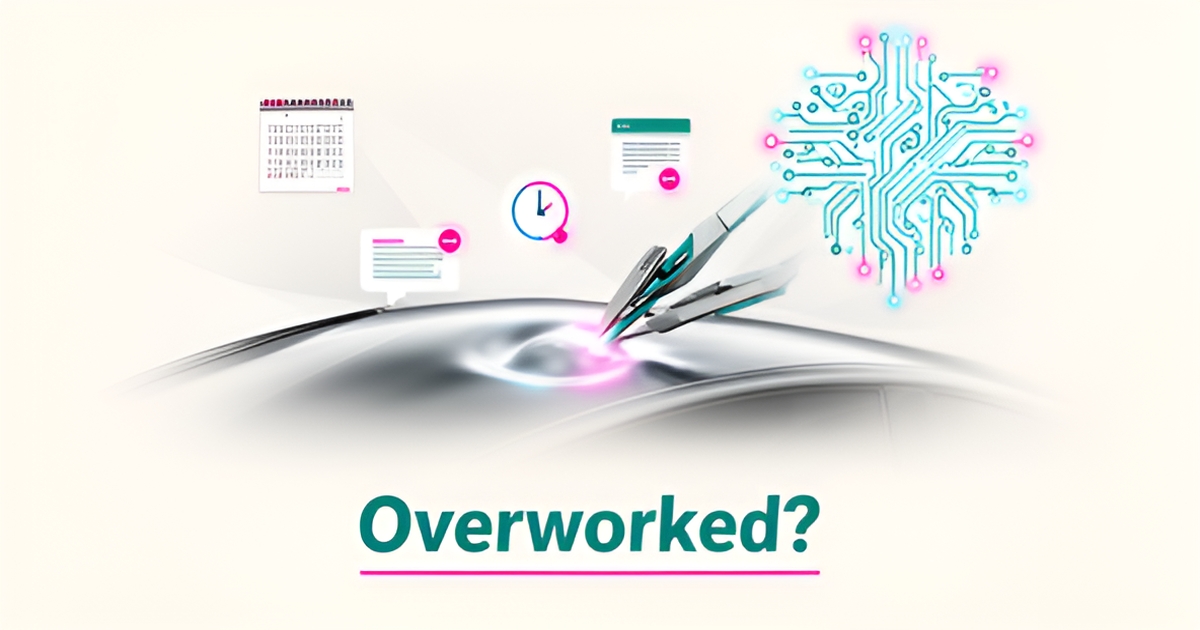
7 Signs Your PDR Business Is Overworked and Needs AI Support
Key Facts
- Manual scheduling under high job volume is a common driver of missed appointments and double-bookings in service businesses
- Follow-up rates tend to slip when administrative tasks eat into a technician's working day
- Scheduling errors typically spike during peak seasons as technicians juggle calls, texts, and repairs at once
- Teams that hand routine coordination to AI commonly report reclaiming meaningful hours each week for skilled work
- AI Employees from AIQ Labs cost roughly 80% less than an equivalent human hire and work around the clock
- AIQ Labs has deployed 200+ multi-agent systems and runs 4 live SaaS products daily
Hire a team member that works 24/7 — for less than a part-time wage.
AI receptionists, SDRs, dispatchers and 99+ roles. Trained on your business, fully managed.
Not sure where to start? Ask our AI planner
The Hidden Cost of Burnout in PDR Operations
The early warning signs of technician overload often appear subtle but compound quickly—missed appointments, declining follow-up rates, and scheduling chaos signal deeper capacity issues. In PDR operations, where precision and timing are critical, these symptoms reflect not just workflow strain but eroding customer trust. Repetitive tasks and poor workflow design steadily drain team bandwidth, turning skilled technicians into administrative bottlenecks. When humans are forced to juggle high-volume, low-value activities, their ability to focus on complex repairs diminishes, directly impacting service quality and retention.
In PDR shops, overload typically manifests as technicians skipping quality checks to stay on schedule or delaying customer callbacks because dispatching consumes their buffer time. Over time, these shortcuts damage reputation—customers notice inconsistent communication and perceive unreliability, even when the technical work remains excellent. The hidden cost isn't just overtime pay; it's the slow leakage of loyalty and referrals that sustain long-term growth.
- Missed appointments and double-bookings become more frequent when technicians manage scheduling manually amid high job volume
- Follow-up rates slip when administrative tasks consume a growing share of a technician's day
- Scheduling errors spike during peak seasons as task-switching between calls, texts, and repairs takes its toll
These patterns point to the same underlying issue: cognitive load, not just manual effort, is what burns teams out. When AI handles routine coordination—qualifying leads, syncing calendars, triggering follow-ups—technicians regain the mental space needed to diagnose complex dents, advise clients with confidence, and maintain the personal touch that differentiates local shops from chains. Ignoring these signs doesn't just risk burnout—it risks losing the very trust that makes PDR a relationship-driven trade.
Why AI Is the Sustainable Fix, Not Just Another Tool
AI is more than another tool in the tech stack—it's a sustainable fix for the systemic strain PDR businesses face when technicians are pulled away from repairs to manage leads, schedule appointments, and chase follow-ups. Unlike generic chatbots that offer scripted responses, specialized AI agents are built to handle end-to-end workflows like lead qualification and appointment setting with contextual understanding and tool integration, directly addressing the bottlenecks that contribute to burnout and missed opportunities. In a PDR setting, that means technicians spend less time on administrative drag and more time on the precision repairs that drive revenue.
This shift isn't just about efficiency—it's about sustainability. AI Employees operate 24/7 without fatigue, reducing the pressure on human teams to be constantly available while ensuring no lead goes unanswered or appointment slips through the cracks. And at roughly 80% less than the cost of a human hire, the savings come not from cutting staff but from reallocating human effort toward higher-value activities that require judgment, skill, and customer rapport. When AI manages the front-end flow—qualifying serious inquiries, syncing with calendars, and triggering timely follow-ups—technicians gain back hours each week previously lost to context-switching and manual coordination.
The result is a leaner, more resilient operation where AI doesn't replace the technician but removes the noise that prevents them from doing their best work. By integrating with existing tools like CRMs and scheduling platforms, these AI systems create a seamless flow from lead to repair order, reducing the errors and delays that frustrate both staff and customers. The most successful implementations treat AI as an ongoing partnership requiring active management and refinement—which is exactly how AIQ Labs works with PDR businesses, whether through a single AI Employee, a rebuilt workflow, or a full AI operating system built in phases. This isn't a temporary patch; it's a foundation for long-term operational health.
How to Implement AI Without Disrupting Your Workflow
Implementing AI doesn't require a complete overhaul of your PDR operations. Start by targeting one high-friction workflow—like lead intake or appointment scheduling—where delays and missed opportunities are most visible. Focusing on repetitive tasks first lets teams see quick wins without disrupting core technician work. This phased approach builds confidence and creates a foundation for broader adoption.
Begin with a single AI Employee through the Start Monthly model: an AI-powered receptionist, lead qualifier, or appointment setter that connects directly to your existing CRM and calendar systems, with setup, training on your business, and ongoing improvements included. As the initial workflow stabilizes, you can move to a fixed-price Workflow Build to rebuild the one process that costs you the most, or eventually a full AI Operating System you own outright. Every step is phased—no big-bang disruption, no surprise invoices.
Integrate the AI Employee gradually, allowing your team to adapt while maintaining service continuity. Communicate the AI's role as a support tool, provide role-specific training, and establish feedback loops to refine performance. Monitor key metrics like response time and lead conversion rate to measure impact. Once the initial workflow stabilizes, expand to adjacent processes—like follow-up automation or dispatch coordination—using the same structured rollout. This ensures AI enhances, rather than interrupts, your workflow. Start the 2-minute Fit Check to identify your highest-impact automation opportunity, then book a free 30-minute strategy call to map it out.
Still paying for 10+ subscriptions that don’t talk to each other?
We build custom AI systems you own outright. No vendor lock-in. Full control.
Not sure where to start? Ask our AI planner
Frequently Asked Questions
What are the early signs that my PDR business is overworked and needs AI support?
How does AI help reduce technician burnout in PDR operations?
Will implementing AI disrupt my current PDR workflow?
What cost savings can I expect from using AI Employees in my PDR business?
Do customers prefer human interaction over AI in service industries like PDR?
How do I get started with AI for my PDR business without a big upfront investment?
Reclaim Your Technicians' Time for What Matters Most
When PDR teams are buried under scheduling chaos, missed follow-ups, and administrative drag, the real cost isn't just overtime—it's eroded trust and lost opportunities. This article highlighted how cognitive overload from repetitive tasks drains technician bandwidth, leading to missed appointments, slipping follow-up rates, and peak-season scheduling errors. The sustainable fix isn't another generic tool but AI Employees that handle lead qualification, appointment setting, and follow-ups end-to-end, integrating with your existing CRM and calendar systems—at roughly 80% less than the cost of a human hire. AI creates space for precision repairs, confident client consultations, and the personal touch that defines your shop. The path forward starts with targeting one high-friction workflow—like intake or scheduling—to see quick wins without disruption. Take the first step: start the 2-minute Fit Check to identify your highest-impact automation opportunity, then book a free 30-minute strategy call to map a realistic, no-obligation plan for sustainable growth.
Make AI your competitive advantage — not just another tool.
Strategy, implementation and ongoing optimization. One partner, end to end.
Not sure where to start? Ask our AI planner