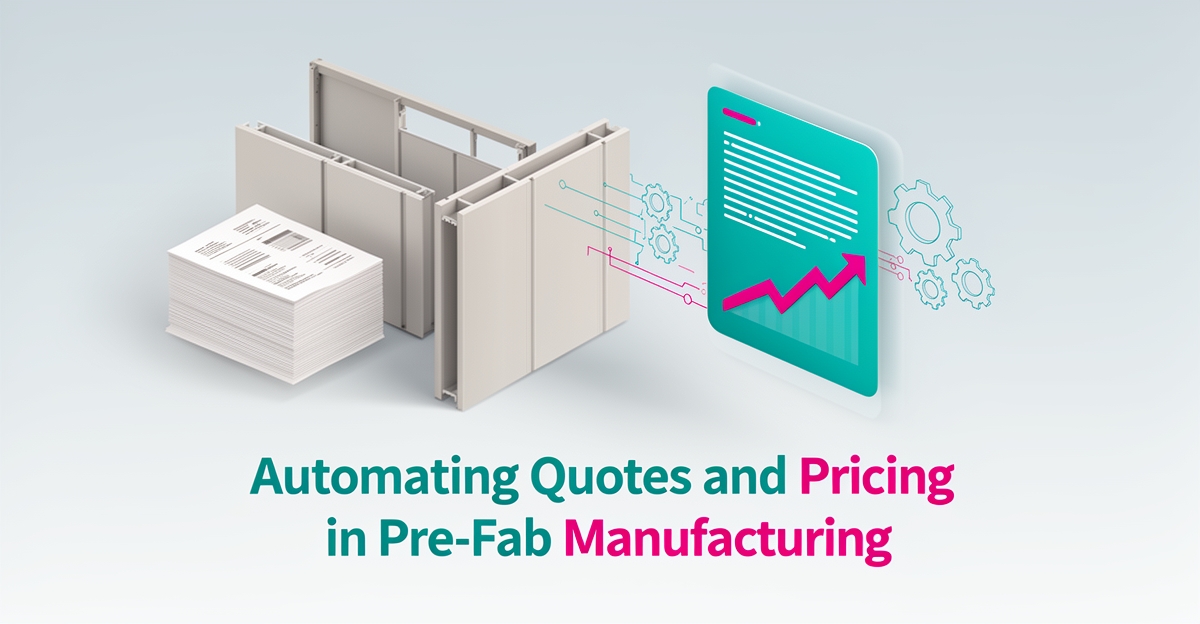
7 Signs Your Pre-Fab Company Is Ready to Automate Customer Quotes and Pricing
Key Facts
- Roughly 45% of manufacturers report misalignment with customer requirements tied to manual quoting according to industry research
- AI-assisted quoting can deliver thousands in monthly impact through labor savings and improved margin consistency based on studies
- Automated systems have been shown to reduce order errors by nearly half per research
- AI analysis can reach very high accuracy in bills of quantities and materials as shown by industry data
- AI-powered quoting can reduce cycle times by 80-90% per Scopable
- Faster production timelines and meaningful material savings are possible with AI-powered digital fabrication per Borg Markkula Oy
Hire a team member that works 24/7 — for less than a part-time wage.
AI receptionists, SDRs, dispatchers and 99+ roles. Trained on your business, fully managed.
Not sure where to start? Ask our AI planner
Your Quoting Process Is Costing You Time and Money
Your quoting process might be silently eroding your profitability. Many pre-fab builders still rely on manual spreadsheets and email chains to generate quotes, a method that introduces delays and inaccuracies at every step. These inefficiencies don't just frustrate your team—they directly impact your bottom line by slowing down sales cycles and increasing the risk of costly errors.
According to industry research, roughly 45% of manufacturers report misalignment with customer requirements due to manual quoting, often stemming from outdated data or miscalculated material costs. This disconnect leads to revised quotes, delayed approvals, and frustrated clients who may turn to competitors offering faster, more transparent pricing. When your quote doesn't reflect real-time regional pricing or material availability, you risk losing trust before the project even begins.
The financial toll is significant. Manual quoting consumes valuable time that could be spent on design, client engagement, or project execution. Studies show that AI-assisted quoting can deliver thousands of dollars in monthly impact through labor savings and improved margin consistency—funds currently lost to repetitive data entry and error correction. Additionally, automated systems have been shown to cut order errors by nearly half, minimizing rework, material waste, and strained client relationships.
- Sales teams spend excessive time chasing missing specs or correcting quote discrepancies
- Project timelines stall while waiting for revised quotes to be approved
- Inconsistent pricing confuses customers and undermines confidence in your expertise
- Manual processes prevent scalability as quote volume grows
- Teams lack real-time visibility into material costs and regional pricing fluctuations
These pain points compound over time, creating operational drag that limits growth. If your team is spending more time fixing quotes than winning new projects, it's a clear signal that your current process is no longer sustainable. Addressing these inefficiencies isn't just about saving time—it's about reclaiming revenue, improving accuracy, and positioning your pre-fab company to compete with speed and precision in a rapidly evolving market.
You're Seeing Clear Signals That Automation Is the Next Step
When quoting becomes a bottleneck rather than a bridge to closing deals, it's time to reassess your approach. For pre-fab home builders, the signs are often subtle at first—delayed responses, frustrated sales teams, or quotes that require constant tweaking—but they compound quickly into lost opportunities and eroded margins. Recognizing these patterns early can mean the difference between staying competitive and falling behind.
One of the most telling indicators is the frequency of quote revisions. If your team is constantly adjusting prices after initial delivery due to overlooked material costs or regional variables, it reflects a system straining under manual complexity. Research shows that roughly 45% of manufacturers report misalignment with customer requirements directly tied to manual quoting processes, highlighting how easily human error creeps in when juggling fluctuating material prices, labor rates, and design specifications. Another red flag is inconsistent pricing across similar projects—when two nearly identical homes receive different quotes based on who prepared them, it undermines trust and complicates forecasting.
Sales team bottlenecks also signal readiness for change. When your reps spend hours compiling quotes instead of engaging prospects, productivity suffers. AI-powered quoting can alleviate this by automating complex calculations and pulling real-time data from material suppliers and regional cost databases, reducing cycle times by up to 80-90%. This speed not only improves internal efficiency but directly impacts customer satisfaction—faster, more accurate quotes lead to quicker decisions and higher conversion rates. Companies using AI-assisted quoting have reported measurable monthly gains from labor savings and improved margin consistency.
Finally, consider the cost of errors. A single mistake in a bill of quantities can cascade into thousands of dollars in wasted materials or rework. AI analysis has demonstrated extremely high accuracy in generating bills of quantities and materials, a level of precision nearly impossible to sustain manually at scale. When your team is spending more time correcting quotes than creating them, and when customers begin questioning the reliability of your estimates, automation isn't just an upgrade—it's a necessity. These seven signals, when viewed together, reveal a clear tipping point where AI-powered quoting shifts from optional to essential for sustainable growth.
How AI-Powered Quoting Delivers Measurable ROI in Pre-Fab
For pre-fab manufacturers, slow and error-prone quoting processes don't just frustrate customers—they directly erode profit margins and delay project timelines. When every quote requires manual cross-checking of material costs, labor rates, and regional pricing, inefficiencies compound quickly across the sales pipeline.
AI-powered quoting systems eliminate these bottlenecks by analyzing project specifications, material databases, and local market data to generate precise, instant quotes. According to industry research, AI analysis can achieve very high accuracy in bills of quantities and materials, drastically reducing the risk of costly miscalculations. This level of precision ensures that quotes reflect real-world costs without guesswork or repetitive validation.
Beyond accuracy, automation drives measurable operational gains. A recent study found that automated quote generation reduces order errors by nearly half, preventing costly rework and material waste downstream. These improvements translate directly to the bottom line, with data showing meaningful monthly impact through labor savings, fewer revisions, and consistent margin protection.
For pre-fab companies using fragmented tools like spreadsheets or legacy estimating software, AIQ Labs builds custom AI quoting systems through its AI Workflow Builds service—rebuilding the one workflow that costs you the most, integrated with your existing CRMs, accounting platforms, and project management tools. By owning the solution outright, businesses avoid subscription lock-in while gaining a scalable engine that learns from every quote to improve accuracy over time. The result is a faster, more reliable quoting process that wins more bids and protects profitability—without adding headcount or complexity.
Your Path to Implementation: From Assessment to Owned AI System
Implementing AI-powered quoting doesn't have to be overwhelming. By following a structured approach, pre-fab builders can transition from manual quoting to automated efficiency with minimal disruption. AIQ Labs offers a clear path to implementation, ensuring your business reaps the full benefits of AI-driven quoting and pricing.
Before diving into AI implementation, it's crucial to assess your current quoting process. Identify bottlenecks, inefficiencies, and areas where errors commonly occur. According to industry research, roughly 45% of manufacturers report misalignment with customer requirements due to manual quoting. This assessment will help you pinpoint where AI can make the most significant impact.
Selecting the right AI solution is critical. Look for a system that can handle the complexities of pre-fab construction, including project specs, material costs, and regional pricing variations. AIQ Labs offers tailored AI systems that analyze these factors to generate accurate, instant quotes. Our solutions are designed to integrate seamlessly with your existing tools, ensuring a smooth transition.
AIQ Labs provides three flexible payment models to suit your business needs:
- Start Monthly: Setup plus a flat monthly plan that costs less than a part-time hire. Includes build, training, integrations, monitoring, and improvements. Pause or adjust anytime.
- Build in Milestones: Split the build into phases. Approve and pay for each phase as it ships. Stop anytime and keep everything built so far.
- Own It Outright: One project price or a monthly Build Partnership. Full ownership of the code, agents, and data when complete.
These models ensure that you can start small, scale as needed, and ultimately own your AI system outright. And if quoting is just one of several workflows dragging on your team, managed AI Employees can handle inbound quote requests, follow-ups, and data entry around the clock—at a fraction of the cost of a human hire.
Develop and refine templates to ensure accurate and consistent quoting. AI-powered systems can automate complex calculations and dynamically adjust prices based on real-time data. According to Markovate, AI-powered quoting can reduce errors in pricing calculations and data entry, leading to more accurate quotes.
Establish approval rules to ensure that quotes are reviewed and approved by the relevant stakeholders. This step is crucial for maintaining accuracy and compliance. AIQ Labs' systems include configurable approval workflows, ensuring that every quote meets your standards before it reaches the customer.
Continuous monitoring and optimization are key to long-term success. AIQ Labs provides ongoing support and optimization to ensure your AI system evolves with your business. According to Scopable, businesses that implement AI-powered quoting can achieve 80-90% faster cycle times, leading to significant efficiency gains. For companies ready to connect quoting with scheduling, production, and billing in one system, an AI Operating System ties it all together—built in phases and owned outright.
By following these steps, pre-fab builders can successfully implement AI-powered quoting and pricing systems, transforming their operations and gaining a competitive edge. Ready to take the next step? Start with a two-minute Fit Check and a free 30-minute strategy call to assess your current systems and identify high-ROI automation opportunities.
Still paying for 10+ subscriptions that don’t talk to each other?
We build custom AI systems you own outright. No vendor lock-in. Full control.
Not sure where to start? Ask our AI planner
Frequently Asked Questions
How much time can AI-powered quoting actually save my pre-fab team each month?
What's the biggest risk of sticking with manual quoting for our pre-fab business?
Can AI quoting really reduce errors in our bills of quantities and materials?
Will switching to AI-powered quoting require us to overhaul our current CRM or project tools?
Is AI-powered quoting only for large pre-fab companies, or can small builders benefit too?
How do I know if my pre-fab company is ready to automate quoting—what are the real signs?
Turn Quote Bottlenecks Into Growth Opportunities
If your pre-fab team is spending more time fixing quotes than winning projects, the signs are clear: manual processes are eroding margins, delaying sales cycles, and undermining customer trust. As highlighted throughout this article, recurring quote revisions, inconsistent pricing, and sales bottlenecks aren't just operational headaches—they're measurable profit leaks, with AI-powered quoting shown to deliver meaningful monthly gains through labor savings and improved accuracy. The good news? Transitioning to automated quoting doesn't require overhauling your entire operation. AIQ Labs helps pre-fab builders assess their current workflow, implement tailored AI quoting systems that integrate with existing tools, and scale at their own pace—whether starting monthly, building in milestones, or owning the system outright. The path forward begins with clarity: take the two-minute Fit Check to see where AI can unlock the highest ROI in your quoting process, then schedule a free 30-minute strategy call to map your next steps. See how AI-powered quoting transforms efficiency and accuracy—and position your business to quote with speed, precision, and confidence.
Make AI your competitive advantage — not just another tool.
Strategy, implementation and ongoing optimization. One partner, end to end.
Not sure where to start? Ask our AI planner