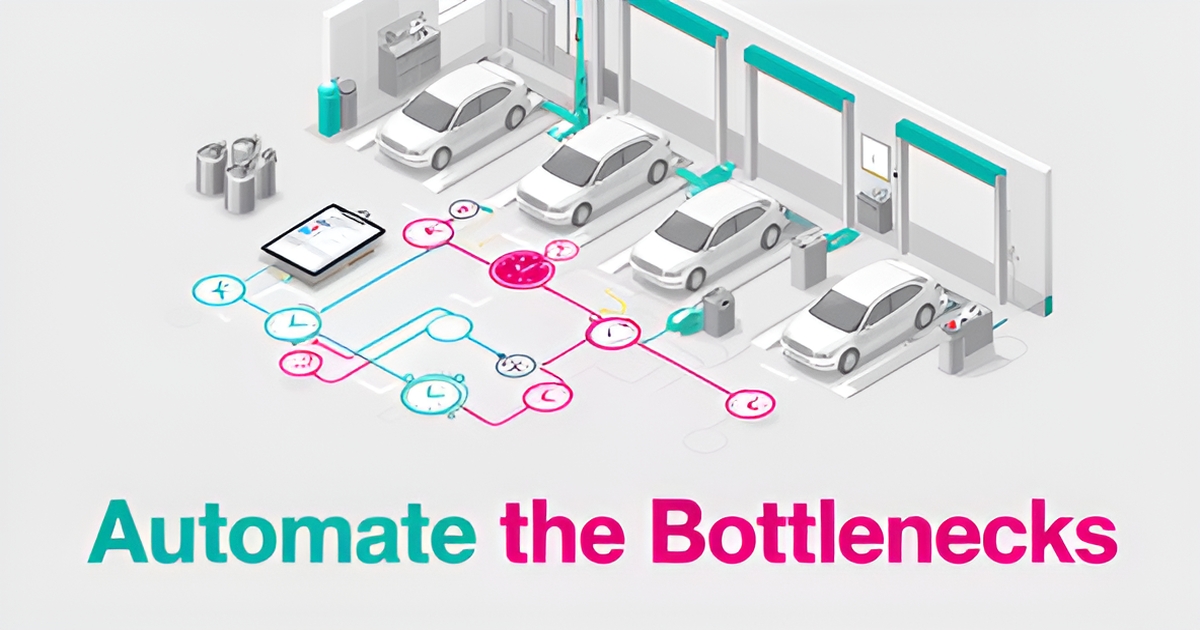
7 Signs Your Quick Lube Franchise Needs AI for Workflow Automation
Key Facts
- Stonebriar Auto Services processed over 132,758 inbound calls using Revmo AI without pulling technicians off the floor Source 1
- Stonebriar Auto Services reports $6,000 in attributed monthly revenue per location from Revmo AI Source 1
- PitCrew delivers a minimum 10% improvement in overall efficiency and speed for most quick lube customers Source 1
- Eight in 10 global workers report lacking sufficient time or energy to complete work effectively Source 2
- 60% of workplace interactions now happen as unplanned, ad hoc communications that fragment attention Source 2
- Atlantic Coast Enterprises will launch PitCrew across all 66 stores after a successful pilot showing improved speed of service Source 1
- Stonebriar Auto Services oversees 128 locations across the U.S. using Revmo AI for customer communications Source 1
Hire a team member that works 24/7 — for less than a part-time wage.
AI receptionists, SDRs, dispatchers and 99+ roles. Trained on your business, fully managed.
Not sure where to start? Ask our AI planner
The Cognitive Overload Trap: Why Quick Lube Teams Are Stuck
Your quick lube technicians are drowning in a sea of interruptions, and it's costing you more than you realize. The modern quick lube shop has become a perfect storm of cognitive overload, where every ping, ring, and "quick question" pulls your team away from what they do best—servicing vehicles.
According to Microsoft research, eight in 10 global workers report lacking sufficient time or energy to complete their work effectively. In quick lube operations, this capacity crisis manifests in ways that directly impact your bottom line. When technicians are pulled between bay duties and phone calls, service times stretch beyond the critical 15-minute target that defines industry standards.
The interruption epidemic runs deeper than most franchise owners realize. That same research reveals that 60% of workplace interactions now happen as unplanned, ad hoc communications—quick chats, impromptu calls, and spontaneous requests that fragment attention throughout the day. In a quick lube context, this translates to technicians constantly switching between oil changes, customer inquiries, and administrative tasks.
Austin Mejia from Plaud captures the core challenge: "The volume of information, decisions, and context-switching is moving faster than the pace humans can realistically handle." This isn't just about being busy—it's about cognitive bandwidth being stretched beyond sustainable limits.
The symptoms of this overload show up in predictable patterns across quick lube operations:
- Technicians leaving bays mid-service to answer phones, then losing track of where they left off
- Service times creeping upward as workers juggle multiple competing priorities
- Customer details falling through cracks when staff manually track appointments and preferences
- Quality inconsistencies when rushed technicians skip verification steps
- Employee burnout from the mental exhaustion of constant task-switching
The real tragedy is that most of these interruptions involve routine, repeatable tasks that don't require human judgment. Yet they consume the mental energy your team needs for complex problem-solving and quality service delivery. When Stonebriar Auto Services implemented AI to handle their call volume, they processed over 132,758 inbound calls without pulling a single technician off the floor.
This is where the right AI approach makes a real difference. Rather than adding another layer of technology to manage, effective workflow automation reduces the number of things your team must remember, check, and coordinate manually. AIQ Labs builds these systems specifically to eliminate the cognitive burden that keeps quick lube teams trapped in reactive mode—whether that's an AI receptionist answering every call, or a rebuilt workflow targeting the single process that costs you the most.
AI That Works: Real-Time Monitoring and Communication Automation
Quick lube operations thrive on speed and precision, but manual tracking and phone handling often create hidden bottlenecks that slow service and strain staff. AI-powered monitoring and communication tools are designed to eliminate these friction points without replacing human roles, instead freeing technicians to focus on what they do best—serving vehicles efficiently and safely.
Computer vision systems like PitCrew use existing shop cameras to automatically track vehicle entry and exit, service times, and technician activity in real time, delivering a minimum of 10% improvement in overall efficiency and speed for most customers Source 1. This real-time visibility allows managers to spot delays instantly—such as vehicles sitting idle or service times exceeding targets—so teams can adjust workflows on the fly. The system also enhances security and loss prevention by comparing AI-detected car counts with point-of-sale invoices to identify discrepancies that may indicate theft or service gaps Source 1.
Conversational AI platforms like Revmo AI handle inbound calls, texts, and emails during and after business hours, ensuring no customer inquiry goes unanswered while keeping technicians focused on service bays Source 1. Stonebriar Auto Services, overseeing 128 locations, has processed over 132,758 inbound calls through Revmo AI and reports attributed revenue of $6,000 per location per month from the platform Source 1. This automation reduces the cognitive load of constant interruptions, allowing staff to complete service tasks without frequent context-switching—a critical factor in environments where eight in 10 global workers report lacking sufficient time or energy to do their work Source 2.
Together, these tools create a feedback loop of awareness and action: real-time bay monitoring highlights operational delays, while conversational AI ensures customer flow remains smooth and uninterrupted. For quick lube franchises aiming to improve speed, accuracy, and customer experience without overburdening teams, AI-driven monitoring and communication aren't just helpful—they're becoming essential components of modern workflow automation. To explore how these solutions can be tailored to your specific operations, start with AIQ Labs' 2-minute Fit Check, then book a free 30-minute strategy call to map your biggest bottlenecks and highest-ROI opportunities.
From Pilot to Profit: Implementing AI Without Disruption
A smooth AI implementation starts with understanding your specific pain points and leveraging what you already have. For quick lube franchises, this means assessing workflow bottlenecks—whether it's missed calls pulling technicians off bays or manual service timing creating inefficiencies—before selecting the right AI solution. Industry leaders like Atlantic Coast Enterprises (ACE) began by evaluating their 66-store network's camera infrastructure, confirming existing systems could support computer vision tools like PitCrew without new hardware, as the software layers intelligence onto current setups. This approach minimizes upfront costs and avoids operational disruption during rollout.
The next critical step is piloting in select locations to validate impact before scaling. ACE successfully tested PitCrew in a subset of stores, reporting improved speed of service—a key metric given the 15-minute oil change target cited across the industry—before expanding to all locations. Similarly, Stonebriar Auto Services deployed Revmo AI across its 128 locations after initial testing, handling over 132,758 inbound calls and attributing $6,000 in monthly revenue per location to the platform. These real-world examples show how phased adoption builds confidence and refines processes. Once proven, install real-time dashboards visible to technicians and managers, configure privacy settings—such as local edge processing and face blurring for video data—and train staff to interpret alerts and act on insights, turning data into faster service and better customer experiences without adding cognitive load.
AIQ Labs supports this phased approach directly. With AI Workflow Builds, you rebuild the one workflow that costs the most—call handling, dispatch, or service tracking—at a fixed price, in phases, so you see results before scaling. And when you're ready to connect everything—phones, bays, scheduling, reporting—into one operating layer you own outright, AI Operating Systems gets you there step by step. With 200+ multi-agent systems deployed and four live SaaS products AIQ Labs runs daily, each phase is built on systems proven in the field, not theory.
Still paying for 10+ subscriptions that don’t talk to each other?
We build custom AI systems you own outright. No vendor lock-in. Full control.
Not sure where to start? Ask our AI planner
Frequently Asked Questions
How does AI help reduce cognitive overload for quick lube technicians?
What kind of efficiency improvement can I expect from AI-powered bay monitoring like PitCrew?
Can AI handle customer calls without pulling technicians off the service bays?
Will implementing AI require me to buy new cameras or hardware for my quick lube shop?
How does AI help prevent theft or service gaps in my quick lube operation?
What kind of revenue impact have other quick lube franchises seen from using AI for customer communication?
The 15-Minute Advantage: Turning Overload Into Opportunity
Your technicians didn't sign up to be air traffic controllers. Yet every day, they're juggling bay duties, phone calls, and customer inquiries while trying to hit that critical 15-minute service window. The seven signs we've explored—from missed calls to creeping service times—all point to the same root cause: cognitive overload that's costing you speed, quality, and revenue. The good news? You don't need to overhaul your entire operation or invest in new hardware. As Stonebriar Auto Services discovered, the right AI approach can handle over 132,758 customer calls while adding $6,000 in monthly revenue per location—all without pulling a single technician off the floor. Start small. Pick your biggest bottleneck—whether that's call handling or bay monitoring—and pilot a solution in one or two locations. Measure the impact, refine the process, then scale what works. AIQ Labs builds these systems for quick lube operations through three entry points: AI Employees that answer every call at a fraction of a human hire, AI Workflow Builds that rebuild your costliest workflow at a fixed price, and AI Operating Systems that connect your whole operation in phases you own outright. Ready to identify your highest-ROI automation opportunity? Take the 2-minute Fit Check, then book a free 30-minute strategy call to map your biggest bottleneck and explore what's possible.
Make AI your competitive advantage — not just another tool.
Strategy, implementation and ongoing optimization. One partner, end to end.
Not sure where to start? Ask our AI planner