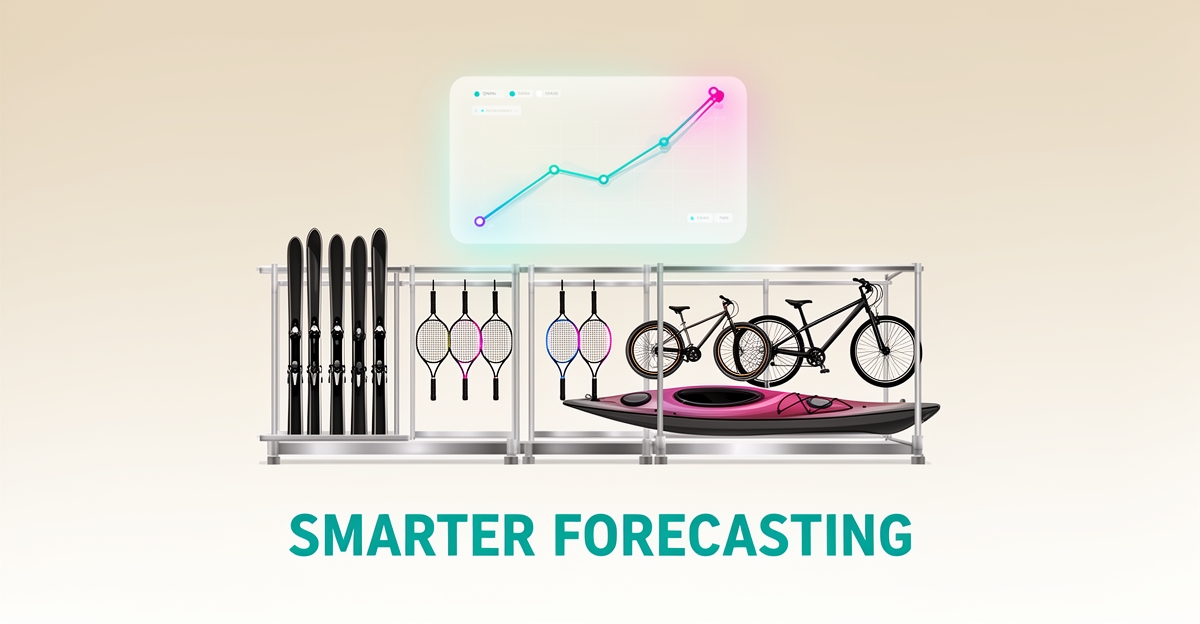
7 Signs Your Sports Equipment Rental Business Needs AI for Inventory Forecasting and Demand Planning
Key Facts
- AI-driven demand forecasting has been reported to reduce stockouts by roughly 10% to 20% according to supply chain analysis
- Shops using dynamic pricing have reported 12-22% revenue increases in their first season based on operator results
- Operators report 30-45% fewer mid-rental equipment failures after switching to usage-based maintenance per industry reports
- Automated communication sequences have been linked to 25-40% higher review rates and 15-20% more repeat bookings within the first season
- AI-powered inventory allocation can reduce stockouts by roughly 30% across multiple locations through intelligent restocking
- Predictive maintenance is typically credited with extending equipment life by around 20% based on vendor impact claims
- As of late 2026, forecasting models routinely combine booking history, weather, and local event data to project demand 4-6 weeks ahead
Hire a team member that works 24/7 — for less than a part-time wage.
AI receptionists, SDRs, dispatchers and 99+ roles. Trained on your business, fully managed.
Not sure where to start? Ask our AI planner
The Hidden Cost of Guesswork: Why Traditional Inventory Management Fails Sports Rentals
Manual inventory planning creates a costly cycle of stockouts and overstock that directly impacts revenue and customer trust. During peak seasons, sports rental businesses frequently run out of high-demand equipment like kayaks or bikes, turning away customers who then book with competitors. In slower periods, the same businesses sit on excess inventory that ties up capital and depreciates in value. This reactive approach forces constant firefighting instead of strategic growth.
The financial toll is significant. Businesses relying on intuition and spreadsheets for demand forecasting experience stockouts that can cost 10-20% of potential rental revenue during peak windows, according to supply chain analysis. Meanwhile, overstocked equipment often sits idle at utilization rates below 40%, representing wasted investment that could be redirected toward higher-turnover assets or marketing efforts. These inefficiencies compound over time, eroding profitability.
AI adopters avoid this trap by using predictive models that analyze historical booking patterns, weather data, and local events to forecast demand 4-6 weeks in advance. This proactive approach allows rental businesses to adjust inventory levels before demand shifts occur, rather than reacting after shelves are empty or overflowing. The result is a more balanced inventory that aligns with actual customer needs.
- Demand forecasting that analyzes historical booking data, weather forecasts, local events, and trend data to project weekly demand 4-6 weeks in advance
- Fleet utilization scoring that identifies underperforming assets (flagging items below 40% utilization over rolling 90-day windows)
- Cross-category pattern recognition (identifying correlations like windy days killing paddleboard demand while boosting kayak demand)
- Auto-reorder alerts based on burn rates rather than simple stock levels
These capabilities transform inventory from a cost center into a strategic asset. Rental businesses using AI-driven demand forecasting report reduced stockouts and improved cash flow through optimized ordering cycles. By moving beyond guesswork, they ensure the right equipment is available at the right time—maximizing revenue opportunities while minimizing carrying costs. This shift from reactive to proactive inventory management is foundational to sustainable growth in the competitive sports rental market.
How AI Transforms Demand Planning: From Reactive Stocking to Predictive Precision
Traditional demand planning in sports equipment rental often relies on intuition and spreadsheets, leading to reactive stocking that misses peak opportunities and creates costly overages. AI transforms this process by analyzing historical booking data, weather forecasts, local events, and real-time booking velocity to generate predictive demand forecasts 4-6 weeks in advance. This shift from guesswork to precision enables operators to align inventory with actual customer demand, reducing stockouts by 10-20% according to industry research. AI-driven demand forecasting delivers these improvements by processing thousands of simultaneous data points that human planners simply cannot track manually.
The impact extends beyond inventory optimization to revenue enhancement through intelligent pricing strategies. AI systems continuously adjust rates based on dynamic factors like approaching capacity, forecasted sunshine for paddleboards, or upcoming local triathlons, capturing more value during high-demand periods while strategically lowering prices to fill midweek gaps. Operators implementing these approaches report 12-22% revenue increases in their first season, primarily by monetizing peak-day opportunities that were previously left on the table. Dynamic pricing optimization ensures equipment generates maximum revenue instead of sitting idle, directly boosting profitability during critical windows.
For rental businesses managing multiple locations, AI enables intelligent inventory allocation that moves equipment between sites based on predicted demand patterns. This capability has been shown to reduce costly stockouts by roughly 30% while preventing expensive assets from sitting unused in low-demand areas. Automated inventory allocation and restocking creates a self-balancing system where utilization rates improve across the entire fleet. By combining predictive forecasting with dynamic pricing and smart allocation, rental operators shift from reactive firefighting to proactive precision—ensuring the right equipment is available at the right place and time, every time. AIQ Labs builds these systems as AI Workflow Builds — rebuilding the one workflow that costs you the most, at a fixed price — or as part of a broader AI Operating System that connects forecasting, booking, and maintenance in one layer you own outright.
From Insight to Action: Implementing AI Forecasting in Your Rental Workflow
Moving from insight to a working system starts with a focused build that mirrors how rental operators actually run inventory. AI forecasting replaces intuition with signals, but only when the model is trained on your real booking, weather, and equipment data.
A practical rollout begins with demand forecasting model setup. Historical booking data, weather forecasts, local events, and trend data are combined to project weekly demand 4-6 weeks in advance. AI-driven demand forecasting has been reported to reduce stockouts by 10% to 20%, giving you a clear window to reposition assets before peak weekends.
Utilization monitoring is wired in from day one. Fleet utilization scoring flags underperforming assets, for example items below 40% utilization over a rolling 90-day window, and surfaces cross-category patterns like windy days shifting demand from paddleboards to kayaks. This visibility prevents capital from sitting idle and supports smarter retirements.
Integration determines adoption. The forecasting layer must connect to existing booking, POS, and maintenance tools so reorder alerts and transfers trigger automatically. Operators running automated communication sequences see 25-40% higher review rates and 15-20% repeat booking increases within the first season when systems share a single source of truth.
AIQ Labs approaches this through phased AI Workflow Builds — production-ready systems the business owns outright. Implementation is phased to reduce risk and prove value early.
A low-risk path for rental workflows typically includes:
- Demand forecasting model setup using historical sales, seasonality, and external signals, with weekly 4-6 week projections
- Utilization monitoring dashboards with alerts for underperforming assets and auto-reorder triggers based on burn rate
- Integration with existing booking, inventory, and maintenance systems for real-time data sync and automated actions
- Pilot validation on one category or location, then scale across fleet and sites
The Build in Milestones payment model supports this approach. You approve and pay per phase as it ships, keep everything built so far, and can stop anytime. Start Monthly and Own It Outright options are also available, depending on how you want to manage cost and ownership. That structure aligns with the rental calendar, letting you validate forecasting accuracy before peak season.
Early results compound. Shops using dynamic pricing report 12-22% revenue increases in the first season, and usage-based maintenance cuts mid-rental failures by 30-45%. With owned code and continuous optimization, the system learns your local patterns and improves each season without vendor lock-in.
Still paying for 10+ subscriptions that don’t talk to each other?
We build custom AI systems you own outright. No vendor lock-in. Full control.
Not sure where to start? Ask our AI planner
Frequently Asked Questions
How can AI help me stop running out of kayaks and bikes on busy weekends?
Is AI forecasting worth it if I only have one or two rental locations?
Will AI pricing make my customers angry or seem unfair?
How do I know AI won’t just sit on top of my messy spreadsheets?
What’s the actual ROI timeline for AI inventory and demand planning?
Can AI help me move equipment between locations instead of just buying more?
From Guesswork to Growth
The seven signs point to the same reality: manual planning creates a costly cycle of stockouts during peak demand and idle assets in the off-season that erode revenue and trust. AI changes that by replacing intuition with signals — forecasting weekly demand 4-6 weeks out from bookings, weather and events, flagging underperforming fleet, and enabling dynamic pricing and smart allocation across locations. Rental operators who make the shift are seeing fewer stockouts, higher utilization, and revenue gains from pricing that captures peak value without leaving midweek capacity empty. If these patterns feel familiar, the next step is to test forecasting on one category or site first, with real booking and weather data connected to your existing booking, POS and maintenance tools. AIQ Labs builds production-ready inventory and demand systems businesses own outright, delivered through phased builds you approve and pay for as they ship. Start with clarity, not a commitment: Start the Fit Check — a 2-minute application followed by a free 30-minute strategy call to map your biggest bottleneck and see if there is a clear, high-ROI win. If not, we will tell you.
Make AI your competitive advantage — not just another tool.
Strategy, implementation and ongoing optimization. One partner, end to end.
Not sure where to start? Ask our AI planner