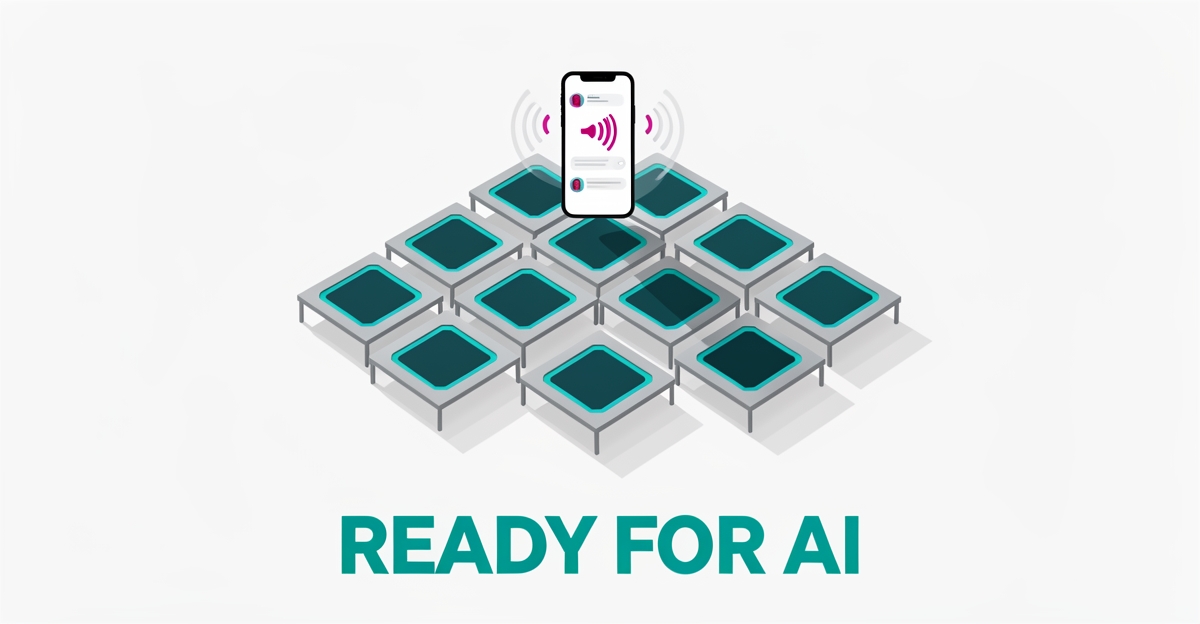
7 Signs Your Trampoline Park Is Ready for AI-Driven Guest Engagement
Key Facts
- Trampoline parks typically field 60 to 120 daily calls during peak season, with the majority asking the same repetitive questions
- Missed calls during weekend rushes commonly convert directly into lost party bookings — the inquiry rarely calls back
- AI receptionists and booking agents answer instantly, 24/7, without hold times or seasonal staffing gaps
- Predictive staffing based on demand forecasts typically reduces overstaffing during lulls and understaffing during surges
- Reactive maintenance creates unplanned court closures; sensor-based monitoring helps parks shift to predictive upkeep
- AIQ Labs has deployed 200+ multi-agent systems and runs 4 live SaaS products daily
Hire a team member that works 24/7 — for less than a part-time wage.
AI receptionists, SDRs, dispatchers and 99+ roles. Trained on your business, fully managed.
Not sure where to start? Ask our AI planner
The Operational Bottlenecks Draining Revenue and Safety
Manual operations start to crack when growth outpaces the front desk. The signs are visible in missed revenue, exhausted staff, and safety gaps that manual teams can no longer cover consistently.
Peak season brings a heavy call load — commonly 60 to 120 phone calls per day at busy parks — and most of those calls ask the same questions: hours, pricing, party availability, age requirements, waiver rules, and group rates. That repetition consumes staff time while guests wait on hold.
Missed calls convert directly to lost bookings. When a phone rings unanswered during a weekend rush, the inquiry rarely returns, and the party booking — often the highest-value transaction a park handles — leaves with it.
Equipment reliability adds another pressure point. Parks relying on reactive maintenance see unplanned outages that close courts and erode trust. Every surprise closure is a refund, a reschedule, and a dent in the reputation that drives repeat visits.
These bottlenecks cluster into three operational drains:
- High-volume repetitive inquiries that tie up front desk staff during peak hours
- Missed calls that directly lose party bookings and membership conversions
- Unplanned equipment outages from reactive maintenance and overload risk
When wait times stretch, no-shows rise, and member communication becomes inconsistent, the park has outgrown manual processes. That is a classic readiness signal for AI-driven guest engagement.
Identifying the right intervention matters more than adding tools. A tailored AI Readiness Assessment maps current call volume, booking leakage, and equipment risk to specific automation opportunities. AIQ Labs uses this practical approach to determine the right AI solutions for each park's unique challenges without forcing a one-size-fits-all stack.
The goal is not to replace staff, but to remove the repetitive, high-cost friction that drains revenue and safety margins.
How AI Closes the Gap Between Demand and Delivery
Demand surges at trampoline parks, but delivery bottlenecks quietly erode revenue and guest satisfaction. AI closes that gap by converting friction points into automated, measurable workflows.
Phone volume spikes during peak season, with most calls asking the same questions about hours, pricing and waivers. Voice agents answer instantly, capture details, and book parties without hold times. Parks deploying AI receptionists typically see fewer missed calls turning into lost bookings, and front-desk staff freed to focus on guests already in the building. See how managed AI Employees work in practice.
Staffing mismatches create the next gap. Predictive analytics forecast arrival patterns and adjust schedules in real time — higher coverage during peak lanes, lower overtime on slow days, and less of the labor waste that comes from static schedules built weeks in advance.
Equipment wear compounds downtime. Sensor-based load monitoring tracks mat stress and usage intensity across jump zones, letting parks shift from reactive repairs to predictive upkeep — fewer surprise closures, longer equipment life, and a stronger safety story for parents.
Pricing also lags demand. Dynamic pricing adjusts ticket and party rates by time, day, and capacity to balance load and revenue, smoothing demand peaks instead of letting slow Tuesdays sit empty while Saturdays overflow.
These bottlenecks map directly to proven AI solutions:
- Voice agents eliminate hold times and recover bookings from missed calls
- Predictive staffing optimizes labor schedules against real demand
- Sensor-based maintenance reduces unplanned downtime and equipment waste
- Dynamic pricing smooths demand peaks and lifts revenue per visit
An AI readiness assessment helps parks identify which gaps are costing the most today. AIQ Labs uses a tailored assessment to match each park's unique challenges with the right AI solutions, from conversational voice to predictive operations.
The 7 Readiness Signals That Predict AI Success
Trampoline parks often hit operational walls where manual processes can no longer keep pace with demand. Recognizing the right signals ensures AI deployment drives immediate impact rather than adding complexity.
The seven diagnostic indicators that predict AI success begin with chronic front-desk overload, where staff spend excessive time answering repetitive questions. Busy parks commonly field 60 to 120 phone calls per day during peak season, with most asking the same questions about hours, pricing, party availability, age requirements, waiver rules, and group rates. This volume creates bottlenecks that frustrate guests and divert staff from higher-value interactions.
High no-show rates represent another critical signal, directly tied to missed communication opportunities. Missed calls during peak hours routinely become lost party bookings, revealing how front-desk inefficiency translates to revenue leakage. Parks experiencing consistent booking gaps despite marketing efforts often lack the systems to confirm, remind, and follow up effectively.
Inconsistent member communication further undermines retention and lifetime value. When engagement relies on manual outreach, messages become sporadic or generic, reducing effectiveness. Automated, timely, personalized outreach consistently outperforms manual blasts on open rates, repeat visits, and membership renewals.
Flat ancillary sales signal missed opportunities to maximize revenue per guest. Without intelligent recommendations or dynamic pricing, parks leave money on the table — grip socks, arcade credits, party add-ons, and memberships all respond to timely, relevant offers.
Long wait times for check-in, waiver signing, or party coordination erode guest satisfaction and safety perception. AI receptionists and chatbots handle the inbound volume, freeing staff to focus on in-park experiences while ensuring no inquiry goes unanswered.
Difficulty scaling staff efficiently during peak periods reflects outdated labor planning. Predictive staffing models built on demand forecasts eliminate overstaffing during lulls and understaffing during surges — the two failure modes that quietly inflate payroll.
Finally, reactive maintenance approaches increase downtime and safety risks. Sensor-based load monitoring and predictive alerts let parks service equipment on schedule instead of after a failure, preventing unplanned court closures and extending equipment life.
AIQ Labs uses these signals in its AI readiness assessment to pinpoint where automation delivers the fastest ROI, whether through AI Employees handling front-desk tasks, a targeted Workflow Build fixing the one process that costs the most, or a phased AI Operating System connecting the whole park. Addressing these indicators transforms operational pain points into measurable gains in efficiency, revenue, and guest experience.
From Assessment to Activation: The AIQ Labs Deployment Path
Recognizing the signs is only half the equation. The other half is knowing how to move from "we have a problem" to "we have a system solving it" — without betting the whole park on an unproven rollout.
The path AIQ Labs uses with trampoline parks starts with a free Fit Check: a two-minute assessment followed by a 30-minute strategy call with an AI engineer. The goal isn't a sales pitch. It's a working session that maps your biggest bottleneck — whether that's the daily flood of repetitive calls during peak season or the party bookings lost to unanswered phones — and identifies the highest-ROI starting point.
From there, deployment follows a deliberately phased model. Rather than rebuilding everything at once, the first step is narrow and measurable:
- A single AI Employee in a defined role — an AI receptionist answering calls 24/7 or a booking agent handling party reservations and waiver questions
- A targeted workflow fix — rebuilding one broken process, like party booking follow-up or member communication, end to end at a fixed price
- Scaling to a full AI Operating System — one connected operating layer built in phases — once the pilot proves itself in your actual operating environment
This approach matters because the payoff for getting it right compounds. Starting with one role lets you verify the gains on your own numbers — bookings captured, calls answered, hours saved — before expanding to the next gap.
The engagement structure is built to match your risk tolerance. A Start Monthly model covers one AI Employee — build, training on your park's processes, integrations, monitoring, and improvements included — with the ability to pause or adjust anytime. Larger builds can be structured in milestones where you approve and pay per phase, keeping everything built so far if you stop. And critically, clients own the code, agents, and data outright — no vendor lock-in.
For park owners, the practical takeaway is simple: you don't need a transformation plan covering every department on day one. You need one clear win, proven quickly, then a roadmap for scaling it. The Fit Check exists to find that win — and if there isn't a clear one, a good partner will tell you that too.
If the signs in this article sound familiar, the fastest next step is a two-minute Fit Check at Apply, followed by a free 30-minute strategy call to map your highest-ROI starting point — or an honest answer if AI isn't the right fix yet.
Still paying for 10+ subscriptions that don’t talk to each other?
We build custom AI systems you own outright. No vendor lock-in. Full control.
Not sure where to start? Ask our AI planner
Frequently Asked Questions
How many phone calls do trampoline parks typically get per day during peak season?
What happens to missed calls at trampoline parks?
Can AI really reduce labor costs for trampoline parks?
How does sensor-based load monitoring improve equipment maintenance and safety?
Is automated outreach effective for increasing repeat bookings at trampoline parks?
How do we start without overcommitting?
The Park That Runs Itself While You Scale
The seven signals — front-desk overload, missed calls, no-shows, flat ancillary sales, long check-in lines, staffing whiplash, and reactive maintenance — are not just operational headaches. They are revenue leaks with real price tags: party bookings lost to unanswered phones, payroll wasted on static schedules, courts closed by surprise failures. AI doesn't fix these by adding dashboards; it fixes them by putting a trained, always-on AI Employee in each gap — a receptionist who never misses a call, a booking agent who follows up every lead, a predictive engine that staffs the floor before the rush hits. The next step isn't a master plan; it's a two-minute Fit Check at Apply to pinpoint your highest-ROI starting point, followed by a free strategy call with an AI engineer who will map the win — or tell you honestly if one doesn't exist yet.
Make AI your competitive advantage — not just another tool.
Strategy, implementation and ongoing optimization. One partner, end to end.
Not sure where to start? Ask our AI planner