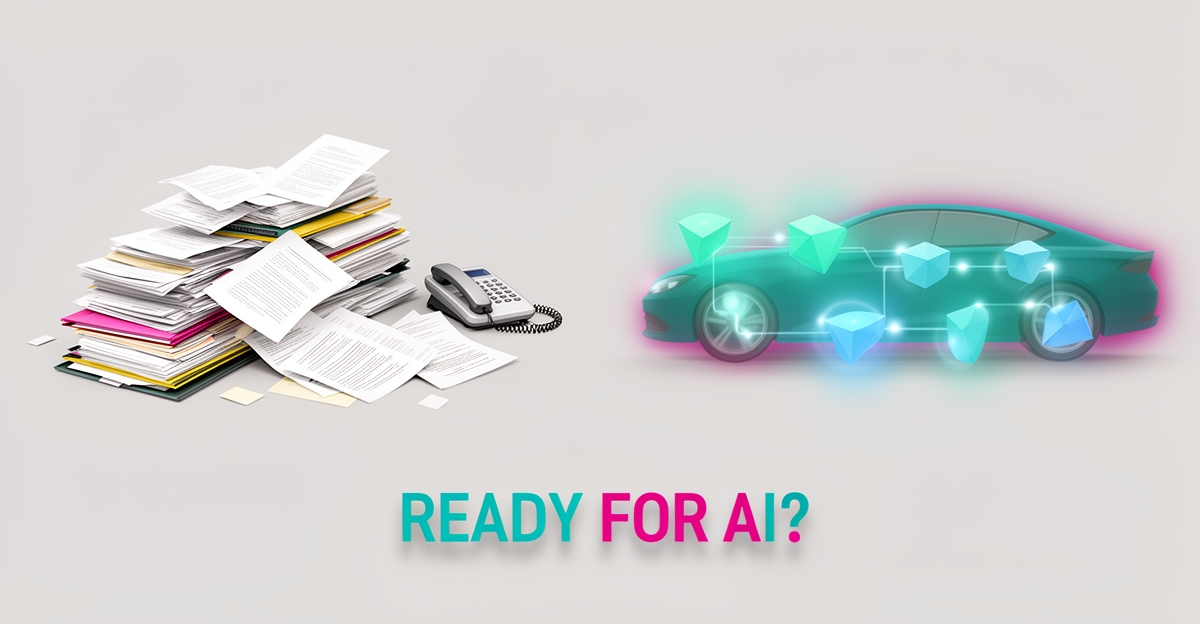
7 Signs Your Used Car Dealership Is Ready for AI Workflow Automation
Key Facts
- Task-specific AI agents are moving from experiments into everyday business software, with adoption accelerating sharply as of late 2026
- Well-built AI workflow automation can eliminate most manual data entry errors in dealership paperwork
- Sales teams commonly spend 15+ hours weekly on manual data entry—a strong signal it's time to automate
- AI-powered follow-up systems keep every lead engaged with behavior-based personalization, so nothing falls through the cracks
- Vehicle listing automation can cut the time from acquisition to online posting from days to hours
- Intelligent appointment scheduling coordinates test drives and service consultations without constant human intervention
- AI receptionists respond instantly to inquiries, reducing customer wait times and improving satisfaction
Hire a team member that works 24/7 — for less than a part-time wage.
AI receptionists, SDRs, dispatchers and 99+ roles. Trained on your business, fully managed.
Not sure where to start? Ask our AI planner
The Operational Pain Points Signaling Readiness
Used car dealerships often hit a breaking point when daily operations start to feel like a cycle of repetitive tasks and missed opportunities. When staff spend more time on paperwork than on customer engagement, it's a clear sign that manual processes are draining both efficiency and morale.
Repetitive paperwork is one of the most visible friction points in dealership operations, with employees dedicating significant hours to manual data entry, vehicle documentation, and compliance forms. This not only increases the risk of errors but also pulls valuable time away from sales, customer service, and follow-up activities. Long customer wait times make it worse, as delays in vehicle preparation, financing approvals, or appointment scheduling lead to frustration and lost sales. Inconsistent follow-ups—whether due to overlooked leads or delayed responses—directly hurt conversion rates and customer trust, especially in a competitive market where responsiveness is key.
These operational pain points don't just create inefficiencies; they have measurable consequences. Staff burnout rises when teams are constantly firefighting instead of focusing on high-value interactions. Customer satisfaction declines as wait times lengthen and communication gaps appear. Over time, these factors erode profitability, with hidden costs accumulating from overtime, rework, and missed deal opportunities. The broader shift toward task-specific AI agents in business software as of late 2026 signals that automation has become a practical answer for exactly these kinds of workflow bottlenecks. For dealerships experiencing these symptoms, readiness for AI workflow automation isn't theoretical—it's practical and urgent.
Addressing these challenges requires more than just adding another software tool; it demands a system that intelligently handles repetitive tasks while adapting to the dealership's unique rhythm. AI workflow automation can take over routine documentation, trigger timely follow-ups based on customer behavior, and streamline appointment scheduling—freeing staff to focus on relationship-building and closing deals. When implemented thoughtfully, such systems don't replace human teams but empower them, reducing burnout and improving both internal efficiency and the customer experience. The result is a more agile operation where technology handles the busywork, and people do what they do best: connect with customers and move inventory.
How AI Workflow Automation Changes Dealership Operations
The shift from traditional automation to AI-driven automation isn't just an upgrade—it's a fundamental reimagining of how dealerships operate. While traditional systems excel at repetitive tasks, AI workflow automation brings something new: the ability to handle complexity, adapt to context, and interact naturally enough to build customer trust.
Traditional automation follows rigid rules. It moves data from point A to point B, sends templated emails, and updates spreadsheets. But it stumbles when faced with nuance—a customer asking about trade-in value while mentioning budget concerns, or a vehicle listing that needs pricing adjusted based on market conditions. AI-driven automation handles these layered tasks by analyzing data, understanding context, and making intelligent decisions.
One key differentiator is natural, human-like interaction. Modern AI agents aren't robotic systems—they're designed to interact conversationally, building customer trust through exchanges that feel natural. When a potential buyer calls after hours, an AI receptionist can answer questions, schedule a test drive, and adjust its communication style based on the customer's tone.
AI also transforms sales enablement through data analysis. Instead of sales reps manually reviewing inventory turnover rates or customer preferences, AI systems continuously analyze patterns across your dealership's data. They identify which vehicles are sitting too long, which leads are most likely to convert, and when follow-ups will have the highest impact. The catch? Data quality matters enormously. AI systems trained on incomplete or inaccurate information produce unreliable recommendations—making clean, current data essential for success.
The complexity AI handles today would have been impossible just a few years ago. Consider what happens between a vehicle arriving at your lot and a customer driving it home:
- Vehicle listing creation with optimized descriptions and competitive pricing analysis
- Multi-channel lead response across email, phone, SMS, and chat
- Intelligent appointment scheduling that accounts for sales rep availability and customer preferences
- Automated follow-up sequences that adapt based on customer engagement
- Real-time inventory updates synchronized across all platforms
Each of these tasks involves decision-making, not just execution. The highest-value AI applications go beyond basic scheduling to pattern recognition and revenue leak detection—identifying which deals are stalling and why.
AIQ Labs builds systems that handle this full spectrum, from initial vehicle listing through appointment scheduling and beyond, with 200+ multi-agent systems deployed to date. The goal isn't replacing your team—it's eliminating the repetitive work that prevents them from focusing on high-value customer interactions. When AI handles the operational complexity, your sales team can do what they do best: build relationships and close deals.
From Signs to System: Implementation Roadmap for Dealerships
Recognizing the signs is only half the battle. Turning those pain points into a working AI system requires a clear, practical roadmap that protects existing operations while building new capability.
Start by mapping where automation creates immediate relief. Used car dealerships typically find value in repetitive paperwork, long customer wait times, and inconsistent follow-ups. Identifying areas where AI can be applied to streamline processes creates a prioritized target list instead of a blanket rollout.
Integration comes next. AI systems must connect to the tools the team already uses daily. Integration with existing workflows and systems ensures data flows between CRM, inventory, scheduling, and DMS without manual re-entry. This is where custom build work differs from off-the-shelf widgets: systems are architected for your specific stack.
Data quality determines outcomes. Train AI systems on high-quality data to ensure accuracy and effectiveness. Clean, complete, and up-to-date vehicle records, customer interactions, and service histories let models learn real patterns rather than noise.
Deployment should be measured and iterative. Monitor and evaluate the performance of AI systems regularly, then continuously update and refine them to ensure they remain effective. Early metrics often focus on wait time reduction, follow-up consistency, and staff hours reclaimed from busywork.
A practical implementation sequence looks like this:
- Identify target areas by auditing repetitive paperwork, wait times, and follow-up gaps
- Integrate AI with existing CRM, DMS, and scheduling tools for seamless data flow
- Train models on high-quality, dealership-specific data for accurate listings and appointments
- Monitor performance and refine workflows based on real usage and feedback
AIQ Labs supports this journey through three entry points. AI Employees are managed AI staff—receptionists, SDRs, dispatchers, and 99+ other roles—that handle real tasks like lead qualification and appointment setting around the clock, at roughly 80% less cost than a human hire. AI Workflow Builds rebuild the one workflow that costs your dealership the most, at a fixed price and in phases. And AI Operating Systems connect everything into one operating layer, built in phases and owned outright.
With task-specific AI agents becoming standard in business software, dealerships that move deliberately now gain a sustainable advantage. The goal is not replacement—it's removing busywork so teams can focus on relationships and closing.
Start with the 2-minute Fit Check at https://aiqlabs.ai/apply, then book a free 30-minute strategy call at https://aiqlabs.ai/book to map your biggest bottleneck and identify high-ROI automation opportunities.
What Ready Looks Like in Practice
Recognizing the signs of readiness is only the first step—translating them into action requires a clear understanding of what "ready" actually looks like in daily operations. For used car dealerships, this means identifying specific, measurable behaviors that signal AI workflow automation will deliver immediate impact.
Businesses are moving beyond experimentation to deploy AI systems that handle real workflows. For dealerships, readiness manifests in observable patterns—such as sales teams spending more than 15 hours weekly on manual data entry, or customer follow-ups delayed by more than 24 hours due to staff capacity constraints.
AIQ Labs diagnoses these pain points through a structured Fit Check, then deploys systems tailored to each dealership's specific bottlenecks. For example, vehicle listing automation can reduce the time from acquisition to online posting from days to hours, while AI-powered follow-up systems ensure no lead falls through the cracks. These systems integrate directly with existing CRM and inventory tools, creating a single source of truth across operations.
The readiness indicators translate into concrete deployment scenarios:
- Repetitive paperwork: AI automates document processing, title transfers, and compliance forms, sharply reducing manual entry errors
- Long customer wait times: AI receptionists and chat systems respond instantly to inquiries, book appointments, and route complex requests to human staff
- Inconsistent follow-ups: Automated lead nurturing sequences ensure every prospect receives timely, personalized communication based on their behavior and preferences
- Inventory listing delays: AI pulls vehicle data, generates descriptions, and posts listings across multiple platforms simultaneously
- Scheduling bottlenecks: Intelligent calendar systems coordinate test drives, service appointments, and sales consultations with minimal human intervention
AI's role in sales enablement extends beyond task automation to include predictive insights and personalized customer engagement. For dealerships, this means AI systems that not only schedule appointments but also analyze customer data to recommend optimal follow-up timing and messaging.
AIQ Labs structures deployments to match SMB realities. Dealerships can start with a single workflow—such as listing automation or follow-up sequences—through Build in Milestones, paying per phase at a fixed price and retaining ownership of everything built. The Start Monthly model provides a fully managed AI employee for roughly 80% less than the cost of a human hire, with setup, training, and ongoing optimization included. And for dealerships ready to connect everything, Own It Outright delivers a complete AI operating system built in phases and owned free of vendor lock-in. See pricing details for how each model works.
The key is matching the solution to the dealership's current maturity level. A dealership experiencing all seven readiness signs might benefit from a comprehensive AI operating system, while one with isolated pain points may only need a targeted workflow build. Either way, the goal remains the same: systems the dealership owns outright, with no vendor lock-in or recurring subscription dependencies.
Still paying for 10+ subscriptions that don’t talk to each other?
We build custom AI systems you own outright. No vendor lock-in. Full control.
Not sure where to start? Ask our AI planner
Frequently Asked Questions
What are the main signs that my used car dealership needs AI workflow automation?
How does AI workflow automation differ from traditional automation in a dealership setting?
Can AI really improve customer follow-up and lead conversion at my dealership?
What role does data quality play in the success of AI workflow automation for dealerships?
How quickly can I expect to see results from implementing AI workflow automation in my dealership?
Will AI workflow automation replace my dealership staff?
Key Takeaways
When AI Handles the Grind, Your Team Gets Back to Selling
The signs are clear: when your team spends more time on paperwork than with customers, when wait times grow and follow-ups slip, it's not just inefficiency—it's missed opportunity. AI workflow automation takes over the repetitive work so your people can focus on relationships and closing deals. Start with the workflow that costs you the most, prove the value, and build from there. Take the 2-minute Fit Check at https://aiqlabs.ai/apply or book a free 30-minute strategy call at https://aiqlabs.ai/book.
Make AI your competitive advantage — not just another tool.
Strategy, implementation and ongoing optimization. One partner, end to end.
Not sure where to start? Ask our AI planner