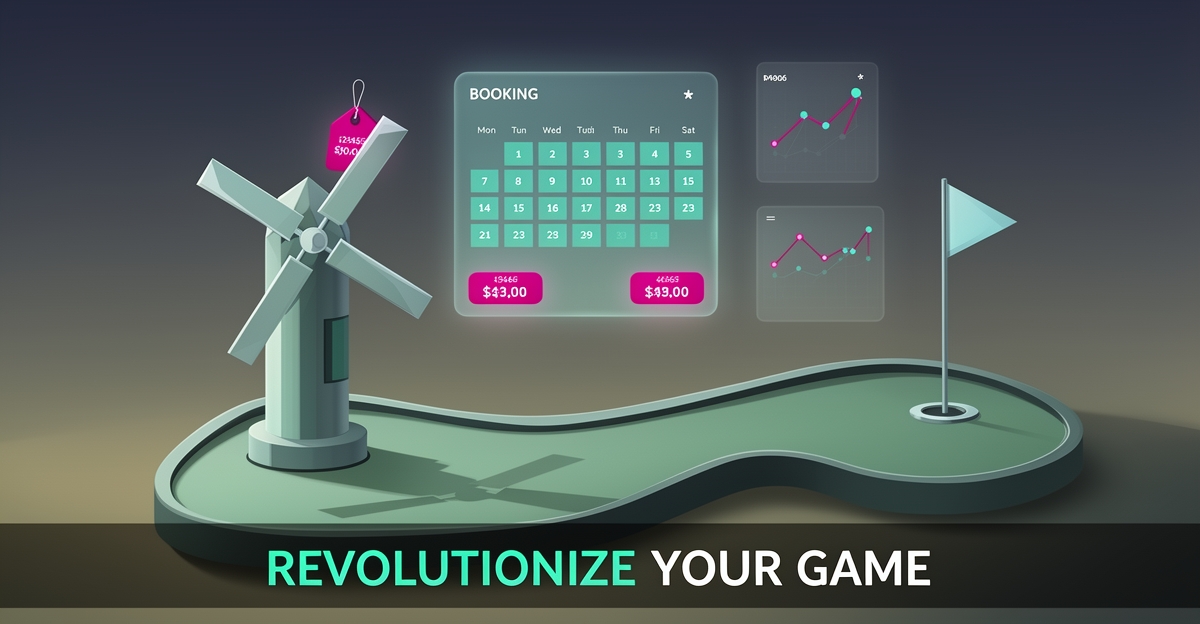
7 Ways AI Can Automate Booking & Pricing for Mini Golf Courses in High-Traffic Areas
Key Facts
- Manual scheduling typically consumes several hours per week in administrative tasks for small venue operators
- AI-powered scheduling with automated reminders can substantially reduce no-shows, with industry analyses often citing reductions of up to 60%
- Operators switching to automated scheduling frequently report meaningful booking volume gains within the first few months
- Human error in manual scheduling commonly shows up as double-bookings and wrong details—typically a 5-15% error rate in industry comparisons
- AI scheduling handles 5 or 500 bookings per day with the same effort, removing the scaling ceiling
- Predictive no-show models in adjacent industries like healthcare scheduling are reported to achieve 90%+ accuracy
Hire a team member that works 24/7 — for less than a part-time wage.
AI receptionists, SDRs, dispatchers and 99+ roles. Trained on your business, fully managed.
Not sure where to start? Ask our AI planner
Peak Hour Bottlenecks Killing Mini Golf Revenue
Peak hour bottlenecks are silently eroding revenue at high-traffic mini golf courses, where manual scheduling consumes several hours per week in administrative tasks and leaves operators scrambling during rush periods. This time drain prevents staff from focusing on guest experience or upselling opportunities when demand is highest. As volume grows, the same manual effort required for 5 bookings becomes unsustainable at 500, creating a hard ceiling on throughput no matter how many employees are added.
Human error compounds the problem, with industry comparisons typically citing a 5-15% error rate for double-bookings and incorrect details in manually managed systems. These mistakes lead to frustrated customers, last-minute reshuffling, and lost revenue from empty slots that could have been filled. During peak hours, even small errors cascade into major disruptions—groups arrive to find their time slot taken, or staff overbook and must turn away paying guests.
The scalability gap is stark: manual systems don't scale, each new booking requires the same manual effort, while AI-powered scheduling can handle 5 or 500 bookings per day with the same effort. For mini golf courses in tourist zones or urban entertainment districts, this inflexibility means leaving money on the table during holidays, weekends, and special events when demand spikes unpredictably. Without intelligent automation, peak hours become a liability instead of the revenue engine they should be.
AI Booking Engines That Manage Demand Automatically
What if your booking system could handle a sudden rush of reservations without you lifting a finger? AI booking engines make this a reality, transforming how mini golf courses manage their demand.
These intelligent systems combine the personal touch of manual booking with the efficiency of online tools, adding a layer of intelligence on top. The system doesn't just accept bookings; it actively manages your calendar, engages customers, and optimizes your schedule automatically.
The operational benefits are immediate and significant. Manual scheduling can consume several hours per week in administrative tasks, but AI reduces this to near zero. It eliminates the need for staff to check availability, enter bookings, or send reminders, freeing them to focus on the guest experience.
This efficiency directly impacts your bottom line. AI-powered scheduling can substantially reduce no-shows—industry analyses often cite reductions of up to 60%—through automated, intelligent reminders. Operators switching to automated scheduling also frequently report meaningful booking volume increases within the first few months.
The core advantages of an AI booking engine include:
- Zero Admin Time: The system handles all booking logistics automatically.
- Unlimited Scalability: It manages 5 or 500 bookings a day with the same effort.
- Proactive Engagement: Automatically sends reminders and follow-ups to customers.
- Continuous Improvement: The AI learns from booking patterns to optimize tee times and pricing.
Unlike manual methods, which are limited by staff hours and prone to double-bookings and wrong details, AI operates 24/7 with consistent accuracy. This ensures you never miss a booking opportunity, even during peak hours or after closing.
At AIQ Labs, we deploy these systems as managed AI Employees. An AI Booking Agent integrates directly with your calendar and payment systems, providing a seamless reservation experience for your customers while delivering the valuable data you need to grow your business.
Dynamic Pricing and Demand-Based Throughput
High-traffic mini golf courses lose revenue every time a prime tee time sits empty while the parking lot overflows. AI-driven dynamic pricing closes that gap by treating capacity as a live asset, not a fixed price list.
The online scheduling market continues to grow as operators seek throughput control, not just online forms. For mini golf, that means rates that move with day of week, seasonality, weather, and real-time demand.
Predictive models ingest historical play data, local events, and booking velocity to forecast demand windows. Prices rise automatically during Friday evening peaks and school holiday surges, then ease during mid-afternoon lulls to fill slots. This demand-based throughput increases revenue during peak periods while actively filling off-peak inventory.
AI scheduling also reduces friction that kills conversion. Automated reminders and predictive flagging can cut no-shows substantially—often cited at up to 60% in industry analyses—protecting high-value slots that are expensive to replace. The same systems handle 5 or 500 bookings per day with the same effort, which matters when weekend traffic spikes.
Manual scheduling consumes several hours per week in administrative tasks, with human error typically showing up as double-bookings and wrong details. AI removes that drag by auto-confirming, reminding, and re-optimizing in real time.
In practice, AIQ Labs deploys these systems as AI-driven booking engines and dynamic pricing models for high-traffic recreation operators. If pricing is your single most expensive broken process, a targeted AI Workflow Build can rebuild just that workflow at a fixed price.
Effective dynamic pricing models typically include:
- Day-of-week and time-of-day multipliers that lift price on peak evenings and weekends
- Seasonality and event-based pricing tied to local calendars and weather forecasts
- Real-time demand signals that adjust rates as inventory fills
- Automated incentives for off-peak slots to smooth throughput
The result is higher average revenue per round, fuller course utilization, and less staff time spent on the phone juggling changes. Operators gain intelligent optimization instead of static price boards, with continuous improvement as the model learns from each booking cycle.
7 Automation Workflows for Mini Golf Operators
High-traffic mini golf courses live or die by throughput. These seven AI workflows turn booking chaos into a revenue engine that runs itself.
Instant online booking with 24/7 availability captures every impulse. When a family decides at 9 PM to book Saturday morning, the system confirms immediately—no phone tag, no lost sales. Operators moving to automated booking commonly report booking volume gains within the first few months.
Automated reminders and waitlist management keep slots full. The system sends confirmation texts, day-before reminders, and weather updates without staff lifting a finger. When cancellations happen, it instantly offers the slot to waitlisted customers.
No-show prediction flags risky bookings before they happen. By analyzing historical patterns—booking lead time, party size, past behavior—the AI identifies likely no-shows and triggers overbooking protocols or deposit requirements. Predictive models in adjacent industries like healthcare scheduling are reported to achieve 90%+ accuracy in no-show prediction.
Surge pricing maximizes revenue during peak demand. The system raises prices for Saturday afternoon slots, lowers them for Tuesday mornings, and adjusts in real time based on weather forecasts and local events. You capture willingness-to-pay without manual rate card updates.
Group booking optimization handles birthday parties and corporate events intelligently. The AI bundles tee times, assigns dedicated staff, and coordinates catering add-ons—complex logistics that typically consume staff hours.
Channel sync prevents double-bookings across walk-ins, phone reservations, and online platforms. Manual scheduling typically carries a 5-15% error rate for double-bookings and wrong details; AI eliminates this by maintaining a single source of truth across all channels.
Post-round upsell drives incremental revenue. Immediately after checkout, the system offers discounted second rounds, merchandise, or future booking incentives based on party size and spending patterns.
- 24/7 booking capture without staff overhead
- Predictive no-show reduction
- Dynamic pricing based on demand signals
- Zero double-booking errors
- Automated upsell sequences
AIQ Labs builds these workflows as custom AI systems that integrate with your existing POS and payment infrastructure. Whether you need a single workflow fix or a complete booking automation platform, the systems scale from 5 to 500 daily bookings without additional administrative burden.
Implementation Roadmap for AI Booking and Pricing
Deploying AI booking and pricing without getting locked into a subscription stack starts with a clear assessment, not a vendor demo. High-traffic mini golf courses need systems that handle surges, protect margins, and integrate with what already runs the business.
Start with a process and data audit. Map current booking flows, POS entries, calendar limits, and pricing rules by day, week, and season. Identify where manual scheduling eats hours each week and where human error creates double-bookings and wrong details. This baseline shows the ROI window for automation.
Next, design a custom integration layer. AI booking should read live capacity from your existing POS/calendar and write back confirmed reservations, payments, and waitlist moves. True ownership means the integration code and data models are built for your stack, not rented as a black box. AIQ Labs architects these connections with deep two-way APIs so pricing signals can flow from demand to the front end without a new platform.
Training the AI Employee on course-specific rules is where generic tools fail. The agent learns peak-hour caps, group minimums, weather holds, membership tiers, and local event spikes. With course-specific training, the system actively manages your calendar, engages clients across channels, and optimizes your schedule rather than just accepting bookings.
Deployment follows a milestone approach that preserves control:
- Assessment & architecture of booking, pricing, and POS integration points
- Custom build of AI booking agent and dynamic pricing logic with rule training on historical demand
- Live pilot on one lane block or weekend shift with human-in-the-loop guardrails
- Optimization via no-show reduction, throughput tracking, and price elasticity tuning
Ongoing optimization turns data into revenue. AI-powered scheduling can handle 5 or 500 bookings per day with the same effort. Systems that learn from actual show rates can cut no-shows substantially—often cited at up to 60%—directly increasing playable rounds during prime time.
Choose a payment model that matches risk tolerance. Start Monthly delivers one AI employee with setup, training, integrations, monitoring, and improvements included and can be paused or adjusted anytime. Build in Milestones splits the workflow into phases you approve and pay per phase, keeping everything built so far. Own It Outright delivers a full AI Operating System with full ownership of code, agents, and data when complete.
The result is a booking and pricing engine that scales with traffic, protects margins, and remains yours to evolve.
Still paying for 10+ subscriptions that don’t talk to each other?
We build custom AI systems you own outright. No vendor lock-in. Full control.
Not sure where to start? Ask our AI planner
Frequently Asked Questions
How much time can AI booking systems save mini golf operators each week?
What is the human error rate for double-bookings in manual mini golf scheduling systems?
Can AI really handle 500 bookings a day without extra staff effort?
How much can dynamic pricing increase booking volume for mini golf courses?
Do AI booking systems help reduce no-shows at mini golf courses?
Is it true that AI booking engines require constant manual oversight to avoid errors?
Turn Peak Hours Into Your Most Profitable Shift
High-traffic mini golf courses don't need more staff to handle peak demand — they need systems that scale automatically. Manual scheduling creates bottlenecks, errors, and lost revenue, while AI booking engines eliminate admin time, cut no-shows, and manage 5 or 500 bookings with the same effort. Dynamic pricing turns capacity into a live asset, filling lulls and capturing willingness-to-pay during surges, and the seven automation workflows — from 24/7 instant booking to predictive no-show reduction and post-round upsells — transform throughput into a revenue engine. Implementation starts with a process audit and custom integration, not a generic subscription. AIQ Labs builds these systems as managed AI Employees and owned AI operating systems that integrate with your POS and calendar, so pricing signals and bookings flow without vendor lock-in. If you're ready to map your biggest bottleneck to a high-ROI automation plan, start the 2-minute Fit Check at https://aiqlabs.ai/apply for a free 30-minute strategy call.
Make AI your competitive advantage — not just another tool.
Strategy, implementation and ongoing optimization. One partner, end to end.
Not sure where to start? Ask our AI planner