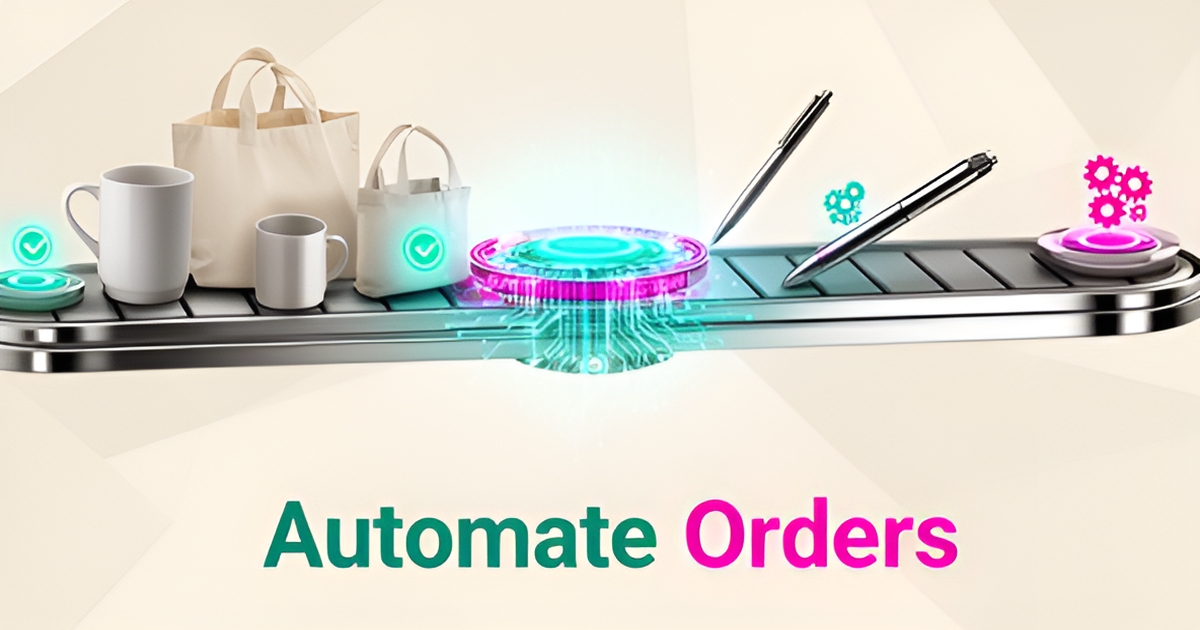
7 Ways AI Can Automate Custom Order Processing for Promotional Products Businesses
Key Facts
- Top B2B e-commerce suppliers have reported savings of 1,500+ hours per year by standardizing order flow according to OrderEase data
- One Odoo ERP implementation reportedly reduced manual operations by roughly 90% and doubled work order processing speed per an Itransition case study
- A majority of companies have made AI a strategic priority, with many tech leaders reporting AI embedded in core operations per Pragmatic Coders research
- OrderEase reports processing millions of orders through its AI-driven fulfillment orchestration platform according to OrderEase
- Microsoft Power Automate applies built-in AI models to automate document and image processing while supporting approval workflows per Microsoft documentation
- One brewery reported eliminating manual order entry entirely using automated order management per OrderEase case data
- Custom OMS development streamlines order intake, design approvals, and fulfillment tracking using AI-driven workflows per SysGears
Hire a team member that works 24/7 — for less than a part-time wage.
AI receptionists, SDRs, dispatchers and 99+ roles. Trained on your business, fully managed.
Not sure where to start? Ask our AI planner
The Hidden Cost of Manual Order Chaos in Promotional Products
Custom orders live or die on speed and accuracy, and promotional products businesses are built on both. Every variable—artwork, colors, quantities, imprint locations—adds a manual touchpoint that compounds risk across the workflow.
Disconnected systems force teams to retype the same details from email into spreadsheets, then into the ERP, then into production. That fragmentation creates bottlenecks at intake, design approvals, and fulfillment tracking. An ERP centralization case study notes that outdated, independent solutions forced employees to manage processes manually, which was a major reason for operational slowdown and declining quality of services.
Manual data entry is not just slow; it is expensive. Order management data suggests top B2B e-commerce suppliers have saved 1,500+ hours per year after standardizing order flow, with one brewery reporting a 100% reduction in order entry. The same platform reports processing millions of orders by automating repetitive steps that slow teams down.
Error rates climb with variability. Promotional products handle high SKU complexity, rush jobs, and client-specific artwork approvals. Without structured flow, orders arrive at fulfillment with mismatched specs, wrong pricing, or missing approvals. Post-implementation results from a centralized ERP deployment reported manual operations reduced by roughly 90% and work order management becoming about two times faster.
The financial impact shows up in three places:
- Delayed revenue from orders stuck in approval loops
- Rework and rush shipping costs from entry mistakes
- Lost capacity as staff copy-paste data instead of serving clients
Order management software is designed to manage the entire order lifecycle from placement to fulfillment and delivery. Automating routine tasks with an OMS can accelerate fulfillment, cut operational costs, and improve customer experience. The hidden cost is the opportunity cost of teams unable to scale.
AI-driven workflows address the root cause by standardizing data upfront and removing manual handoffs. Industry research indicates a large majority of companies have made AI a strategic priority, with many technology leaders confirming AI is fully embedded into core operations. For promotional products, that means intake, design approvals, and fulfillment tracking can run on one connected system.
AIQ Labs approaches this with [AI Workflow Builds](/workflow-builds) that rebuild the one workflow costing you the most—fixed price, delivered in phases—turning disconnected tools into a unified operational layer with automated data synchronization across CRM, accounting, and production systems. The goal is not more dashboards, it is fewer manual touchpoints and predictable throughput.
When order chaos is removed, teams gain back hours, margins stabilize, and clients receive accurate updates without chasing.
7 AI Automation Points That Transform Order Workflows
Promotional products businesses juggle custom specs, design revisions, and multi-channel intake — a workflow that breaks down without intelligent automation. AI-driven order management replaces manual handoffs with structured, end-to-end workflows that accelerate fulfillment and cut operational costs.
Intelligent order capture unifies intake from EDI, eCommerce, B2B portals, sales reps, email, marketplaces and POS. OrderEase documentation shows a platform that captures orders from every sales channel and standardizes every transaction before it reaches the ERP, creating structured order flow that can be scaled with confidence. This removes rekeying and duplicate entry across teams.
AI-powered design file processing and approval routing automates the most error-prone step in custom work. Microsoft Power Automate applies built-in AI models to intelligently automate document and image processing, prediction and analysis, while supporting approval processes across an organization with mobile support. Design files are extracted, validated, and routed automatically.
Predictive inventory allocation and automated fulfillment orchestration keep promises realistic. OrderEase’s fulfillment orchestration coordinates fulfillment across warehouses, production environments and shipping partners using configurable business rules, and connects directly to ERP and inventory systems to check availability in real time before orders are confirmed.
Real-time order tracking and seamless ERP integration give buyers and staff a single source of truth. Custom OMS development streamlines order intake, design approvals and fulfillment tracking using AI-driven workflows, with key features including order creation and processing, fulfillment and tracking, inventory management, payment and billing management, and shipment management. Integration eliminates manual data management and operational slowdowns.
Exception handling with human-in-the-loop controls protects quality without bottlenecking throughput. An Odoo ERP implementation case study reports manual operations reduced by roughly 90% and work order management becoming about two times faster after automating business processes. Configurable escalation ensures critical decisions stay with people while routine exceptions resolve automatically.
The automation impact compounds across the order lifecycle:
- Order capture from multiple channels with standardized data upfront
- AI design validation and automated approval routing
- Predictive inventory allocation and fulfillment orchestration
- Real-time tracking with ERP integration and centralized visibility
- Exception handling with human-in-the-loop controls
Businesses adopting this approach see measurable gains. Top B2B e-comm suppliers have reported saving 1,500+ hours per year using structured order management, and a large majority of companies have made AI a strategic priority according to industry research on AI software development. AIQ Labs builds these systems so businesses own and control them outright—replacing subscription chaos with unified, owned digital assets. See how the [AI Operating System](/ai-operating-systems) approach connects intake, approvals, and fulfillment in one layer.
From Pilot to Production: Implementing AI Without Disruption
Most AI initiatives die in the pilot phase, not because the technology fails, but because the implementation strategy lacks a bridge to daily operations. For promotional products businesses, moving from experimental order automation to full production requires a deliberate shift from legacy patchworks to owned, AI-driven workflows.
The first phase demands a rigorous assessment of your current order management infrastructure. Many distributors discover their "systems" are actually disconnected spreadsheets and email chains that create manual handoffs at every stage. According to ERP implementation case studies, centralizing these disparate workflows can reduce manual operations substantially while significantly accelerating work order processing. This diagnostic phase maps every touchpoint—from initial client inquiry through design approval to fulfillment tracking—identifying where custom AI workflow integration delivers immediate ROI rather than automating broken processes.
Rather than attempting a complete operational overhaul, successful implementations follow a milestone-based development approach. This methodology allows you to automate one critical workflow—perhaps order intake or proof approval—validate the results, then expand. Data from order management platforms suggests this targeted strategy can save top B2B suppliers over 1,500 hours annually by standardizing transaction data before it reaches the ERP. AIQ Labs structures engagements exactly this way under its Build in Milestones model: fixed price, phased delivery, and full ownership of each component as it ships while maintaining operational continuity.
Preventing pilot stall requires specific change management strategies:
- Deploy AI agents that run continuously in the background, monitoring order queues and executing tasks on schedules rather than waiting for manual prompts
- Implement intelligent document processing to handle custom order forms and artwork files automatically
- Establish human-in-the-loop controls for high-value custom orders requiring design approval
- Create centralized dashboards that give decision-makers direct access to order status without technical intermediaries
The transition from legacy systems to AI-driven workflows succeeds when technology serves your team's daily reality, not the other way around. Research on AI adoption emphasizes that true competitive advantage emerges when leaders can question and act on AI-driven insights directly, eliminating the delays caused by technical gatekeepers. By treating implementation as a strategic partnership rather than a software installation, promotional products businesses transform order processing from an operational bottleneck into a scalable asset they control completely.
Building vs. Buying: Why Ownership Matters in AI Order Systems
Most promotional products businesses start their AI journey with subscription platforms because they're fast to deploy. But speed today often creates constraints tomorrow — vendor lock-in, rigid workflows that can't handle custom decoration specs, and recurring costs that compound as order volume grows. Research indicates most companies have made AI a strategic priority, yet many struggle to move beyond pilot stage because their tools weren't built for their specific operations.
True ownership changes the equation. When you own the code, agents, and data outright, you eliminate platform dependencies that limit how you process complex custom orders — whether that's multi-location fulfillment routing, variable decoration pricing, or client-specific approval chains. One ERP implementation reportedly reduced manual operations by roughly 90% and doubled work order speed precisely because the system was customized to the business, not the other way around.
- No vendor can sunset features you rely on for art proof approvals
- Custom integrations with your ERP, CRM, and production software stay yours
- Proprietary automation becomes a balance-sheet asset, not an operating expense
- Competitive advantage compounds as your system learns your unique workflows
AIQ Labs builds custom AI systems under a true ownership model — clients own the system outright, with full source code and zero platform lock-in. Payment is flexible too: Start Monthly, Build in Milestones, or Own It Outright — details on the [pricing page](/pricing). The difference isn't technical — it's strategic. Renting AI means optimizing someone else's roadmap. Owning it means building your own.
Still paying for 10+ subscriptions that don’t talk to each other?
We build custom AI systems you own outright. No vendor lock-in. Full control.
Not sure where to start? Ask our AI planner
Frequently Asked Questions
How much time can promotional products businesses save by automating order processing with AI?
What are the main hidden costs of manual order processing in promotional products businesses?
How does AI reduce errors in custom order processing for promotional products?
Can I own the AI system built for my promotional products business, or am I locked into a subscription?
What’s the best way to implement AI in order processing without disrupting current operations?
How does AI handle exceptions in custom order workflows without slowing things down?
Your Orders Deserve a System That Keeps Up
The promotional products workflow — custom specs, shifting artwork, multi-channel intake — will always be complex. What changes is whether that complexity creates bottlenecks or becomes a structured, scalable process. AI-driven workflows replace the manual handoffs that slow teams down: unified order capture that eliminates rekeying, intelligent design validation that routes proofs automatically, predictive inventory checks before promises are made, and real-time tracking that gives everyone a single source of truth. The businesses pulling ahead aren't chasing dashboards; they're removing touchpoints. Industry data indicates most companies have made AI a strategic priority, with many embedding it into core operations according to industry research. AIQ Labs builds custom AI systems you own outright — full source code, zero vendor lock-in, and workflows that appreciate in value as they learn your business. Start with the two-minute Fit Check at [aiqlabs.ai/apply](/apply), then a free 30-minute strategy call at [aiqlabs.ai/book](/book) to map your biggest bottleneck and identify the highest-ROI automation opportunity. No obligation, just clarity on what's possible.
Make AI your competitive advantage — not just another tool.
Strategy, implementation and ongoing optimization. One partner, end to end.
Not sure where to start? Ask our AI planner