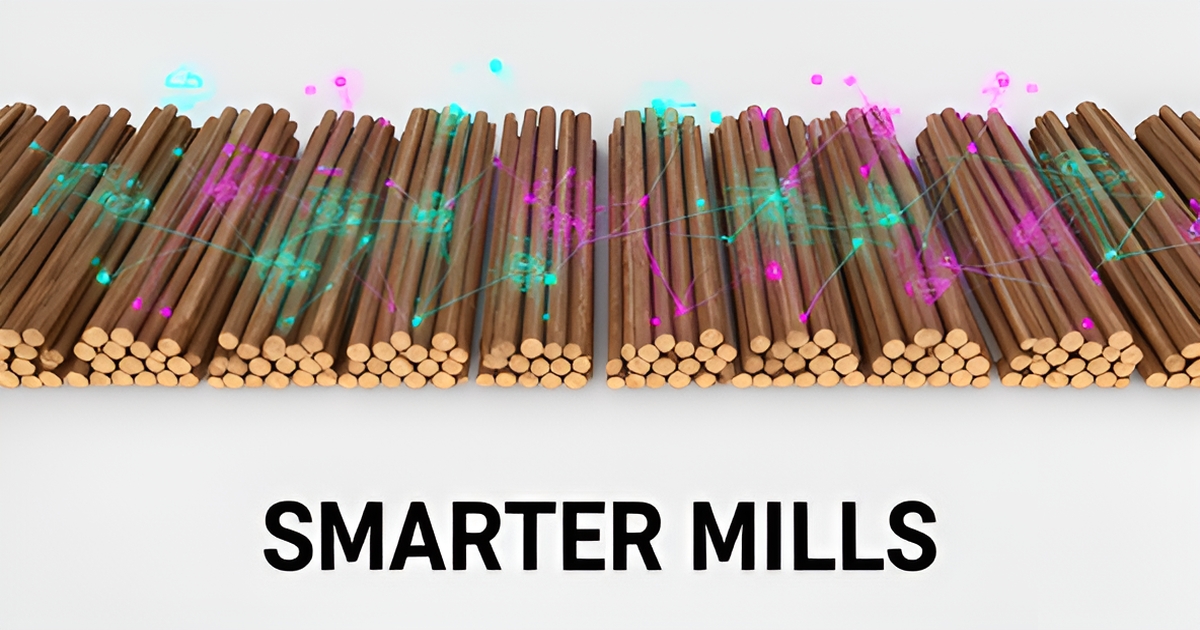
7 Ways AI Can Automate Inventory and Log Management in Sawmills
Key Facts
- Poor production scheduling can cost sawmills thousands of dollars weekly in downtime and missed throughput according to sawmill operations experts.
- AI-powered cut optimization has been reported to increase lumber yield by 8-15% compared to manual sawing decisions based on sawmill operations research.
- Thousands of dollars and obsolete items are often tied up in excess inventory that ultimately gets written off per office technology industry trainers.
- Traditional forecasting methods struggle as businesses generate vast amounts of data requiring AI processing according to AI inventory management research.
- AI-enhanced inventory systems spot demand patterns for accurate forecasts and optimized warehouse replenishment per LiquidWeb analysis.
- AI employees in equivalent roles typically cost around 80% less than a human hire while working 24/7/365 per AIQ Labs.
- AIQ Labs has deployed 200+ multi-agent systems and runs 4 live SaaS products daily demonstrating proven multi-agent architecture at scale.
Hire a team member that works 24/7 — for less than a part-time wage.
AI receptionists, SDRs, dispatchers and 99+ roles. Trained on your business, fully managed.
Not sure where to start? Ask our AI planner
The Manual Tracking Trap Costing Sawmills Time and Yield
Most sawmills still run their most critical data on paper tally sheets and spreadsheets that haven't changed in decades. Every manual entry point — log scaling, grade assignment, board tally — creates an opportunity for error that compounds downstream into missed cuts, wrong shipments, and inventory that exists only on paper.
Research from sawmill operations experts shows that poor production scheduling can cost sawmills and lumber yards thousands of dollars weekly in downtime and missed throughput. When scaling data sits on clipboards instead of a live system, the production team cannot optimize the headrig for the actual mix arriving at the deck. The result is a cascade of small inefficiencies: sawyers making decisions on stale data, edgers running suboptimal patterns, and planers idling while the yard crew hunts for the right packages.
- Manual tally sheets that drift from reality the moment the forklift moves
- Scaling errors that erase margin before the log hits the carriage
- Production schedules built on yesterday's inventory snapshot
- Excess obsolete inventory tying up cash and yard space
- No real-time visibility into grade recovery or yield by species
The problem isn't unique to lumber. In the broader office technology sector, trainers have found that thousands of dollars — as well as obsolete items — are tied up in excess inventory that ultimately gets written off, a dynamic that mirrors what happens when sawmills overproduce low-grade boards they can't sell. The root cause is the same: inventory logic built on static minimums and maximums that nobody updates as demand shifts.
AI changes the economics of this equation by turning passive records into an active control layer. Instead of chasing staff for updates using pen and paper, automated systems can ingest scale tickets, camera feeds, and ERP data to maintain a single source of truth that updates in real time. AIQ Labs builds custom AI systems specifically designed for such operations, ensuring accuracy and scalability in high-volume environments where every percentage point of yield recovery matters.
Seven AI Automation Levers for Lumber Tracking and Logs
Sawmills face constant challenges with lumber tracking and inventory logs, but AI is transforming how these operations run. From the moment logs arrive to the final cut, intelligent systems are replacing manual processes with precision and speed.
Automated log intake and scaling uses computer vision and sensor data to capture dimensions and species instantly, eliminating tape-measure guesswork and reducing scaling errors that erode profit. Real-time digital inventory tracking replaces paper tally sheets with live dashboards that show every log's location, grade, and destination as it moves through the yard—critical for accurate yield tracking and capturing more value. AI-powered cut optimization analyzes log characteristics in milliseconds to determine the highest-value sawing pattern, with reported yield gains of 8-15% over manual decisions. Discrepancy detection continuously compares expected versus actual inventory, flagging mismatches from mis-scales or misplacements before they snowball into financial write-offs. Predictive reorder and minimum/maximum level monitoring uses historical usage and seasonal trends to trigger replenishment just in time, preventing both stockouts and costly overstock. Production scheduling optimization coordinates sawing, drying, and shipping based on real-time mill capacity and order priorities, reducing downtime and getting orders out faster. Automated reporting pulls data from all these systems into clear, actionable insights—shift summaries, waste metrics, and performance trends—without a single manual entry. Together, these levers turn lumber tracking from a liability into a competitive advantage. Sawmills face significant challenges with lumber tracking and inventory logs, which can be addressed through AI automation. AIQ Labs builds custom systems that own these workflows end-to-end, ensuring sawmills scale accuracy without adding headcount. AI enhances inventory management so you can redistribute resources and focus on other key business areas.
Why AI Works Better Than Legacy Inventory Tools in Sawmills
Traditional inventory consoles often sit underused because they demand constant manual tuning — a reality one industry trainer describes as "one of the best tools" that remains "one of the least understood and most underutilized" in many operations. These legacy systems rely on static min/max thresholds that drift out of sync as soon as production patterns shift, leaving thousands of dollars tied up in excess stock that eventually gets written off. AI-driven platforms change the equation by ingesting real-time data from multiple sources and continuously learning from actual usage, so replenishment logic adjusts automatically instead of waiting for a human to notice the gap.
- Continuous learning models replace fixed reorder points with dynamic forecasts
- Agent-based workflows handle routine reconciliation and discrepancy detection
- Multi-source data fusion captures demand signals that spreadsheets miss
- Human oversight stays in the loop for exceptions and strategic calls
The result is a shift from reactive firefighting to proactive control. Research on AI-enhanced inventory systems shows they can "spot demand patterns and use this data for accurate forecasts and optimizing warehouse replenishment plans" while freeing staff to "redistribute resources and focus on other key business areas." AIQ Labs applies this same architecture to sawmill operations, building custom AI employees that automate data entry, flag scaling errors in real time, and generate the reports supervisors actually trust — without replacing the human judgment that keeps the yard running smoothly.
Implementing AI Inventory Automation with a Production-Ready Partner
Implementing AI for inventory automation begins with a thorough assessment of your current workflows. Before deploying any technology, map every touchpoint where data enters your system—from log scaling and tally sheets to yard management and shipping. This diagnostic phase reveals where manual errors creep in and where bottlenecks slow operations. According to industry insights on sawmill operations, poor production scheduling can cost mills thousands of dollars weekly, making this initial workflow audit critical for identifying high-impact automation targets.
Data readiness follows workflow mapping. AI systems require clean, structured historical data to learn patterns and make accurate predictions. This often means digitizing legacy paper logs and standardizing how you record dimensions, species, and grades. As research on AI inventory management indicates, traditional forecasting methods struggle when businesses generate vast amounts of data, requiring AI to process real-time inputs from multiple sources. Preparing this data foundation typically takes two to four weeks but determines the accuracy of everything that follows.
Integration with existing mill systems demands careful architecture. Your AI solution must communicate with current ERP software, scaling systems, and production equipment without disrupting daily operations. AIQ Labs builds these connections using deep two-way API integrations that create seamless data flow between your existing tools and new AI capabilities. This approach ensures that automated inventory tracking and log management work alongside your current processes rather than replacing them abruptly.
Phased rollout minimizes risk while proving value quickly. Rather than automating everything simultaneously, successful implementations typically follow this sequence:
- Automate data entry for log intake and scaling first, eliminating manual transcription errors
- Deploy real-time inventory tracking for lumber and byproducts
- Activate discrepancy detection that flags mismatches between physical counts and digital records
- Enable predictive analytics for demand forecasting and production optimization
Financial flexibility matches this phased approach through AIQ Labs' Build in Milestones model, where you approve and pay for each phase as it ships, retaining everything built if you pause. Alternatively, the Start Monthly option provides a flat-rate plan covering build, training, and ongoing improvements—costing less than a human hire while delivering 24/7 automated monitoring. For mills ready to commit fully, the Own It Outright model transfers complete code and data ownership upon completion, eliminating vendor lock-in. You can review the details on the pricing page.
Success requires viewing AI as augmentation rather than replacement. As workflow automation research emphasizes, agents handle routine tasks so your team focuses on revenue-generating activities. With AI-powered optimization delivering reported yield gains of 8-15% over manual decisions, the technology pays for itself when implemented with proper planning and phased execution.
Still paying for 10+ subscriptions that don’t talk to each other?
We build custom AI systems you own outright. No vendor lock-in. Full control.
Not sure where to start? Ask our AI planner
Frequently Asked Questions
How much can AI-powered cut optimization increase lumber yield compared to manual decisions?
What financial impact does poor production scheduling have on sawmills?
How does AI improve inventory tracking in sawmills compared to manual tally sheets?
Can AI systems work with existing sawmill equipment and software?
What is the first step in implementing AI for inventory automation in a sawmill?
Does implementing AI in sawmills require replacing human workers?
From Clipboards to Control Towers
The shift from paper tally sheets to AI-driven inventory control isn't just a technology upgrade — it's a fundamental change in how sawmills capture value at every stage of the log-to-lumber journey. Automated scaling eliminates the guesswork that erodes margin before the first cut. Real-time tracking replaces the blind spots where inventory drifts from reality. Predictive replenishment stops the cycle of stockouts and write-offs. And cut optimization powered by live data has delivered reported yield gains of 8-15% over manual decisions. These aren't theoretical improvements; they're the difference between reacting to yesterday's numbers and controlling today's output. The mills that make this transition don't just reduce errors — they gain the visibility to schedule smarter, ship faster, and price confidently. AIQ Labs builds these systems as owned assets, not rented tools, with phased rollouts that prove value before scaling. If you're ready to see what a custom AI workflow fix looks like for your yard, start with the two-minute Fit Check at aiqlabs.ai/apply — then join a free 30-minute strategy call where we map your biggest bottleneck and the fastest path to ROI.
Make AI your competitive advantage — not just another tool.
Strategy, implementation and ongoing optimization. One partner, end to end.
Not sure where to start? Ask our AI planner