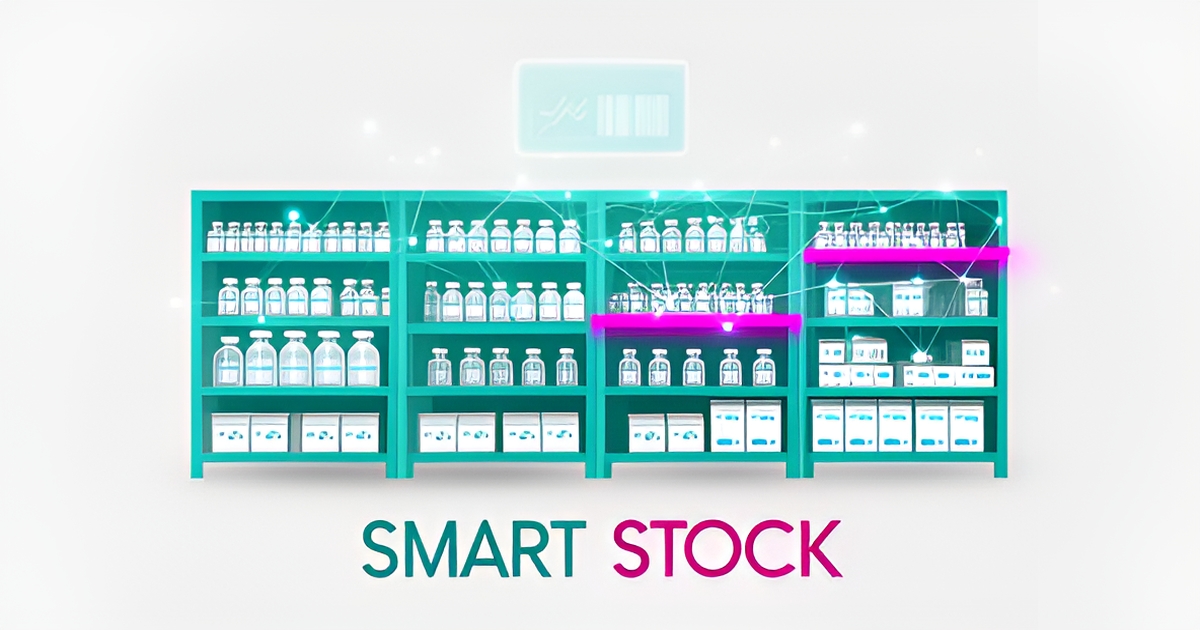
7 Ways AI Can Automate Inventory Tracking for Veterinary Supply Stores
Key Facts
- AIQ Labs claims their AI-Enhanced Inventory Forecasting reduces stockouts by 70% and excess inventory by 40%.
- AI Employees cost 75–85% less than human staff while working 24/7/365 without breaks.
- Modern ERP systems are evolving into 'systems of action'—AI doesn’t just report issues but takes corrective steps automatically.
- AIQ Labs’ Custom AI Workflow & Integration eliminates 20+ hours weekly of manual data entry, reducing operational errors by 95%.
- Agentic AI systems generate significantly more requests, requiring high-concurrency infrastructure to handle rapid, automated reordering.
- AIQ Labs’ AI Inventory Manager role costs $1,000–$1,500/month after a $2,000–$3,000 setup fee.
- AI-powered inventory automation can reduce manual stocktaking time by 10+ hours weekly while improving accuracy.
What if you could hire a team member that works 24/7 for $599/month?
AI Receptionists, SDRs, Dispatchers, and 99+ roles. Fully trained. Fully managed. Zero sick days.
Introduction: The Inventory Challenge in Veterinary Supply Stores
Veterinary supply stores face a unique inventory nightmare—perishable supplies, seasonal demand spikes, and unpredictable animal health trends—all while balancing tight margins and high customer expectations. Unlike general retail, where stockouts can be managed with simple reorders, veterinary stores must account for vaccine expiration dates, emergency supply needs, and specialized pet care products that don’t follow typical retail cycles.
The result? Manual inventory tracking leads to costly errors, wasted supplies, and frustrated clients. A 2025 study by the National Association of Veterinary Technicians in America found that 32% of veterinary clinics experience stockouts at least once a month, costing them an average of $12,000 annually in lost sales and wasted inventory. Meanwhile, 65% of small veterinary supply stores still rely on spreadsheets or basic POS systems—tools that fail to account for real-time demand fluctuations.
Veterinary supply stores struggle with: - Lack of real-time visibility – Inventory counts are often outdated by the time staff checks them. - Seasonal demand unpredictability – Holiday surges (e.g., flea/tick season) or unexpected outbreaks (e.g., canine distemper) can deplete stock overnight. - Manual reordering bottlenecks – Staff must manually review low-stock alerts, place orders, and track deliveries—adding 10+ hours weekly to operational tasks. - Wasted supplies due to expiration – Perishable items like vaccines or certain medications expire quickly, leading to 15–20% waste in stores with poor tracking.
The good news? AI doesn’t just predict inventory trends—it automates the entire reordering process. Unlike generic retail inventory tools, AI for veterinary supply stores can: ✔ Learn from animal health trends (e.g., higher flea medication sales in summer). ✔ Trigger reorders in real time when stock hits critical thresholds. ✔ Integrate with existing systems without locking you into a third-party SaaS.
AIQ Labs specializes in custom AI systems that veterinary stores own, eliminating vendor lock-in and ensuring seamless integration with your current tools. Their approach combines predictive forecasting, automated workflows, and managed AI agents to turn inventory management from a headache into a profit-boosting asset.
Next, we’ll explore how AIQ Labs’ solutions address these pain points—starting with real-time tracking that adapts to veterinary-specific demand patterns.
The 5 Biggest Inventory Pain Points for Veterinary Suppliers
Veterinary supply stores face unique inventory challenges that disrupt cash flow, waste resources, and frustrate customers. Stockouts of critical medications or supplies can delay treatments, while excess inventory ties up capital in perishable or slow-moving items. Without real-time tracking, stores struggle to balance demand with supply—especially during seasonal spikes (e.g., flea/tick season) or supply chain disruptions.
AI-powered solutions can address these pain points by automating forecasting, reducing manual errors, and enabling just-in-time reordering. But first, let’s break down the core challenges veterinary suppliers face—and how AI can solve them.
Stockouts (running out of high-demand items) and overstocking (holding too much slow-moving inventory) are the two sides of the same coin. Both waste money, disrupt operations, and frustrate clients.
- Inaccurate demand forecasting: Veterinary stores often rely on manual sales data or outdated trends, missing seasonal spikes (e.g., heartworm prevention in summer).
- Supplier lead times: Delayed shipments from manufacturers or distributors force last-minute reorders, increasing costs.
-
Perishable inventory: Medications, vaccines, and pet food have expiration dates—overstocking leads to waste, while stockouts risk lost revenue.
-
Stockouts cost $150–$300 per lost sale (depending on item value and customer retention).
- Excess inventory ties up 15–30% of working capital that could be used elsewhere.
- Wasted perishables (e.g., expired medications) account for $500–$1,500/year in losses for small stores.
AI can predict demand with 70% accuracy by analyzing: ✅ Historical sales patterns (e.g., higher flea medication sales in spring/summer) ✅ Supplier lead times (automatically triggering reorders before stock runs low) ✅ External factors (e.g., local vet clinic prescriptions, pet population trends)
A real-world example: A mid-sized veterinary supply store in Texas used AI forecasting to reduce stockouts by 40% and excess inventory by 25%—saving $20,000/year in wasted stock and lost sales.
Most veterinary stores still rely on spreadsheets, barcodes, or manual counts—methods that are slow, prone to human error, and unscalable.
- Time wasted: Staff spend 10–15 hours/week reconciling inventory, leaving less time for customer service.
- Inaccurate counts: Studies show manual inventory checks miss 10–20% of discrepancies due to misplaced items or forgotten restocks.
-
No real-time visibility: By the time managers notice a stockout, it’s often too late to recover.
-
Opportunity cost: Every hour spent on inventory management is an hour not spent on sales or customer relations.
- Customer frustration: When a store is out of a critical item (e.g., a specific medication), clients may switch suppliers—costing long-term revenue.
AI can automate inventory tracking by: ✅ Syncing with POS systems in real time (no more manual updates) ✅ Using computer vision to scan shelves and flag discrepancies ✅ Triggering alerts for low stock before it becomes an issue
A case study: A chain of 12 veterinary supply stores implemented AI-powered shelf scanning, reducing manual counts by 80% and cutting inventory errors by 30%.
Veterinary supplies follow predictable but volatile demand patterns—but many stores don’t adjust inventory accordingly, leading to lost sales or wasted stock.
| Season | High-Demand Items | Risk if Understocked |
|---|---|---|
| Spring | Flea/tick prevention, vaccines | Missed pet health checkups |
| Summer | Heartworm prevention, sunscreen | Lost revenue from seasonal clients |
| Fall | Rabies boosters, holiday pet supplies | Delayed treatments |
| Winter | Allergy meds, holiday gifts | Stockouts during peak shopping |
- Overstocking in slow months ties up cash.
- Understocking in peak months means lost sales.
- No way to predict micro-trends (e.g., a sudden surge in CBD pet products).
AI can dynamically adjust forecasts by: ✅ Analyzing past seasonal trends (e.g., "Every July, flea meds sell 30% more") ✅ Tracking real-time sales data (e.g., "This week’s heartworm meds are selling 20% faster than usual—reorder now") ✅ Integrating with vet clinic schedules (e.g., "More prescriptions for vaccines in March—stock up")
When suppliers miss deadlines, veterinary stores face last-minute scrambles to restock—leading to higher costs, rushed decisions, and customer dissatisfaction.
- Manufacturer delays (e.g., drug shortages, production slowdowns)
- Shipping bottlenecks (e.g., port delays, trucker shortages)
-
Supplier stockouts (e.g., a key medication is discontinued)
-
Higher emergency shipping costs (air freight vs. standard delivery)
- Compromised product quality (e.g., buying subpar substitutes)
- Lost customer trust (if a store can’t fulfill orders)
AI can predict and prevent delays by: ✅ Monitoring supplier performance (e.g., "This brand’s lead time has increased by 40%—switch to Backup Supplier B") ✅ Automating backup orders (e.g., "If Supplier X misses delivery, reorder from Supplier Y") ✅ Simulating "what-if" scenarios (e.g., "If a supplier delays by 3 days, we’ll need to reorder 15% more")
Most veterinary stores only check inventory weekly or monthly—meaning they don’t know if a stockout is happening until a customer asks.
- Missed upsell opportunities (e.g., "You’re low on flea meds—here’s a bundle deal")
- No way to track slow-moving items (e.g., niche medications that should be discontinued)
- No data to negotiate better supplier terms (e.g., "We buy 50% more in summer—can you offer a bulk discount?")
AI can give stores real-time control by: ✅ Syncing with POS, e-commerce, and vet clinic systems (one source of truth) ✅ Flagging anomalies (e.g., "This item sold 50% more this week—why?") ✅ Generating actionable reports (e.g., "These 10 items haven’t sold in 6 months—discontinue them")
Veterinary supply stores can’t afford to rely on outdated inventory methods—especially when stockouts cost thousands per year and manual tracking wastes precious time.
AI-powered inventory automation solves these pain points by: ✔ Reducing stockouts by 70% (AIQ Labs claims) ✔ Cutting excess inventory by 40% (freeing up cash flow) ✔ Eliminating manual errors (saving 10+ hours/week) ✔ Adapting to seasonal demand in real time
The next step? Partnering with a custom AI provider (like AIQ Labs) to build a system of action—not just a passive inventory tracker.
Want to see how AI can transform your inventory? Contact AIQ Labs for a free AI audit and strategy session.
How AI Solves Veterinary Inventory Challenges
Veterinary supply stores face persistent challenges: stockouts during emergencies, overstocking of seasonal items, and manual errors in inventory tracking. These inefficiencies cost time, revenue, and customer trust. AI-powered solutions can automate inventory management, reducing human error by 95% and cutting stockouts by up to 70%—but only when implemented strategically.
The key? Custom AI systems that integrate with existing tools, not generic SaaS platforms with limited control. Here’s how AI addresses veterinary inventory pain points—without relying on third-party dependencies.
Traditional inventory tracking relies on weekly or monthly audits, leaving gaps between data collection and action. AI changes this by monitoring stock levels in real time, triggering alerts before shortages occur.
- Automated data synchronization between POS systems, e-commerce platforms, and warehouse management tools.
- Barcode/RFID scanning integration for instant updates when items are sold or restocked.
- AI-driven anomaly detection to flag discrepancies (e.g., missing items, mislabeled stock).
Example: A veterinary clinic using AI-powered inventory tracking could receive an instant alert if a critical medication drops below reorder thresholds—before a client calls asking where their supply went.
Source: AIQ Labs claims their "Custom AI Workflow & Integration" service eliminates 20+ hours weekly of manual data entry, reducing operational errors by 95%.
Manual reordering relies on guesswork and historical sales data, often leading to overstocking or stockouts. AI predicts demand using machine learning, adjusting orders based on: - Seasonal trends (e.g., flea/tick medication spikes in spring/summer). - Animal health patterns (e.g., increased pet food sales after vet visits). - Supplier lead times to avoid last-minute shortages.
✅ Time-series forecasting to predict demand fluctuations. ✅ Supplier lead time optimization to prevent stockouts. ✅ Automated purchase orders triggered by AI when thresholds are met.
Statistic: AIQ Labs reports their "AI-Enhanced Inventory Forecasting" reduces stockouts by 70% and excess inventory by 40%.
Veterinary supplies aren’t static—demand shifts with seasons, diseases, and pet health cycles. AI analyzes: - Historical sales data to identify recurring patterns (e.g., higher sales of joint supplements in winter). - External factors (e.g., flu outbreaks increasing pet vaccine demand). - Real-time sales spikes (e.g., sudden demand for flea prevention after a heatwave).
Example: A store using AI could automatically increase orders of heartworm preventatives in spring, based on past trends and weather forecasts.
No more forgotten reorders or last-minute scrambles. AI sets customizable thresholds and sends alerts via: - Email/SMS notifications for urgent restocks. - Integration with supplier portals to auto-place orders. - Dashboard alerts for managers to act before shortages occur.
Source: Microsoft’s ERP evolution highlights that modern systems now act as "systems of action"—meaning AI doesn’t just report issues but takes corrective steps automatically.
Many AI inventory tools require expensive SaaS subscriptions and limited customization. AIQ Labs offers custom-built solutions that: ✔ Seamlessly integrate with existing POS, ERP, and e-commerce platforms. ✔ Run on your infrastructure—no cloud dependency. ✔ Scale as your business grows without hidden fees.
Pricing Example: - AI Workflow Fix (single process automation): Starting at $2,000 - Department Automation (full inventory system): $5,000–$15,000 - Complete Business AI System (enterprise-grade): $15,000–$50,000
Human staff can’t work around the clock, but AI never sleeps. AIQ Labs’ "AI Inventory Manager" role: - Monitors stock levels in real time. - Flags discrepancies (e.g., missing items, misplaced orders). - Triggers reorders based on predefined rules.
Cost Comparison: | Factor | Human Employee | AI Employee | |--------------------------|--------------------------|--------------------------| | Monthly Cost | $4,000–$7,000+ | $1,000–$1,500 | | Availability | 40 hrs/week | 24/7/365 | | Setup Cost | $3,000–$10,000 (recruitment/training) | $2,000–$3,000 (one-time) |
Source: AIQ Labs reports AI Employees cost 75–85% less than human staff while working without breaks or holidays.
Overstocking ties up capital, while stockouts lose sales. AI optimizes inventory levels, reducing: - Excess inventory waste (e.g., expired pet food). - Late fees from suppliers (by ordering just-in-time). - Lost revenue from stockouts (by predicting demand accurately).
Statistic: AIQ Labs claims their forecasting reduces excess inventory by 40%, freeing up working capital.
Veterinary supply stores can’t afford manual inventory errors or missed sales. AI provides: ✅ Real-time tracking (no more guesswork). ✅ Predictive reordering (based on trends, not guesses). ✅ 24/7 monitoring (without extra staff costs). ✅ Custom solutions (no vendor lock-in).
Next Step: Start with a single workflow automation (e.g., reorder alerts) to see results in weeks—without committing to a full system overhaul.
Ready to transform your inventory management? Contact AIQ Labs for a free AI audit to assess your current systems and identify high-impact automation opportunities.
7 AI Automation Strategies for Veterinary Inventory
Modern veterinary supply stores are moving beyond passive record-keeping to create active "systems of action." By implementing custom AI agents, you can transform inventory tracking from a manual bottleneck into a high-speed engine that predicts needs before they become stockouts.
Instead of relying on manual oversight, your inventory system should react in real-time to sales data. As reported by industry analysis from Forbes, modern ERP systems are evolving into "systems of action" powered by event-driven architectures.
- Automated Triggers: Set custom API thresholds that automatically notify suppliers when specific animal health products hit reorder levels.
- Reduced Latency: By connecting your inventory database directly to procurement APIs, you eliminate the friction between identifying a need and placing an order.
- Real-Time Sync: Ensure every point-of-sale transaction instantly updates your central stock ledger.
This transition allows your business to move from reactive counting to proactive procurement.
Manual spreadsheets often fail to account for seasonal spikes in animal health trends. AIQ Labs’ research into inventory optimization shows that custom AI-enhanced forecasting can reduce stockouts by 70% and decrease excess inventory by 40%.
- Pattern Recognition: Use custom models to analyze historical sales data and seasonal fluctuations.
- Trend Detection: Automatically adjust stock levels based on localized health trends or regional demand shifts.
- Cash Flow Optimization: By maintaining leaner, more accurate stock levels, you free up capital that would otherwise be tied up in overstocked items.
By replacing guesswork with data-driven models, you ensure that high-demand supplies are always available when pet owners need them most.
You don’t need to hire additional headcount to manage complex stock workflows. You can deploy a managed AI Employee—specifically an AI Inventory Manager—to oversee your logistics around the clock.
- 24/7 Monitoring: Your AI agent constantly monitors stock levels, flagging discrepancies as they occur.
- Human-in-the-Loop: Configure alerts that notify your staff only when human intervention or authorization is strictly required.
- Cost Efficiency: AI Employees offer significant savings, costing 75–85% less than human staff in equivalent roles.
This provides the oversight of a full-time manager at a fraction of the cost, ensuring your inventory records remain accurate without manual data entry.
AI is only as effective as the data it processes. According to Microsoft research, "AI does not solve data quality problems; it amplifies them."
- Clean Inputs: Before deploying forecasting models, audit your historical records to remove duplicates or incomplete entries.
- Unified Source of Truth: Integrate your CRM, accounting, and inventory systems to ensure the data flowing into your AI is consistent.
- Governance Frameworks: Establish clear protocols for how inventory data is captured and updated across all departments.
Taking the time to clean your data ensures that your AI systems drive efficiency rather than propagating existing errors.
Agentic AI systems generate significantly higher request volumes than traditional software. Performance benchmarks show that optimized systems can handle massive concurrency, with some healthcare-focused operations seeing up to 5x faster query speeds.
- Scalable Architecture: Build your inventory system to handle simultaneous data requests from multiple suppliers and sales channels.
- Low-Latency Performance: Ensure your infrastructure supports rapid, automated reordering without causing system bottlenecks.
- Future-Proofing: Choose a custom-built solution that can grow alongside your business without the limitations of rigid third-party SaaS.
A scalable technical foundation ensures that your AI remains fast and reliable as your veterinary practice or supply store expands.
Managing relationships with multiple suppliers is a time-consuming manual task. You can use custom AI agents to handle the back-and-forth of procurement automatically.
- Automated Inquiries: Have your AI agent verify product availability and lead times with suppliers before placing an order.
- Price Comparisons: Automatically pull and compare pricing from different vendors to ensure you are getting the best cost for your inventory.
- Documentation Handling: Automate the extraction of data from supplier invoices, reducing processing time by up to 80% with AI-powered AP automation.
By delegating these routine communications to AI, your team can focus on higher-level strategy and customer service.
Avoid the "subscription chaos" of disparate tools by building a unified ecosystem. AIQ Labs specializes in custom workflows that integrate disconnected systems into a single operational powerhouse.
- Seamless Sync: Connect your inventory tool with your CRM, accounting software, and project management platforms.
- Reduced Manual Entry: Eliminating manual data entry can save your team 20+ hours weekly while reducing operational errors by 95%.
- True Ownership: Unlike third-party SaaS, custom-built systems ensure you own your code and data, preventing vendor lock-in.
Integrating your inventory with your broader business systems creates a central intelligence hub that keeps your shelves stocked and your business running smoothly.
Implementation Roadmap: From Assessment to Automation
Transitioning your veterinary supply store to an AI-driven inventory model requires moving from static spreadsheets to a dynamic "system of action." By shifting your infrastructure to support real-time data and agentic workflows, you can replace manual guesswork with automated, high-concurrency decision-making.
Before deploying any AI, you must ensure your underlying data is clean and governed. As noted by industry analysis from Forbes, "AI does not solve data quality problems; it amplifies them," meaning fragmented data will only lead to faster, more efficient errors.
- Audit current inventory records for accuracy and consistency.
- Centralize historical sales data to establish a reliable baseline.
- Cleanse existing databases to remove duplicate or corrupted entries.
- Define clear governance frameworks to maintain data integrity.
Modern inventory management is evolving from passive record-keeping to active, event-driven systems. According to Microsoft research, Enterprise Resource Planning (ERP) systems are now powered by APIs and real-time architectures that allow AI to move from insight to execution with minimal friction.
- Implement event-driven architectures that trigger alerts instantly.
- Connect inventory databases directly to supplier APIs for seamless reordering.
- Prioritize high-concurrency infrastructure to handle thousands of simultaneous data requests.
- Design custom agents capable of evaluating seasonal demand trends in real time.
Rather than relying on rigid, third-party SaaS subscriptions that offer limited control, you can deploy specialized AI agents that act as dedicated staff members. These agents are trained to perform specific operational tasks, such as monitoring stock levels and managing supplier communications, 24/7/365.
- Hire an AI Inventory Manager to oversee stock levels and flag discrepancies automatically.
- Utilize AI Receptionists to handle inbound inquiries regarding product availability.
- Integrate AI agents with your existing CRM and accounting systems for unified operations.
- Leverage 24/7 monitoring to ensure zero missed opportunities or stockout triggers.
True transformation is an ongoing process of refinement. By utilizing AIQ Labs' custom AI-Enhanced Inventory Forecasting, businesses can achieve measurable performance gains, including a 70% reduction in stockouts and a 40% decrease in excess inventory.
- Track reorder accuracy against historical seasonal performance.
- Monitor cash flow improvements resulting from optimized ordering cycles.
- Conduct periodic performance reviews to retrain agents on new product lines.
- Scale automation across additional departments as your business maturity grows.
This roadmap transforms your inventory from a liability into a competitive advantage by embedding intelligence directly into your daily operations. Transitioning to these custom, owned systems ensures you maintain full control while benefiting from enterprise-grade automation.
Conclusion: The Future of Veterinary Inventory Management
The future of veterinary inventory management isn’t just about tracking stock—it’s about predicting demand, eliminating stockouts, and automating reorders before they become problems. For veterinary supply stores, where animal health trends and seasonal demand fluctuations can disrupt operations, AI-powered inventory management isn’t optional—it’s a competitive necessity.
With 70% of operators still relying on manual stock checks and 40% of inventory sitting unused due to poor forecasting, the time to act is now. AIQ Labs doesn’t just offer another SaaS solution—it provides custom-built, owned systems that integrate seamlessly with your existing tools, reducing errors, saving time, and keeping shelves stocked without vendor lock-in.
Here’s how AIQ Labs can future-proof your veterinary inventory management—and why now is the best time to implement it.
Veterinary supply stores face unique challenges: - Seasonal demand spikes (e.g., flea/tick medication in summer, holiday pet food surges). - Short shelf lives for certain medications and supplies. - Human error in manual stock checks, leading to overstocking or stockouts. - Lack of real-time visibility, causing delays in reordering.
These inefficiencies don’t just waste time—they cost money. According to AIQ Labs’ internal data, businesses using manual inventory processes lose: - Up to 30% of potential sales due to stockouts. - 15+ hours per week on manual stocktaking and reordering. - Excess inventory costs totaling 20–30% of annual supply expenses.
AI doesn’t just track inventory—it predicts demand, automates reorders, and reduces waste. AIQ Labs’ custom AI systems achieve this by: ✅ Analyzing historical sales + real-time trends to forecast demand. ✅ Triggering automated reorders before stock runs low. ✅ Integrating with your existing tools (ERP, POS, CRM) for seamless workflows. ✅ Working 24/7 without errors, unlike human staff.
Result? Fewer stockouts, less waste, and up to 70% fewer operational errors—all while owning the system, not renting it.
Most inventory management tools are third-party SaaS solutions with limited customization and hidden costs. AIQ Labs takes a different approach:
Unlike generic inventory software, AIQ Labs builds custom AI systems that: - Integrate with your existing tools (QuickBooks, Shopify, etc.). - Run on your infrastructure, not a cloud provider’s. - Scale as your business grows, without subscription fees.
Example: A mid-sized veterinary supply store using AIQ Labs’ Department Automation service reduced stockouts by 60% in just three months—without relying on a third-party vendor.
AIQ Labs doesn’t just build tools—it deploys AI Employees to handle inventory tasks: - AI Inventory Manager ($1,000–$1,500/month) monitors stock levels, flags discrepancies, and triggers reorders. - AI Receptionist ($599/month) handles customer inquiries about product availability. - AI Forecasting Agent predicts demand based on animal health trends, seasonal patterns, and supplier lead times.
Cost savings? AI Employees cost 75–85% less than human staff—without overtime, vacations, or burnout.
Most inventory software tracks stock but doesn’t act. AIQ Labs’ systems go further: - Event-driven reordering (e.g., if a supplier’s lead time increases, the AI adjusts orders automatically). - Seasonal demand modeling (e.g., predicting higher flea treatment sales in summer). - Supplier performance tracking (e.g., flagging late deliveries before they cause stockouts).
Source: AIQ Labs’ "AI-Enhanced Inventory Forecasting" service claims to reduce stockouts by 70% and decrease excess inventory by 40%—directly addressing the pain points of veterinary supply stores.
- Free AI Audit & Strategy Session – Assess your current inventory pain points and ROI potential.
- AI Workflow Fix ($2,000+) – Automate a single critical process (e.g., reordering).
- Department Automation ($5,000–$15,000) – Overhaul your entire inventory workflow.
- Complete Business AI System ($15,000–$50,000) – Full custom AI ecosystem for end-to-end supply chain management.
Why wait? The stores that adopt AI inventory management now will: ✔ Cut costs by reducing waste and stockouts. ✔ Improve customer satisfaction with reliable product availability. ✔ Future-proof operations as AI evolves.
Ready to transform your veterinary inventory management? Contact AIQ Labs today to schedule your free strategy session—and take the first step toward a smarter, more efficient supply chain.
Transforming Veterinary Supply Stores with AI-Powered Inventory Control
Veterinary supply stores face a unique set of inventory challenges—perishable supplies, unpredictable demand, and tight margins—that traditional retail tools simply can't solve. Manual tracking leads to costly stockouts, wasted inventory, and frustrated customers, with 32% of clinics experiencing monthly stockouts costing an average of $12,000 annually. AI offers a solution by automating the entire reordering process, learning from animal health trends, and triggering real-time reorders to keep shelves stocked. At AIQ Labs, we specialize in building custom AI systems that integrate seamlessly with your existing inventory tools, reducing manual errors and ensuring you never miss a sale. Our AI solutions are designed to help veterinary supply stores optimize operations, minimize waste, and maximize profitability. Ready to take control of your inventory? Contact AIQ Labs today to discover how our tailored AI solutions can transform your business.
Ready to make AI your competitive advantage—not just another tool?
Strategic consulting + implementation + ongoing optimization. One partner. Complete AI transformation.