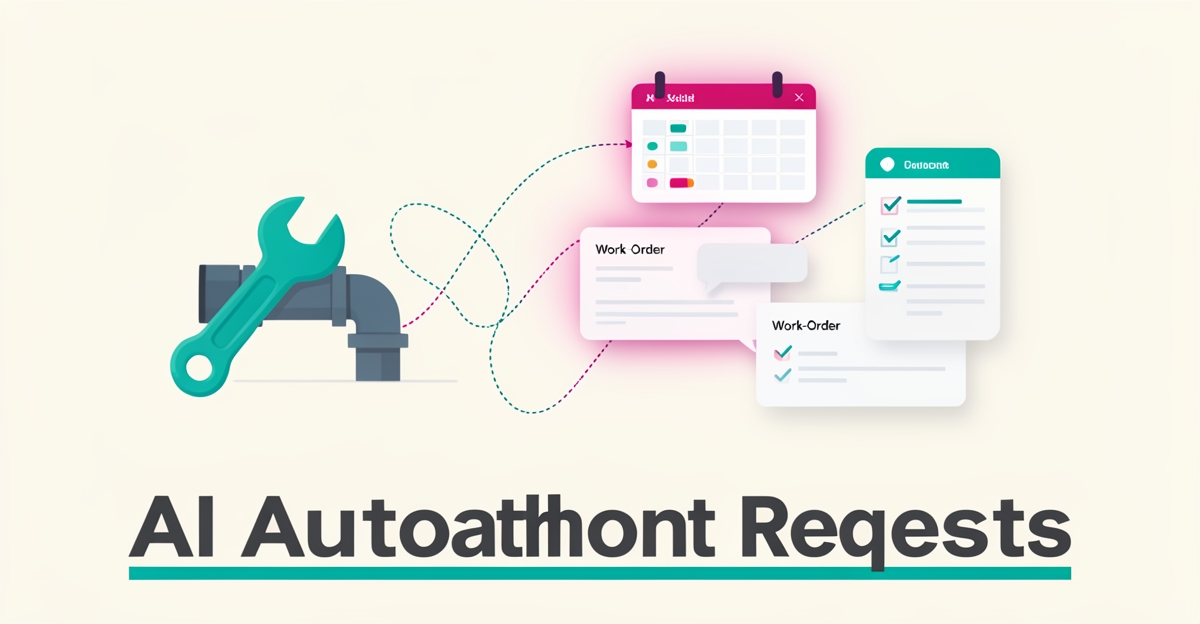
7 Ways AI Can Automate Routine Plumbing Requests and Free Up Technician Time
Key Facts
- Industry research reports average productivity gains of roughly 30–40% in the first year of full workflow automation deployment per industry research
- Basic automation is typically credited with reducing operational costs by 20–30%, with intelligent automation cited at 50–70% according to the same research
- Employees estimate automation could save them around 240 hours annually; managers put the figure closer to 360 hours per workforce surveys
- Error rates for repetitive administrative work are reported to drop by up to 75% after automation based on industry data
- The workflow automation market has grown steadily through the mid-2020s, with mainstream adoption across service industries as of late 2026
- Surveys indicate a large majority of companies now use AI in at least one business function reflecting mainstream adoption
- Industry analysis suggests generative AI could handle a majority of employees' current activities in knowledge-heavy roles according to industry analysis
Hire a team member that works 24/7 — for less than a part-time wage.
AI receptionists, SDRs, dispatchers and 99+ roles. Trained on your business, fully managed.
Not sure where to start? Ask our AI planner
The Hidden Admin Cost in Plumbing Operations
Every service call starts with a phone call, a text, or an email, and behind each one sits a cascade of administrative work that never shows up on an invoice. Scheduling, confirming, dispatching, generating work orders, chasing signatures, and following up afterward consume hours that technicians could spend on pipe repairs and installations. Industry data suggests the large majority of workers perform repetitive, time-consuming tasks in their roles, tasks that are partially or fully automatable according to industry data. For plumbing SMBs running lean crews, that administrative drag compounds fast.
- Scheduling and rescheduling appointments across multiple channels
- Manually creating work orders from scattered customer details
- Following up for approvals, payments, or post-service reviews
- Re-entering data between field software, accounting, and CRM
- Handling routine "where's my tech?" and "when will you arrive?" inquiries
The financial impact is measurable. Industry research on workflow automation platforms reports strong multi-year returns, with average productivity gains of roughly 30–40% in the first year of full deployment. Basic automation is typically credited with cutting operational costs by 20–30%, while intelligent automation is cited at 50–70% according to the same research. Employees estimate automation could save them around 240 hours annually; managers put the figure closer to 360 hours per workforce surveys.
AIQ Labs sees this pattern across trades businesses: the bottleneck isn't technical skill, it's the administrative layer wrapped around every job. Custom AI workflow systems can absorb that layer, routing requests, generating documents, and managing communications without pulling technicians off tools. The shift moves routine coordination from human queues to automated logic, freeing capacity for the work that actually drives revenue.
How AI Workflow Automation Works for Plumbing
Traditional automation follows rigid rules, but AI-powered workflows understand context, interpret unstructured data, and make decisions based on understanding rather than predefined scripts. For plumbing operations, this means the difference between a system that simply routes a ticket and one that reads an incoming request, identifies the issue type, checks technician availability, and proposes a complete work order, all before a human reviews it.
The shift is already underway. Surveys indicate a large majority of companies now use AI in at least one business function, and industry analysis suggests generative AI could handle a majority of employees' current activities in knowledge-heavy roles. For plumbing businesses, that translates to scheduling, dispatch, customer follow-ups, and work order generation running with minimal manual intervention.
AIQ Labs builds these systems using a structured workflow architecture that mirrors how experienced office managers think:
- Trigger identification, Incoming emails, CRM records, webhook events, or customer portal submissions start the process
- Data reading and understanding, AI extracts key details: address, issue type, urgency, customer history
- RAG fact finding, Retrieval-augmented generation searches your procedure manuals, pricing sheets, and compliance docs for current rules
- Decision making and actions, The orchestration layer selects next steps: create work order, assign technician, send confirmation, update CRM
- Human-in-the-loop approval, For sensitive operations (pricing exceptions, warranty calls, safety issues), AI prepares a summary with rationale for one-click approval
This approach combines machine speed with human judgment where it matters most. The system handles routine requests end-to-end while escalating exceptions with full context, so technicians spend less time on paperwork and more time on pipe. If you want to see how this maps to your operation, AIQ Labs' Workflow Builds rebuild the single workflow that costs you the most, at a fixed price and in phases.
7 Routine Requests AI Can Automate Today
Plumbing businesses lose technician hours to repetitive admin that could run without human touch. AI workflow automation shifts those tasks to intelligent agents, freeing crews for hands-on repairs while cutting mistakes.
Intelligent scheduling and dispatch is the first win. AI reads incoming requests, checks technician location, skills, and availability, then books the optimal slot and sends confirmations. Organizations using workflow automation can achieve average productivity gains of roughly 30–40% in the first year of full deployment, with industry research showing most IT and engineering leaders report meaningful time savings from process automation. Error rates for repetitive administrative work are reported to drop by up to 75% after automation.
Auto work order generation follows the same logic. Once a job is scheduled, an AI agent creates the work order from the intake notes, pulls parts history, attaches safety checklists, and pushes it to the field app. This removes the manual data entry that dominates so much administrative work in service businesses.
Customer intake and triage can run 24/7. An AI employee answers calls, texts, or web forms, extracts request type and urgency, and routes emergencies immediately. Adoption of workflow automation has grown steadily across service industries through the mid-2020s, and it's now a mainstream tool for trades businesses as of late 2026.
Practical automations plumbing teams deploy today include:
- Intelligent scheduling and dispatch with real-time availability matching
- Auto work order generation from intake with parts and history pre-filled
- Customer intake and triage via voice, SMS and chat with escalation rules
- Follow-up and review requests sent automatically after job completion
- Parts and inventory checks that flag stockouts before dispatch
- Invoice and payment reminders with one-click pay links
- After-hours coverage by an AI employee handling bookings and emergencies
Follow-up and review requests improve retention without dispatcher effort. Parts checks prevent truck rolls with missing inventory, and invoice reminders reduce days sales outstanding. After-hours coverage ensures no lead is missed, a common revenue leak for trades. AIQ Labs' AI Employees handle exactly this kind of coverage, managed AI receptionists, SDRs, and dispatchers at a fraction of the cost of a human hire.
These workflows deliver measurable financial impact. Industry research on workflow automation platforms documents strong multi-year returns, with basic automation typically reducing operational costs by 20–30% and intelligent automation cited at 50–70% cost reductions.
AIQ Labs builds custom workflow systems tailored to plumbing operations, ensuring seamless integration with existing tools like service management software. The result is less admin burden, fewer errors, and technicians focused on the work only humans can do.
Implementation Playbook for Plumbing Teams
Rolling out AI automation in a plumbing operation doesn’t require a rip-and-replace overhaul, it requires a disciplined sequence. The teams that succeed treat implementation as an engineering project, not a software purchase.
Start with trigger identification. Map every event that kicks off administrative work: an inbound call, a web form submission, a WhatsApp message, a photo of a leaking water heater. These triggers become the entry points where AI reads the request, extracts key details like address and issue type, and checks them against your business rules before a human ever gets involved.
Next, integrate with your service management software. Whether you run ServiceTitan, Housecall Pro, or Jobber, the AI layer needs two-way API access so it can create work orders, check technician availability, and update job statuses without swivel-chair data entry. This is where AIQ Labs typically steps in, building custom workflow systems that sit on top of your existing stack rather than forcing a platform migration, with full ownership of the code transferring to you.
Then comes prompt engineering and governance. A well-designed prompt can yield dramatically better results than a generic one, and production-grade prompt work involves version control, fallback mechanisms, edge-case debugging, and audit trails, not just clever wording. For plumbing teams, governance means defining which decisions the AI can make alone (booking a standard drain cleaning) and which require human approval (quoting a repipe, dispatching after-hours emergency rates).
Before going live, run in shadow mode. Let the AI draft responses and work orders alongside your dispatcher for two to three weeks without sending anything to customers. Measure accuracy, catch errors, and build an error taxonomy. Follow shadow mode with a canary release, routing perhaps 10% of real traffic through the system, then expand as confidence grows.
Finally, control costs from day one:
- Cache responses for repeat questions like pricing ranges and service areas
- Route simple requests to cheaper models and reserve powerful ones for complex diagnostics
- Send only relevant context to the model instead of full customer histories
- Track cost per resolved request, not just raw token spend
The payoff justifies the discipline. Organizations deploying workflow automation report strong multi-year returns, with error rates on repetitive administrative work reported to drop by up to 75%. Start with one workflow, prove the numbers, then scale.
Still paying for 10+ subscriptions that don’t talk to each other?
We build custom AI systems you own outright. No vendor lock-in. Full control.
Not sure where to start? Ask our AI planner
Frequently Asked Questions
How much time can AI really save plumbing technicians on administrative tasks?
What kind of ROI can a plumbing business expect from implementing AI workflow automation?
Will AI replace our plumbing technicians or just help with paperwork?
Can AI work with our existing plumbing software like ServiceTitan or Jobber?
Is it safe to let AI make decisions about pricing or emergency dispatches?
How do we know the AI won’t make mistakes or generate incorrect work orders?
From Paperwork to Pipes: Reclaim Your Technicians' Time
AI workflow automation isn't about replacing skilled plumbers, it's about freeing them from the administrative drag that keeps them off the job site. As we've explored, intelligent systems can handle everything from scheduling and work order generation to customer follow-ups and after-hours coverage, with industry research pointing to first-year productivity gains of roughly 30–40% and error reductions of up to 75% on repetitive admin work. The real opportunity lies in starting small, identifying one repetitive workflow, testing it in shadow mode, and scaling what works. AIQ Labs helps plumbing businesses build custom AI solutions that integrate with existing tools like ServiceTitan or Jobber, so technicians spend less time on paperwork and more time doing what they do best: fixing pipes and keeping homes running smoothly. Ready to see where AI could unlock capacity in your operation? Take the two-minute Fit Check, it maps your biggest bottlenecks and identifies the highest-ROI automation opportunities, with no obligation.
Make AI your competitive advantage — not just another tool.
Strategy, implementation and ongoing optimization. One partner, end to end.
Not sure where to start? Ask our AI planner