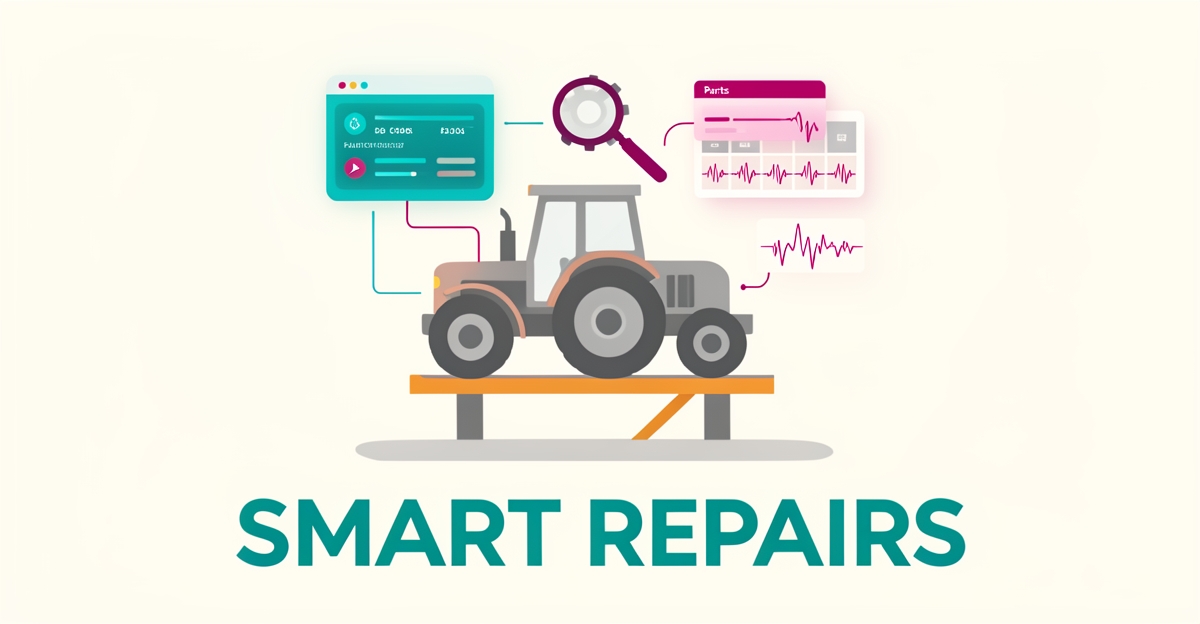
7 Ways AI Can Automate Routine Repairs in a Farm Equipment Shop
Key Facts
- AI-powered diagnostic systems can reduce diagnosis time by up to 90% according to industry research
- 67% of collision repair shops already use AI-powered diagnostic tools per recent industry data
- 70% of car owners would use AI agents for real-time diagnosis and issue resolution based on consumer surveys
- AI damage estimation software cuts inspection times by 60% as shown in automotive applications
- Predictive maintenance can forecast equipment failures like conveyor belt failure at 5,000 operating hours using machine learning algorithms
- AI-driven scheduling minimizes disruption by aligning repairs with operational rhythms reducing costly downtime per incident
- AI diagnostic tools deliver uniform results every time, unlike experience-based methods that introduce variability ensuring standardized care across technicians
Hire a team member that works 24/7 — for less than a part-time wage.
AI receptionists, SDRs, dispatchers and 99+ roles. Trained on your business, fully managed.
Not sure where to start? Ask our AI planner
The Labor and Turnaround Squeeze Facing Farm Shops
Farm equipment shops are caught in a tightening squeeze between rising labor costs and impatient customers. Skilled technician shortages continue to drive up wages, while reactive manual diagnostics create bottlenecks that slow every repair. At the same time, equipment owners expect faster turnarounds, mirroring trends seen in automotive repair where 67% of collision repair shops already use AI-powered diagnostic tools and 70% of car owners would use AI agents for real-time diagnosis. This gap between labor constraints and service expectations is squeezing profitability and pushing shops toward automation as a necessity, not just an upgrade. Shops that rely solely on manual processes face longer diagnostic cycles, inconsistent accuracy, and missed opportunities to proactively address wear before it leads to costly breakdowns. AI workflow automation offers a direct path out of this squeeze by handling repetitive tasks like fault code interpretation, part cross-referencing, and initial work order triage—freeing technicians to focus on complex mechanical work that truly requires human expertise. By integrating AI into core diagnostic and scheduling workflows, farm equipment shops can begin to close the turnaround gap without adding headcount or sacrificing accuracy. AIQ Labs helps shops implement these automation systems through custom workflow solutions that own and control, turning labor-intensive bottlenecks into streamlined, AI-augmented operations.
How AI Transforms Routine Repair Workflows
The diagnostic bay has always been the bottleneck where profit margins stall—technicians spend hours tracing faults that AI can now identify in minutes. Research from the automotive sector shows AI-powered diagnostic systems can reduce diagnosis time by up to 90%, a figure that translates directly to combine harvesters, tractors, and sprayers where hydraulic and electronic systems grow more complex every season.
Visual inspection cameras paired with anomaly detection now catch wear on belts, hydraulic leaks, and structural cracks with consistency no human eye can match across a 12-hour shift. In collision repair, 67% of shops already use AI-powered diagnostic tools and damage estimation software cuts inspection times by 60%. The same computer vision models train on millions of equipment images to flag issues before they become catastrophic field failures.
Predictive maintenance shifts the entire shop from reactive firefighting to scheduled precision. Machine learning algorithms forecast equipment failures by analyzing sensor data, operating hours, and historical repair patterns—predicting, for example, that a conveyor belt or transmission will fail at 5,000 hours so the part arrives before the breakdown. AI agents analyze historical data to predict when repairs are likely needed, automatically aligning technician skill sets, bay availability, and parts inventory so the right repair happens at the right time.
- Automated part recommendations pull real-time pricing from multiple suppliers and cross-reference compatibility with the exact machine serial number
- Intelligent work order routing matches each job to the technician with the strongest track record on that failure mode
- Customer communication automation sends proactive updates via SMS or email at every milestone—diagnosis complete, parts ordered, repair underway, ready for pickup
- Inventory-aware scheduling prevents the costly scenario where a bay sits empty waiting for a backordered seal kit
AIQ Labs builds custom workflow automation that connects these seven levers into a single system—diagnostic intake, parts lookup, technician dispatch, customer updates, and inventory sync—so farm equipment shops eliminate the manual handoffs that eat hours every week. The technology is proven in automotive and heavy industry; the opportunity is adapting it to the specific machines, seasons, and workflows that define agricultural repair.
From Automotive Proof to Farm Shop Implementation
The transition from automotive repair insights to farm equipment implementation hinges on proven metrics that translate directly across equipment types. AI systems achieving 90%+ accuracy in vehicle inspections demonstrate the reliability needed for complex farm machinery diagnostics, where consistent results eliminate guesswork based solely on technician experience. This consistency is critical when diagnosing intermittent hydraulic issues or electrical faults in tractors and combines, where traditional methods often vary between shifts.
These capabilities shift shops from reactive repairs to proactive diagnostic centers, a transformation documented in automotive applications where AI reduced inspection times by up to 60% and predictive maintenance cut unplanned downtime by 30%. For farm equipment shops, this means identifying wear patterns in planter rows or predicting combine header failures before harvest season disruptions. AI acts as a digital assistant in the bay, providing context-sensitive guidance that standardizes diagnostics across varying skill levels while freeing senior technicians for complex overhauls rather than routine fault isolation.
AIQ Labs’ custom workflow automation systems operationalize these principles by integrating diagnostic AI with parts recommendation engines and work order routing—creating end-to-end automation for common repair tasks. The system processes visual imagery from inspection cameras, sensor data from equipment telematics, and historical repair patterns to generate actionable insights, directly addressing the skilled labor shortages that inflate costs in agricultural service operations. By automating routine checks and parts sourcing, shops reduce manual data entry and administrative bottlenecks, allowing human expertise to focus on high-value repairs that require nuanced judgment. This approach transforms the shop into a predictive maintenance hub where AI handles consistent, repeatable tasks while technicians apply their experience to unpredictable failures. Industry research confirms that such automation directly tackles the core challenge of labor shortages driving costs upward while meeting customer demand for faster, more accurate service—prices equally valid in farm equipment contexts where downtime during critical seasons carries substantial operational penalties. Studies show AI diagnostic tools deliver uniform results every time, unlike experience-based methods that introduce variability, ensuring farm equipment receives standardized care regardless of which technician performs the initial assessment. Real-world applications demonstrate that AI-driven scheduling minimizes disruption by aligning repairs with operational rhythms—a vital consideration for farms where equipment availability directly impacts planting and harvest timelines. This foundation enables shops to implement AI not as a replacement for skilled labor, but as a force multiplier that extends expert knowledge across every repair bay.
Building Owned AI Workflows with AIQ Labs
Most farm equipment shops don't need another software subscription—they need AI systems they actually own. AIQ Labs builds custom workflow automation that integrates directly with your existing shop management system, creating diagnostic agents, dispatchers, and work order managers that belong to your business outright.
The shift from reactive to proactive operations is already underway. According to industry research, 67% of collision repair shops now use AI-powered diagnostic tools, and AI diagnostic systems can reduce diagnosis time by up to 90%. Farm equipment shops face the same pressures—skilled technician shortages, rising customer expectations, and the need to do more with existing staff.
AIQ Labs structures engagements through three flexible payment models. Start Monthly delivers one AI employee—like an AI Dispatcher or Work Order Manager—for a flat monthly fee covering build, training, integrations, and ongoing improvements. Build in Milestones breaks larger systems into phases, letting you approve and pay for each completed stage while keeping everything built so far. Own It Outright provides full ownership of code, agents, and data through a single project price or Build Partnership structure.
For a farm equipment shop, this might look like:
- A diagnostic agent that analyzes equipment sensor data and service history, flagging issues before breakdowns occur—similar to how predictive maintenance systems forecast failures after 5,000 operating hours
- An AI Dispatcher that routes work orders based on technician skillsets and availability, eliminating the $500–$2,000 in overtime costs that poor scheduling creates per incident
- A Work Order Manager that syncs parts inventory with repair schedules, reducing the delays that cost shops 3–6 production hours per event
The difference between renting AI tools and owning custom systems compounds over time. Subscription platforms lock you into their roadmap, their pricing increases, and their limitations. Custom-built agents trained on your specific workflows, integrated with your existing tools, and owned outright give you complete control over customization and future development—no vendor lock-in, no platform dependencies.
Ready to map your shop's automation opportunity? Start the two-minute Fit Check at AIQ Labs, then book a free 30-minute strategy call at aiqlabs.ai/book. We'll identify your highest-ROI automation target—and if there isn't a clear win, we'll tell you that too.
Still paying for 10+ subscriptions that don’t talk to each other?
We build custom AI systems you own outright. No vendor lock-in. Full control.
Not sure where to start? Ask our AI planner
Frequently Asked Questions
How much time can AI actually save on diagnostics in a farm equipment shop?
Will AI replace my technicians or just help them?
Can AI really predict when a combine or tractor will break down before it happens?
What does it cost to implement AI workflow automation in my shop?
How does AI scheduling prevent the costly delays we see when bays sit empty waiting for parts?
Is this technology proven in agriculture or just automotive?
Turn Your Shop Into a Predictive Powerhouse
The gap between rising labor costs and customer expectations isn't closing on its own. While 67% of collision repair shops already leverage AI diagnostics to cut inspection times and standardize results, farm equipment shops that stick to manual fault tracing and reactive scheduling risk falling further behind. The seven automation levers covered here—from visual wear detection to predictive parts ordering—aren't futuristic concepts; they're proven systems that turn diagnostic bottlenecks into streamlined workflows where technicians focus on complex repairs instead of paperwork. AIQ Labs specializes in building these custom workflow automation systems specifically for agricultural repair operations, creating owned AI assets that integrate with your existing shop management tools rather than locking you into another subscription. Ready to identify your highest-ROI automation target? Start the two-minute Fit Check, then book a free 30-minute strategy call at aiqlabs.ai/book. We'll map your biggest bottleneck—and if there isn't a clear win, we'll tell you that too.
Make AI your competitive advantage — not just another tool.
Strategy, implementation and ongoing optimization. One partner, end to end.
Not sure where to start? Ask our AI planner