7 Ways AI Can Cut Down on Design Mistakes in Custom Home Builds
Key Facts
- Construction productivity has improved only modestly over the past two decades despite technological advances, a gap widely attributed to manual design-to-build handoffs
- Real-time clash detection catches conflicts digitally that would otherwise surface during framing or rough-in, when corrections are most expensive
- Automated validation typically reduces manual review effort by a wide margin, freeing designers and project managers for higher-value work
- The construction industry is a major contributor to global emissions, and rework-driven waste adds to that footprint
- AIQ Labs has deployed 200+ multi-agent systems and runs 4 live SaaS products daily—validation workflows are built from real operating experience
Hire a team member that works 24/7 — for less than a part-time wage.
AI receptionists, SDRs, dispatchers and 99+ roles. Trained on your business, fully managed.
Not sure where to start? Ask our AI planner
The Hidden Cost of Design Errors in Custom Home Construction
A single mismatched dimension on a blueprint can cascade into weeks of rework on a custom home build. Design inconsistencies, blueprint inaccuracies, and material mismatches are not minor inconveniences; they are the primary drivers of costly rework, project delays, and budget overruns.
The construction sector has long struggled with systemic inefficiency. Industry analyses have noted for years that construction productivity has improved only modestly over the past two decades despite technological advances. That stagnation highlights how manual design-to-build handoffs continue to create errors that compound on site.
Custom homes amplify the risk because each project is unique. Changes made late in design are rarely caught until framing or finishes, when corrections are most expensive. And the industry's scale makes the impact material: construction is a major contributor to global emissions, and much of that footprint is tied to waste from rework and overconsumption.
Design errors typically surface as:
- Blueprint inaccuracies that force field modifications and trade coordination delays
- Material mismatches where specified products are unavailable or incompatible
- Version control gaps between architects, engineers, and builders
- Late-stage change orders that trigger cascading schedule slippage
These issues are not inevitable. AI can validate blueprints, cross-reference materials, and flag design inconsistencies before construction begins, preventing costly rework. This is where AI Workflow Builds apply directly to design-to-construction transitions: AIQ Labs rebuilds the one workflow that costs you the most, at a fixed price, in phases.
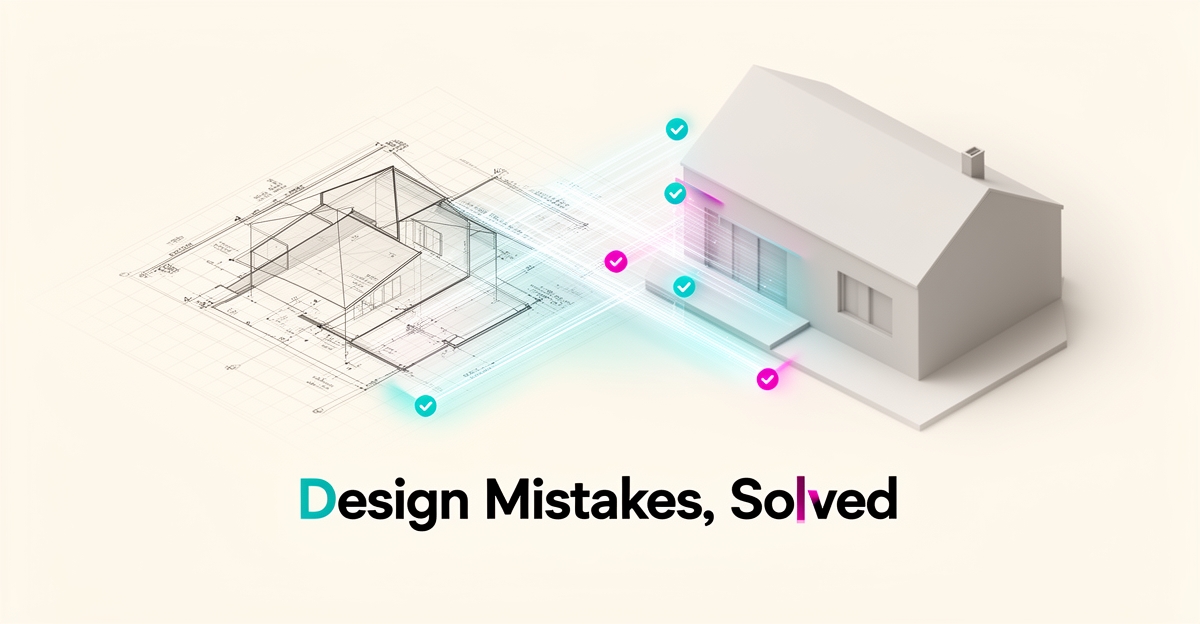
AIQ Labs builds automation systems that ensure accuracy across design-to-construction handoffs by validating drawings against specifications and material databases in real time. The goal is to shift error detection left, so teams resolve conflicts digitally rather than on site.
When validation happens early, builders protect margins, homeowners avoid delays, and projects move with the precision custom builds demand.
How AI Validates Design Accuracy Before Construction Begins
Design errors discovered on site are expensive, and in custom home builds they are personal. AI shifts validation left, catching inconsistencies while the design is still digital instead of after materials are ordered.
AI systems ingest blueprints, specifications, and supplier data, then cross-reference every element against building codes, structural logic, and material compatibility. This automated checking replaces manual mark-ups with continuous analysis that flags mismatches before construction begins. Across the industry, AI is increasingly used for project planning, quality control, safety monitoring, and construction management.
Clash detection is the most visible benefit. AI compares architectural, structural, and MEP models in real time and identifies spatial conflicts, clearance violations, and routing errors that human reviewers miss. The same technology validates material specs against supplier data sheets, ensuring ordered products meet load, fire, and environmental requirements. Real-time clash detection prevents rework that would otherwise surface during framing or rough-in.
Validation also strengthens quality control. AI-powered tools analyze design data, predict outcomes, and identify potential risks, helping teams improve efficiency and control costs. In comparable technical workflows, automation typically delivers substantial time savings over manual review—a pattern that transfers directly to blueprint review and specification checking.
The construction sector carries a heavy sustainability burden. Construction is widely cited as a major contributor to global emissions, while productivity gains have lagged other industries for decades. Accurate first-time design reduces waste, over-ordering, and site corrections that drive both cost and emissions.
For custom builders, AI validation typically covers:
- Blueprint cross-referencing against code databases and local amendments
- Material compatibility checks for structural, thermal, and finish assemblies
- Real-time clash detection across architectural, structural, and MEP models
- Supplier spec verification to prevent substitutions that compromise performance
These checks are embedded into the workflow rather than bolted on as a separate review step. AIQ Labs builds custom automation systems that ensure accuracy across design-to-construction transitions, so projects start on site with confidence rather than corrections. The result is fewer RFIs, cleaner submittals, and a handoff your trades can trust.
Implementing AI Workflow Automation for Design-to-Construction Handoff
AI is transforming how custom home builders move from design to construction, turning a traditionally fragmented handoff into a seamless, error-resistant process. Integrating design tools like CAD and BIM with project management and supplier databases creates a unified pipeline that flags inconsistencies early, reducing manual review cycles and preventing costly rework. Industry reporting suggests AI-driven workflow automation can meaningfully cut design-to-construction transition time, directly addressing one of the sector's persistent productivity gaps. This level of integration ensures that material specifications, structural tolerances, and code compliance are validated in real time before ground is broken.
AIQ Labs' workflow builds act as the intelligent bridge between design intent and build execution, continuously cross-referencing blueprints against supplier inventories, local building codes, and historical project data. When a mismatch is detected—such as a window size not available from a regional supplier or a load-bearing wall conflicting with HVAC routing—the system alerts stakeholders immediately, allowing corrections during the design phase where changes are least expensive. Comparable automation workflows typically reduce manual validation effort substantially, freeing designers and project managers to focus on the work that matters rather than error-checking.
- Automated clash detection between architectural, structural, and MEP systems
- Real-time material availability and pricing cross-referencing
- Code compliance validation against municipal and provincial regulations
- Change impact analysis that predicts downstream effects of design modifications
- Version-controlled audit trails ensuring accountability across teams
By embedding AI into the core of the design-to-construction handoff, builders gain a proactive safeguard against the miscommunications and oversight that traditionally lead to delays and budget overruns. The result is a tighter feedback loop between designers, engineers, and tradespeople—one where accuracy is built into the workflow, not inspected after the fact. This approach doesn't just prevent mistakes; it redefines reliability in custom home building.
Still paying for 10+ subscriptions that don’t talk to each other?
We build custom AI systems you own outright. No vendor lock-in. Full control.
Not sure where to start? Ask our AI planner
Frequently Asked Questions
How does AI actually catch design mistakes before construction starts?
What are the most common design errors AI prevents in custom home builds?
How much time can AI save during the design review process?
Will AI replace architects and builders in custom home construction?
Can AI help make custom home construction more sustainable?
How do custom home builders get started with AI design validation?
Build Smarter, Not Harder
Custom home builds will always carry unique risk, but design errors don't have to be part of the cost of doing business. Shifting validation left with AI means blueprints, specs, and supplier data are cross-referenced before materials are ordered, clashes are caught in real time, and late-stage change orders stop cascading through the schedule. That early detection protects margins for builders, reduces waste tied to rework, and gives homeowners the precision they expect. For teams ready to embed this discipline into their workflow, an AI Workflow Build can turn fragmented handoffs into a continuous, error-resistant pipeline—built in phases, at a fixed price, and owned outright when complete. Start the 2-minute Fit Check at https://aiqlabs.ai/apply, then book a free 30-minute strategy call at https://aiqlabs.ai/book to map your biggest design-to-build bottleneck. You can also reach the team directly at [email protected].
Make AI your competitive advantage — not just another tool.
Strategy, implementation and ongoing optimization. One partner, end to end.
Not sure where to start? Ask our AI planner